Map of France showing where the Galloy arms are recorded
The Galloy arms were recorded in Picardie, c. 1663.
Picardie lay on the northern road into France and saw armies pass through it repeatedly. Its landowners were soldiers as often as farmers, and a soldier needed a shield he could be recognised by.
This is where the arms were entered in the register. Families often moved to other parts of the country, so the same name can turn up in more than one region.
The body that granted and recorded arms in France in this period.
Louis XIV of France
Sovereign of the period
Louis XIV of France
1643–1715
Reigning in France when the Galloy arms are first recorded.
How Arms Worked in France
In France, a coat of arms was a mark of honor that passed down through the male line to all legitimate descendants. Families often used the same shield without changes to show their shared heritage. If a branch wanted to stand out, they could add a small mark to their shield to show their specific place in the family tree.
Granting authority
The Juge d'armes de France acted as the official authority that regulated and verified coats of arms across the country.
How they got arms
Families typically inherited their arms from ancestors, though they could also receive them through royal grants or by proving their noble status.
Where arms were recorded
Coats of arms were officially recorded in the Armorial Général de France, which began its main collection in the year 1696.
The family's standing
Recorded among the armigerous families of Picardie.
Origin & History of the Galloy Family in France
The Galloy family name finds its historical roots in the northern region of Picardie, where records confirm members of the family were established by the year 1663. During the seventeenth century, this area was a vital agricultural and strategic landscape that often felt the pressures of regional conflicts and shifting borders. The name itself is thought to be a variation of older French nicknames, likely derived from the word "gal," which historically described a person who was lively, cheerful, or bold. Families in this part of France during the 1600s were often deeply connected to the local parish system, which served as the primary center for recording births, marriages, and deaths. By living in Picardie, the Galloy family participated in a culture defined by resilient rural traditions and the slow evolution of the French language as it transitioned from regional dialects into a more standardized form. Their presence in these historical records highlights a family that was well-integrated into the local community life of northern France during the reign of King Louis XIV.
Coat of Arms & Family Crest Details
Symbols on this shield
bendDefence, and the scarf of a commander
roseThe seventh son, and beauty with grace
crescentHonour by the sovereign, and the second son
Colours
Silver (Argent)Means: Peace and sincerity
Black (Sable)Means: Constancy
Gold (Or)Means: Generosity
Historical info
Source
J. B. Rietstap, Armorial Général, Gouda: G. B. van Goor Zonen, 1884–87
Blazon (the actual original written record)
“Parti: au 1 d'arg. à quatre roses de six feuilles de ...., 1, 2 et 1; au 2 de sa. à la bande d'or, acc. de deux croiss. d'arg., posés en bandes, celui en chef versé, celui en p. montant. Cq. cour. C.: un homme iss., hab. de sa., tenant devant son corps un écusson aux armes du 1.”
Germanyc. 1765
Digital archive packCoat of arms PNG, gold border print PDF, vector SVG and the certificate of authenticity. Sent to your email in minutes.
Map of Germany showing where the Galloy arms are recorded
The Galloy arms were recorded in Germany, c. 1765.
Arms such as these were typically recorded in Bavaria.
Bavaria was a country of old landed families and walled market towns. Estates passed down the same line for centuries, and both the landowners and the leading townsmen kept arms, which is why so many Bavarian names sit in the registers.
This is where the arms were entered in the register. Families often moved to other parts of the country, so the same name can turn up in more than one region.
The body that granted and recorded arms in Germany in this period.
Francis I, Holy Roman Emperor
Sovereign of the period
Francis I, Holy Roman Emperor
1745–1765
Reigning in France when the Galloy arms are first recorded.
How Arms Worked in Germany
In the Holy Roman Empire, coats of arms were often granted to individuals by the Emperor or his representatives. These arms were then passed down through the generations to all legitimate descendants of the original holder. Younger branches of a family usually kept the same shield design without needing to change it, as the arms belonged to the entire lineage.
Granting authority
The Holy Roman Emperor held the sole power to grant new coats of arms throughout his vast imperial territories.
How they got arms
Families typically obtained their coats of arms through a formal imperial grant or by proving their noble status to the authorities.
Where arms were recorded
These grants were officially recorded in the Imperial Chancery registers, which began keeping formal records of such honors during the Middle Ages.
The family's standing
Recorded among the armigerous families of Germany.
Origin & History of the Galloy Family in Germany
The family name Galloy carries a distinct history rooted in the southern regions of Germany, particularly within the state of Bavaria. By the mid-eighteenth century, records confirm that members of the family were established residents of this area. During the 1760s, Bavaria was a landscape defined by agricultural traditions and the gradual modernization of local governance under the Wittelsbach dynasty. Families like the GAlloys often lived in small, tight-knit communities where social status was tied to land ownership and participation in the local parish. Because the name appears in Bavarian records as early as 1765, it is likely that the family was part of the common citizenry that helped shape the regional identity of southern Germany during this era. Their presence in the region suggests a stable life centered around the customs and economic shifts of the Holy Roman Empire.
Coat of Arms & Family Crest Details
Symbols on this shield
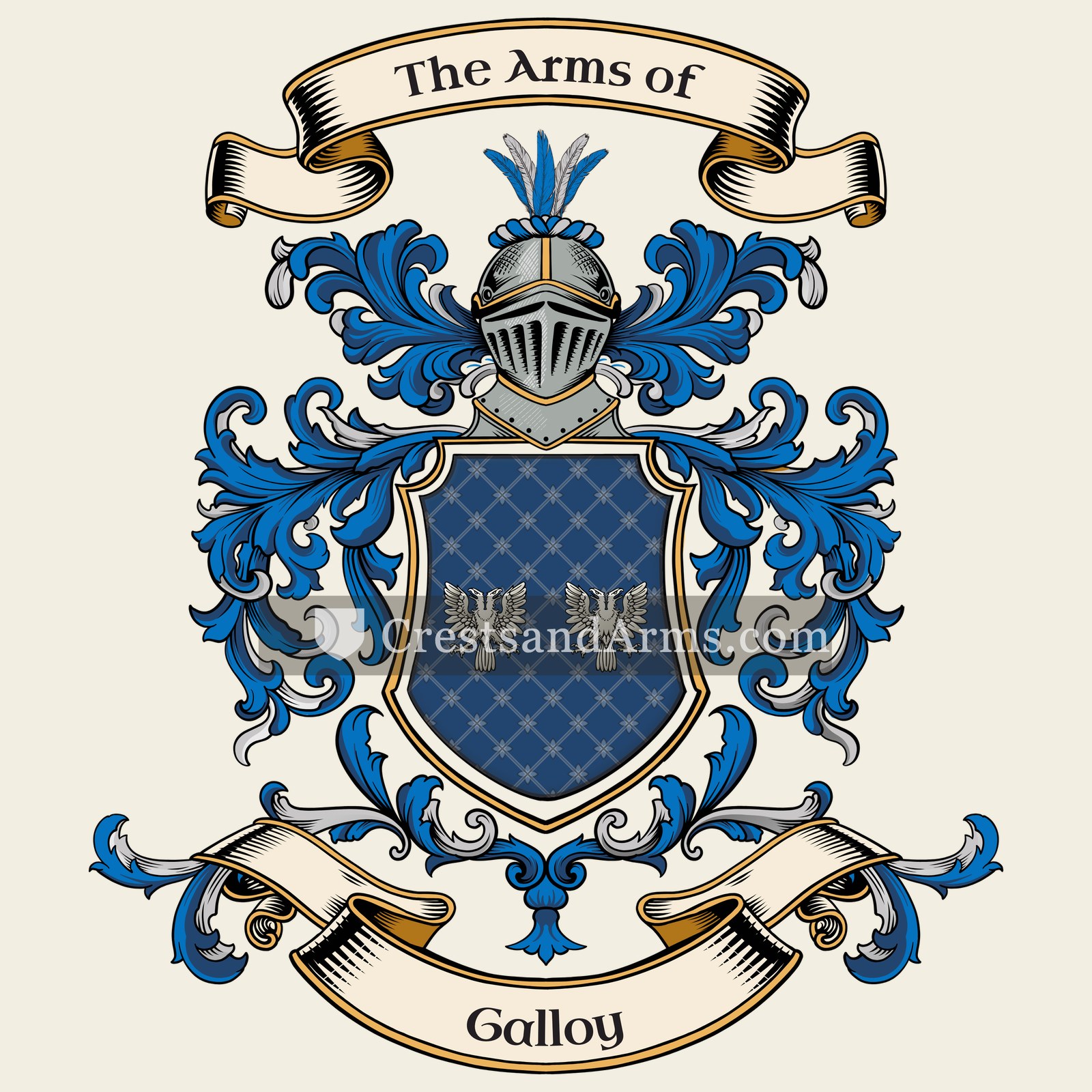
eagleNobility, strength and a keen mind
Colours
Blue (Azure)Means: Loyalty and truth
Historical info
Source
J. B. Rietstap, Armorial Général, Gouda: G. B. van Goor Zonen, 1884–87
Blazon (the actual original written record)
“D'azur à deux aigles de profil affr. au nat., acc. en p. de trois ruches, 1 et 2.”
Netherlandsc. 1815
Digital archive packCoat of arms PNG, gold border print PDF, vector SVG and the certificate of authenticity. Sent to your email in minutes.
Map of Netherlands showing where the Galloy arms are recorded
The Galloy arms were recorded in Netherlands, c. 1815.
Arms such as these were typically recorded in Friesland.
Friesland was low, wet country on the northern coast of the Netherlands, farmed by families who had held the same land for centuries. Free landholders were unusually common there, and a free landholder could carry arms.
This is where the arms were entered in the register. Families often moved to other parts of the country, so the same name can turn up in more than one region.
Region
Friesland
First recorded
1815
Granting Authority for the Galloy Arms
Hoge Raad van Adel
Photograph made by me · CC BY-SA 3.0
The body that granted and recorded arms in Netherlands in this period.
William I of the Netherlands
Sovereign of the period
William I of the Netherlands
1815–1840
Reigning in France when the Galloy arms are first recorded.
How Arms Worked in Netherlands
In the Netherlands, coats of arms were often used by noble families and those who held specific public offices. These arms were passed down through the generations to legitimate descendants. Younger branches of a family usually kept the original design without needing to add special marks. This system ensured that the family identity remained clear and consistent over many years.
Granting authority
The Hoge Raad van Adel is the official body that regulates and manages noble titles and coats of arms in the Netherlands.
How they got arms
Families typically obtained their coats of arms through official royal grants or by proving their long-standing historical use of the symbols.
Where arms were recorded
Coats of arms are officially recorded in the registers held by the Hoge Raad van Adel, which began its work in 1814.
The family's standing
Recorded among the armigerous families of Netherlands.
Origin & History of the Galloy Family in Netherlands
The family name Galloy carries a distinct history within the Netherlands, particularly as it emerged in the northern province of Friesland during the early nineteenth century. By 1815, records confirm that members of the Galloy family were established in this region, a time when the Netherlands was undergoing significant social changes following the end of the Napoleonic era. During this period, the Dutch government required citizens to formalize their surnames for official civil registries, which helped solidify the spelling and lineage of families like the Gallowys. While the name likely shares roots with broader European naming traditions, its presence in Friesland suggests a family that integrated into the local agricultural or maritime communities of the north. These early ancestors were part of a society that valued community ties and local identity, helping the name persist as a recognized part of the regional heritage.
Galloy Meaning & Related Branches
Root word
Gallo
Derived from the Latin word Gallus referring to a Gaul or Frenchman.
This name
GalloyA diminutive or patronymic form indicating a person of Gallic origin or descent.
also spelled
Galois
Galloy
Galoy
Galwa
Gallowis
Documented Sources
J. B. Rietstap, Armorial Général, Gouda: G. B. van Goor Zonen, 1884–87
Archives départementales de la Somme, Registres paroissiaux et d'état civil
Muller, Charles, Les noms de famille en Picardie, 1985
Dauzat, Albert, Dictionnaire étymologique des noms et prénoms de France, 1951
Digital archive packCoat of arms PNG, gold border print PDF, vector SVG and the certificate of authenticity. Sent to your email in minutes.


 chevronProtection, and faithful service completed
 chiefAuthority, wisdom and dominion
 crescentHonour by the sovereign, and the second son
 mulletThe third son, and a divine quality from above
 chevronProtection, and faithful service completed
 chiefAuthority, wisdom and dominion
 crescentHonour by the sovereign, and the second son
 mulletThe third son, and a divine quality from above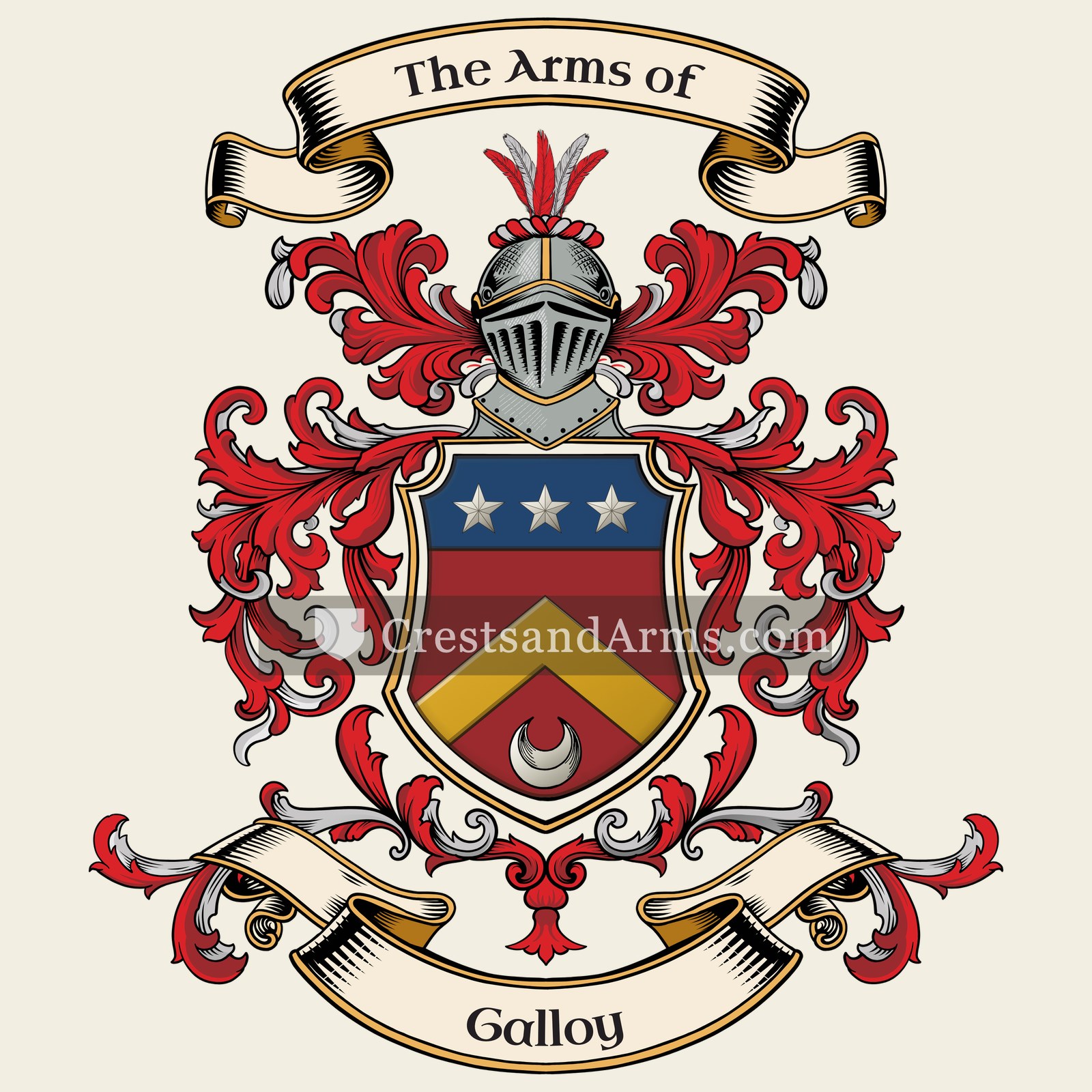


 bendDefence, and the scarf of a commander
 roseThe seventh son, and beauty with grace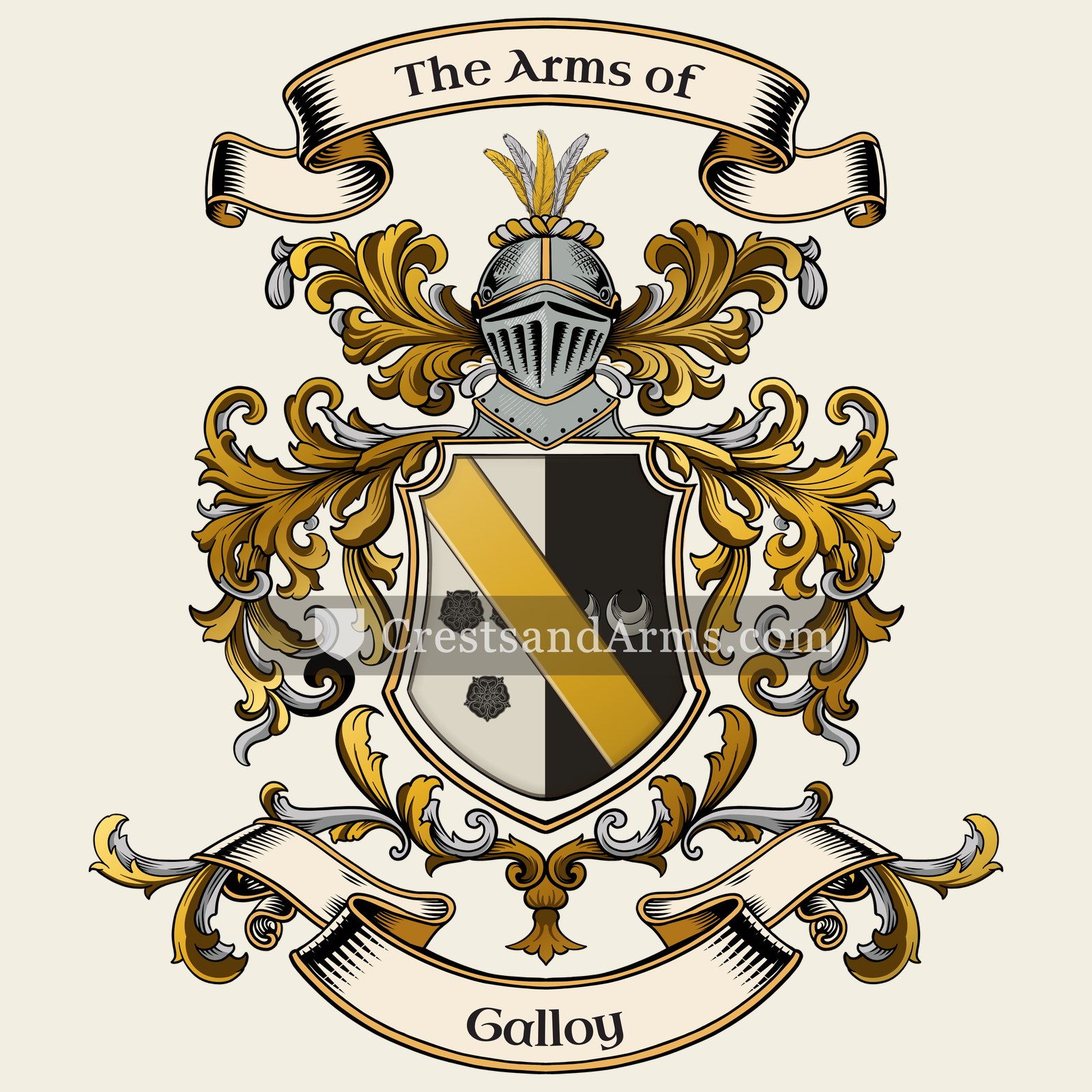


 eagleNobility, strength and a keen mind