Map of Netherlands showing where the Gallus arms are recorded
The Gallus arms were recorded in Leyde, c. 1815.
This is where the arms were entered in the register. Families often moved to other parts of the country, so the same name can turn up in more than one region.
Region
Leyde
Town
Leyde
First recorded
1815
Granting Authority for the Gallus Arms
Hoge Raad van Adel
Photograph made by me · CC BY-SA 3.0
The body that granted and recorded arms in Netherlands in this period.
William I of the Netherlands
Sovereign of the period
William I of the Netherlands
1815–1840
Reigning in Netherlands when the Gallus arms are first recorded.
How Arms Worked in Netherlands
In the Netherlands, coats of arms were often used by noble families and those who held specific public offices. These arms were passed down through the generations to legitimate descendants. Younger branches of a family usually kept the original design without needing to add special marks. This system ensured that the family identity remained clear and consistent over many years.
Granting authority
The Hoge Raad van Adel is the official body that regulates and manages noble titles and coats of arms in the Netherlands.
How they got arms
Families typically obtained their coats of arms through official royal grants or by proving their long-standing historical use of the symbols.
Where arms were recorded
Coats of arms are officially recorded in the registers held by the Hoge Raad van Adel, which began its work in 1814.
The family's standing
Recorded among the armigerous families of Netherlands.
Origin & History of the Gallus Family in Netherlands
The family name Gallus carries a history deeply rooted in the cultural and linguistic traditions of Europe, eventually finding a firm foothold in the Netherlands by the early nineteenth century. While the name itself is derived from the Latin word for a rooster or a person from Gaul, it became a distinct identifier for families settling in urban centers like Leiden. By 1815, records confirm that members of the Gallus family were established residents of this historic city, which was then a bustling hub of trade and academic life following the end of the Napoleonic era. During this period, the Netherlands underwent significant administrative changes, including the formal registration of surnames under the civil registry system. Families like the Gallus line integrated into the local Dutch society by participating in the city's textile industries and scholarly communities. Their presence in Leiden during this transformative time reflects the broader movement of families across borders who sought stability and new opportunities in the growing Dutch kingdom.
Coat of Arms & Family Crest Details
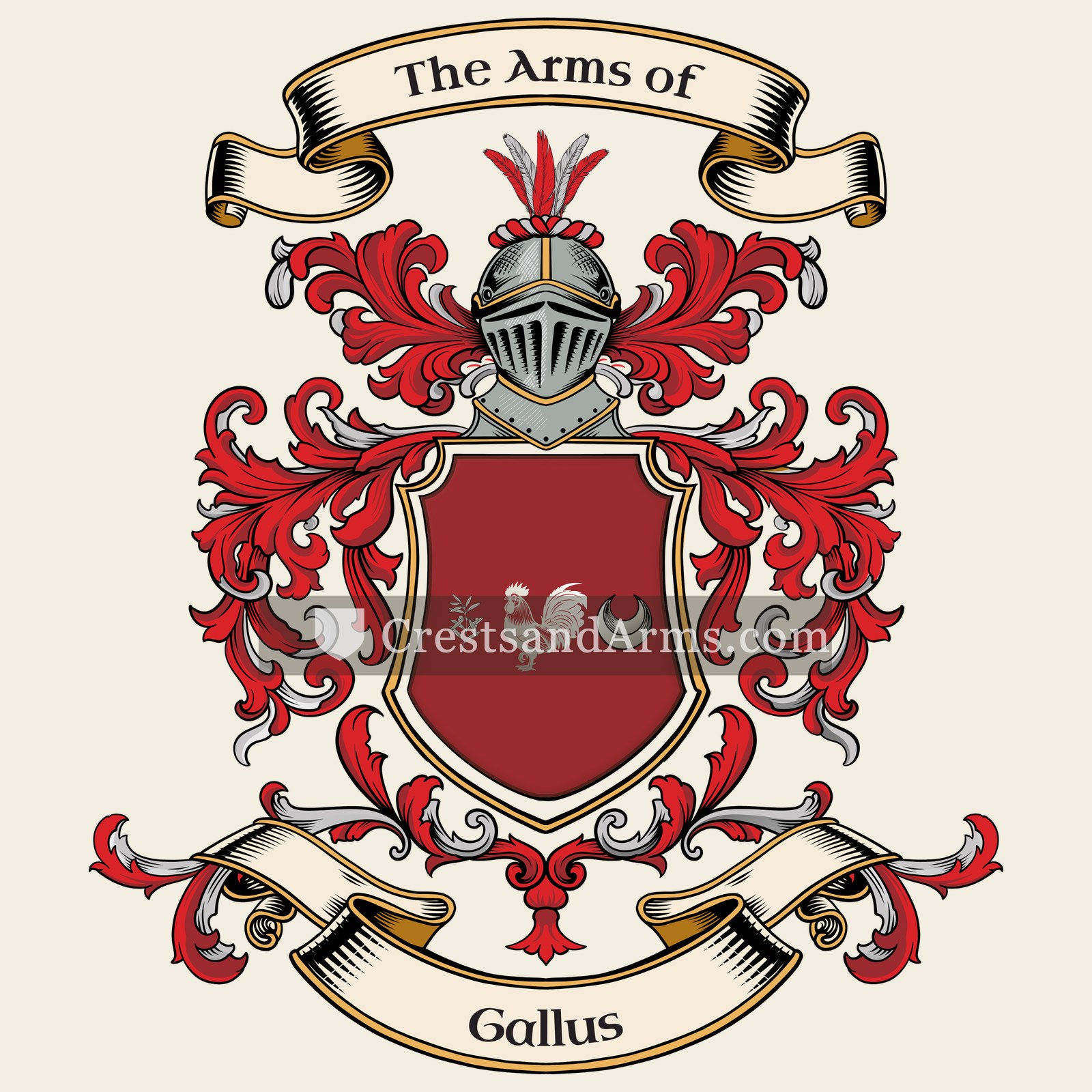
Symbols on this shield
cockCourage, vigilance and readiness for battle
branchPeace, and new growth
crescentHonour by the sovereign, and the second son
Colours
Red (Gules)Means: Military strength
Silver (Argent)Means: Peace and sincerity
Historical info
Source
J. B. Rietstap, Armorial Général, Gouda: G. B. van Goor Zonen, 1884–87
Blazon (the actual original written record)
“De gu. à un coq hardi d'arg., soutenu d'un chicot en croissant, au nat. C.: le coq.”
GermanyRatisbonne, c. 1765
Digital archive packCoat of arms PNG, gold border print PDF, vector SVG and the certificate of authenticity. Sent to your email in minutes.
Map of Germany showing where the Gallus arms are recorded
The Gallus arms were recorded in Ratisbonne, c. 1765.
This is where the arms were entered in the register. Families often moved to other parts of the country, so the same name can turn up in more than one region.
The body that granted and recorded arms in Germany in this period.
Francis I, Holy Roman Emperor
Sovereign of the period
Francis I, Holy Roman Emperor
1745–1765
Reigning in Netherlands when the Gallus arms are first recorded.
How Arms Worked in Germany
In the Holy Roman Empire, coats of arms were often granted to individuals by the Emperor or his representatives. These arms were then passed down through the generations to all legitimate descendants of the original holder. Younger branches of a family usually kept the same shield design without needing to change it, as the arms belonged to the entire lineage.
Granting authority
The Holy Roman Emperor held the sole power to grant new coats of arms throughout his vast imperial territories.
How they got arms
Families typically obtained their coats of arms through a formal imperial grant or by proving their noble status to the authorities.
Where arms were recorded
These grants were officially recorded in the Imperial Chancery registers, which began keeping formal records of such honors during the Middle Ages.
The family's standing
Recorded among the armigerous families of Germany.
Origin & History of the Gallus Family in Germany
The name Gallus has deep roots in the German-speaking regions of Europe, where it often functioned as a Latinized form of names related to the word for a rooster or as a reference to someone of Gaulish origin. By the mid-eighteenth century, the family established a notable presence in the city of Ratisbonne, which is known today as Regensburg. During this period, Ratisbonne served as the permanent seat of the Perpetual Diet of the Holy Roman Empire, making it a bustling center for politics, trade, and culture. Families living in the city at this time were often integrated into the urban professional class, benefiting from the city’s status as a crossroads for travelers and scholars moving through the Danube region. The Gallus family likely participated in the civic life of this historic city, contributing to the local economy and social structure that defined life in the Bavarian region during the late 1700s.
Gallus Meaning & Related Branches
Root word
Gallus
Latin term meaning a rooster or a person from Gaul.
This name
GallusA surname historically used as a nickname for a proud or vocal person.
also spelled
Galus
Documented Sources
J. B. Rietstap, Armorial Général, Gouda: G. B. van Goor Zonen, 1884–87
Nationaal Archief, Burgerlijke Stand en Bevolkingsregisters van Leiden
Fokkens, A., Leiden in de negentiende eeuw, 1998
Van Driel, L., Nederlandse familienamen: Oorsprong en geschiedenis, 2005
Digital archive packCoat of arms PNG, gold border print PDF, vector SVG and the certificate of authenticity. Sent to your email in minutes.


 cross symbolChristian faith and service
 cockCourage, vigilance and readiness for battle
 cross symbolChristian faith and service
 cockCourage, vigilance and readiness for battle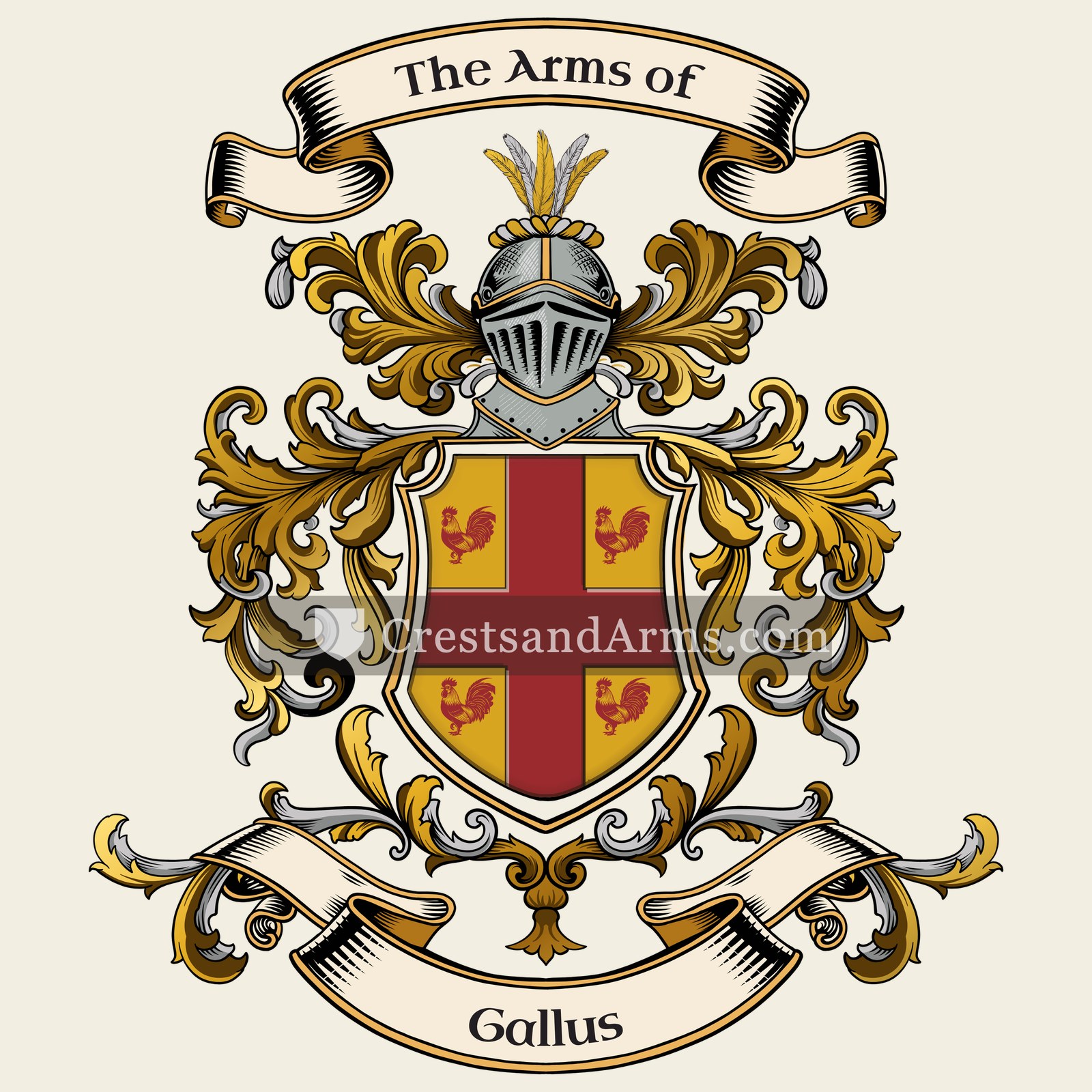


 branchPeace, and new growth
 crescentHonour by the sovereign, and the second son