A record of documented arms, meaning and origin, researched for the Gama family lines. Documented in 3 countries.
Reg. 5563 · Spanish, G–I
Coat of Arms & Family Crest Details
Symbols on this shield
mountThe ground held, and steadfastness upon it
towerGrandeur and solidity, and a stronghold defended
mulletThe third son, and a divine quality from above
Colours
Red (Gules)Means: Military strength
Green (Vert)Means: Hope
Silver (Argent)Means: Peace and sincerity
Historical info
Source
J. B. Rietstap, Armorial Général, Gouda: G. B. van Goor Zonen, 1884–87
Blazon (the actual original written record)
“De gu. à une tour sommée d'une tourelle d'arg., surm. d'une étoile (8) du même, et un loup de sa., passant devant la porte; le tout soutenu d'une terrasse de sin. [A cette maison appartenait le célèbre navigateur, Vasco de Gama.]”
Spainc. 1722
Digital archive packCoat of arms PNG, gold border print PDF, vector SVG and the certificate of authenticity. Sent to your email in minutes.
Map of Spain showing where the Gama arms are recorded
The Gama arms were recorded in Spain, c. 1722.
Arms such as these were typically recorded in Castile.
Castile was the heart of Spain and the source of most of its noble families. Land won in the long wars against the Moors was granted out to fighting men, and a man granted land was granted arms along with it.
This is where the arms were entered in the register. Families often moved to other parts of the country, so the same name can turn up in more than one region.
The body that granted and recorded arms in Spain in this period.
Philip V of Spain
Sovereign of the period
Philip V of Spain
1714–1724
Reigning in Spain when the Gama arms are first recorded.
How Arms Worked in Spain
In Spain, a coat of arms was considered a form of property that belonged to the entire family line. These arms were passed down from a father to all his children equally. Younger branches of the family usually kept the original design without needing to add any special marks to distinguish their specific line.
Granting authority
The Cronista Rey de Armas was the official body that regulated and granted coats of arms throughout Spain.
How they got arms
Families often obtained their arms through royal grants or by proving their noble status to the official heraldic authority.
Where arms were recorded
Coats of arms were officially recorded in the registers of the Cronista Rey de Armas starting in 1496.
The family's standing
Recorded among the armigerous families of Spain.
Origin & History of the Gama Family in Spain
The surname Gama has deep roots in the Iberian Peninsula, where it emerged as a distinct family identifier during the Middle Ages. While the name is often associated with the famous Portuguese explorer Vasco da Gama, the lineage also established a significant presence in the Spanish region of Castile. By the early eighteenth century, records confirm that members of the Gama family were well-integrated into the social and administrative fabric of Castilian life. These families often lived in rural communities or small towns, where they contributed to the local economy through agriculture and trade. Over time, the name became a marker of regional identity, reflecting the movement of people across the porous borders of the peninsula. The presence of the family in Castile by 1722 suggests that they were part of a broader network of families who moved between kingdoms to seek new opportunities in land ownership and civil service.
Coat of Arms & Family Crest Details
Symbols on this shield
chequyConstancy, and the counting-board
escutcheonA shield within a shield, and a claim inherited
Colours
Gold (Or)Means: Generosity
Silver (Argent)Means: Peace and sincerity
Red (Gules)Means: Military strength
Historical info
Source
J. B. Rietstap, Armorial Général, Gouda: G. B. van Goor Zonen, 1884–87
Blazon (the actual original written record)
“Echiq. d'or et de gu. de cinq tires, chacune de trois pièces, chaque point de gu. ch. de deux jumelles d'arg. A un écusson en abîme, ch. des armes de Portugal.”
Portugalc. 1706
Digital archive packCoat of arms PNG, gold border print PDF, vector SVG and the certificate of authenticity. Sent to your email in minutes.
Map of Portugal showing where the Gama arms are recorded
The Gama arms were recorded in Portugal, c. 1706.
Arms such as these were typically recorded in Lisboa.
Lisbon was the seat of the Portuguese crown and the port its wealth came through. Families made rich by trade and by service to the king took arms, and the crown's heralds recorded them there.
This is where the arms were entered in the register. Families often moved to other parts of the country, so the same name can turn up in more than one region.
The body that granted and recorded arms in Portugal in this period.
Peter II of Portugal
Sovereign of the period
Peter II of Portugal
1683–1706
Reigning in Spain when the Gama arms are first recorded.
How Arms Worked in Portugal
In Portugal, a coat of arms was a family possession that passed from a father to his children. Every legitimate descendant had the right to use the family shield without needing to change it. Younger branches of the family kept the original design, though they sometimes added small symbols to distinguish their specific line from the main branch.
Granting authority
The Cartório da Nobreza acted as the official body that managed and regulated noble titles and coats of arms in Portugal.
How they got arms
Families typically inherited their arms through bloodline, though they could also receive new grants from the crown for distinguished service.
Where arms were recorded
Coats of arms were officially recorded in the books of the Cartório da Nobreza starting in the year 1512.
The family's standing
Recorded among the armigerous families of Portugal.
Origin & History of the Gama Family in Portugal
The family name Gama holds a significant place in the history of Portugal, rooted deeply in the social and political landscape of the nation. While the name is most famously associated with the explorer Vasco da Gama, the lineage was well-established among the Portuguese nobility and the urban elite long before the eighteenth century. By 1706, historical records confirm that members of the Gama family were prominent residents of Lisboa, where they participated in the administrative and social life of the capital city. During this era, families with this surname were often connected to the royal court or the merchant classes that fueled Portugal’s maritime economy. The name itself reflects a long tradition of service to the crown, and its presence in Lisboa during the early 1700s highlights the family's role in maintaining the cultural and political stability of the kingdom during a time of transition.
Coat of Arms & Family Crest Details
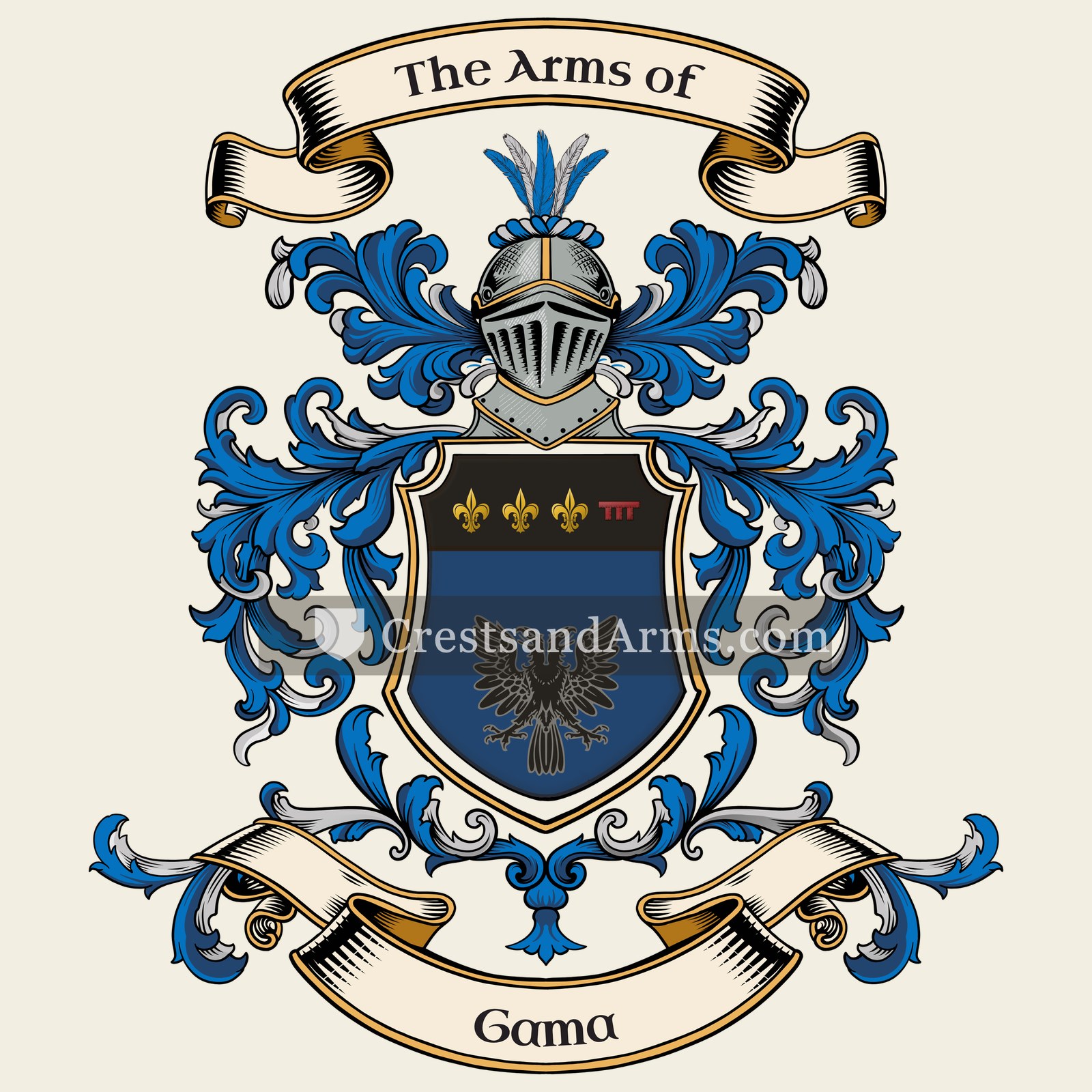
Symbols on this shield
chiefAuthority, wisdom and dominion
labelThe eldest son, during his father's life
eagleNobility, strength and a keen mind
fleur de lisPurity, light, and the sixth son
Colours
Blue (Azure)Means: Loyalty and truth
Black (Sable)Means: Constancy
Gold (Or)Means: Generosity
Red (Gules)Means: Military strength
Historical info
Source
J. B. Rietstap, Armorial Général, Gouda: G. B. van Goor Zonen, 1884–87
Blazon (the actual original written record)
“D'azur à l'aigle de sa., cour. d'or, ch. sur l'estomac d'un écusson circulaire d'arg., surch. d'une équerre [gamma] de sa.; au chef du premier, ch. de trois fleurs-de-lis d'or, rangées entre les quatre pendants d'un lambel de gu.”
ItalyBologne, c. 1775
Digital archive packCoat of arms PNG, gold border print PDF, vector SVG and the certificate of authenticity. Sent to your email in minutes.
Map of Italy showing where the Gama arms are recorded
The Gama arms were recorded in Bologne, c. 1775.
This is where the arms were entered in the register. Families often moved to other parts of the country, so the same name can turn up in more than one region.
The body that granted and recorded arms in Italy in this period.
Alvise Giovanni Mocenigo
Sovereign of the period
Alvise Giovanni Mocenigo
1763–1778
Reigning in Spain when the Gama arms are first recorded.
How Arms Worked in Italy
In the Italian states, coats of arms were often used by noble families to show their status and history. These symbols were passed down through the generations to all legitimate male descendants. Younger branches of a family usually kept the original design but sometimes added small changes to distinguish their specific line from the main branch.
Granting authority
Various local rulers and city governments controlled the use of coats of arms across the different Italian states.
How they got arms
Families often assumed their own arms or received them as official grants from local lords, popes, or city councils.
Where arms were recorded
Arms were recorded in local city archives or private family books rather than in one single national register.
The family's standing
Recorded among the armigerous families of Italy.
Origin & History of the Gama Family in Italy
The history of the Gama family in Italy is deeply connected to the intellectual and social life of Bologna during the late eighteenth century. By 1775, members of the family were well-established residents of this historic city, which served as a major center for trade and academic study in the Papal States. While the name itself carries roots that stretch across Southern Europe, the branch settled in Bologna integrated into the local urban culture by participating in the city’s professional and civic networks. During this period, Bologna was a hub for merchants and scholars, and the presence of the Gama family suggests they were part of the growing middle class that helped sustain the city's reputation for commerce and education. Their life in the region was defined by the stability of the local economy and the vibrant atmosphere of a city that had long been a crossroads for families moving throughout the Italian peninsula.
Gama Meaning & Related Branches
Root word
Gama
Derived from the Galician-Portuguese word for a female deer or doe.
This name
GamaA topographic surname referring to someone who lived near a place frequented by deer.
also spelled
Gamma
Related arms
Cisnerossimilar arms
Tarregasimilar arms
Documented Sources
J. B. Rietstap, Armorial Général, Gouda: G. B. van Goor Zonen, 1884–87
Piferrer, Francisco. Nobiliario de los reinos y señoríos de España. 1857
Digital archive packCoat of arms PNG, gold border print PDF, vector SVG and the certificate of authenticity. Sent to your email in minutes.


 mountThe ground held, and steadfastness upon it
 towerGrandeur and solidity, and a stronghold defended
 mulletThe third son, and a divine quality from above
 mountThe ground held, and steadfastness upon it
 towerGrandeur and solidity, and a stronghold defended
 mulletThe third son, and a divine quality from above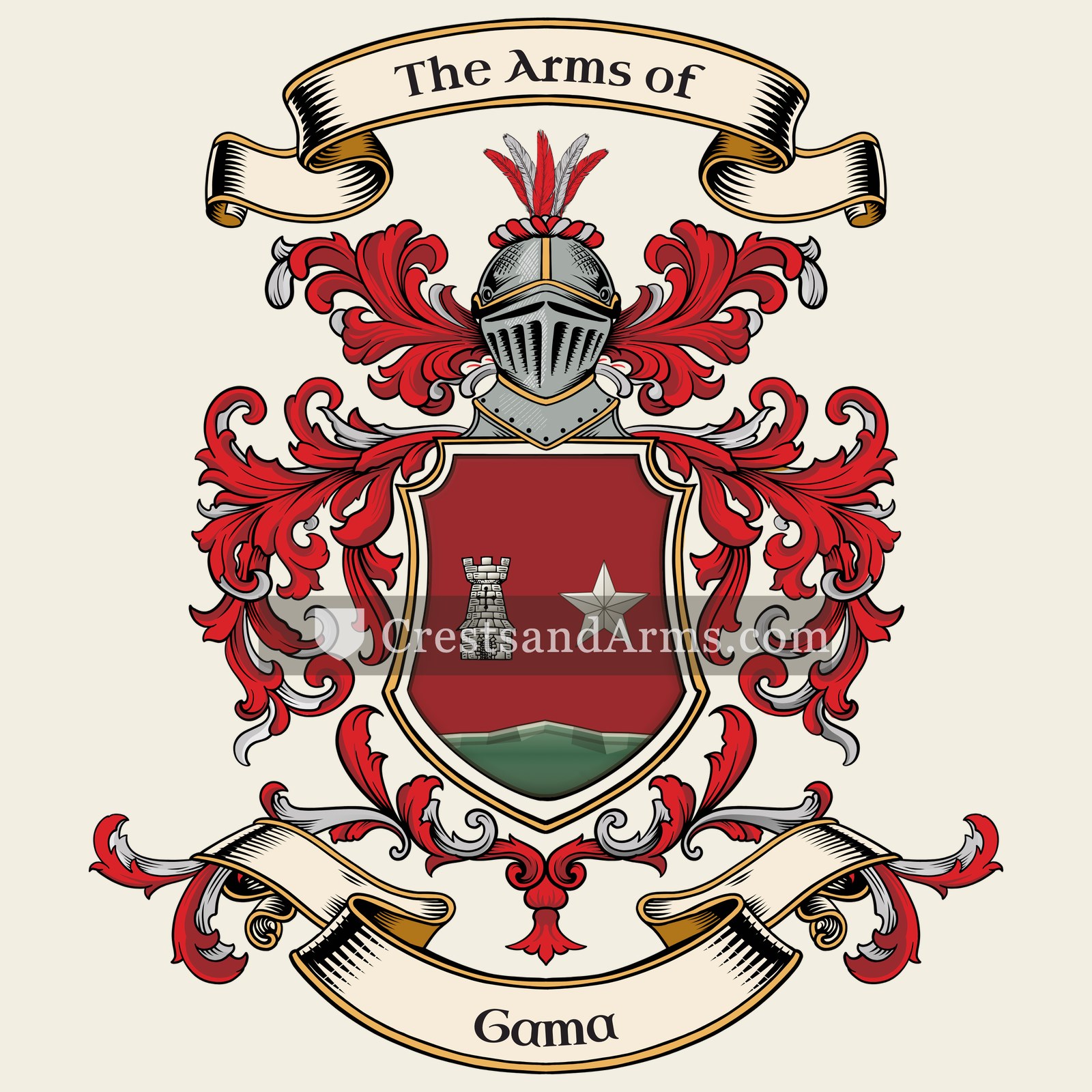


 chequyConstancy, and the counting-board
 escutcheonA shield within a shield, and a claim inherited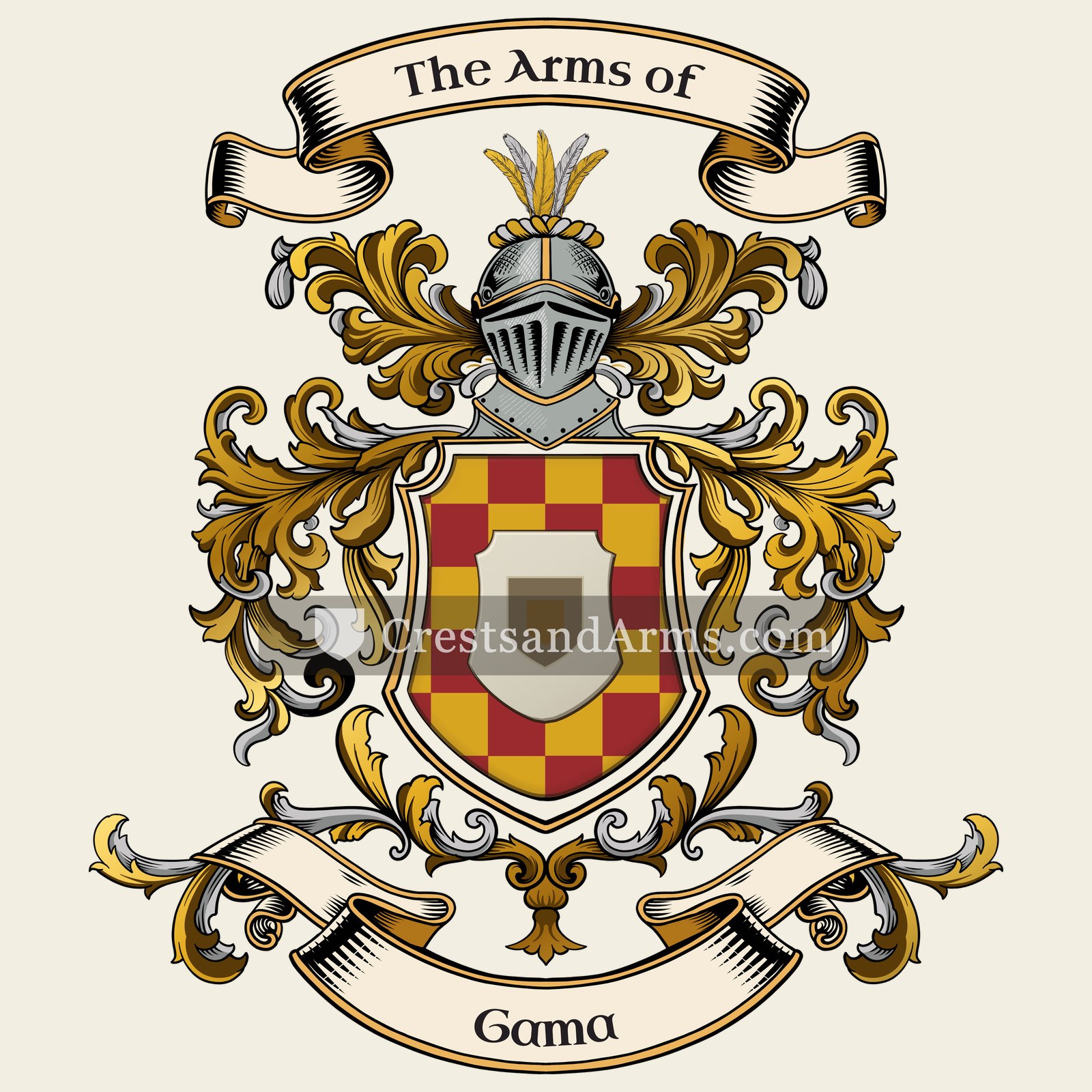


 chiefAuthority, wisdom and dominion
 labelThe eldest son, during his father's life
 eagleNobility, strength and a keen mind
 fleur de lisPurity, light, and the sixth son