Map of Denmark showing where the Gamel arms are recorded
The Gamel arms were recorded in Denmark, c. 1722.
Arms such as these were typically recorded in Sjaælland.
Zealand held the Danish court, the crown's offices and Copenhagen itself. Families who served the king kept estates within reach of it, and royal service was the ordinary route to a coat of arms.
This is where the arms were entered in the register. Families often moved to other parts of the country, so the same name can turn up in more than one region.
The body that granted and recorded arms in Denmark in this period.
Frederik IV of Denmark
Sovereign of the period
Frederik IV of Denmark
1699–1730
Reigning in Denmark when the Gamel arms are first recorded.
How Arms Worked in Denmark
Danish heraldry during this period was closely tied to noble status and royal favor rather than being open to all citizens. Arms were typically granted by the monarch to individuals, and these symbols were then shared by all members of the noble house. If a family line died out, the right to use those specific arms ended with them.
Granting authority
The Danish royal chancery held the power to issue and regulate official coats of arms for the kingdom.
How they got arms
Families usually received their arms through a formal royal grant that confirmed their noble status and rights.
Where arms were recorded
These grants were officially recorded in the Danish Royal Chancery records starting in the sixteenth century.
The family's standing
Recorded among the armigerous families of Denmark.
Origin & History of the Gamel Family in Denmark
The name Gamel carries a deep connection to the history of Denmark, where it is rooted in the Old Norse word for old or aged. Long before it became a formal surname, the term was often used as a descriptive nickname for a respected elder or a person of mature character. By the time the family was documented in the region of Sjælland in 1722, the name had transitioned from a simple descriptor into a stable family identifier. During this period, families in rural Denmark were often identified by their connection to specific lands or their social standing within the local parish. The presence of the Gamel family in Sjælland during the early eighteenth century suggests they were part of the established agrarian society that formed the backbone of the Danish kingdom. As the family grew, they helped preserve this ancient name, ensuring that a term once used to honor the elders of the Viking Age remained a part of the Danish cultural landscape for generations to come.
Coat of Arms & Family Crest Details
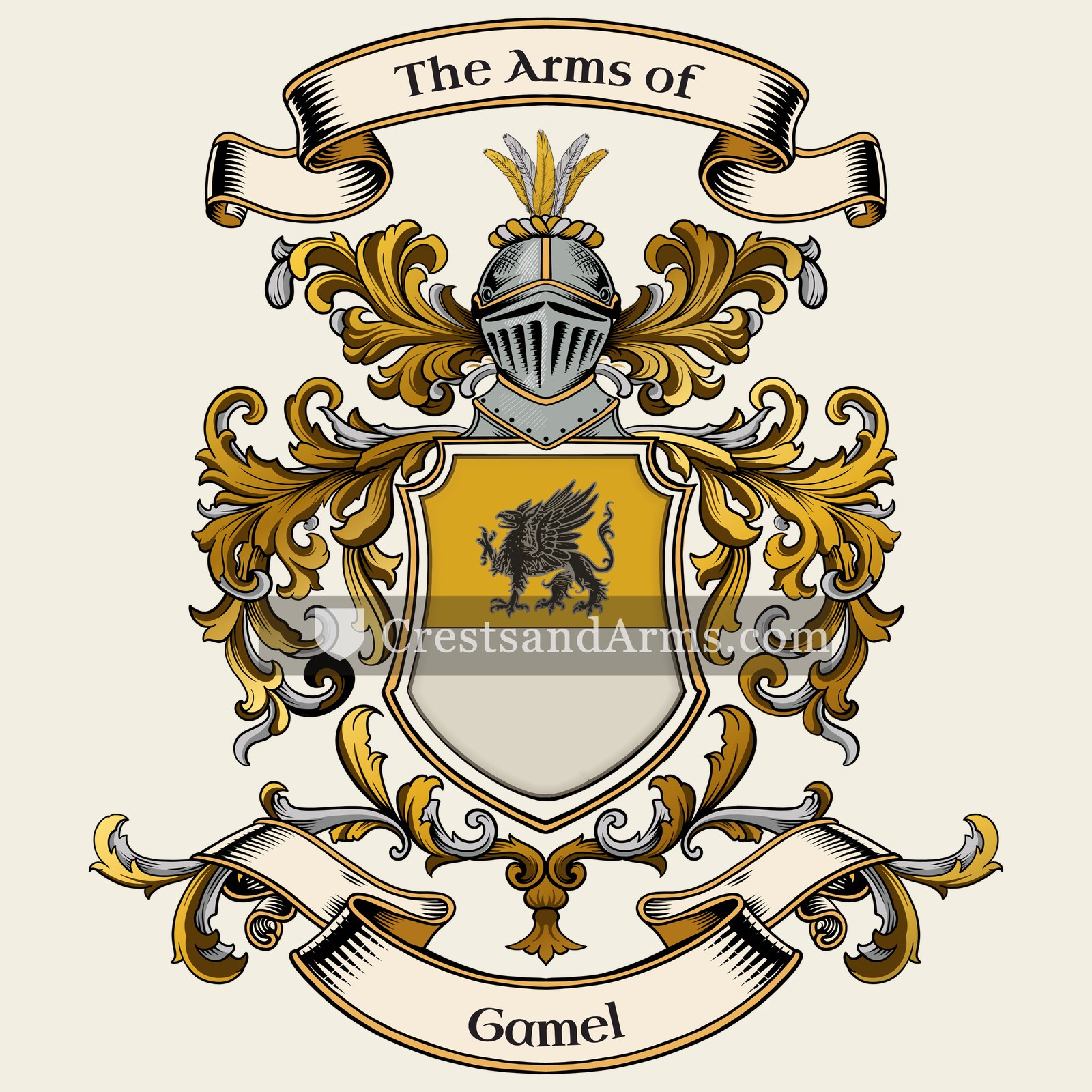
Symbols on this shield
bendDefence, and the scarf of a commander
griffinValour and vigilance, guarding great treasure
Colours
Gold (Or)Means: Generosity
Silver (Argent)Means: Peace and sincerity
Black (Sable)Means: Constancy
Red (Gules)Means: Military strength
Historical info
Source
J. B. Rietstap, Armorial Général, Gouda: G. B. van Goor Zonen, 1884–87
Blazon (the actual original written record)
“Coupé: au 1 d'or au griffon naiss. de sa., mouv. du coupé, brandissant une épée d'arg., garnie d'or; au 2 bandé de quatre pièces d'arg., de gu., d'or et de sa. Deux cq. cour. C.: 1º le griffon du 1, iss.; 1. d'or et de sa.; 2º un vol à l'antique, bandé de quatre pièces de sa., d'or, de gu. et d'arg.; l. d'arg. et de gu.”
Austriac. 1883
Digital archive packCoat of arms PNG, gold border print PDF, vector SVG and the certificate of authenticity. Sent to your email in minutes.
Map of Austria showing where the Gamel arms are recorded
The Gamel arms were recorded in Austria, c. 1883.
Arms such as these were typically recorded in Tyrol.
Tyrol was mountain country in western Austria, where the valleys were held by families who had been there a very long time. Old tenure counted for more than money, and old families carried arms.
This is where the arms were entered in the register. Families often moved to other parts of the country, so the same name can turn up in more than one region.
Region
Tyrol
First recorded
1883
Granting Authority for the Gamel Arms
Imperial and Royal chancery
Sodacan · CC BY-SA 3.0
The body that granted and recorded arms in Austria in this period.
Franz Joseph I of Austria
Sovereign of the period
Franz Joseph I of Austria
1848–1916
Reigning in Denmark when the Gamel arms are first recorded.
How Arms Worked in Austria
Austrian coats of arms were often linked directly to noble titles granted by the Emperor. These symbols belonged to the entire family line rather than just one individual. When a family grew, new branches kept the original design without needing to change it. This system allowed all members of a noble house to share the same identity across many generations.
Granting authority
The Imperial and Royal chancery managed all heraldic matters and controlled the official granting of arms throughout the Austrian lands.
How they got arms
Families typically received their arms through a formal imperial decree that often accompanied the elevation of a person to noble status.
Where arms were recorded
Official records of these grants were kept in the Imperial Register of Nobility which began its formal documentation process in 1453.
The family's standing
Recorded among the armigerous families of Austria.
Origin & History of the Gamel Family in Austria
The family name Gamel has deep roots in the mountainous region of Tyrol, where members of the family were documented as early as 1883. Historically, the name is linked to the linguistic traditions of the Alpine borderlands, where families often adopted surnames based on local occupations, geographic landmarks, or personal traits. In the late nineteenth century, the Tyrol region was a hub of cultural exchange between German and Italian-speaking populations, which influenced how family names were recorded in official parish and civil registers. Families like the Gamels were often involved in the agrarian and trade-based economy that defined life in the high valleys. As the region modernized, these families played a role in the transition from traditional village life to the more structured administrative systems of the Austro-Hungarian Empire. By tracking these early records, we see a family that was well-integrated into the social fabric of the mountain communities during a period of significant regional growth.
Gamel Meaning & Related Branches
Root word
Gamall
Old or aged in Old Norse.
This name
GamelA descriptive nickname referring to an elder or a person of advanced age.
also spelled
Gamel
Documented Sources
J. B. Rietstap, Armorial Général, Gouda: G. B. van Goor Zonen, 1884–87
Kruken, Kristoffer and Stemshaug, Ola. Norsk Personnavnleksikon. 1995
Nielsen, Oluf. Olddanske Personnavne. 1883
Danish National Archives (Rigsarkivet), Kirkebøger (Parish Registers for Sjælland)
Digital archive packCoat of arms PNG, gold border print PDF, vector SVG and the certificate of authenticity. Sent to your email in minutes.


 treeLife, endurance and deep roots
 treeLife, endurance and deep roots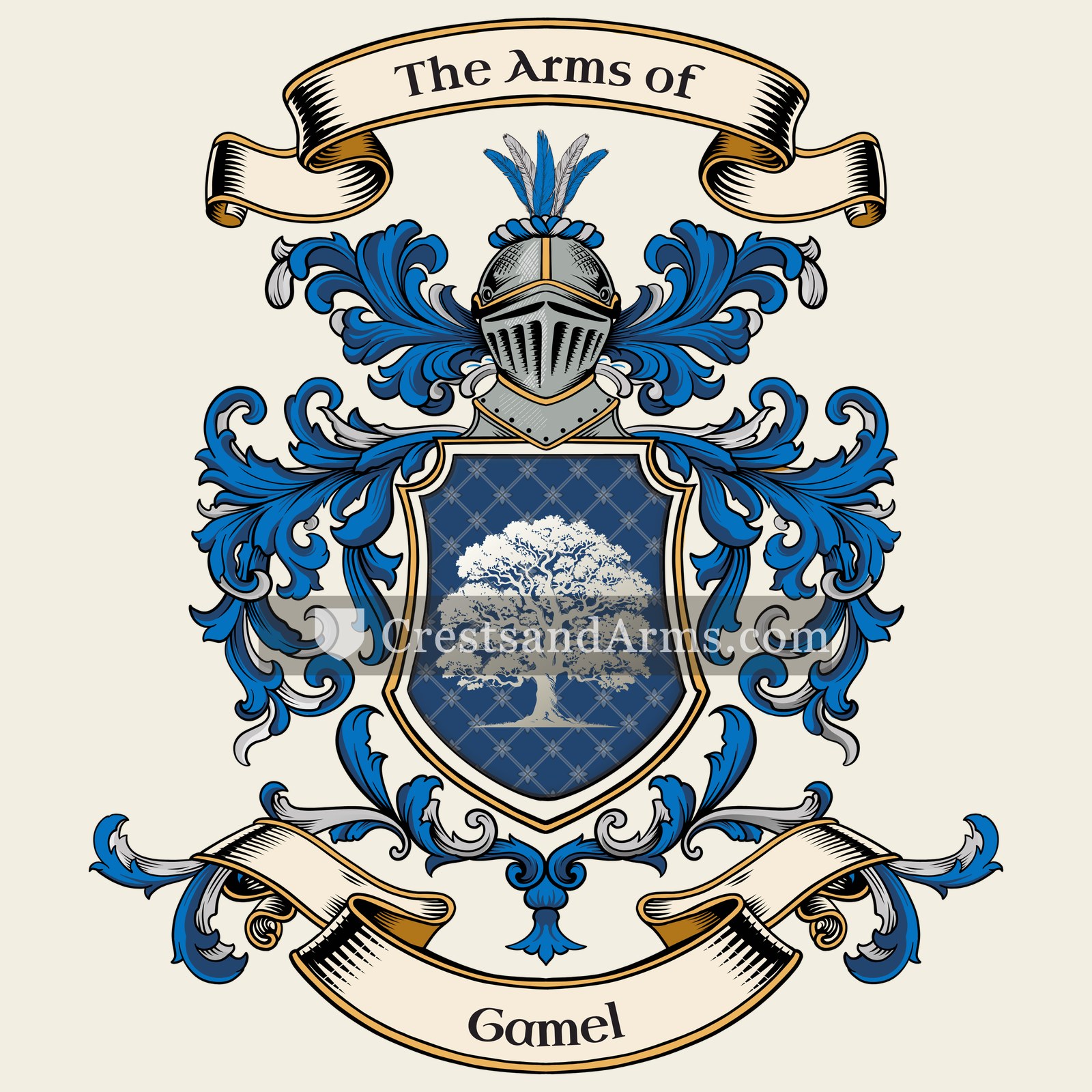


 bendDefence, and the scarf of a commander
 griffinValour and vigilance, guarding great treasure