Map of Spain showing where the Gamez arms are recorded
The Gamez arms were recorded in Catalonia, c. 1722.
Catalonia lived by sea trade, and its merchant houses were as powerful as its landowners. Both sorts of family took arms, and Barcelona kept records of the houses entitled to bear them.
This is where the arms were entered in the register. Families often moved to other parts of the country, so the same name can turn up in more than one region.
The body that granted and recorded arms in Spain in this period.
Philip V of Spain
Sovereign of the period
Philip V of Spain
1714–1724
Reigning in Spain when the Gamez arms are first recorded.
How Arms Worked in Spain
In Spain, a coat of arms was considered a form of property that belonged to the entire family line. These arms were passed down from a father to all his children equally. Younger branches of the family usually kept the original design without needing to add any special marks to distinguish their specific line.
Granting authority
The Cronista Rey de Armas was the official body that regulated and granted coats of arms throughout Spain.
How they got arms
Families often obtained their arms through royal grants or by proving their noble status to the official heraldic authority.
Where arms were recorded
Coats of arms were officially recorded in the registers of the Cronista Rey de Armas starting in 1496.
The family's standing
Recorded among the armigerous families of Catalonia.
Origin & History of the Gamez Family in Spain
The surname Gámez is a patronymic name, which means it was originally derived from the first name of a father or ancestor. While the name has deep roots across the Iberian Peninsula, records confirm that members of the Gámez family were established in the Catalonia region by 1722. During this era, families in Catalonia often lived in small agricultural communities or bustling port towns where they contributed to the local economy through trade and craftsmanship. As the family grew, they moved through different provinces, adapting to the changing social structures of eighteenth-century Spain. Because the name was tied to a specific lineage, it helped individuals maintain a sense of identity and connection to their ancestors as they navigated the historical shifts of the region.
Gamez Meaning & Related Branches
Root word
Gamo
A male fallow deer or buck.
This name
GamezA patronymic surname derived from a nickname for a person resembling a deer.
also spelled
Gomes
Gomezz
Documented Sources
J. B. Rietstap, Armorial Général, Gouda: G. B. van Goor Zonen, 1884–87
Arxiu de la Corona d'Aragó, Registres de la Reial Audiència
Arxiu Històric de Protocols de Barcelona, Lligalls de documents notarials
Moll, Francesc de Borja, Els llinatges catalans: Catalunya, País Valencià i Illes Balears, 1959
Alcover, Antoni Maria, Diccionari català-valencià-balear, 1930
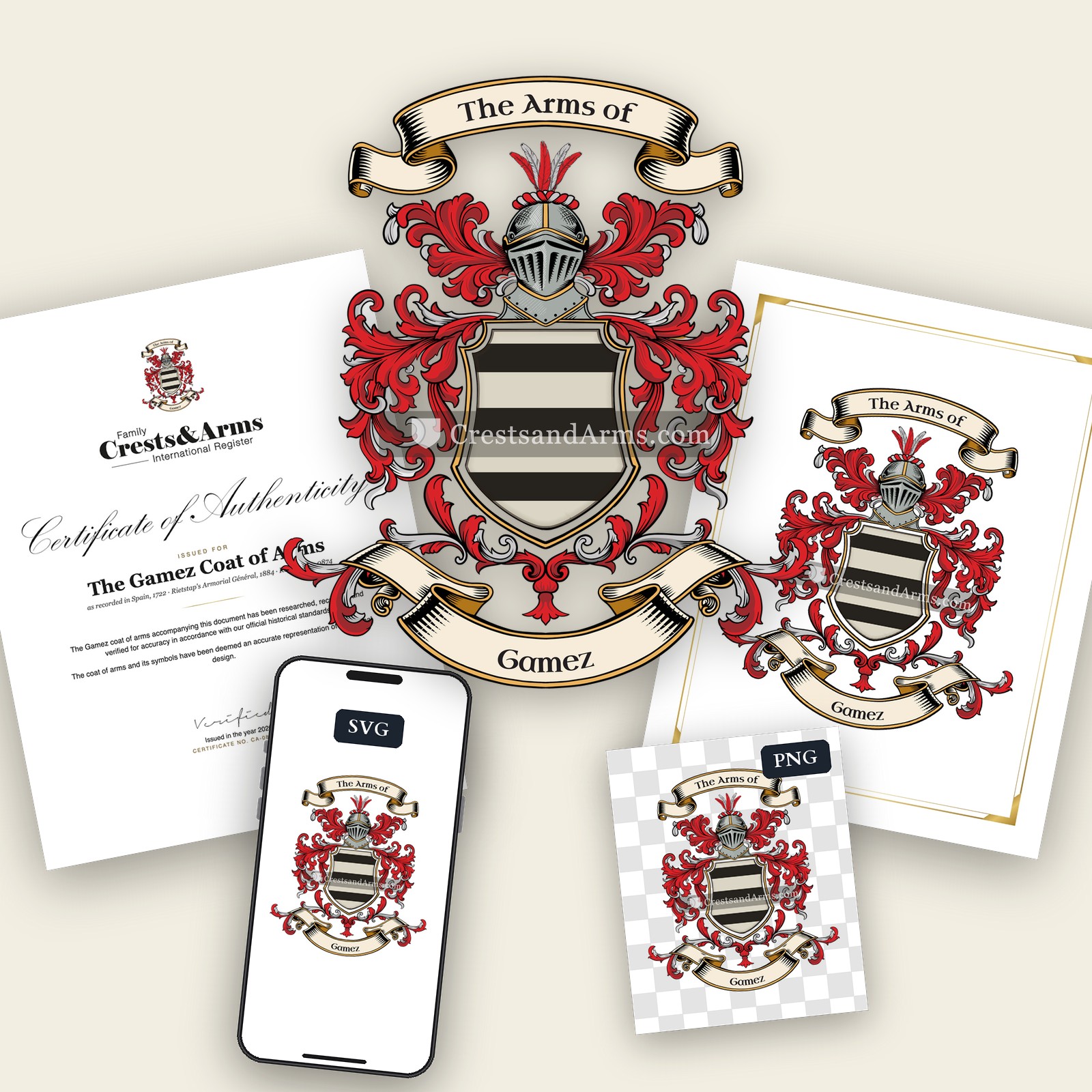
Digital archive packCoat of arms PNG, gold border print PDF, vector SVG and the certificate of authenticity. Sent to your email in minutes.


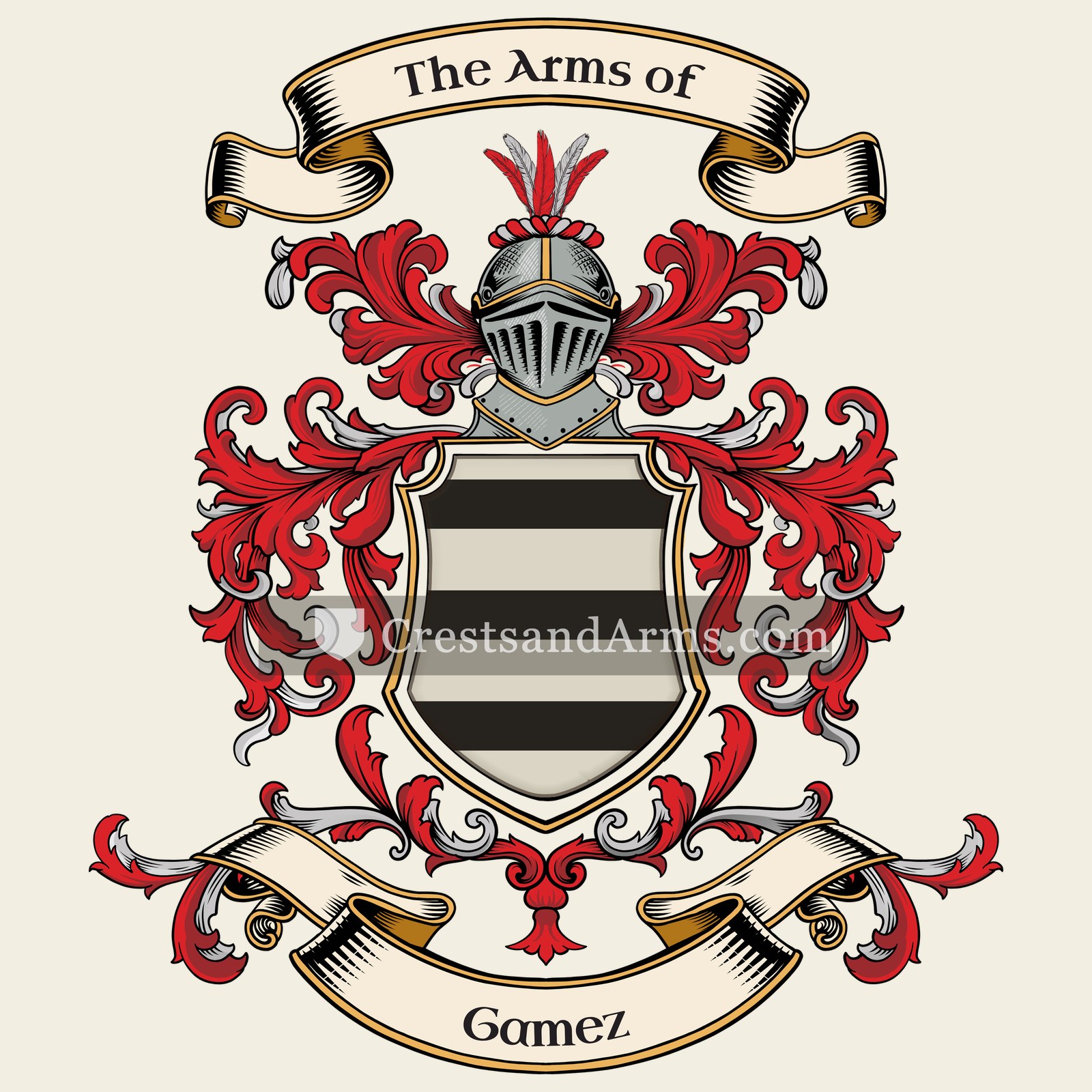
 fessThe military belt, and readiness to serve
 fessThe military belt, and readiness to serve