Map of France showing where the Gargan arms are recorded
The Gargan arms were recorded in Lorraine, c. 1663.
Lorraine sat on the border between France and the German lands, and border country bred soldiers. Families here held small estates and served in arms, and a fighting man was exactly the sort who carried a shield of his own.
This is where the arms were entered in the register. Families often moved to other parts of the country, so the same name can turn up in more than one region.
The body that granted and recorded arms in France in this period.
Louis XIV of France
Sovereign of the period
Louis XIV of France
1643–1715
Reigning in France when the Gargan arms are first recorded.
How Arms Worked in France
In France, a coat of arms was a mark of honor that passed down through the male line to all legitimate descendants. Families often used the same shield without changes to show their shared heritage. If a branch wanted to stand out, they could add a small mark to their shield to show their specific place in the family tree.
Granting authority
The Juge d'armes de France acted as the official authority that regulated and verified coats of arms across the country.
How they got arms
Families typically inherited their arms from ancestors, though they could also receive them through royal grants or by proving their noble status.
Where arms were recorded
Coats of arms were officially recorded in the Armorial Général de France, which began its main collection in the year 1696.
The family's standing
Recorded among the armigerous families of Lorraine.
Origin & History of the Gargan Family in France
The family name Gargan is deeply rooted in the historical landscape of northeastern France, particularly within the region of Lorraine. By the year 1663, records confirm that members of the family were well-established in this area, which served as a vital crossroads between French and Germanic cultures. The name itself is thought to be derived from ancient linguistic roots that often described a person’s physical stature or a specific geographic landmark near their home. During the seventeenth century, families in Lorraine lived through a period of significant transition as the region navigated the aftermath of the Thirty Years' War and the slow expansion of French royal authority. The Gargan family likely functioned as part of the local landholding or professional class, contributing to the agricultural and social stability of their villages during a time when borders were frequently shifting. Their presence in the archives from this era highlights a long-standing connection to the soil and the complex administrative history of the Lorraine province.
Coat of Arms & Family Crest Details
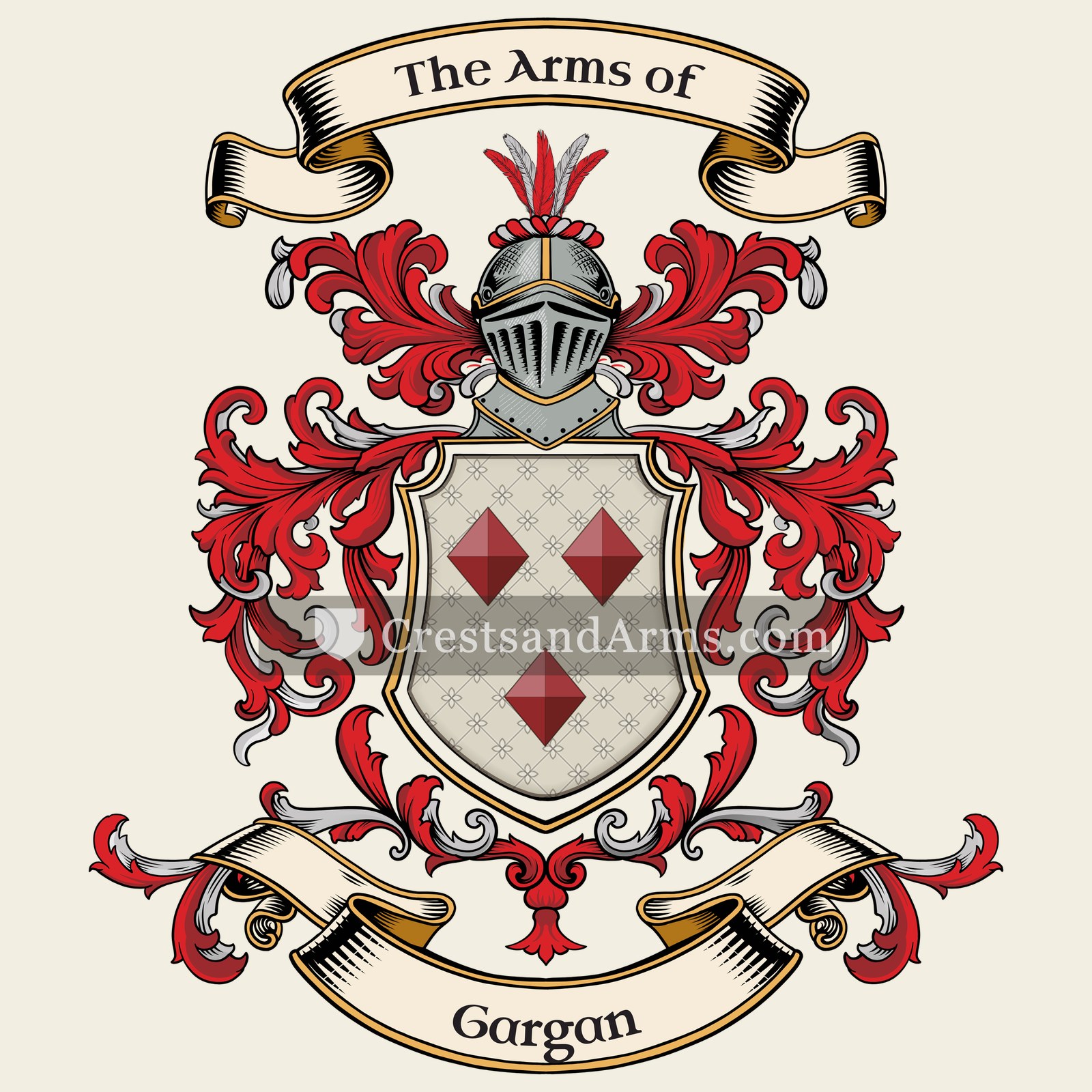
Symbols on this shield
fusilTravail and industry
lozengeHonour and nobility, and the arms of a woman
Colours
Silver (Argent)Means: Peace and sincerity
Red (Gules)Means: Military strength
Historical info
Source
Sir Bernard Burke, The General Armory of England, Scotland, Ireland and Wales, London: Harrison & Sons, 1884
Blazon (the actual original written record)
“Ar. three lozenges gu. (another, fusils)”
SussexSussex, c. 1620
Digital archive packCoat of arms PNG, gold border print PDF, vector SVG and the certificate of authenticity. Sent to your email in minutes.
Map of England showing where the Gargan arms are recorded
The Gargan arms were recorded in Sussex, c. 1620.
Sussex had ironworks in its woods and good farmland on its downs. Both made money, and families who made it bought manors, which is what put their names in the heraldic records.
This is where the arms were entered in the register. Families often moved to other parts of the country, so the same name can turn up in more than one region.
The body that granted and recorded arms in England in this period.
James VI and I
Sovereign of the period
James VI and I
1603–1625
Reigning in France when the Gargan arms are first recorded.
How Arms Worked in England
English heraldry allowed arms to be shared by all legitimate descendants of the original owner. These symbols were treated as personal property that moved through the generations to all children. While the eldest son kept the original design, other family members could use the same shield without needing to change it or register their own unique versions.
Granting authority
The College of Arms in London has regulated the use of coats of arms throughout England and Wales since 1484.
How they got arms
Families typically obtained their coats of arms through a formal grant from the Crown or by proving their ancient right to them.
Where arms were recorded
All official coats of arms are recorded in the registers kept at the College of Arms, which date back to the fifteenth century.
The family's standing
Recorded among the armigerous families of Sussex.
Origin & History of the Gargan Family in England
The family name Gargan has roots that trace back to the southern coastal regions of England, with documented evidence placing members of the family in the county of Sussex as early as 1620. During this period, Sussex was a landscape defined by its proximity to the English Channel, which made it a hub for trade, maritime activity, and agricultural development. Families living in this area often worked as tenant farmers or skilled tradespeople who supported the local economy. The name itself is thought to have evolved from regional dialects and occupational descriptions common in the seventeenth century. As the family established itself in Sussex, they became part of the local parish records, which served as the primary way for officials to track residents during the Stuart era. By remaining in this region, the early Gargans contributed to the social fabric of rural England, living through a time of significant political and religious change that shaped the future of the British Isles.
Gargan Meaning & Related Branches
Root word
Gargantua
Derived from the Latin word for throat or gullet.
This name
GarganA nickname for a gluttonous person or someone with a large appetite.
also spelled
Gargant
Gargen
Gargain
Garganne
Documented Sources
J. B. Rietstap, Armorial Général, Gouda: G. B. van Goor Zonen, 1884–87
Bastien, Pierre. Histoire de la Lorraine. 1998
Martin, Jean-Pierre. Les noms de famille en Lorraine. 2005
Archives départementales de Meurthe-et-Moselle, Registres paroissiaux de l'ancien duché de Lorraine
Digital archive packCoat of arms PNG, gold border print PDF, vector SVG and the certificate of authenticity. Sent to your email in minutes.


 bendDefence, and the scarf of a commander
 bendDefence, and the scarf of a commander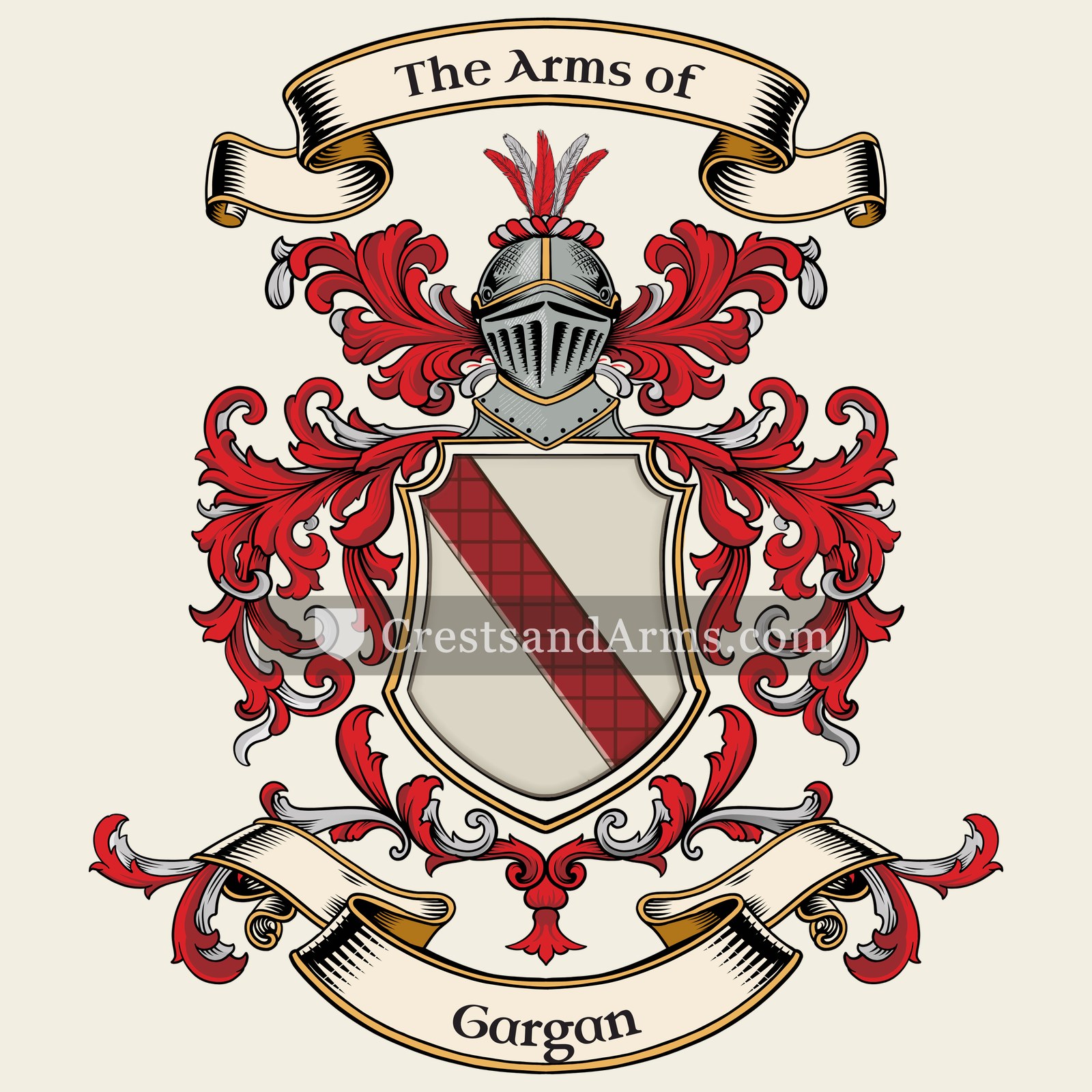


 fusilTravail and industry
 lozengeHonour and nobility, and the arms of a woman