Map of Belgium showing where the Garin arms are recorded
The Garin arms were recorded in Tournai, c. 1737.
This is where the arms were entered in the register. Families often moved to other parts of the country, so the same name can turn up in more than one region.
The body that granted and recorded arms in Belgium in this period.
Charles VI, Holy Roman Emperor
Sovereign of the period
Charles VI, Holy Roman Emperor
1711–1740
Reigning in Belgium when the Garin arms are first recorded.
How Arms Worked in Belgium
In Belgium, a coat of arms is considered personal property that is passed down through the male line to legitimate descendants. Families often use the same shield design across generations to show their shared heritage. If a branch of the family wants to change the design, they must apply for an official update to their specific version of the arms.
Granting authority
The Conseil héraldique is the official body that regulates and approves all coats of arms in Belgium.
How they got arms
Families obtain their coats of arms through formal royal grants or by confirming their historical right to use existing designs.
Where arms were recorded
All approved coats of arms are officially recorded in the public registers of the Conseil héraldique since 1844.
The family's standing
Recorded among the armigerous families of Belgium.
Origin & History of the Garin Family in Belgium
The family name Garin has deep roots in the historic city of Tournai, which is located in the modern-day Wallonia region of Belgium. By 1737, records confirm that members of the Garin family were already established residents within this ancient settlement. Tournai was a major center for trade and craftsmanship during the eighteenth century, and families like the Garins were often integrated into the local urban economy. The name itself is thought to derive from the Germanic personal name Warin, which evolved through various regional dialects before settling into its current form. As residents of a city that frequently shifted between different political powers, the Garins of Tournai likely navigated a complex social landscape defined by local guilds and religious traditions. Their presence in the city during this period highlights the long-standing continuity of families who contributed to the cultural and economic life of the region long before the modern Belgian state was formed.
Coat of Arms & Family Crest Details
Symbols on this shield
escallopThe pilgrim's shell, and a long journey made
Colours
Red (Gules)Means: Military strength
Gold (Or)Means: Generosity
Historical info
Source
J. B. Rietstap, Armorial Général, Gouda: G. B. van Goor Zonen, 1884–87
Blazon (the actual original written record)
“De gu. à trois coquilles d'or.”
NormandieNormandie, c. 1663
Digital archive packCoat of arms PNG, gold border print PDF, vector SVG and the certificate of authenticity. Sent to your email in minutes.
Map of France showing where the Garin arms are recorded
The Garin arms were recorded in Normandie, c. 1663.
Normandie held a dense crowd of knightly families on some of the best farmland in France. Its men had fought and settled abroad for generations, and a family that sent sons to war needed a shield they could be recognised by.
This is where the arms were entered in the register. Families often moved to other parts of the country, so the same name can turn up in more than one region.
The body that granted and recorded arms in France in this period.
Louis XIV of France
Sovereign of the period
Louis XIV of France
1643–1715
Reigning in Belgium when the Garin arms are first recorded.
How Arms Worked in France
In France, a coat of arms was a mark of honor that passed down through the male line to all legitimate descendants. Families often used the same shield without changes to show their shared heritage. If a branch wanted to stand out, they could add a small mark to their shield to show their specific place in the family tree.
Granting authority
The Juge d'armes de France acted as the official authority that regulated and verified coats of arms across the country.
How they got arms
Families typically inherited their arms from ancestors, though they could also receive them through royal grants or by proving their noble status.
Where arms were recorded
Coats of arms were officially recorded in the Armorial Général de France, which began its main collection in the year 1696.
The family's standing
Recorded among the armigerous families of Normandie.
Origin & History of the Garin Family in France
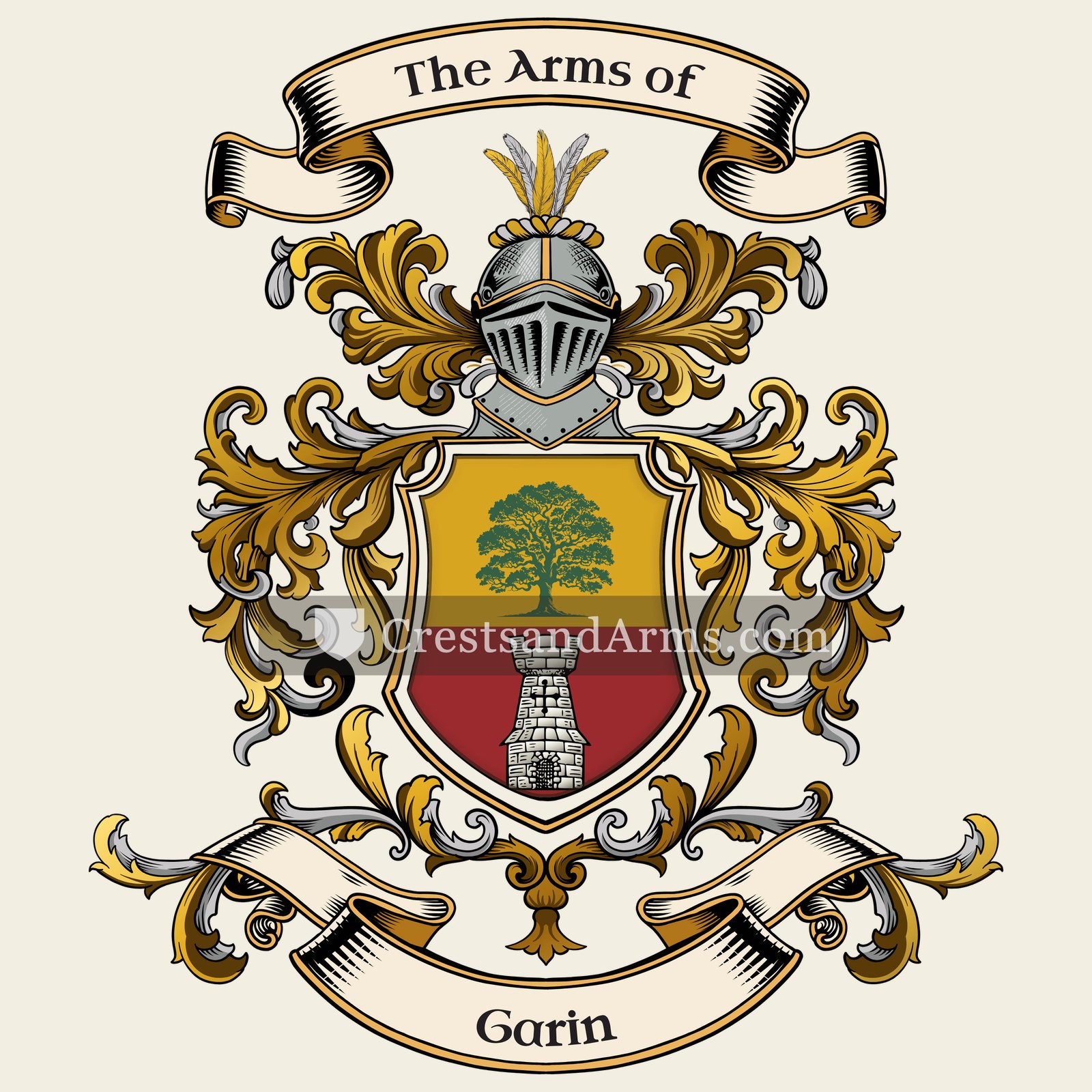
The name Garin is a classic example of a patronymic surname, which means it originated from a given name rather than a specific place or occupation. It derives from the ancient Germanic name Warin, which evolved through the Old French language to become Garin. By the time the name was firmly established in the region of Normandie during the mid-17th century, it had already been in use for several generations across various parts of France. Families bearing this name were often part of the rural population, working as farmers or tradespeople who helped shape the local economy of northern France. When records confirm the presence of the Garin family in Normandie in 1663, they were likely part of a long-standing community that had lived in the region for centuries. These early ancestors were subject to the laws and customs of the French crown, and their lives were often documented in local parish registers that recorded births, marriages, and deaths.
Coat of Arms & Family Crest Details
Symbols on this shield
treeLife, endurance and deep roots
towerGrandeur and solidity, and a stronghold defended
Colours
Gold (Or)Means: Generosity
Red (Gules)Means: Military strength
Green (Vert)Means: Hope
Historical info
Source
J. B. Rietstap, Armorial Général, Gouda: G. B. van Goor Zonen, 1884–87
Blazon (the actual original written record)
“Coupé: au 1 d'or à un bosquet de sin.; au 2 de gu. à une tour sommée d'une tourelle d'arg.”
Spainc. 1722
Digital archive packCoat of arms PNG, gold border print PDF, vector SVG and the certificate of authenticity. Sent to your email in minutes.
Map of Spain showing where the Garin arms are recorded
The Garin arms were recorded in Spain, c. 1722.
Arms such as these were typically recorded in Castile.
Castile was the heart of Spain and the source of most of its noble families. Land won in the long wars against the Moors was granted out to fighting men, and a man granted land was granted arms along with it.
This is where the arms were entered in the register. Families often moved to other parts of the country, so the same name can turn up in more than one region.
The body that granted and recorded arms in Spain in this period.
Philip V of Spain
Sovereign of the period
Philip V of Spain
1714–1724
Reigning in Belgium when the Garin arms are first recorded.
How Arms Worked in Spain
In Spain, a coat of arms was considered a form of property that belonged to the entire family line. These arms were passed down from a father to all his children equally. Younger branches of the family usually kept the original design without needing to add any special marks to distinguish their specific line.
Granting authority
The Cronista Rey de Armas was the official body that regulated and granted coats of arms throughout Spain.
How they got arms
Families often obtained their arms through royal grants or by proving their noble status to the official heraldic authority.
Where arms were recorded
Coats of arms were officially recorded in the registers of the Cronista Rey de Armas starting in 1496.
The family's standing
Recorded among the armigerous families of Spain.
Origin & History of the Garin Family in Spain
The family name Garin has deep roots in the northern regions of Spain, where it emerged as a patronymic surname derived from the ancient Germanic name Warin. By the early 18th century, the family had established a clear presence in the kingdom of Castile, a region that served as the political and cultural heart of the Spanish nation. During this era, families like the Garins were often tied to the local land and the administrative duties of their parishes, which helped them integrate into the social fabric of the Castilian countryside. As the family grew, they participated in the common life of the region, contributing to the agricultural and local governance systems that defined life in 1722. Their history reflects the broader movement of people across the Iberian Peninsula, as families moved to settle in new territories while maintaining the traditions and naming customs of their ancestors.
Garin Meaning & Related Branches
Root word
Warin
Derived from the Germanic element warin meaning guard or protect.
This name
GarinA patronymic surname indicating descent from a person named Warin, meaning protector or guardian.
also spelled
Garryn
Garrin
Related arms
Bonnefoy du Charmelsimilar arms
Compagnoltsimilar arms
Happesimilar arms
Documented Sources
J. B. Rietstap, Armorial Général, Gouda: G. B. van Goor Zonen, 1884–87
Archives de l'État à Tournai, Registres paroissiaux de la ville de Tournai (1737)
Carnoy, Albert, Origines des noms de famille en Belgique, 1953
Dauzat, Albert, Dictionnaire étymologique des noms de famille et prénoms de France, 1951
Digital archive packCoat of arms PNG, gold border print PDF, vector SVG and the certificate of authenticity. Sent to your email in minutes.


 fessThe military belt, and readiness to serve
 martletA younger son, who must win his own land
 trefoilPerpetuity, and the Trinity
 fessThe military belt, and readiness to serve
 martletA younger son, who must win his own land
 trefoilPerpetuity, and the Trinity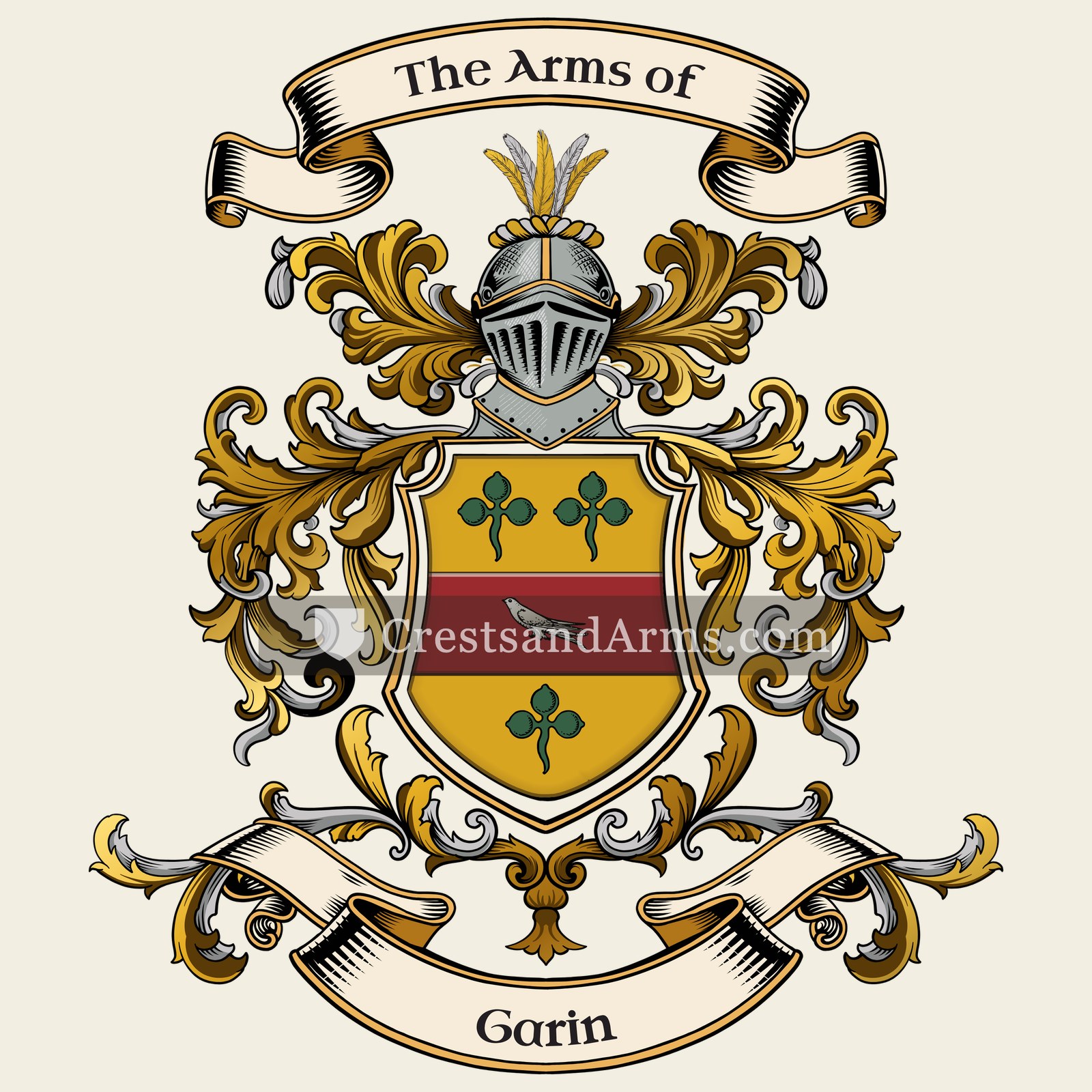


 escallopThe pilgrim's shell, and a long journey made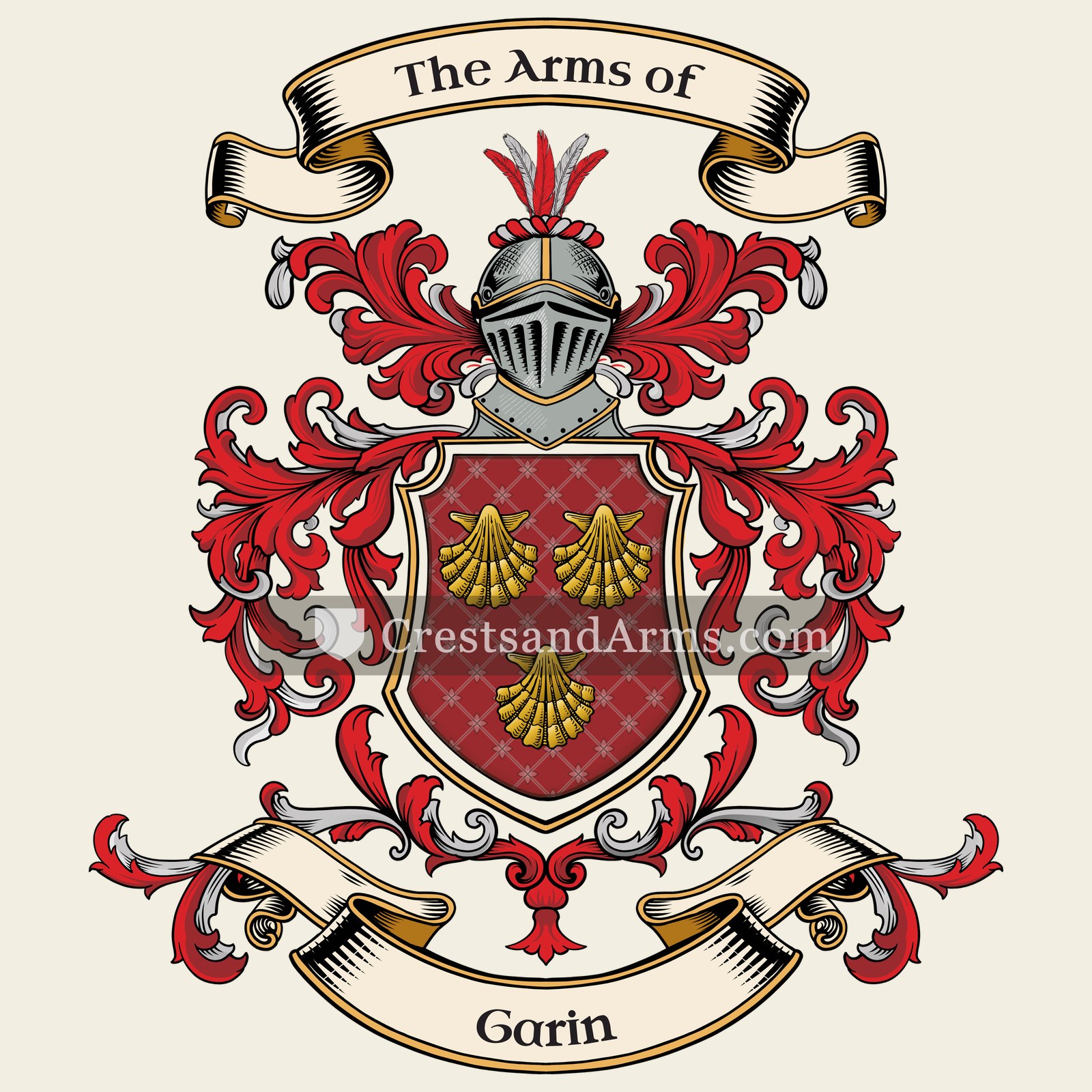


 treeLife, endurance and deep roots
 towerGrandeur and solidity, and a stronghold defended