Map of Italy showing where the Gato arms are recorded
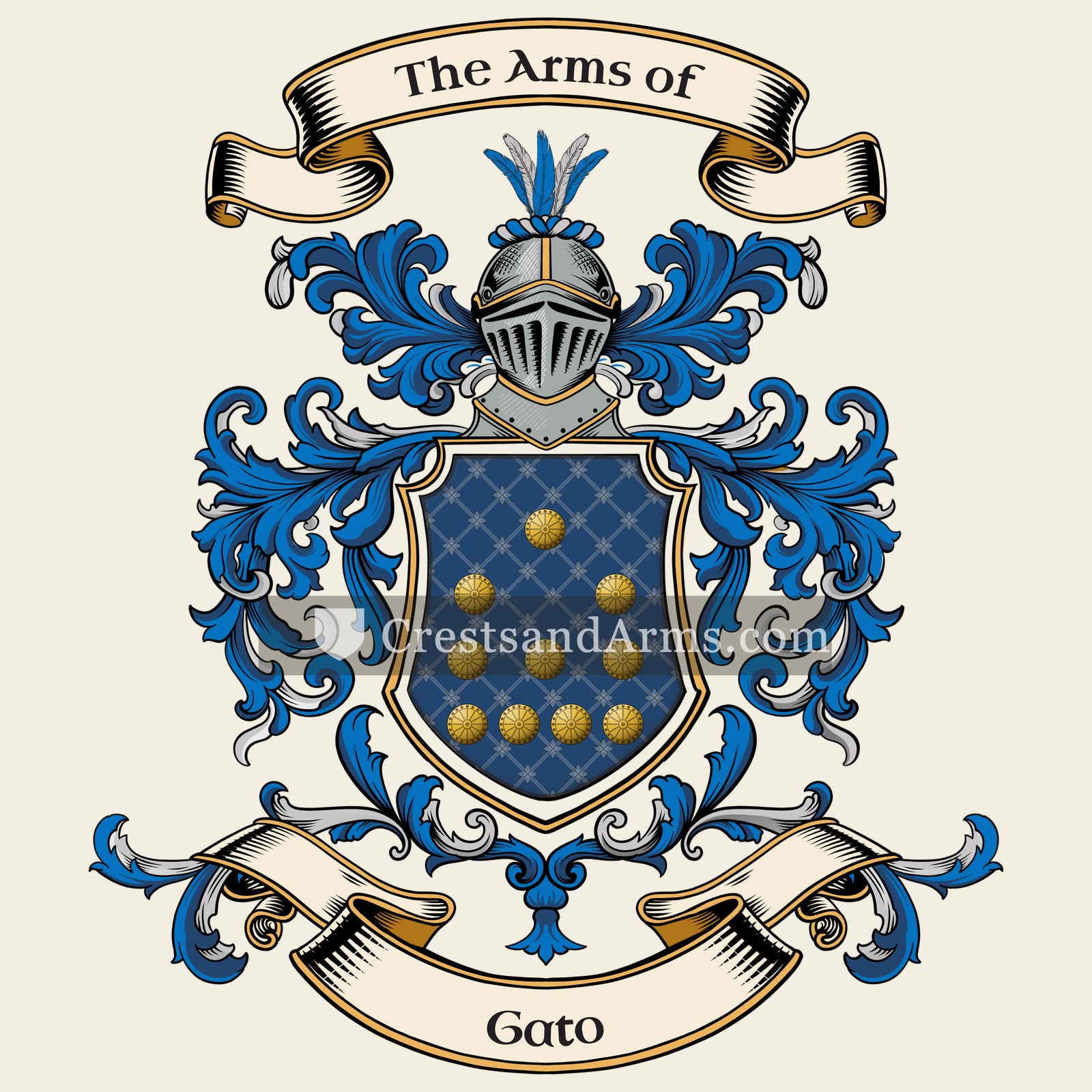
The Gato arms were recorded in Sicily, c. 1775.
Sicily was ruled in turn by Normans, Germans, French and Spanish, and each left landed families behind. The island kept formal lists of its noble houses, which is why so many Sicilian names carry recorded arms.
This is where the arms were entered in the register. Families often moved to other parts of the country, so the same name can turn up in more than one region.
The body that granted and recorded arms in Italy in this period.
Alvise Giovanni Mocenigo
Sovereign of the period
Alvise Giovanni Mocenigo
1763–1778
Reigning in Italy when the Gato arms are first recorded.
How Arms Worked in Italy
In the Italian states, coats of arms were often used by noble families to show their status and history. These symbols were passed down through the generations to all legitimate male descendants. Younger branches of a family usually kept the original design but sometimes added small changes to distinguish their specific line from the main branch.
Granting authority
Various local rulers and city governments controlled the use of coats of arms across the different Italian states.
How they got arms
Families often assumed their own arms or received them as official grants from local lords, popes, or city councils.
Where arms were recorded
Arms were recorded in local city archives or private family books rather than in one single national register.
The family's standing
Recorded among the armigerous families of Sicily.
Origin & History of the Gato Family in Italy
The surname Gato carries a long history rooted in the Mediterranean, with significant documentation placing the family in Sicily by the year 1775. The name itself is derived from the word for cat, which was often used as a descriptive nickname in medieval Italy to identify individuals who possessed feline traits like agility, stealth, or sharp vision. During the eighteenth century, families in Sicily were often tied to specific regions through agricultural work or trade, and the Gato name appears in local parish registers and land records from that era. These early ancestors were part of a complex social structure in Southern Italy, where surnames were becoming permanent markers of lineage and community identity. By the late 1700s, the Gato family had established deep roots in the Sicilian landscape, contributing to the local economy and the unique cultural fabric of the island.
Gato Meaning & Related Branches
Root word
Cattus
A Latin term referring to a cat or feline animal.
This name
GatoAn Italian occupational or descriptive surname used to identify someone with cat-like agility or stealth.
also spelled
Gato
Documented Sources
J. B. Rietstap, Armorial Général, Gouda: G. B. van Goor Zonen, 1884–87
Archivio di Stato di Palermo, Stato Civile della Restaurazione
Diocesi di Palermo, Libri Parrocchiali di Battesimo e Matrimonio
Caracausi, Girolamo, Dizionario onomastico della Sicilia, 1993
Digital archive packCoat of arms PNG, gold border print PDF, vector SVG and the certificate of authenticity. Sent to your email in minutes.


 roundelA coin, and one who has been to the crusades
 roundelA coin, and one who has been to the crusades