Map of France showing where the Gav arms are recorded
The Gav arms were recorded in Artois, c. 1663.
Artois lay on the disputed ground between France and the Low Countries and was fought over for centuries. Families there held their land under arms, and a shield was how a fighting household was known.
This is where the arms were entered in the register. Families often moved to other parts of the country, so the same name can turn up in more than one region.
The body that granted and recorded arms in France in this period.
Louis XIV of France
Sovereign of the period
Louis XIV of France
1643–1715
Reigning in France when the Gav arms are first recorded.
How Arms Worked in France
In France, a coat of arms was a mark of honor that passed down through the male line to all legitimate descendants. Families often used the same shield without changes to show their shared heritage. If a branch wanted to stand out, they could add a small mark to their shield to show their specific place in the family tree.
Granting authority
The Juge d'armes de France acted as the official authority that regulated and verified coats of arms across the country.
How they got arms
Families typically inherited their arms from ancestors, though they could also receive them through royal grants or by proving their noble status.
Where arms were recorded
Coats of arms were officially recorded in the Armorial Général de France, which began its main collection in the year 1696.
The family's standing
Recorded among the armigerous families of Artois.
Origin & History of the Gav Family in France
The history of the Gav family is rooted in the northern region of Artois, where records confirm their presence by 1663. During this period, Artois was a landscape defined by shifting borders and intense conflict between the French monarchy and the Spanish Netherlands. Families living in this area often navigated complex social changes as the region transitioned fully under French control following the Treaty of the Pyrenees. The name Gav likely emerged from the local dialects of the region, reflecting the linguistic blend of French and Flemish influences common in northern villages. By settling in Artois, the early members of the family were part of a resilient population that maintained agricultural and trade traditions despite the frequent movement of armies across their lands. Their presence in the seventeenth century places them among the families who helped stabilize the local economy and community life during a time of significant political transformation in France.
Coat of Arms & Family Crest Details
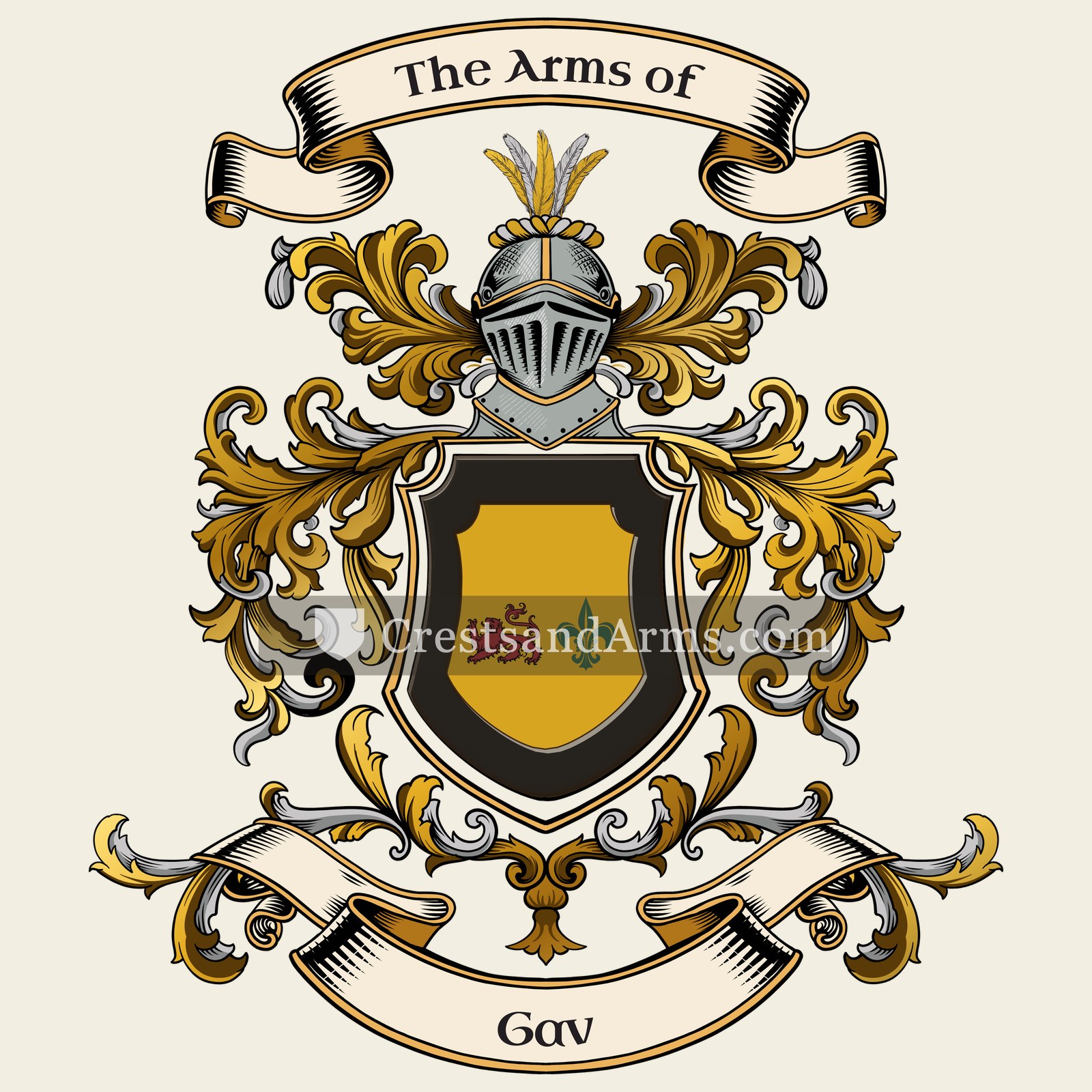
Symbols on this shield
lionCourage, strength and royalty
fleur de lisPurity, light, and the sixth son
Colours
Gold (Or)Means: Generosity
Black (Sable)Means: Constancy
Red (Gules)Means: Military strength
Green (Vert)Means: Hope
Historical info
Source
J. B. Rietstap, Armorial Général, Gouda: G. B. van Goor Zonen, 1884–87
Blazon (the actual original written record)
“D'or au double trècheur fleur. et c.-fleur. de sin. - Armes mod.: D'or au lion de gu., arm., lamp. et sommé d'une couronne royale d'azur; à la bord. échancrée de sa. C.: un chapeau de gu., retr.”
BrabantBrabant, c. 1592
Digital archive packCoat of arms PNG, gold border print PDF, vector SVG and the certificate of authenticity. Sent to your email in minutes.
Map of Belgium showing where the Gav arms are recorded
The Gav arms were recorded in Brabant, c. 1592.
Brabant lay at the heart of the Low Countries, where the trade routes met. Its towns were wealthy and its landowners many, and both kinds of family kept arms, which is why the region is so heavily represented.
This is where the arms were entered in the register. Families often moved to other parts of the country, so the same name can turn up in more than one region.
The body that granted and recorded arms in Belgium in this period.
Philip II of Spain
Sovereign of the period
Philip II of Spain
1556–1598
Reigning in France when the Gav arms are first recorded.
How Arms Worked in Belgium
In Belgium, a coat of arms is considered personal property that is passed down through the male line to legitimate descendants. Families often use the same shield design across generations to show their shared heritage. If a branch of the family wants to change the design, they must apply for an official update to their specific version of the arms.
Granting authority
The Conseil héraldique is the official body that regulates and approves all coats of arms in Belgium.
How they got arms
Families obtain their coats of arms through formal royal grants or by confirming their historical right to use existing designs.
Where arms were recorded
All approved coats of arms are officially recorded in the public registers of the Conseil héraldique since 1844.
The family's standing
Recorded among the armigerous families of Brabant.
Origin & History of the Gav Family in Belgium
The family name Gav has deep roots in the historical region of Brabant, where records confirm members of the family were living as early as 1592. During this period, Brabant was a central hub of trade and culture within the Low Countries, placing the family in a dynamic environment shaped by shifting political borders and religious changes. Families in this area often lived in small agricultural communities or growing market towns, where their daily lives were defined by the local customs of the Duchy of Brabant. Because the name is quite rare, it likely originated as a descriptive nickname or a reference to a specific local landmark that has since faded from common memory. By remaining in this region during the late sixteenth century, the early members of the Gav family were part of a resilient population that navigated the intense social and economic transformations of the era.
Gav Meaning & Related Branches
Root word
Gave
Derived from the Old French word for a river or stream.
This name
GavA topographic name for someone who lived near a river or watercourse.
also spelled
Gavere
Gaver
Gav
Documented Sources
J. B. Rietstap, Armorial Général, Gouda: G. B. van Goor Zonen, 1884–87
Archives départementales du Pas-de-Calais, Série B (Chambre des comptes de Lille)
Gauvard, Claude, La France au Moyen Âge du Ve au XVe siècle, 1996
Lottin, Alain, Histoire des provinces françaises du Nord, 1989
Digital archive packCoat of arms PNG, gold border print PDF, vector SVG and the certificate of authenticity. Sent to your email in minutes.


 lionCourage, strength and royalty
 lionCourage, strength and royalty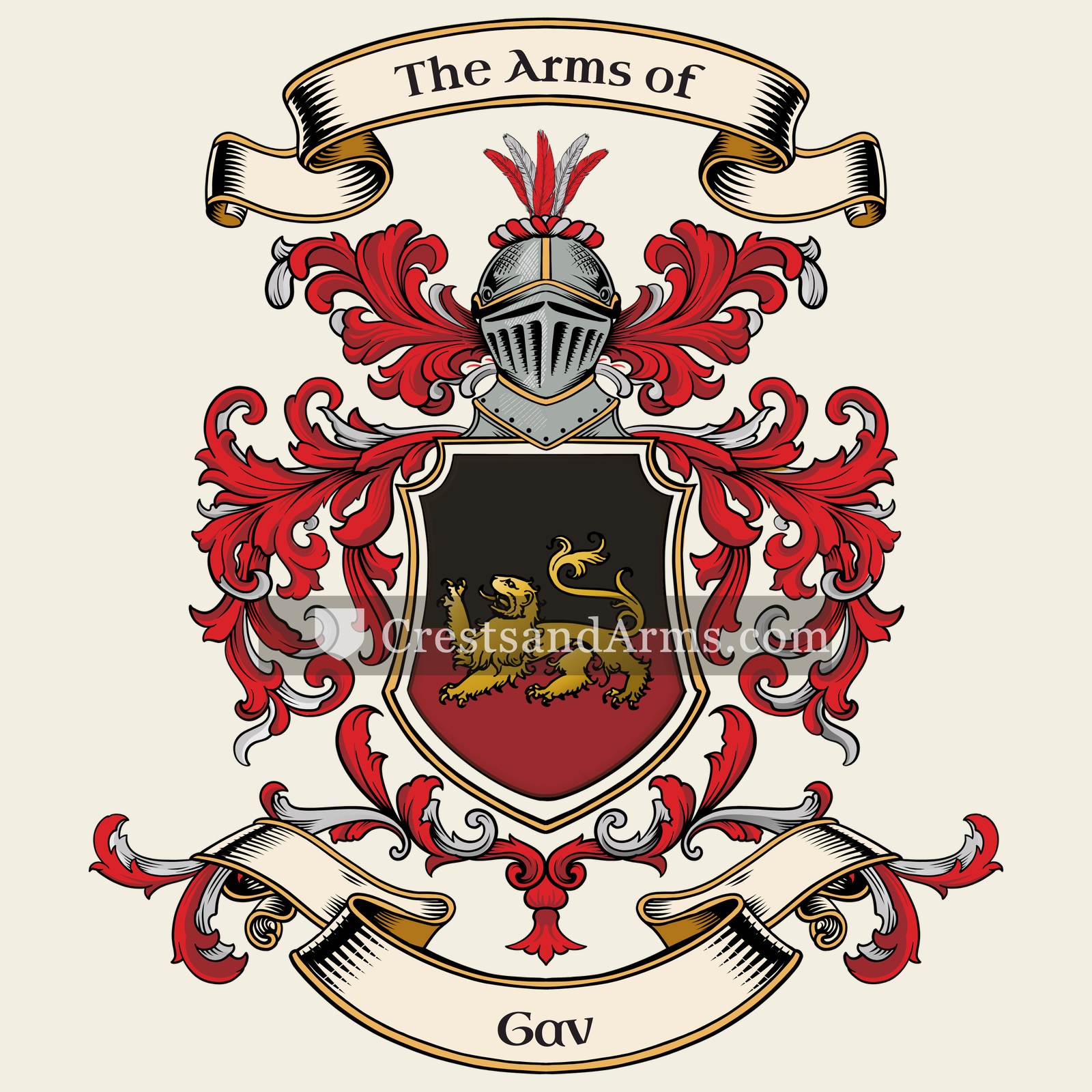


 fleur de lisPurity, light, and the sixth son