Map of Poland showing where the Gavel arms are recorded
The Gavel arms were recorded in Livonia, c. 1696.
Livonia was Baltic country held by a small number of landed families who kept their estates for centuries. Land there passed down whole rather than being divided, and long unbroken tenure is what fills a register.
This is where the arms were entered in the register. Families often moved to other parts of the country, so the same name can turn up in more than one region.
Region
Livonia
First recorded
1696
Granting Authority for the Gavel Arms
Ennoblement by the Sejm
Author: Olek Remesz · CC BY-SA 3.0
The body that granted and recorded arms in Poland in this period.
John III Sobieski
Sovereign of the period
John III Sobieski
1674–1696
Reigning in Poland when the Gavel arms are first recorded.
How Arms Worked in Poland
Polish noble families shared a single coat of arms across many different surnames, creating large clans rather than individual designs. These symbols were held collectively by all members of the clan regardless of their specific family name. When a new family joined the nobility, they were adopted into an existing clan and began using that group's established shield.
Granting authority
The Sejm, which was the Polish parliament, held the power to grant noble status and the right to bear arms.
How they got arms
Families typically received their coat of arms through a formal act of ennoblement granted by the Sejm for distinguished service.
Where arms were recorded
These grants were officially recorded in the Crown Metrica, which served as the central archive for state documents starting in the sixteenth century.
The family's standing
Recorded among the armigerous families of Livonia.
Origin & History of the Gavel Family in Poland
The family name Gavel traces its early roots to the complex borderlands of the Baltic region, where the family maintained a presence in Livonia by 1696. During this period, Livonia was a territory caught between the shifting influences of the Polish-Lithuanian Commonwealth and the Swedish Empire. Families living in this area often served as administrators or landholders who navigated the legal and social systems of both nations. Because the region was a crossroads for trade and military movement, the Gavel family likely functioned as part of the local gentry or professional class that moved between Livonian estates and the broader Polish administrative sphere. Their presence in the late 17th century suggests they were integrated into the regional bureaucracy that managed the transition of power between these competing European states. By maintaining ties to these lands, the family became part of the historical fabric of a region defined by its unique mix of Baltic, German, and Polish cultural traditions.
Coat of Arms & Family Crest Details
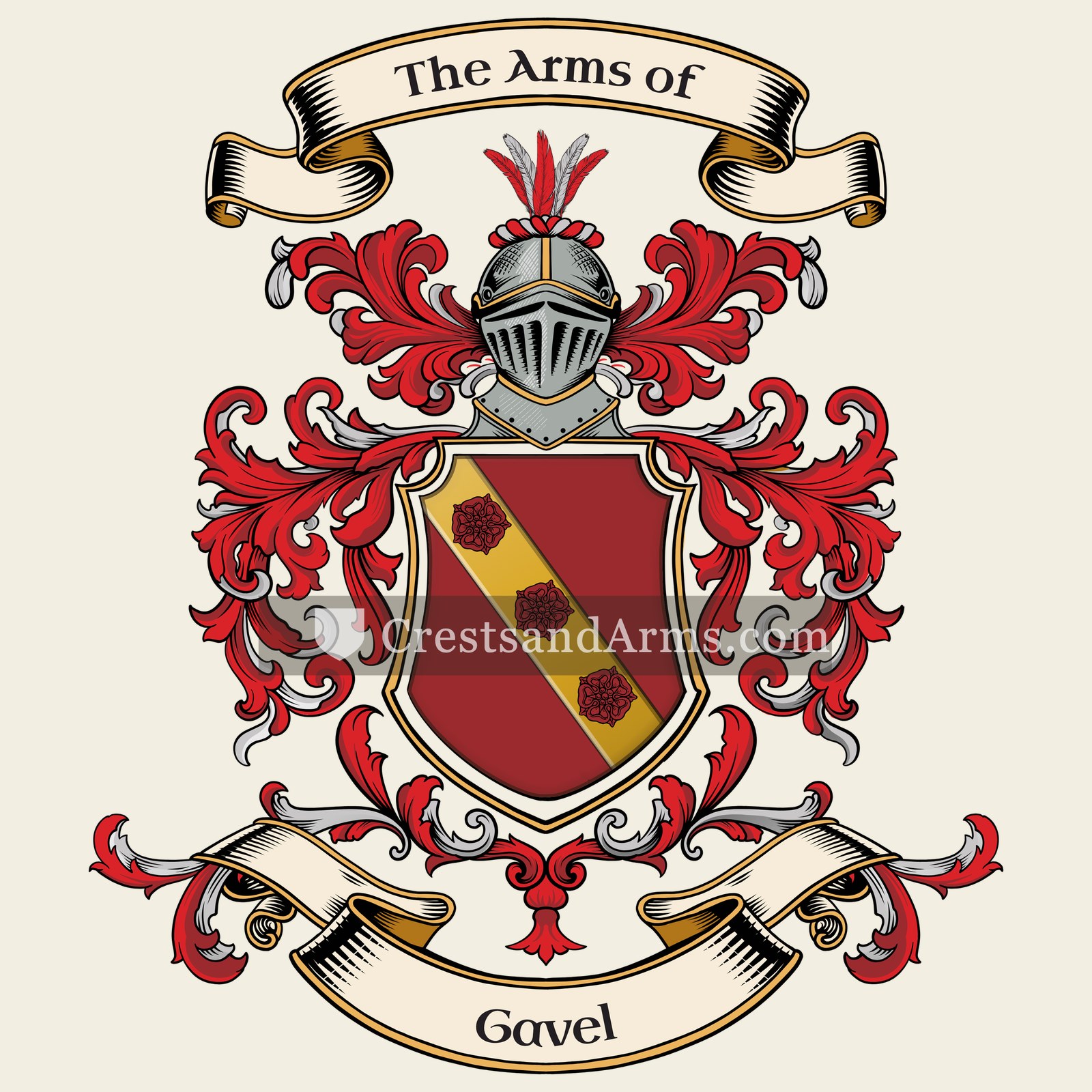
Symbols on this shield
bendDefence, and the scarf of a commander
roseThe seventh son, and beauty with grace
Colours
Red (Gules)Means: Military strength
Gold (Or)Means: Generosity
Historical info
Source
J. B. Rietstap, Armorial Général, Gouda: G. B. van Goor Zonen, 1884–87
Blazon (the actual original written record)
“De gu. à la bande d'or, ch. de trois roses du champ. C.: une femme iss., hab. de ...., tenant de sa main sen. une rose de gu., tigée et feuillée de sin., la main dextre appuyée sur sa hanche.”
Germanyc. 1765
Digital archive packCoat of arms PNG, gold border print PDF, vector SVG and the certificate of authenticity. Sent to your email in minutes.
Map of Germany showing where the Gavel arms are recorded
The Gavel arms were recorded in Germany, c. 1765.
Arms such as these were typically recorded in Bavaria.
Bavaria was a country of old landed families and walled market towns. Estates passed down the same line for centuries, and both the landowners and the leading townsmen kept arms, which is why so many Bavarian names sit in the registers.
This is where the arms were entered in the register. Families often moved to other parts of the country, so the same name can turn up in more than one region.
The body that granted and recorded arms in Germany in this period.
Francis I, Holy Roman Emperor
Sovereign of the period
Francis I, Holy Roman Emperor
1745–1765
Reigning in Poland when the Gavel arms are first recorded.
How Arms Worked in Germany
In the Holy Roman Empire, coats of arms were often granted to individuals by the Emperor or his representatives. These arms were then passed down through the generations to all legitimate descendants of the original holder. Younger branches of a family usually kept the same shield design without needing to change it, as the arms belonged to the entire lineage.
Granting authority
The Holy Roman Emperor held the sole power to grant new coats of arms throughout his vast imperial territories.
How they got arms
Families typically obtained their coats of arms through a formal imperial grant or by proving their noble status to the authorities.
Where arms were recorded
These grants were officially recorded in the Imperial Chancery registers, which began keeping formal records of such honors during the Middle Ages.
The family's standing
Recorded among the armigerous families of Germany.
Origin & History of the Gavel Family in Germany
The family name Gavel has deep roots in the historical landscape of Bavaria, where records confirm members of the family were established by 1765. In the German language, the name is often associated with the Middle High German word "gavel," which historically referred to a fork or a pointed tool used in agricultural labor. This suggests that the earliest ancestors of the family were likely farmers or craftsmen who lived in the rural regions of southern Germany. During the eighteenth century, Bavaria was a society defined by its agrarian traditions and local village life. Families often took their surnames from the tools they used daily or the specific tasks they performed for their local community. By settling in this region, the Gavel family became part of a long tradition of Bavarian landowners and workers who helped shape the local economy through their dedication to the land. Over time, the name became a permanent marker of their identity, linking them to the specific geography and social structure of their ancestral home.
Gavel Meaning & Related Branches
Root word
Gawel
A Polish form of the name Gallus meaning rooster or Gaulish.
This name
GavelDerived from a diminutive of the name Gallus, historically associated with Saint Gall.
also spelled
Gavill
Gavell
Documented Sources
J. B. Rietstap, Armorial Général, Gouda: G. B. van Goor Zonen, 1884–87
Dunsdorfs, Edgars. Der große schwedische Kataster in Livland 1681-1710. 1974
Plakans, Andrejs. The Latvians: A Short History. 1995
Raun, Toivo U. Estonia and the Estonians. 2001
Latvian State Historical Archives (Latvijas Valsts vēstures arhīvs), Fond 7349 (Livonian Land Cadastre Records)
National Archives of Estonia (Rahvusarhiiv), Livonian Governor-General’s Office records
Digital archive packCoat of arms PNG, gold border print PDF, vector SVG and the certificate of authenticity. Sent to your email in minutes.


 chevronProtection, and faithful service completed
 mulletThe third son, and a divine quality from above
 chevronProtection, and faithful service completed
 mulletThe third son, and a divine quality from above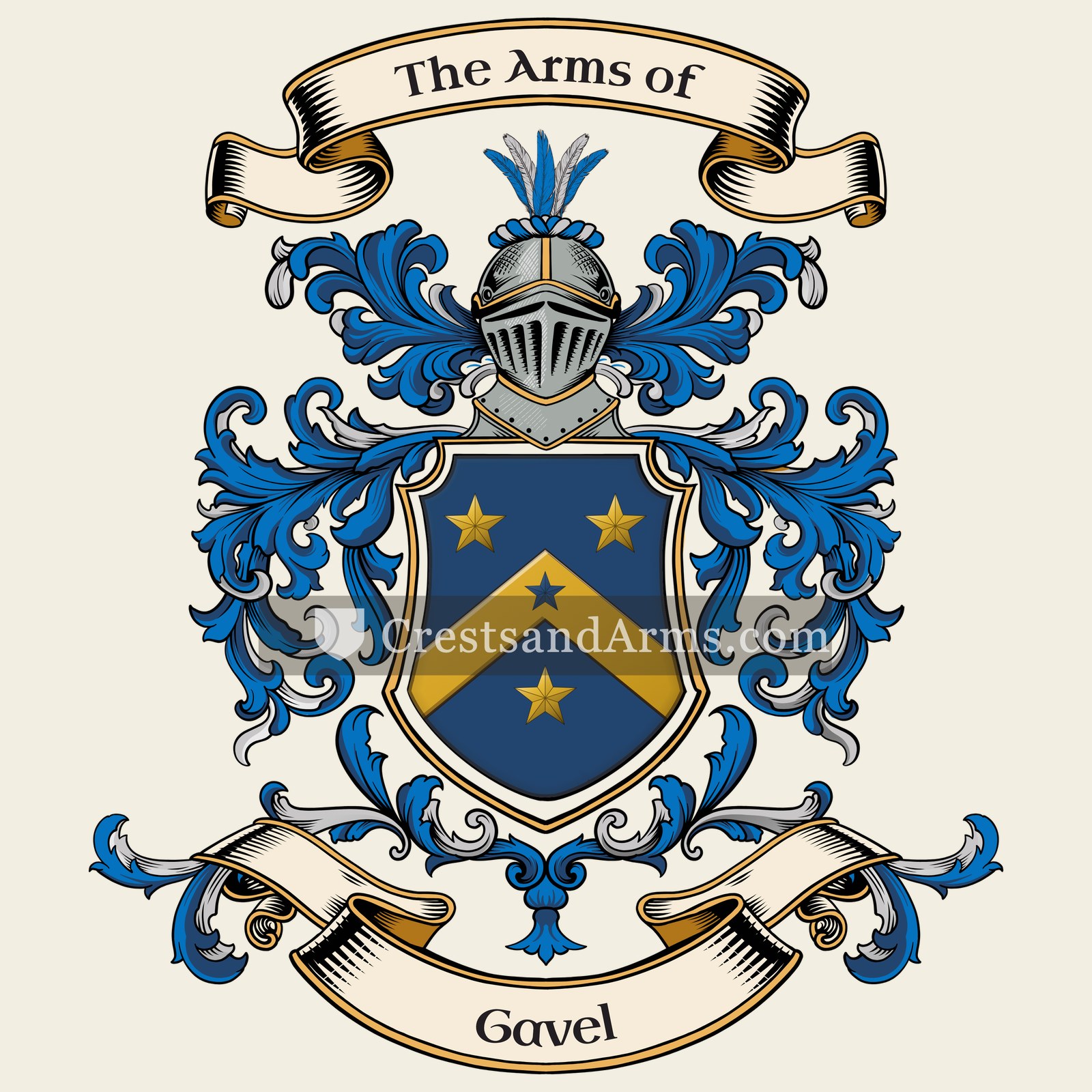


 bendDefence, and the scarf of a commander
 roseThe seventh son, and beauty with grace