Map of Wales showing where the Gemes arms are recorded
The Gemes arms were recorded in Newton, c. 1647.
Arms such as these were typically recorded in Denbigh.
Denbighshire was north Welsh country of hills and small estates. Land was held by a great many families rather than a few, and each holding brought its own claim to a coat of arms.
This is where the arms were entered in the register. Families often moved to other parts of the country, so the same name can turn up in more than one region.
The body that granted and recorded arms in Wales in this period.
Charles I of England
Sovereign of the period
Charles I of England
1625–1649
Reigning in Wales when the Gemes arms are first recorded.
How Arms Worked in Wales
English heraldry allowed arms to be shared by all legitimate descendants of the original owner. These symbols were treated as personal property that moved through the generations to all children. While the eldest son kept the original design, other family members could use the same shield without needing to change it or register their own unique versions.
Granting authority
The College of Arms in London has regulated the use of coats of arms throughout England and Wales since 1484.
How they got arms
Families typically obtained their coats of arms through a formal grant from the Crown or by proving their ancient right to them.
Where arms were recorded
All official coats of arms are recorded in the registers kept at the College of Arms, which date back to the fifteenth century.
The family's standing
Recorded among the armigerous families of Wales.
Origin & History of the Gemes Family in Wales
The history of the Gemes family in Wales is rooted in the rugged landscape of Denbigh, where records confirm their presence as early as 1647. During this period, Denbigh was a significant market town that served as a hub for local trade and social life in North Wales. Families living in this region often relied on agriculture and local craft industries to sustain their households. The name Gemes likely emerged within this community as a way to distinguish specific family lines during a time when surnames were becoming more standardized in official parish registers. Living in Denbigh meant that these early ancestors were part of a close-knit society that navigated the political and religious shifts of the seventeenth century. By establishing themselves in this area, the Gemes family became part of the long history of Welsh town life, contributing to the local economy and the development of the region over several generations.
Meaning of the Gemes family crest colors & symbols
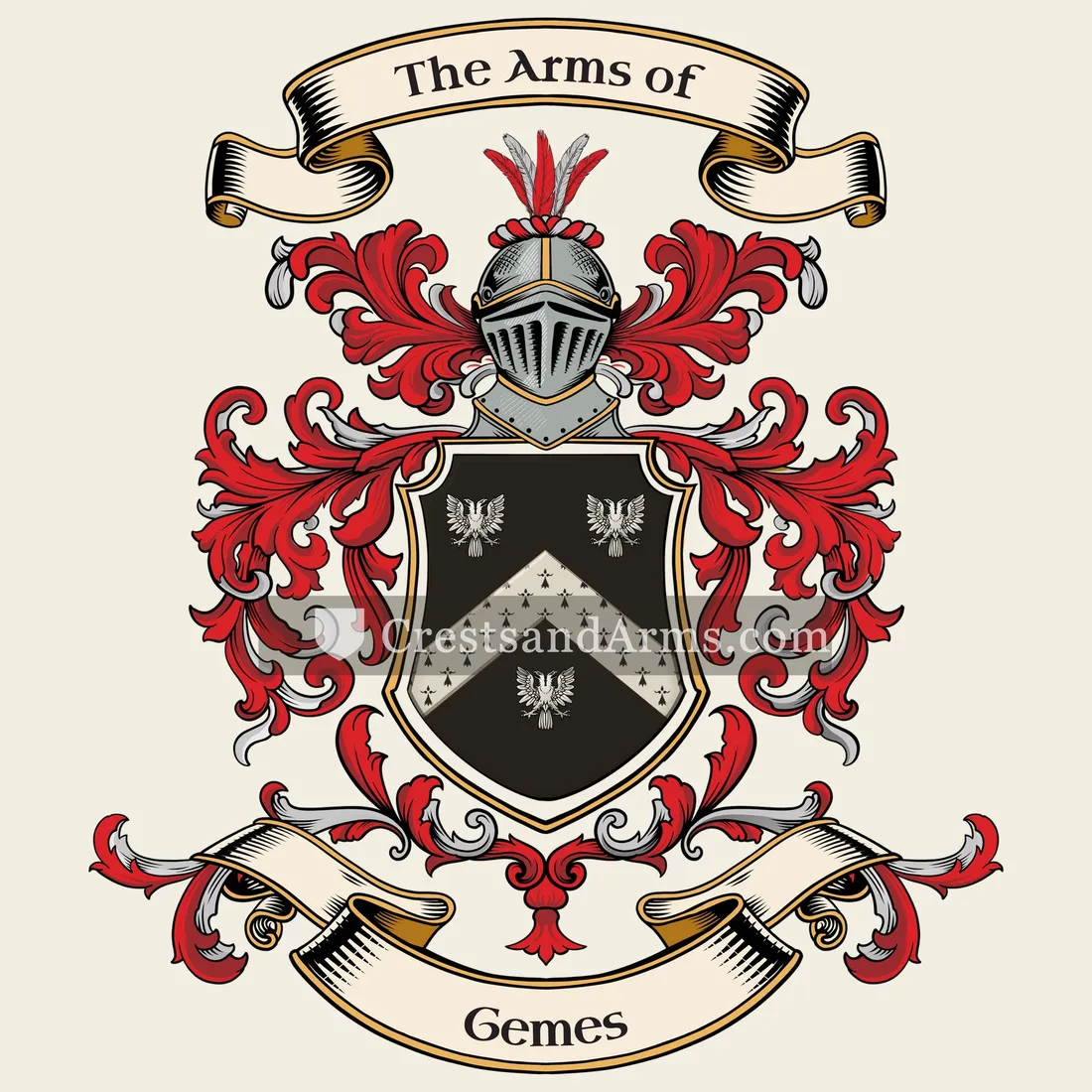
Symbols on this shield
chevronProtection, and faithful service completed
eagleNobility, strength and a keen mind
Colours
Black (Sable)Means: Constancy
ErmineMeans: Dignity
Silver (Argent)Means: Peace and sincerity
Historical info
Source
Sir Bernard Burke, The General Armory of England, Scotland, Ireland and Wales, London: Harrison & Sons, 1884
Blazon (the actual original written record)
“Sa. a chev. erm. betw. three eagles close ar”
LeicesterLeicester, c. 1614
Digital archive packCoat of arms PNG, gold border print PDF, vector SVG and the certificate of authenticity. Sent to your email in minutes.
Map of England showing where the Gemes arms are recorded
The Gemes arms were recorded in Leicester, c. 1614.
Leicestershire was grazing country, and wool and cattle made steady money rather than spectacular fortunes. Steady money bought manors, and manors are what brought families into the registers.
This is where the arms were entered in the register. Families often moved to other parts of the country, so the same name can turn up in more than one region.
The body that granted and recorded arms in England in this period.
James VI and I
Sovereign of the period
James VI and I
1603–1625
Reigning in Wales when the Gemes arms are first recorded.
How Arms Worked in England
English heraldry allowed arms to be shared by all legitimate descendants of the original owner. These symbols were treated as personal property that moved through the generations to all children. While the eldest son kept the original design, other family members could use the same shield without needing to change it or register their own unique versions.
Granting authority
The College of Arms in London has regulated the use of coats of arms throughout England and Wales since 1484.
How they got arms
Families typically obtained their coats of arms through a formal grant from the Crown or by proving their ancient right to them.
Where arms were recorded
All official coats of arms are recorded in the registers kept at the College of Arms, which date back to the fifteenth century.
The family's standing
Recorded among the armigerous families of Leicester.
Origin & History of the Gemes Family in England
The history of the Gemes family in England is rooted in the social and economic landscape of the early seventeenth century. By 1614, records confirm that members of the family were established in Leicester, a town that served as a vital hub for trade and local governance in the East Midlands. During this period, families often settled in growing market towns to participate in the burgeoning textile and agricultural industries that defined the region. Life in Leicester at this time was shaped by the transition from medieval traditions to the more structured administrative practices of the Stuart era. As residents of this community, the early Gemes family members likely navigated the daily challenges of parish life, local commerce, and the shifting religious climate of the early 1600s. Their presence in the town archives suggests they were part of the foundational population that helped build the local economy and social fabric of Leicestershire.
Gemes Meaning & Related Branches
Root word
Gemma
Latin word meaning a precious stone or a jewel.
This name
GemesA locational or occupational surname derived from the Latin term for a gemstone.
also spelled
Gamm
Gamme
Documented Sources
Sir Bernard Burke, The General Armory of England, Scotland, Ireland and Wales, London: Harrison & Sons, 1884
National Library of Wales, Denbighshire Quarter Sessions Records
Digital archive packCoat of arms PNG, gold border print PDF, vector SVG and the certificate of authenticity. Sent to your email in minutes.


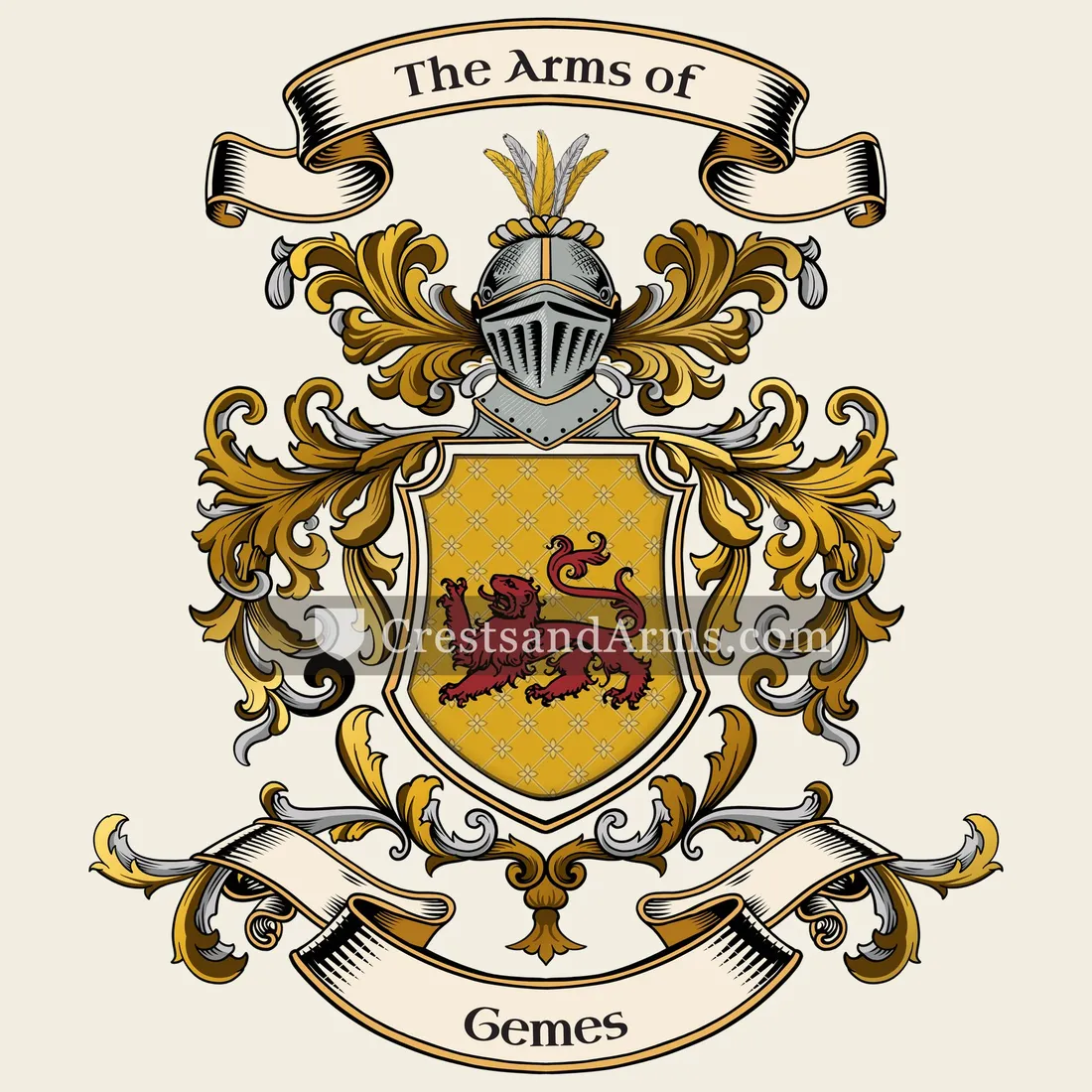
 lionCourage, strength and royalty
 lionCourage, strength and royalty


 chevronProtection, and faithful service completed
 eagleNobility, strength and a keen mind