Map of Germany showing where the George arms are recorded
The George arms were recorded in Germany, c. 1765.
Arms such as these were typically recorded in Bavaria.
Bavaria was a country of old landed families and walled market towns. Estates passed down the same line for centuries, and both the landowners and the leading townsmen kept arms, which is why so many Bavarian names sit in the registers.
This is where the arms were entered in the register. Families often moved to other parts of the country, so the same name can turn up in more than one region.
The body that granted and recorded arms in Germany in this period.
Francis I, Holy Roman Emperor
Sovereign of the period
Francis I, Holy Roman Emperor
1745–1765
Reigning in Germany when the George arms are first recorded.
How Arms Worked in Germany
In the Holy Roman Empire, coats of arms were often granted to individuals by the Emperor or his representatives. These arms were then passed down through the generations to all legitimate descendants of the original holder. Younger branches of a family usually kept the same shield design without needing to change it, as the arms belonged to the entire lineage.
Granting authority
The Holy Roman Emperor held the sole power to grant new coats of arms throughout his vast imperial territories.
How they got arms
Families typically obtained their coats of arms through a formal imperial grant or by proving their noble status to the authorities.
Where arms were recorded
These grants were officially recorded in the Imperial Chancery registers, which began keeping formal records of such honors during the Middle Ages.
The family's standing
Recorded among the armigerous families of Germany.
Origin & History of the George Family in Germany
The family name George finds its roots in the ancient Greek word georgios, which translates to a worker of the earth or a farmer. In the German-speaking regions, this name gained immense popularity during the Middle Ages because of the widespread veneration of Saint George, a figure celebrated for his courage and protection. By the time the family was firmly established in Bavaria in 1765, the name had evolved from a simple description of a profession into a formal surname used to track lineage and social standing. Families living in the Bavarian countryside during this period were often deeply connected to the land, and the name George reflected both their agricultural heritage and their integration into the local parish communities. As record-keeping became more standardized in the eighteenth century, the presence of the George family in official church and civil registers helped solidify their identity within the complex social structure of the Holy Roman Empire.
Coat of Arms & Family Crest Details
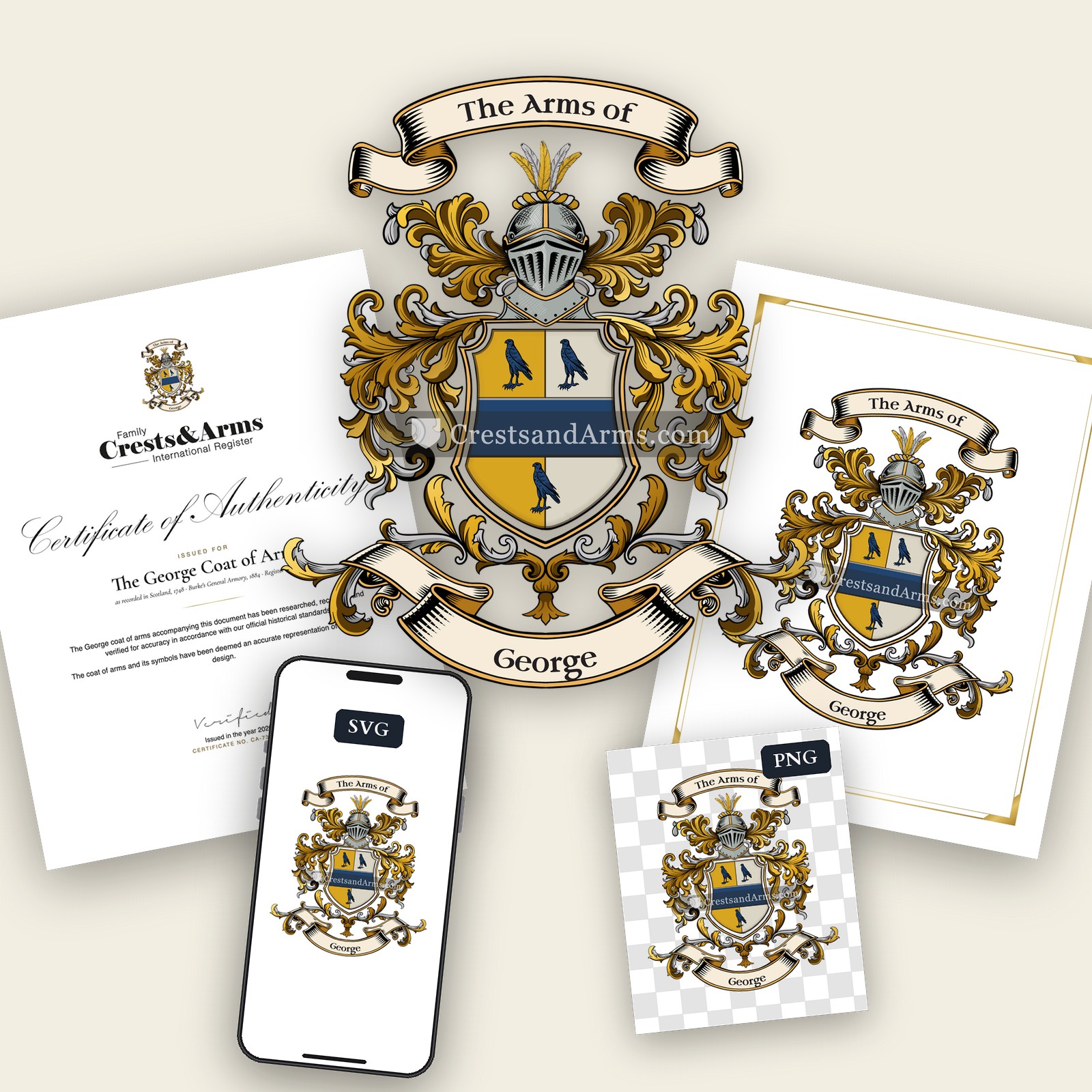
Symbols on this shield
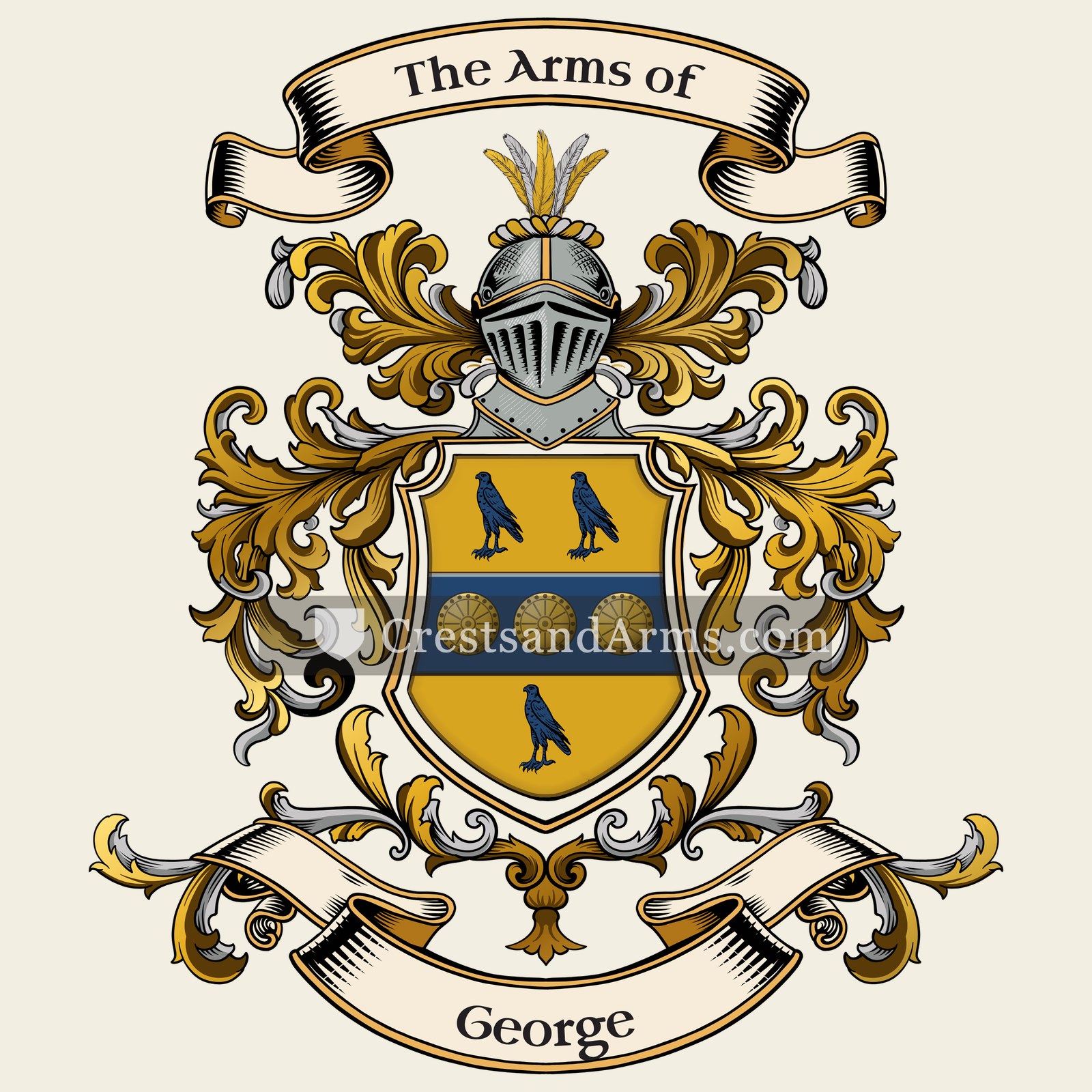
fessThe military belt, and readiness to serve
falconOne eager and quick in pursuit
roundelA coin, and one who has been to the crusades
Colours
Gold (Or)Means: Generosity
Blue (Azure)Means: Loyalty and truth
Historical info
Source
Sir Bernard Burke, The General Armory of England, Scotland, Ireland and Wales, London: Harrison & Sons, 1884
Blazon (the actual original written record)
“Or, on a fesse betw. three falcons rising az. membered gu. as many bezants, each charged with a lion's head erased sa”
Englandc. 1620
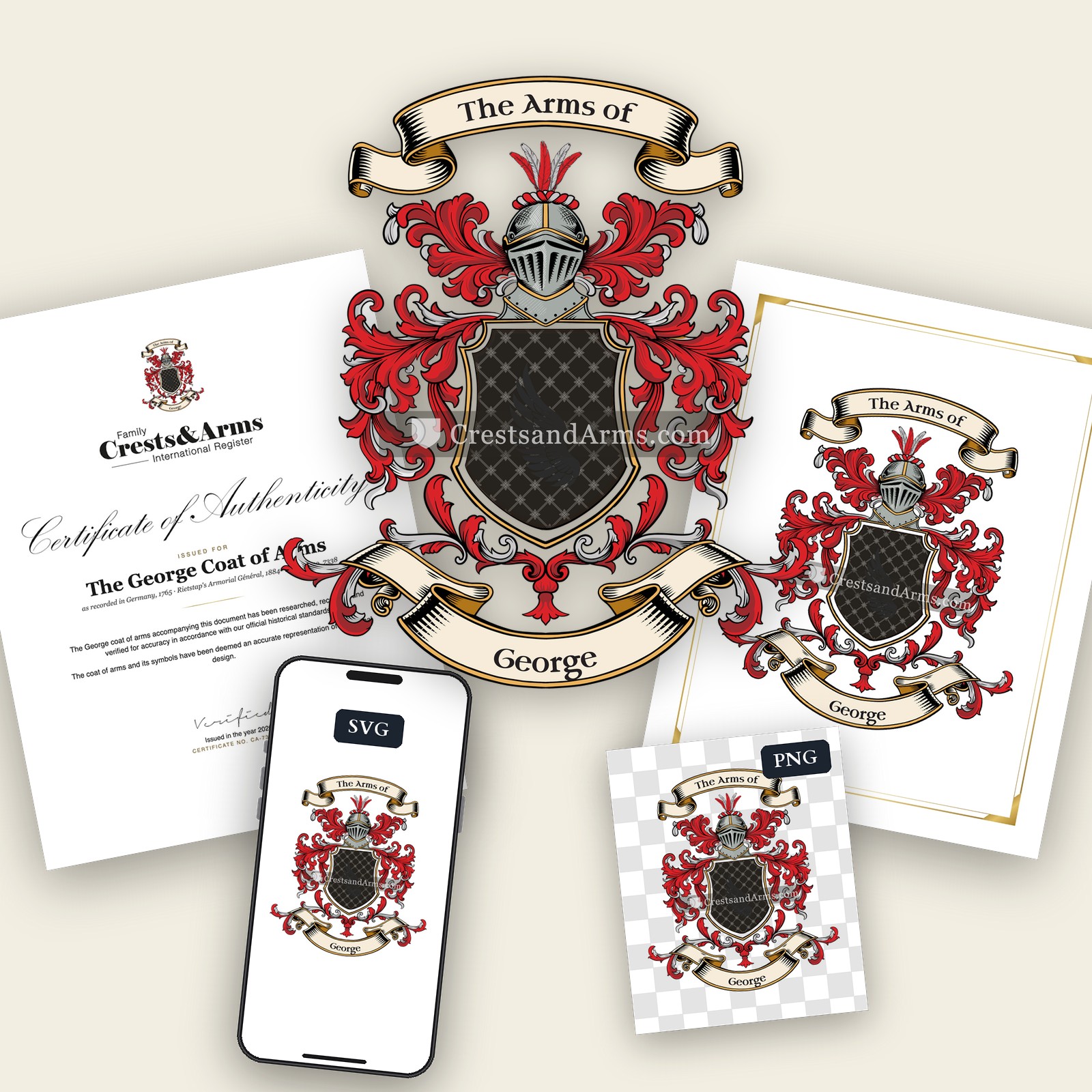
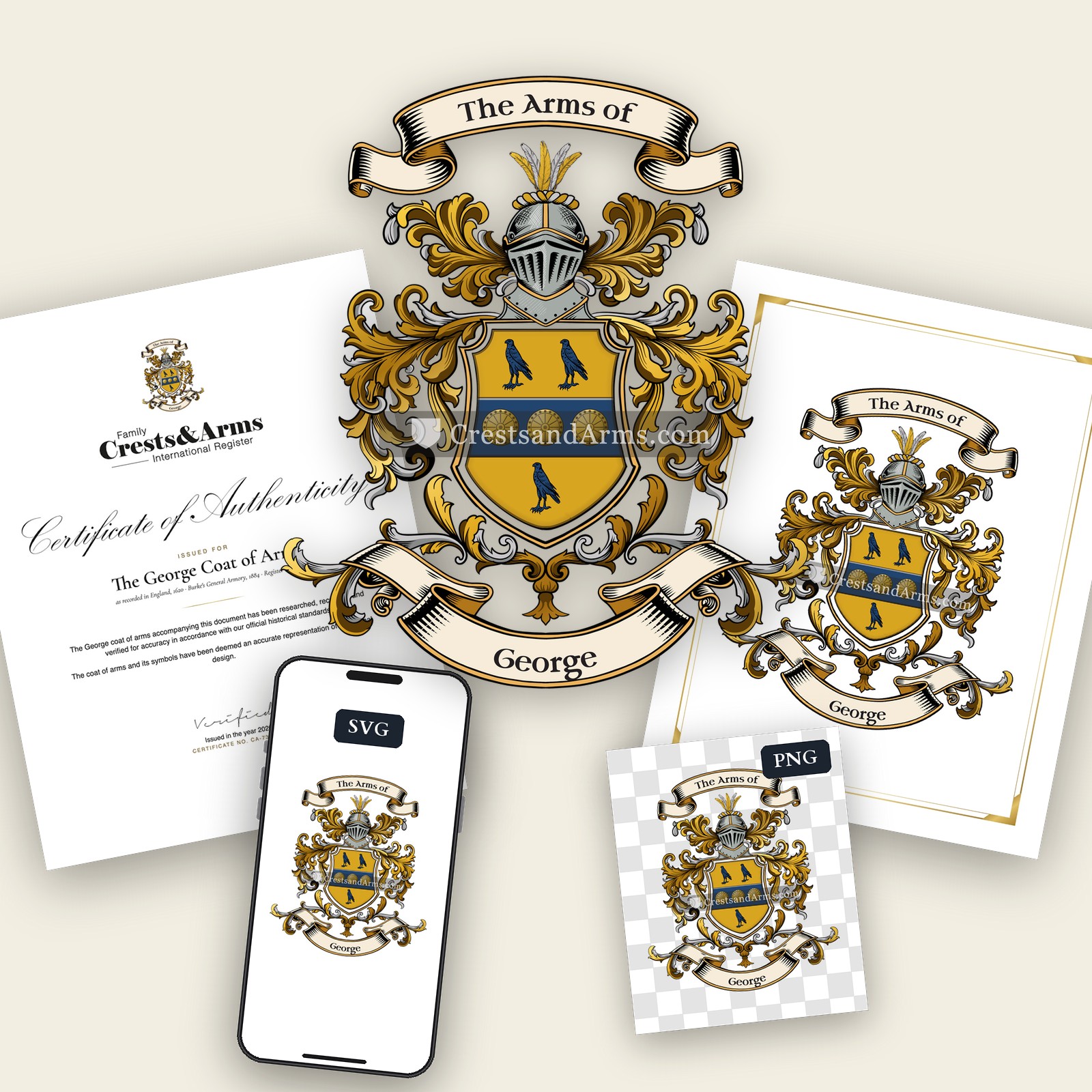
Digital archive packCoat of arms PNG, gold border print PDF, vector SVG and the certificate of authenticity. Sent to your email in minutes.
Map of England showing where the George arms are recorded
The George arms were recorded in England, c. 1620.
Arms such as these were typically recorded in York.
Yorkshire is the largest of the English counties, and it held more gentry families than any other. Land there was split among a great many households rather than a few, so a great many of them carried arms.
This is where the arms were entered in the register. Families often moved to other parts of the country, so the same name can turn up in more than one region.
The body that granted and recorded arms in England in this period.
James VI and I
Sovereign of the period
James VI and I
1603–1625
Reigning in Germany when the George arms are first recorded.
How Arms Worked in England
English heraldry allowed arms to be shared by all legitimate descendants of the original owner. These symbols were treated as personal property that moved through the generations to all children. While the eldest son kept the original design, other family members could use the same shield without needing to change it or register their own unique versions.
Granting authority
The College of Arms in London has regulated the use of coats of arms throughout England and Wales since 1484.
How they got arms
Families typically obtained their coats of arms through a formal grant from the Crown or by proving their ancient right to them.
Where arms were recorded
All official coats of arms are recorded in the registers kept at the College of Arms, which date back to the fifteenth century.
The family's standing
Recorded among the armigerous families of England.
Origin & History of the George Family in England
The name George originates from the Greek word georgios, which means a worker of the earth or a farmer. While the name was well known across Europe due to the legend of Saint George, it did not become a common hereditary surname in England until the late Middle Ages. By the time the family was established in York in 1620, the name had transitioned from a simple given name to a formal family identifier. During this period, the city of York served as a major center for trade and administration in Northern England. Families living there often held roles in local commerce or skilled crafts, which allowed them to build stable lives in a growing urban environment. The presence of the George family in York during the early seventeenth century suggests they were part of the expanding middle class that helped define the social and economic character of the city during the Stuart era.
Coat of Arms & Family Crest Details
Symbols on this shield
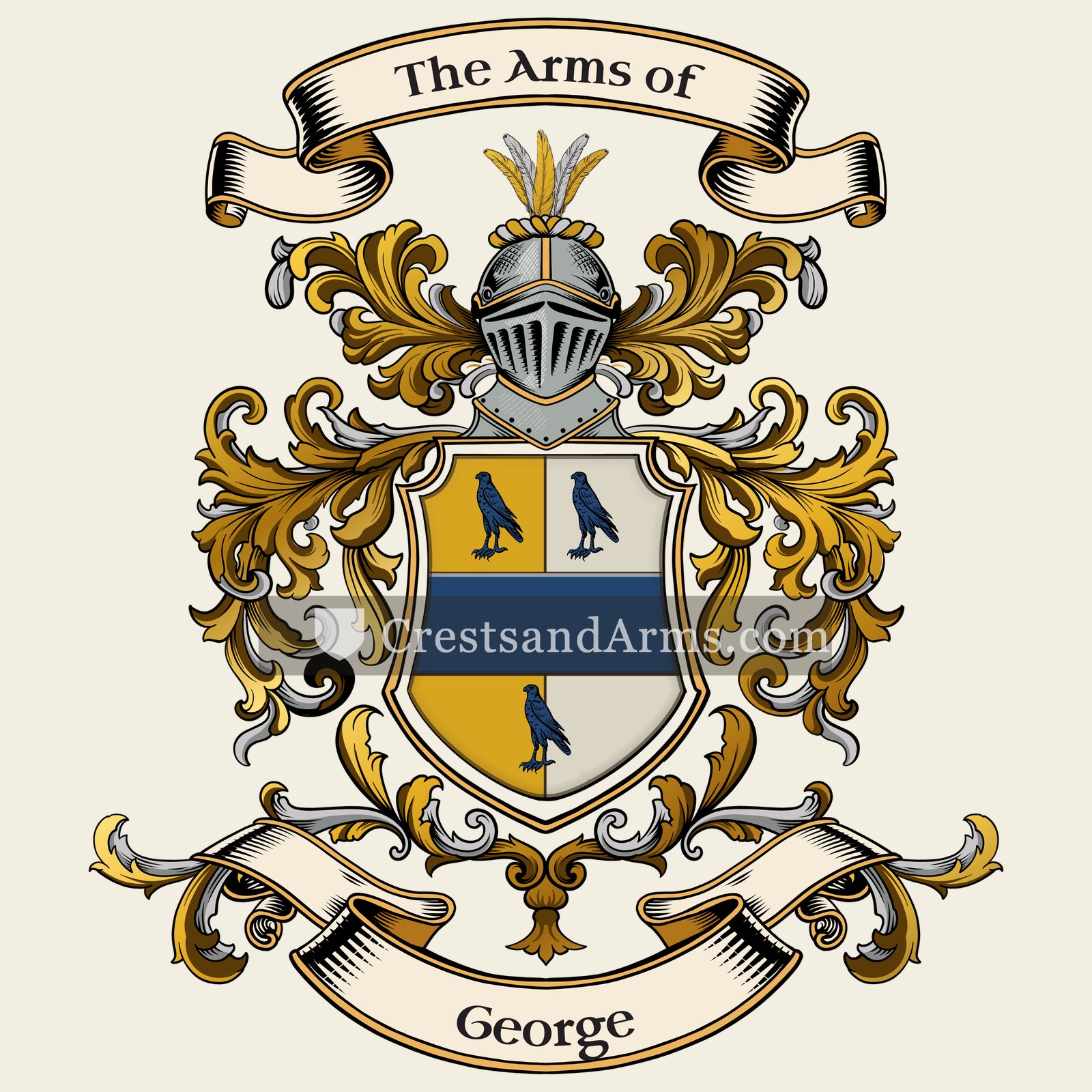
fessThe military belt, and readiness to serve
falconOne eager and quick in pursuit
Colours
Gold (Or)Means: Generosity
Silver (Argent)Means: Peace and sincerity
Blue (Azure)Means: Loyalty and truth
Historical info
Source
Sir Bernard Burke, The General Armory of England, Scotland, Ireland and Wales, London: Harrison & Sons, 1884
Blazon (the actual original written record)
“Or, (another, ar.) a fess betw. three falcons rising az. membered gu”
Scotlandc. 1748
Digital archive packCoat of arms PNG, gold border print PDF, vector SVG and the certificate of authenticity. Sent to your email in minutes.
Map of Scotland showing where the George arms are recorded
The George arms were recorded in Scotland, c. 1748.
Arms such as these were typically recorded in Edinburgh.
Edinburgh was the seat of Scotland's government, its courts and its heralds. Families with business there settled nearby, and being close to where arms were recorded is exactly why so many of them appear.
This is where the arms were entered in the register. Families often moved to other parts of the country, so the same name can turn up in more than one region.
The body that granted and recorded arms in Scotland in this period.
George II of Great Britain
Sovereign of the period
George II of Great Britain
1727–1760
Reigning in Germany when the George arms are first recorded.
How Arms Worked in Scotland
Scottish heraldry is unique because it treats a coat of arms as a piece of personal property protected by law. Only one person can own a specific design at any given time. When a family grows, the head keeps the original shield while other relatives must apply for their own distinct version with slight changes to prove their specific identity.
Granting authority
The Court of the Lord Lyon acts as the official body that regulates and controls all heraldic matters throughout Scotland.
How they got arms
Individuals obtain a legal right to their arms through a formal petition process that confirms their identity and family connection.
Where arms were recorded
All valid coats of arms are officially entered into the Public Register of All Arms and Bearings starting from 1672.
The family's standing
Recorded among the armigerous families of Scotland.
Origin & History of the George Family in Scotland
The surname George has deep roots tied to the Greek name Georgios, which translates to a worker of the earth or a farmer. While the name became popular across Europe due to its association with Saint George, its presence in Scotland reflects a long history of migration and social integration. By the mid-eighteenth century, families bearing this name were well-established in the bustling urban environment of Edinburgh. Records from 1748 confirm that individuals named George were active participants in the city’s professional and civic life during a period of significant cultural growth known as the Scottish Enlightenment. These early residents were part of a growing middle class that helped shape the capital as it modernized. Their presence in the city archives suggests that the family had successfully transitioned from rural origins to become integrated members of the Scottish urban landscape.
George Meaning & Related Branches
Root word
Georgios
Derived from the Greek words for earth and to work.
This name
GeorgeA person who works the land or a farmer.
also spelled
Georgy
Georges
Georger
Related arms
Aheimrecorded with George, same area
Baumgartenrecorded with George, same area
Bern d'Altenburgrecorded with George, same area
Berndorfrecorded with George, same area
Documented Sources
J. B. Rietstap, Armorial Général, Gouda: G. B. van Goor Zonen, 1884–87
Bahlow, Hans, Deutsches Namenlexikon: Familien- und Vornamen nach Ursprung und Sinn erklärt, 1967
Heintze, Albert, Die deutschen Familien-Namen: geschichtlich, geographisch, sprachlich, 1903


 wingSwiftness, and protection under a raised wing
 wingSwiftness, and protection under a raised wing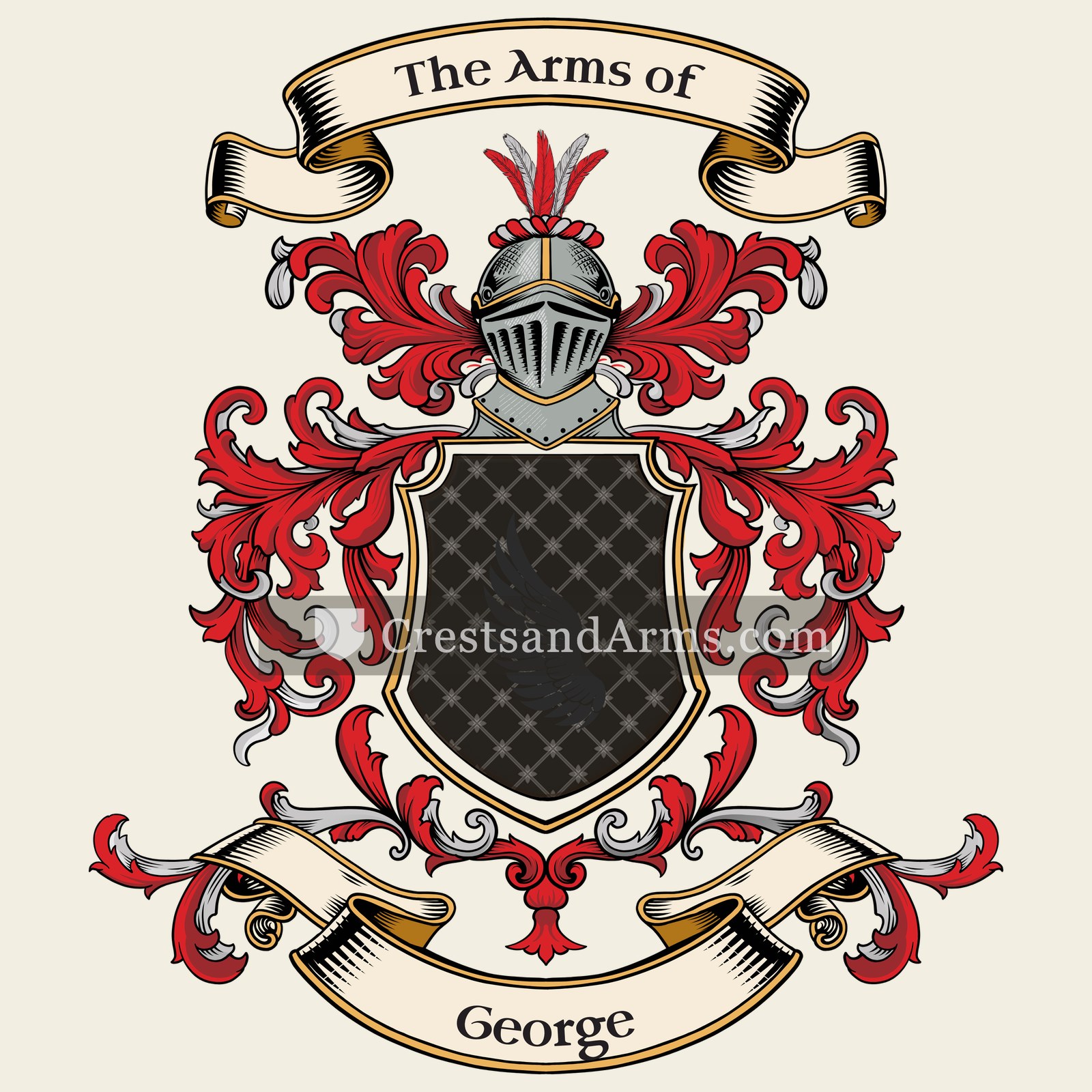


 fessThe military belt, and readiness to serve
 falconOne eager and quick in pursuit
 roundelA coin, and one who has been to the crusades