Map of Netherlands showing where the Gerard arms are recorded
The Gerard arms were recorded in Leyde, c. 1815.
This is where the arms were entered in the register. Families often moved to other parts of the country, so the same name can turn up in more than one region.
Region
Leyde
Town
Leyde
First recorded
1815
Granting Authority for the Gerard Arms
Hoge Raad van Adel
Photograph made by me · CC BY-SA 3.0
The body that granted and recorded arms in Netherlands in this period.
William I of the Netherlands
Sovereign of the period
William I of the Netherlands
1815–1840
Reigning in Netherlands when the Gerard arms are first recorded.
How Arms Worked in Netherlands
In the Netherlands, coats of arms were often used by noble families and those who held specific public offices. These arms were passed down through the generations to legitimate descendants. Younger branches of a family usually kept the original design without needing to add special marks. This system ensured that the family identity remained clear and consistent over many years.
Granting authority
The Hoge Raad van Adel is the official body that regulates and manages noble titles and coats of arms in the Netherlands.
How they got arms
Families typically obtained their coats of arms through official royal grants or by proving their long-standing historical use of the symbols.
Where arms were recorded
Coats of arms are officially recorded in the registers held by the Hoge Raad van Adel, which began its work in 1814.
The family's standing
Recorded among the armigerous families of Netherlands.
Origin & History of the Gerard Family in Netherlands
The name Gerard originates from the ancient Germanic language, combining the elements for spear and brave or strong. While the name spread across Europe during the Middle Ages, its presence in the Netherlands became well-established as families adopted fixed surnames to distinguish themselves in growing urban centers. By the early nineteenth century, the Gerard family had firmly settled in the historic city of Leiden. Records from 1815 confirm their active participation in the local community during a period when the Netherlands was transitioning into a modern kingdom. During this time, families in Leiden often worked in the city's traditional textile industries or as skilled tradespeople, contributing to the economic recovery of the region after the Napoleonic era. This period marked a time of official documentation for many Dutch families, as new government systems began to track residents more closely through civil registries.
Meaning of the Gerard family crest colors & symbols
Symbols on this shield
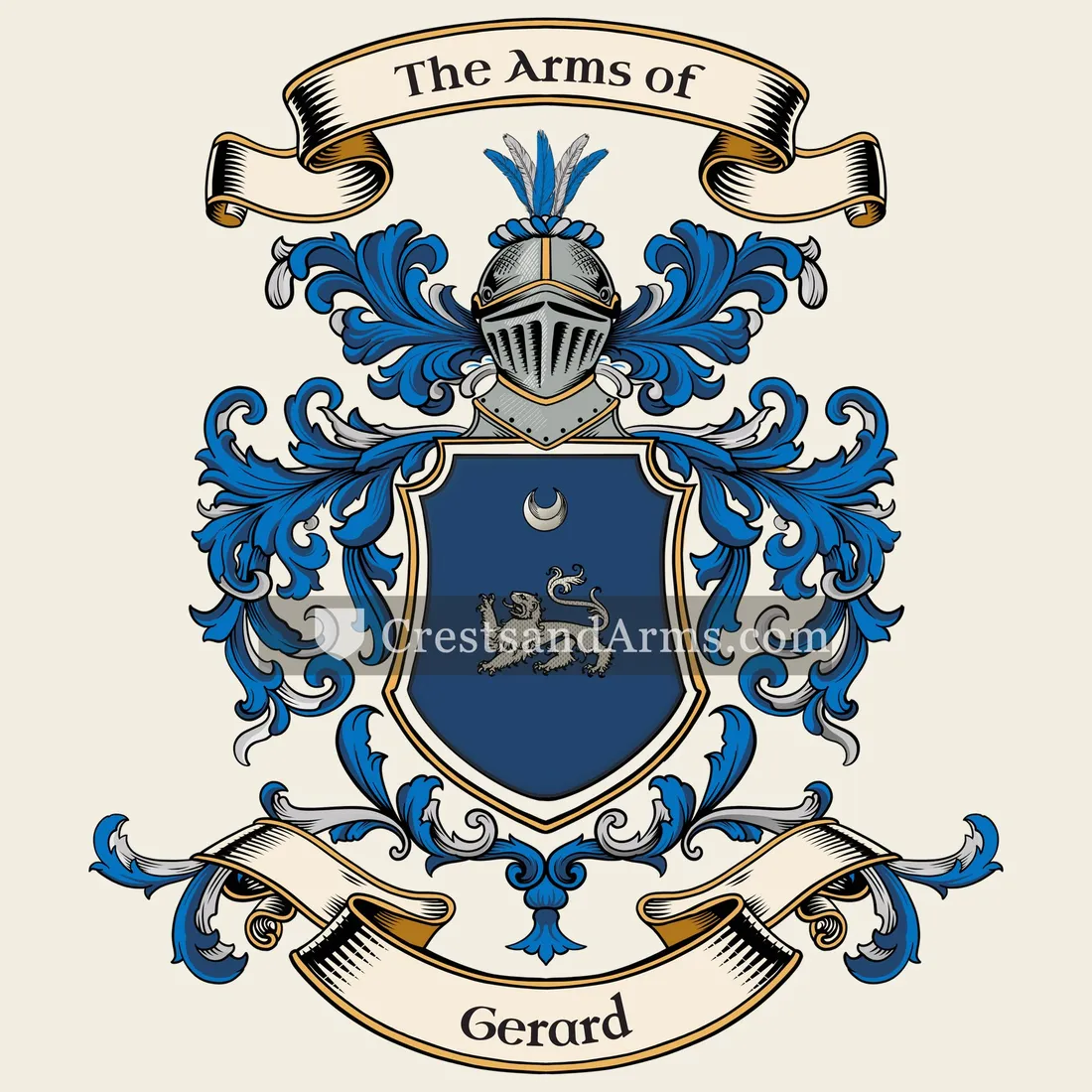
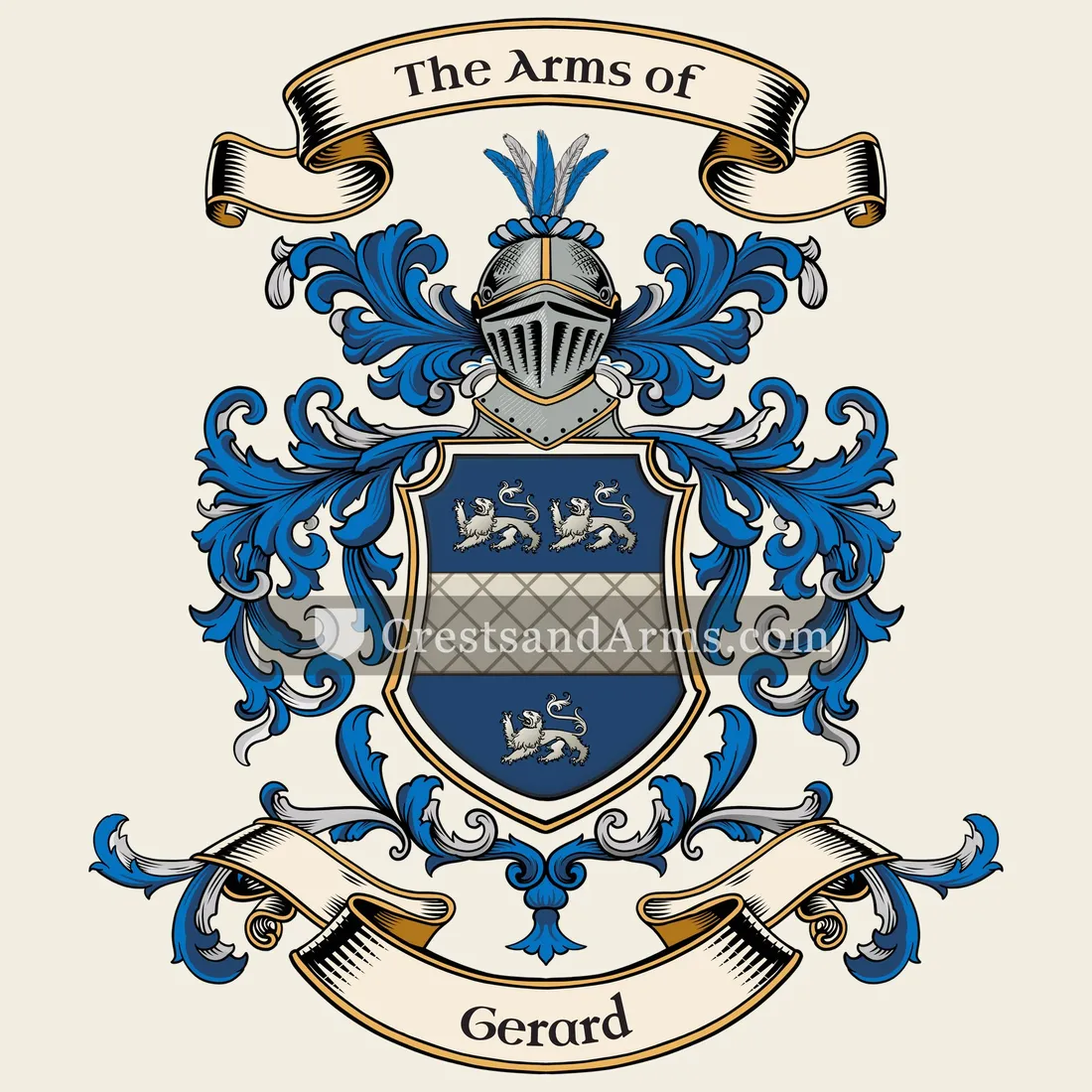
fessThe military belt, and readiness to serve
lionCourage, strength and royalty
Colours
Blue (Azure)Means: Loyalty and truth
Silver (Argent)Means: Peace and sincerity
Historical info
Source
J. B. Rietstap, Armorial Général, Gouda: G. B. van Goor Zonen, 1884–87
Blazon (the actual original written record)
“D'azur à la fasce d'arg., acc. de trois têtes de lion du même.”
LorraineLorraine, c. 1543
Digital archive packCoat of arms PNG, gold border print PDF, vector SVG and the certificate of authenticity. Sent to your email in minutes.
Map of France showing where the Gerard arms are recorded
The Gerard arms were recorded in Lorraine, c. 1543.
Lorraine sat on the border between France and the German lands, and border country bred soldiers. Families here held small estates and served in arms, and a fighting man was exactly the sort who carried a shield of his own.
This is where the arms were entered in the register. Families often moved to other parts of the country, so the same name can turn up in more than one region.
The body that granted and recorded arms in France in this period.
Francis I of France
Sovereign of the period
Francis I of France
1515–1547
Reigning in Netherlands when the Gerard arms are first recorded.
How Arms Worked in France
In France, a coat of arms was a mark of honor that passed down through the male line to all legitimate descendants. Families often used the same shield without changes to show their shared heritage. If a branch wanted to stand out, they could add a small mark to their shield to show their specific place in the family tree.
Granting authority
The Juge d'armes de France acted as the official authority that regulated and verified coats of arms across the country.
How they got arms
Families typically inherited their arms from ancestors, though they could also receive them through royal grants or by proving their noble status.
Where arms were recorded
Coats of arms were officially recorded in the Armorial Général de France, which began its main collection in the year 1696.
The family's standing
Recorded among the armigerous families of Lorraine.
Origin & History of the Gerard Family in France
The name Gerard traces its roots back to the ancient Germanic roots of "ger," meaning spear, and "hard," meaning brave or hardy. By the time the family established a documented presence in the Lorraine region of France in 1543, the name had already become a well-established fixture across the French countryside. During this era, Lorraine served as a vital crossroads for trade and cultural exchange between the French kingdom and the Holy Roman Empire. Families like the Gerards often held roles as local landowners or administrative officials who helped manage the complex social structures of the time. As the name spread through the provinces, it became associated with the resilience of people living in a borderland region that frequently faced the pressures of shifting political loyalties. The history of the name in France reflects the broader movement of families who helped build the foundations of local governance and community life in the sixteenth century.
Meaning of the Gerard family crest colors & symbols
Symbols on this shield
lionCourage, strength and royalty
crescentHonour by the sovereign, and the second son
Colours
Blue (Azure)Means: Loyalty and truth
ErmineMeans: Dignity
Silver (Argent)Means: Peace and sincerity
Historical info
Source
Sir Bernard Burke, The General Armory of England, Scotland, Ireland and Wales, London: Harrison & Sons, 1884
Blazon (the actual original written record)
“Az. a lion ramp. erm. crowned or, a crescent for diff., quartering INCE and HETTON”
LancasterInce · Lancaster, c. 1567
Digital archive packCoat of arms PNG, gold border print PDF, vector SVG and the certificate of authenticity. Sent to your email in minutes.
Map of England showing where the Gerard arms are recorded
The Gerard arms were recorded in Lancaster, c. 1567.
Lancashire was divided among a great many small landed families, more than most northern counties. Estates were passed down whole rather than split up, so the same names hold the same ground for centuries in the records.
This is where the arms were entered in the register. Families often moved to other parts of the country, so the same name can turn up in more than one region.
The body that granted and recorded arms in England in this period.
Elizabeth I of England
Sovereign of the period
Elizabeth I of England
1558–1603
Reigning in Netherlands when the Gerard arms are first recorded.
How Arms Worked in England
English heraldry allowed arms to be shared by all legitimate descendants of the original owner. These symbols were treated as personal property that moved through the generations to all children. While the eldest son kept the original design, other family members could use the same shield without needing to change it or register their own unique versions.
Granting authority
The College of Arms in London has regulated the use of coats of arms throughout England and Wales since 1484.
How they got arms
Families typically obtained their coats of arms through a formal grant from the Crown or by proving their ancient right to them.
Where arms were recorded
All official coats of arms are recorded in the registers kept at the College of Arms, which date back to the fifteenth century.
The family's standing
Recorded among the armigerous families of Lancaster.
Origin & History of the Gerard Family in England
The surname Gerard traces its roots to the ancient Germanic name Gerhard, which combines the words for spear and brave. Following the Norman Conquest of 1066, the name became popular among the ruling class in England and gradually spread across the country. By the mid-16th century, the family had established a notable presence in Lancashire, particularly as members of the landed gentry. Records from 1567 confirm that the Gerards were deeply integrated into the social and political life of the region during the Elizabethan era. As the family grew in influence, they became significant landowners who played active roles in local government and regional affairs. Their history in the north of England reflects the broader transition of English surnames from personal identifiers to permanent family names that were passed down through generations.
Gerard Meaning & Related Branches
Root word
Gerhard
Derived from Germanic elements meaning spear and hardy or brave.
This name
GerardA name signifying a brave or strong individual who wields a spear.
also spelled
Gerart
Jerard
Garrett
Jarrard
Related arms
Garrettvariant spelling
Geraldvariant spelling
Girardvariant spelling
Jarrat, Jarratt, or Jarrettvariant spelling
Documented Sources
J. B. Rietstap, Armorial Général, Gouda: G. B. van Goor Zonen, 1884–87
Erfgoed Leiden en Omstre, Bevolkingsregister van Leiden
Nationaal Archief, Burgerlijke Stand van de provincie Zuid-Holland
Beider, Alexander, A Dictionary of Surnames in the Netherlands, 2014
Van der Schaar, J., Woordenboek van voornamen, 1964
Digital archive packCoat of arms PNG, gold border print PDF, vector SVG and the certificate of authenticity. Sent to your email in minutes.


 pine coneLife and fertility
 pine coneLife and fertility
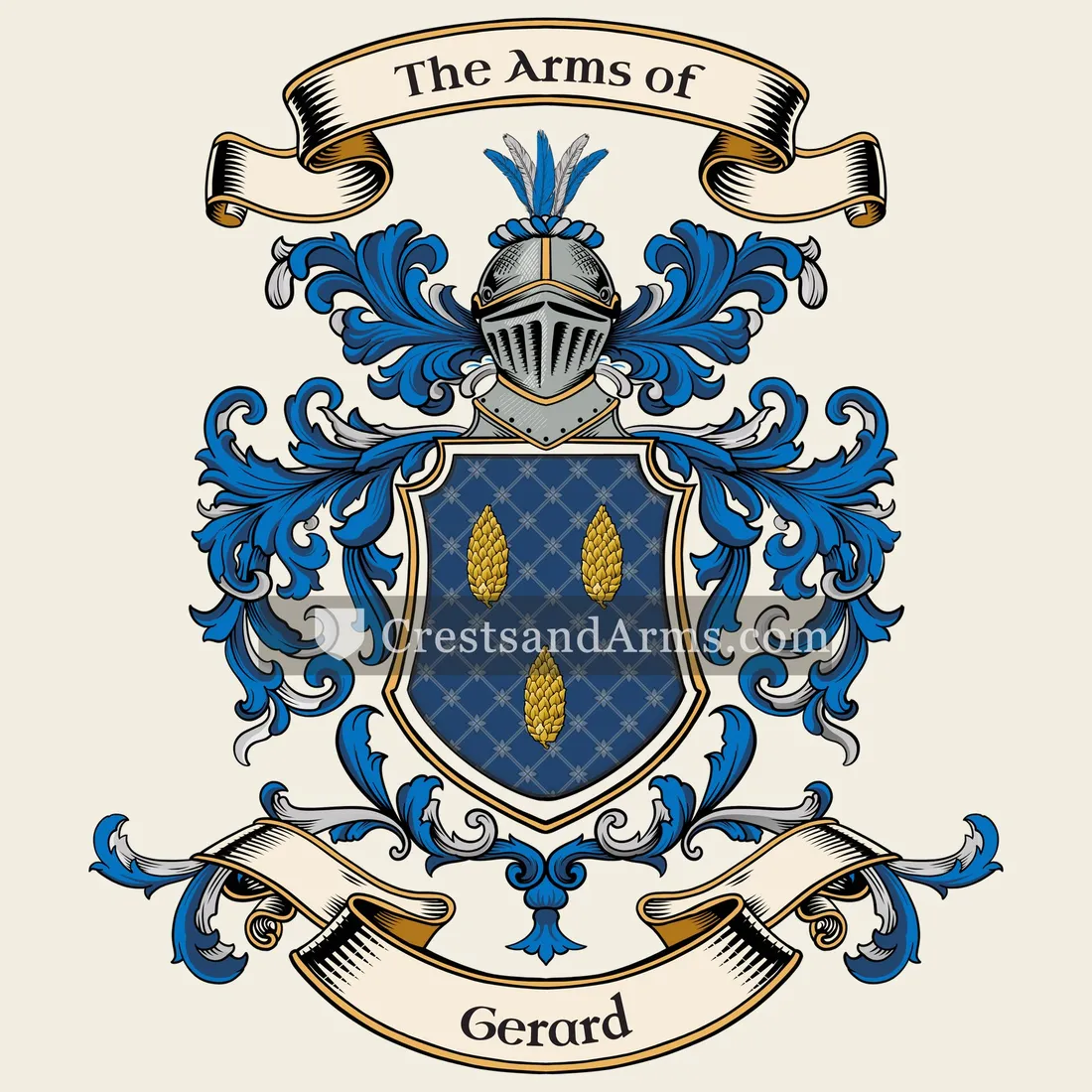


 fessThe military belt, and readiness to serve
 lionCourage, strength and royalty


 crescentHonour by the sovereign, and the second son