Map of Netherlands showing where the Gerardi arms are recorded
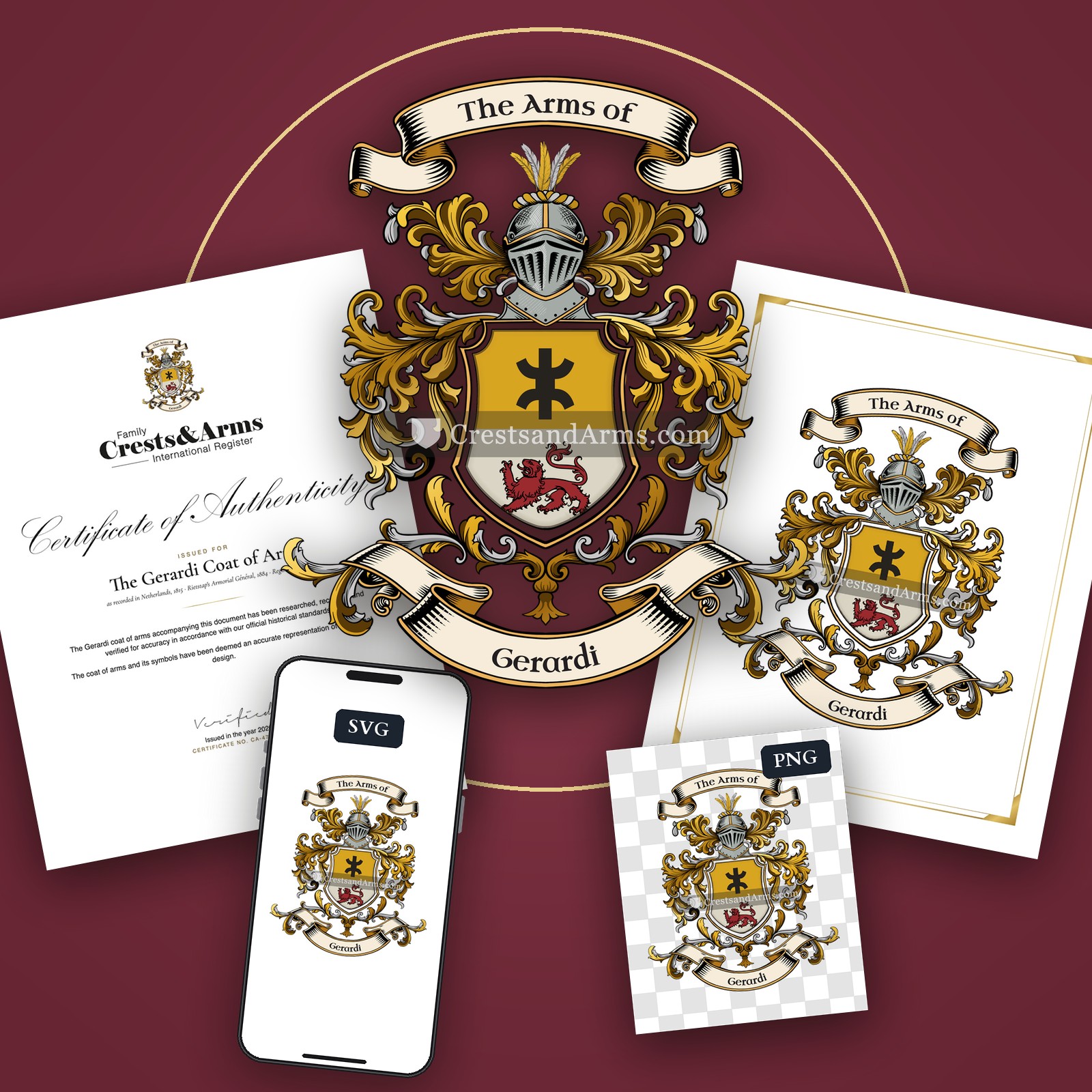
The Gerardi arms were recorded in Nimègue, c. 1815.
This is where the arms were entered in the register. Families often moved to other parts of the country, so the same name can turn up in more than one region.
Region
Nimègue
Town
Nimègue
First recorded
1815
Granting Authority for the Gerardi Arms
Hoge Raad van Adel
Photograph made by me · CC BY-SA 3.0
The body that granted and recorded arms in Netherlands in this period.
William I of the Netherlands
Sovereign of the period
William I of the Netherlands
1815–1840
Reigning in Netherlands when the Gerardi arms are first recorded.
How Arms Worked in Netherlands
In the Netherlands, coats of arms were often used by noble families and those who held specific public offices. These arms were passed down through the generations to legitimate descendants. Younger branches of a family usually kept the original design without needing to add special marks. This system ensured that the family identity remained clear and consistent over many years.
Granting authority
The Hoge Raad van Adel is the official body that regulates and manages noble titles and coats of arms in the Netherlands.
How they got arms
Families typically obtained their coats of arms through official royal grants or by proving their long-standing historical use of the symbols.
Where arms were recorded
Coats of arms are officially recorded in the registers held by the Hoge Raad van Adel, which began its work in 1814.
The family's standing
Recorded among the armigerous families of Netherlands.
Origin & History of the Gerardi Family in Netherlands
The family name Gerardi carries deep roots that trace back to the Germanic tradition of personal names, specifically derived from the name Gerard, which means brave spear. While the name is often associated with Mediterranean regions, its presence in the Netherlands is tied to the movement of people across European borders during the early nineteenth century. By 1815, records confirm that members of the Gerardi family were established in the historic city of Nijmegen. At that time, Nijmegen served as a vital crossroads for trade and military activity following the end of the Napoleonic Wars. The family likely integrated into the local Dutch society by participating in the city’s growing administrative and merchant classes. Their settlement in this ancient city suggests they were part of the broader demographic shifts that defined the post-1815 era in the Low Countries, as families moved to rebuild their lives in a changing political landscape.
Coat of Arms & Family Crest Details
Symbols on this shield
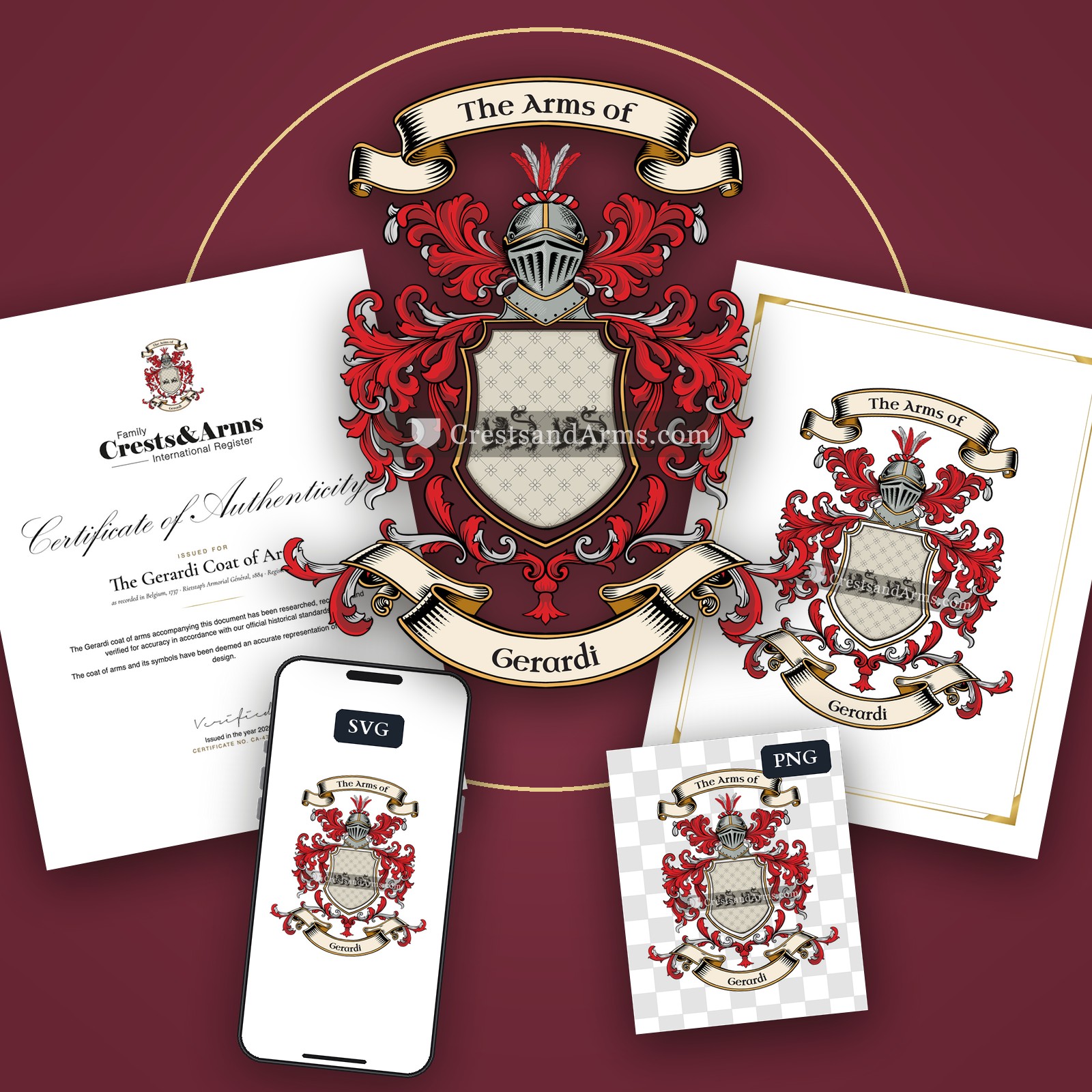
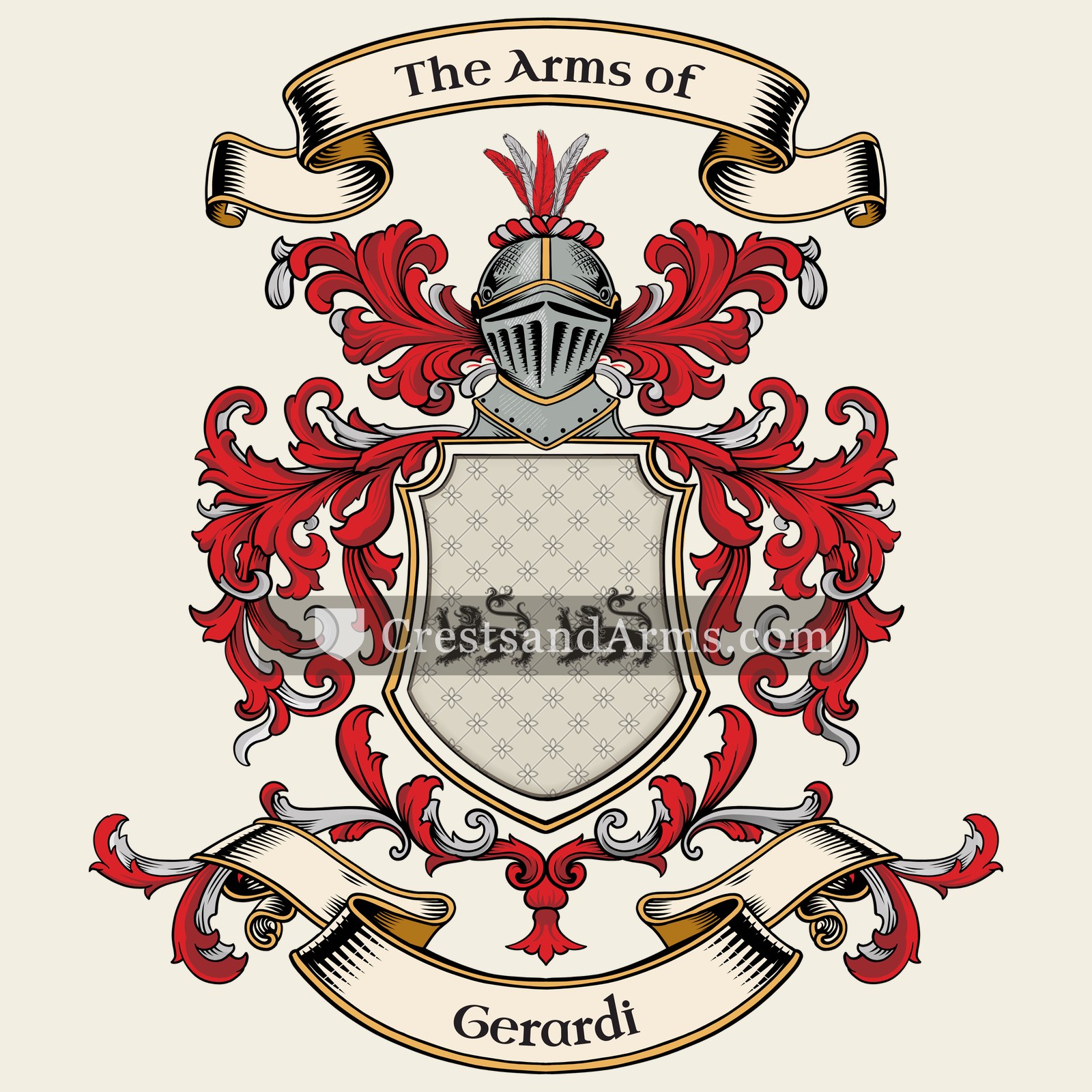
lionCourage, strength and royalty
Colours
Silver (Argent)Means: Peace and sincerity
Black (Sable)Means: Constancy
Historical info
Source
J. B. Rietstap, Armorial Général, Gouda: G. B. van Goor Zonen, 1884–87
Blazon (the actual original written record)
“D'arg. à deux lions affr. de sa., tenant ensemble deux lattes (pièces de bois) de gu., passées en saut. et clouées au point d'intersection de cinq clous d'or, 2, 1 et 2. C.: un lion iss. de sa.”
Belgiumc. 1737
Digital archive packCoat of arms PNG, gold border print PDF, vector SVG and the certificate of authenticity. Sent to your email in minutes.
Map of Belgium showing where the Gerardi arms are recorded
The Gerardi arms were recorded in Belgium, c. 1737.
Arms such as these were typically recorded in Brabant.
Brabant lay at the heart of the Low Countries, where the trade routes met. Its towns were wealthy and its landowners many, and both kinds of family kept arms, which is why the region is so heavily represented.
This is where the arms were entered in the register. Families often moved to other parts of the country, so the same name can turn up in more than one region.
The body that granted and recorded arms in Belgium in this period.
Charles VI, Holy Roman Emperor
Sovereign of the period
Charles VI, Holy Roman Emperor
1711–1740
Reigning in Netherlands when the Gerardi arms are first recorded.
How Arms Worked in Belgium
In Belgium, a coat of arms is considered personal property that is passed down through the male line to legitimate descendants. Families often use the same shield design across generations to show their shared heritage. If a branch of the family wants to change the design, they must apply for an official update to their specific version of the arms.
Granting authority
The Conseil héraldique is the official body that regulates and approves all coats of arms in Belgium.
How they got arms
Families obtain their coats of arms through formal royal grants or by confirming their historical right to use existing designs.
Where arms were recorded
All approved coats of arms are officially recorded in the public registers of the Conseil héraldique since 1844.
The family's standing
Recorded among the armigerous families of Belgium.
Origin & History of the Gerardi Family in Belgium
The family name Gerardi traces its roots in Belgium to the historic region of Brabant, where records confirm members of the family were living as early as 1737. The name itself is a patronymic, meaning it was originally derived from the given name Gerard, which was popular throughout Western Europe during the Middle Ages. In the context of the Low Countries, families often adopted these names to signify their lineage and connection to a specific ancestor. By the 18th century, the Gerardi family was part of the social fabric of the Brabant duchy, a territory known for its complex network of trade, agriculture, and local governance. Living in this region meant the family likely navigated the shifting political landscapes of the Austrian Netherlands, which influenced how families documented their births, marriages, and property ownership. Over time, the name became a stable identifier for these individuals as they contributed to the local community and established their presence within the Belgian landscape.
Coat of Arms & Family Crest Details
Symbols on this shield
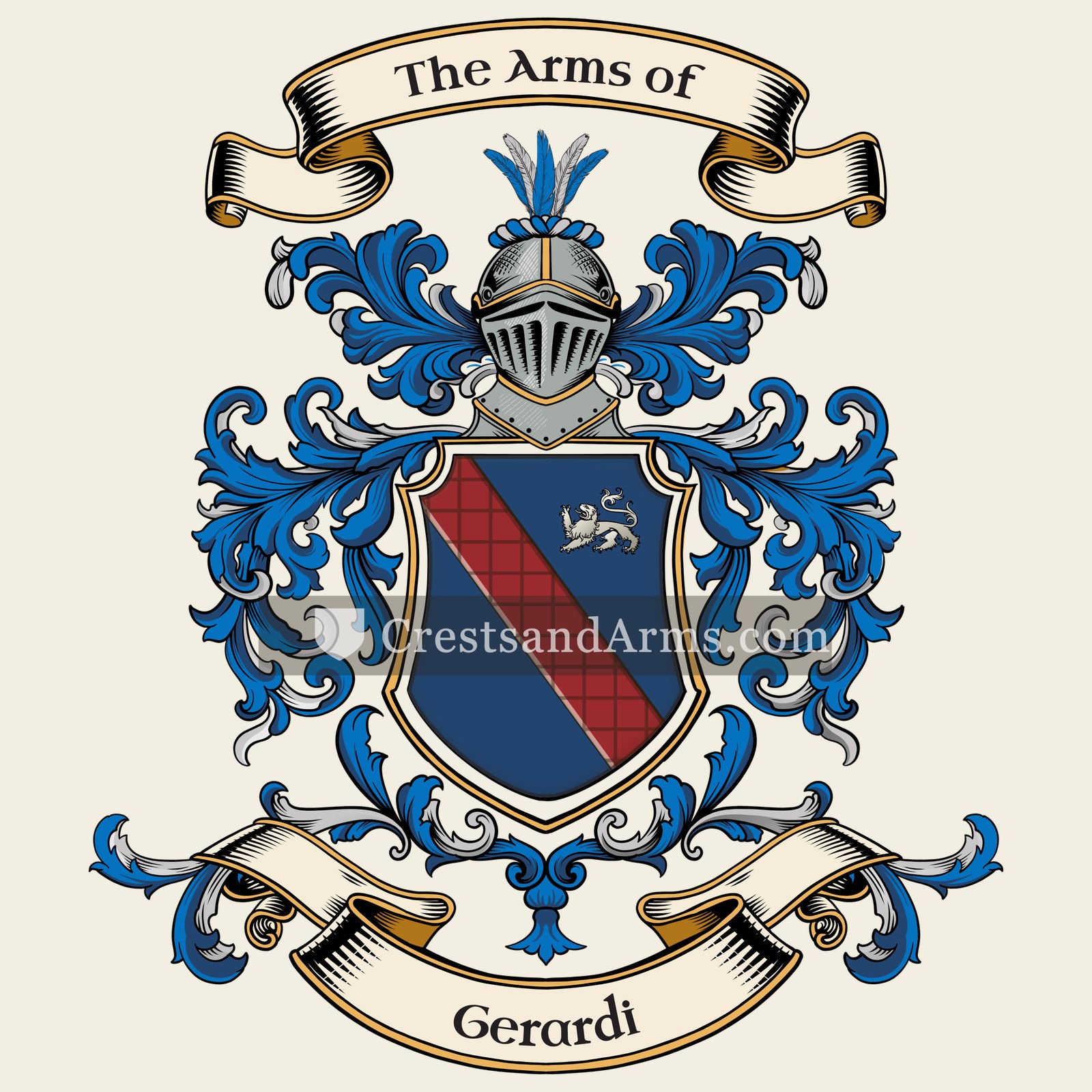
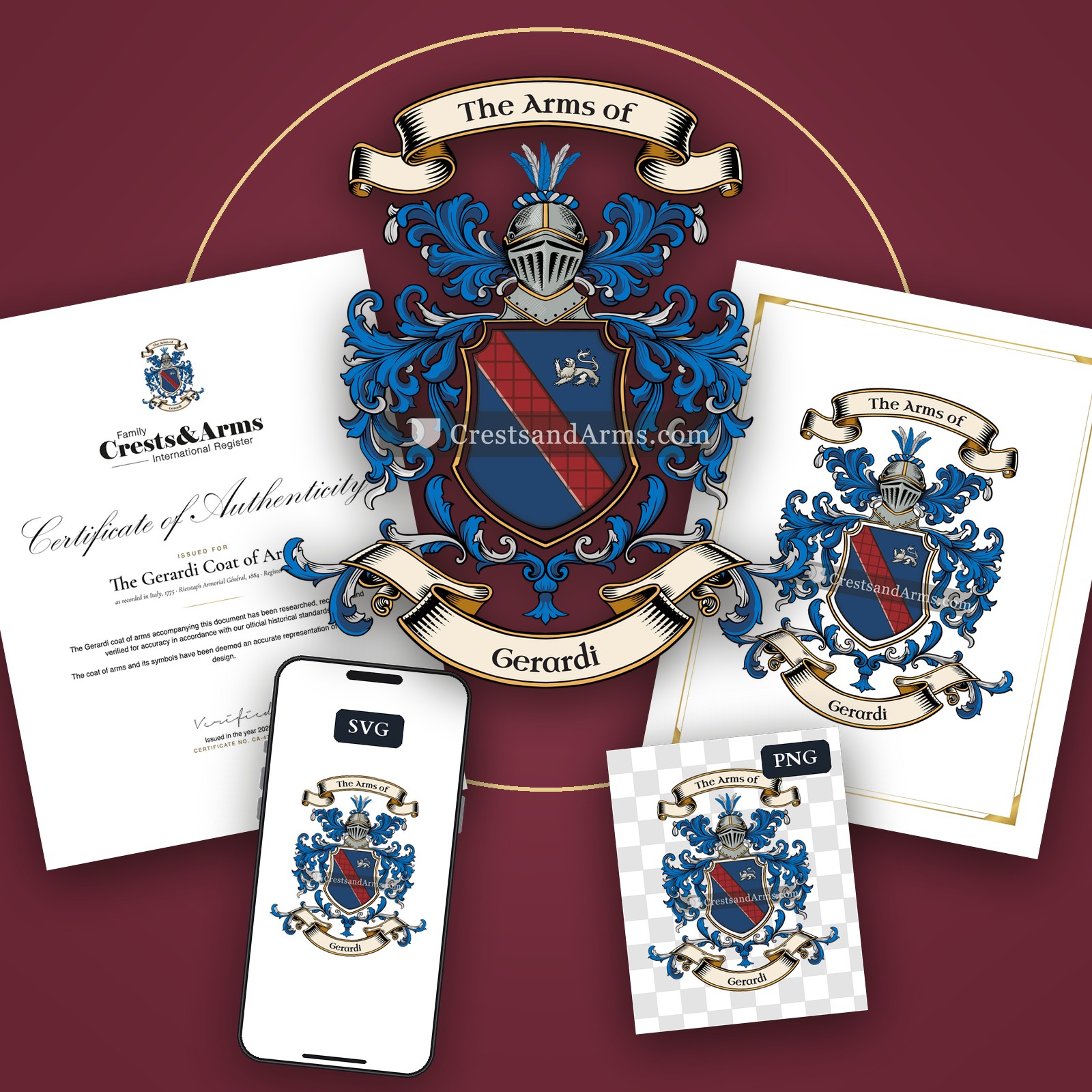
bendDefence, and the scarf of a commander
lionCourage, strength and royalty
Colours
Blue (Azure)Means: Loyalty and truth
Red (Gules)Means: Military strength
Historical info
Source
J. B. Rietstap, Armorial Général, Gouda: G. B. van Goor Zonen, 1884–87
Blazon (the actual original written record)
“D'azur à un chat ramp. au nat., la tête posée de front; à la bande de gu., br. sur le tout.”
ItalyBologne, c. 1775
Digital archive packCoat of arms PNG, gold border print PDF, vector SVG and the certificate of authenticity. Sent to your email in minutes.
Map of Italy showing where the Gerardi arms are recorded
The Gerardi arms were recorded in Bologne, c. 1775.
This is where the arms were entered in the register. Families often moved to other parts of the country, so the same name can turn up in more than one region.
The body that granted and recorded arms in Italy in this period.
Alvise Giovanni Mocenigo
Sovereign of the period
Alvise Giovanni Mocenigo
1763–1778
Reigning in Netherlands when the Gerardi arms are first recorded.
How Arms Worked in Italy
In the Italian states, coats of arms were often used by noble families to show their status and history. These symbols were passed down through the generations to all legitimate male descendants. Younger branches of a family usually kept the original design but sometimes added small changes to distinguish their specific line from the main branch.
Granting authority
Various local rulers and city governments controlled the use of coats of arms across the different Italian states.
How they got arms
Families often assumed their own arms or received them as official grants from local lords, popes, or city councils.
Where arms were recorded
Arms were recorded in local city archives or private family books rather than in one single national register.
The family's standing
Recorded among the armigerous families of Italy.
Origin & History of the Gerardi Family in Italy
The surname Gerardi finds its roots in the Germanic name Gerhard, which translates to spear-strong or brave with a spear. As this name spread across Europe during the Middle Ages, it eventually took hold in the Italian peninsula, where it evolved into the patronymic form Gerardi. By the late eighteenth century, the family had established a notable presence in the city of Bologna. During this period, Bologna was a prominent center for trade, education, and legal study within the Papal States. Families like the Gerardi often integrated into the local urban fabric by participating in the city's active guild systems or administrative roles. Their residence in Bologna by 1775 suggests that they were part of the established middle class or professional circles that helped define the social character of the region during the Enlightenment era.
Gerardi Meaning & Related Branches
Root word
Gerhard
Derived from Germanic elements meaning spear and brave or hardy.
This name
GerardiA patronymic surname signifying son of the brave spearman.
also spelled
Gerardy
Gerardee
Related arms
Negrisimilar arms
Documented Sources
J. B. Rietstap, Armorial Général, Gouda: G. B. van Goor Zonen, 1884–87
Gelders Archief, Burgerlijke Stand Gelderland, Geboorte-, huwelijks- en overlijdensakten Nijmegen (1815)
Van der Schaar, J., Woordenboek van voornamen, 1964
Fockema Andreae, S.J., Geschiedenis der Nederlanden, 1957
Digital archive packCoat of arms PNG, gold border print PDF, vector SVG and the certificate of authenticity. Sent to your email in minutes.


 millrind / fer de molineThe mill's iron, and the grinding of grain
 lionCourage, strength and royalty
 millrind / fer de molineThe mill's iron, and the grinding of grain
 lionCourage, strength and royalty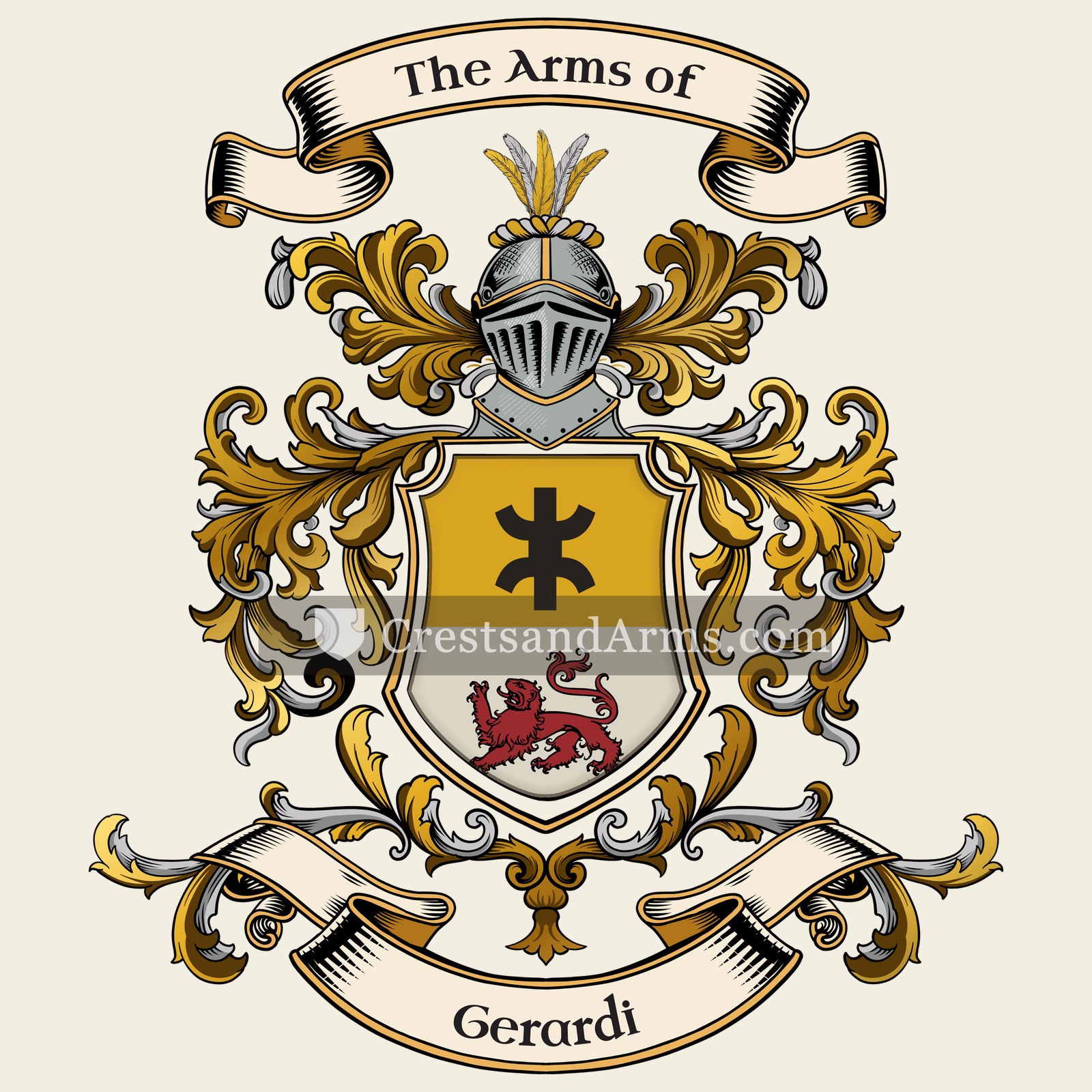




 bendDefence, and the scarf of a commander