Map of Denmark showing where the Gere arms are recorded
The Gere arms were recorded in Denmark, c. 1722.
Arms such as these were typically recorded in Sjaælland.
Zealand held the Danish court, the crown's offices and Copenhagen itself. Families who served the king kept estates within reach of it, and royal service was the ordinary route to a coat of arms.
This is where the arms were entered in the register. Families often moved to other parts of the country, so the same name can turn up in more than one region.
The body that granted and recorded arms in Denmark in this period.
Frederik IV of Denmark
Sovereign of the period
Frederik IV of Denmark
1699–1730
Reigning in Denmark when the Gere arms are first recorded.
How Arms Worked in Denmark
Danish heraldry during this period was closely tied to noble status and royal favor rather than being open to all citizens. Arms were typically granted by the monarch to individuals, and these symbols were then shared by all members of the noble house. If a family line died out, the right to use those specific arms ended with them.
Granting authority
The Danish royal chancery held the power to issue and regulate official coats of arms for the kingdom.
How they got arms
Families usually received their arms through a formal royal grant that confirmed their noble status and rights.
Where arms were recorded
These grants were officially recorded in the Danish Royal Chancery records starting in the sixteenth century.
The family's standing
Recorded among the armigerous families of Denmark.
Origin & History of the Gere Family in Denmark
The history of the Gere family in Denmark is rooted in the rural landscapes of Sjælland, where the name first appeared in official records during the early eighteenth century. By 1722, members of the family were established residents on the island, living during a time when Denmark was transitioning from a feudal society to a more structured administrative state. During this era, most families in the region were tied to the land through agricultural labor or service to local manors. The name Gere likely emerged as a way to distinguish this specific family within their local parish community as census taking and church registrations became more standardized. As the family grew, they became part of the backbone of Sjælland’s local history, contributing to the development of the island’s farming traditions and village life for generations.
Coat of Arms & Family Crest Details
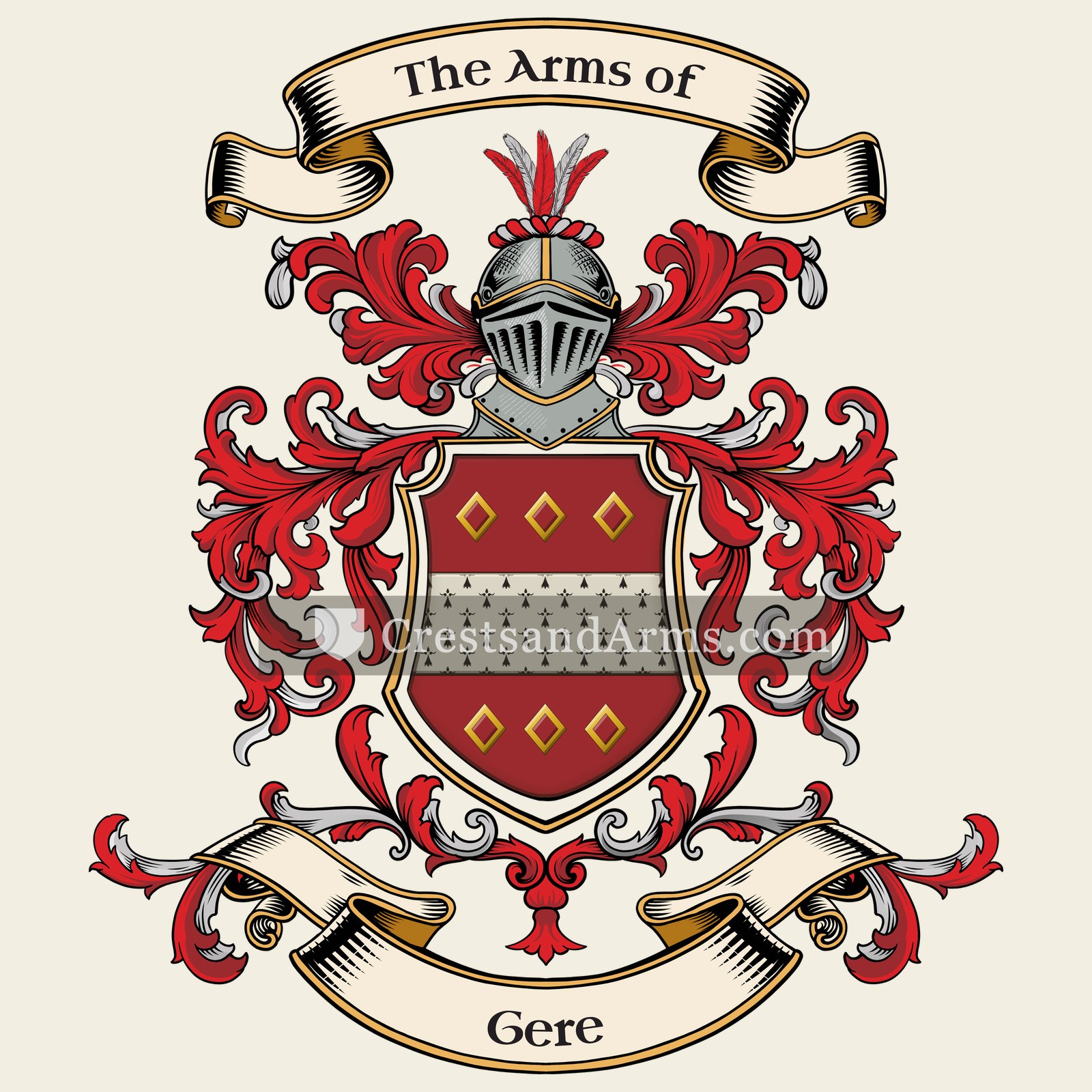
Symbols on this shield
fessThe military belt, and readiness to serve
masclePersuasion and the mail of a knight's coat
Colours
Red (Gules)Means: Military strength
ErmineMeans: Dignity
Gold (Or)Means: Generosity
Historical info
Source
Sir Bernard Burke, The General Armory of England, Scotland, Ireland and Wales, London: Harrison & Sons, 1884
Blazon (the actual original written record)
“Gu. a fesse erm. betw. six. mascles or”
DevonDevon, c. 1620
Digital archive packCoat of arms PNG, gold border print PDF, vector SVG and the certificate of authenticity. Sent to your email in minutes.
Map of England showing where the Gere arms are recorded
The Gere arms were recorded in Devon, c. 1620.
Devon was a county of small manors and seafaring families. Its gentry were spread thickly across the countryside, and money made at sea often bought an estate, which in turn brought a coat of arms.
This is where the arms were entered in the register. Families often moved to other parts of the country, so the same name can turn up in more than one region.
The body that granted and recorded arms in England in this period.
James VI and I
Sovereign of the period
James VI and I
1603–1625
Reigning in Denmark when the Gere arms are first recorded.
How Arms Worked in England
English heraldry allowed arms to be shared by all legitimate descendants of the original owner. These symbols were treated as personal property that moved through the generations to all children. While the eldest son kept the original design, other family members could use the same shield without needing to change it or register their own unique versions.
Granting authority
The College of Arms in London has regulated the use of coats of arms throughout England and Wales since 1484.
How they got arms
Families typically obtained their coats of arms through a formal grant from the Crown or by proving their ancient right to them.
Where arms were recorded
All official coats of arms are recorded in the registers kept at the College of Arms, which date back to the fifteenth century.
The family's standing
Recorded among the armigerous families of Devon.
Origin & History of the Gere Family in England
The surname Gere has deep roots in the southwestern corner of England, particularly within the county of Devon. By the early 17th century, families bearing this name were well-established in the region, living as part of the local agricultural and merchant communities. The name itself is thought to be a variation of older Middle English terms that described a person’s temperament or physical appearance, often relating to someone who was considered changeable or quick-witted. As these families settled into Devonshire life, they became part of the fabric of rural English society, participating in the parish systems and local trade that defined the era. By 1620, the Gere family was already a recognized part of the Devon landscape, contributing to the development of the local economy and the growth of the English countryside during a time of significant social change.
Gere Meaning & Related Branches
Root word
Gerhard
Derived from Germanic elements meaning spear and hardy or brave.
This name
GereA patronymic or occupational surname originating from a short form of Germanic names containing the element spear.
also spelled
Geer
Gier
Related arms
Gearesimilar arms
Geervariant spelling
Duckrecorded with Gere, same area
Documented Sources
J. B. Rietstap, Armorial Général, Gouda: G. B. van Goor Zonen, 1884–87
Rigsarkivet (Danish National Archives), Kirkebøger (Parish Registers) for Sjælland, 1722
Rigsarkivet (Danish National Archives), Folketællinger (Census Records) for Sjælland
Hansen, J. V., Danske slægtsnavne gennem tiderne, 1985
Jensen, K. E., Landbrug og landsbyliv på Sjælland i det 18. århundrede, 1992
Digital archive packCoat of arms PNG, gold border print PDF, vector SVG and the certificate of authenticity. Sent to your email in minutes.


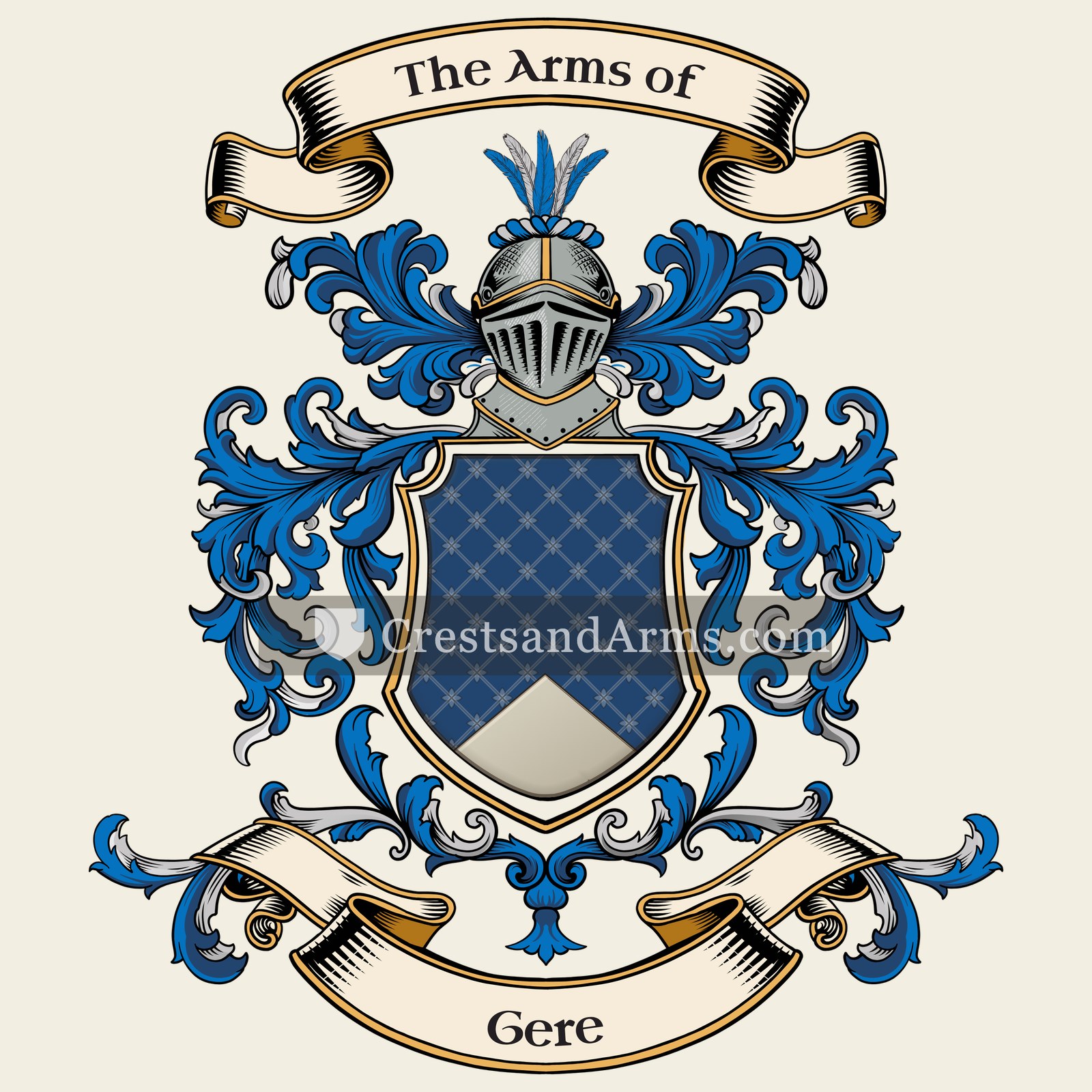


 fessThe military belt, and readiness to serve
 masclePersuasion and the mail of a knight's coat