Map of France showing where the Gervacio arms are recorded
The Gervacio arms were recorded in Dauphine, c. 1663.
Dauphine lay in the mountains of south-eastern France, a country of small estates and scattered valleys. Its gentry were many and mostly modest, and even a small landholding was enough to justify arms.
This is where the arms were entered in the register. Families often moved to other parts of the country, so the same name can turn up in more than one region.
The body that granted and recorded arms in France in this period.
Louis XIV of France
Sovereign of the period
Louis XIV of France
1643–1715
Reigning in France when the Gervacio arms are first recorded.
How Arms Worked in France
In France, a coat of arms was a mark of honor that passed down through the male line to all legitimate descendants. Families often used the same shield without changes to show their shared heritage. If a branch wanted to stand out, they could add a small mark to their shield to show their specific place in the family tree.
Granting authority
The Juge d'armes de France acted as the official authority that regulated and verified coats of arms across the country.
How they got arms
Families typically inherited their arms from ancestors, though they could also receive them through royal grants or by proving their noble status.
Where arms were recorded
Coats of arms were officially recorded in the Armorial Général de France, which began its main collection in the year 1696.
The family's standing
Recorded among the armigerous families of Dauphine.
Origin & History of the Gervacio Family in France
The family name Gervacio traces its roots to the historical region of Dauphiné in southeastern France. By the year 1663, the family was firmly established in this mountainous area, which served as a gateway between the French kingdom and the Italian states. The name itself is derived from the ancient Latin name Gervasius, which means spear servant or warrior. During the seventeenth century, families in the Dauphiné region were often deeply connected to the local agricultural economy and the complex social structures of the provincial nobility and peasantry. Living in the shadow of the Alps, the early members of the Gervacio family navigated a landscape shaped by religious shifts and the centralizing power of the French monarchy. Their presence in this specific region suggests they were part of a resilient community that maintained deep ties to the land and local traditions for generations.
Meaning of the Gervacio family crest colors & symbols
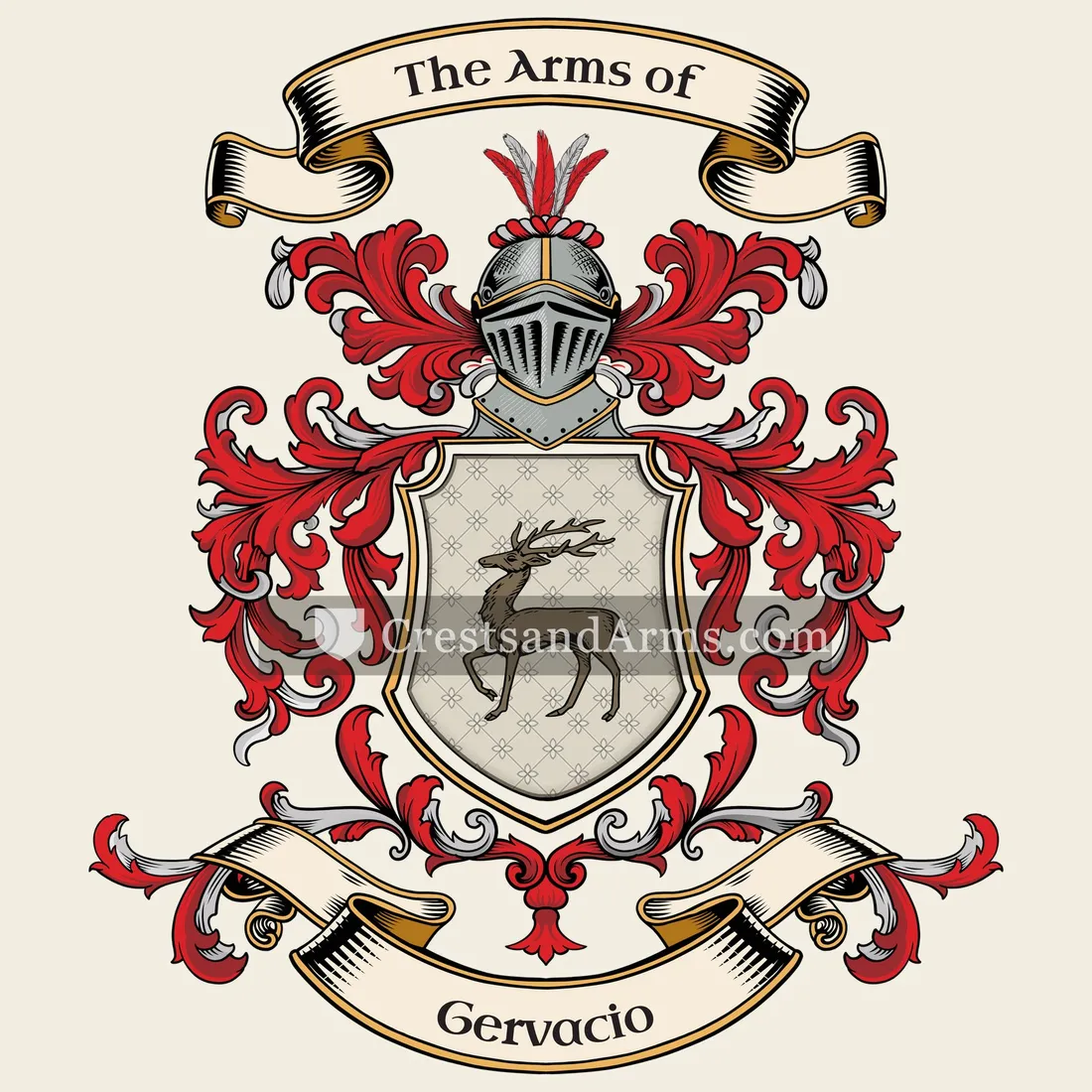
Symbols on this shield
stagPeace and harmony, and one who will not fight unprovoked
Colours
Silver (Argent)Means: Peace and sincerity
Historical info
Source
J. B. Rietstap, Armorial Général, Gouda: G. B. van Goor Zonen, 1884–87
Blazon (the actual original written record)
“D'arg. à un cerf pass. au nat.”
SicilySicily, c. 1775
Digital archive packCoat of arms PNG, gold border print PDF, vector SVG and the certificate of authenticity. Sent to your email in minutes.
Map of Italy showing where the Gervacio arms are recorded
The Gervacio arms were recorded in Sicily, c. 1775.
Sicily was ruled in turn by Normans, Germans, French and Spanish, and each left landed families behind. The island kept formal lists of its noble houses, which is why so many Sicilian names carry recorded arms.
This is where the arms were entered in the register. Families often moved to other parts of the country, so the same name can turn up in more than one region.
The body that granted and recorded arms in Italy in this period.
Alvise Giovanni Mocenigo
Sovereign of the period
Alvise Giovanni Mocenigo
1763–1778
Reigning in France when the Gervacio arms are first recorded.
How Arms Worked in Italy
In the Italian states, coats of arms were often used by noble families to show their status and history. These symbols were passed down through the generations to all legitimate male descendants. Younger branches of a family usually kept the original design but sometimes added small changes to distinguish their specific line from the main branch.
Granting authority
Various local rulers and city governments controlled the use of coats of arms across the different Italian states.
How they got arms
Families often assumed their own arms or received them as official grants from local lords, popes, or city councils.
Where arms were recorded
Arms were recorded in local city archives or private family books rather than in one single national register.
The family's standing
Recorded among the armigerous families of Sicily.
Origin & History of the Gervacio Family in Italy
The family name Gervacio finds its roots in the Latin name Gervasius, which translates to "spear servant" or "honorable." By the late 18th century, the name was firmly established within the social fabric of Sicily. Historical records confirm that members of the family were living on the island by 1775, likely residing in rural or coastal communities where they contributed to the local agricultural economy. During this period, Sicily was a crossroads of Mediterranean culture, and families like the Gervacios often moved between small towns to work as artisans or landowners. Because surnames were becoming more standardized in Italian parish records during the 1700s, the presence of the name in 1775 suggests that the family had already been rooted in the region for several generations. These early ancestors lived through a time of significant political change as Sicily transitioned between various ruling powers, yet the family maintained its identity and presence in the local community.
Gervacio Meaning & Related Branches
Root word
Gervasius
Derived from the Latin word for spear or servant.
This name
GervacioA French surname signifying one who is honored, noble, or serves with a spear.
also spelled
Gervais
Gervasio
Jervasi
Gervasee
Gervase
Documented Sources
J. B. Rietstap, Armorial Général, Gouda: G. B. van Goor Zonen, 1884–87
Archives départementales de l'Isère, Série E, État civil et registres paroissiaux
Archives départementales de la Drôme, Série E, Registres paroissiaux de l'ancien régime
Bouchard, Gérard, Quelques arpents d'Amérique: Population et économie du peuplement, 1996
Chevalier, Bernard, Histoire de la France: Le temps des réformes, 1992
Digital archive packCoat of arms PNG, gold border print PDF, vector SVG and the certificate of authenticity. Sent to your email in minutes.


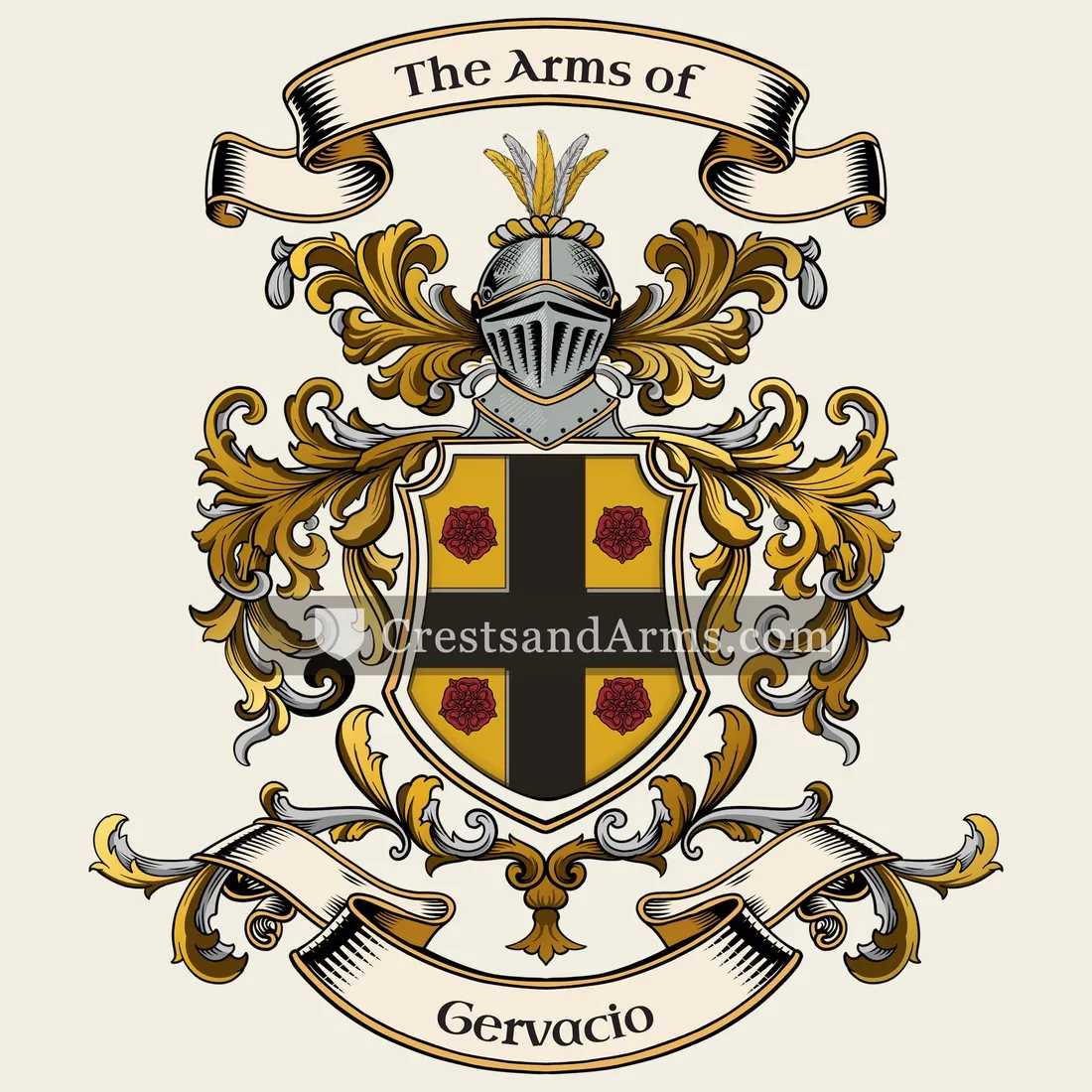
 cross symbolChristian faith and service
 roseThe seventh son, and beauty with grace
 cross symbolChristian faith and service
 roseThe seventh son, and beauty with grace


 stagPeace and harmony, and one who will not fight unprovoked