Map of France showing where the Gervase arms are recorded
The Gervase arms were recorded in Dauphine, c. 1663.
Dauphine lay in the mountains of south-eastern France, a country of small estates and scattered valleys. Its gentry were many and mostly modest, and even a small landholding was enough to justify arms.
This is where the arms were entered in the register. Families often moved to other parts of the country, so the same name can turn up in more than one region.
The body that granted and recorded arms in France in this period.
Louis XIV of France
Sovereign of the period
Louis XIV of France
1643–1715
Reigning in France when the Gervase arms are first recorded.
How Arms Worked in France
In France, a coat of arms was a mark of honor that passed down through the male line to all legitimate descendants. Families often used the same shield without changes to show their shared heritage. If a branch wanted to stand out, they could add a small mark to their shield to show their specific place in the family tree.
Granting authority
The Juge d'armes de France acted as the official authority that regulated and verified coats of arms across the country.
How they got arms
Families typically inherited their arms from ancestors, though they could also receive them through royal grants or by proving their noble status.
Where arms were recorded
Coats of arms were officially recorded in the Armorial Général de France, which began its main collection in the year 1696.
The family's standing
Recorded among the armigerous families of Dauphine.
Origin & History of the Gervase Family in France
The family name Gervase traces its roots to the ancient personal name Gervasius, which gained popularity across France due to the influence of Saint Gervase, a martyr from the early Christian era. By the mid-seventeenth century, the family established a notable presence in the Dauphiné region, a mountainous area in southeastern France known for its rugged terrain and distinct local customs. Records from 1663 confirm that members of the Gervase family were active participants in the social and economic life of this province during the reign of King Louis XIV. At this time, the family name served as a way to identify individuals within their local parish communities, often linking them to specific villages or agricultural estates. As the family grew, they integrated into the regional fabric of the Dauphiné, contributing to the development of the area while maintaining the historical legacy associated with their name.
Coat of Arms & Family Crest Details
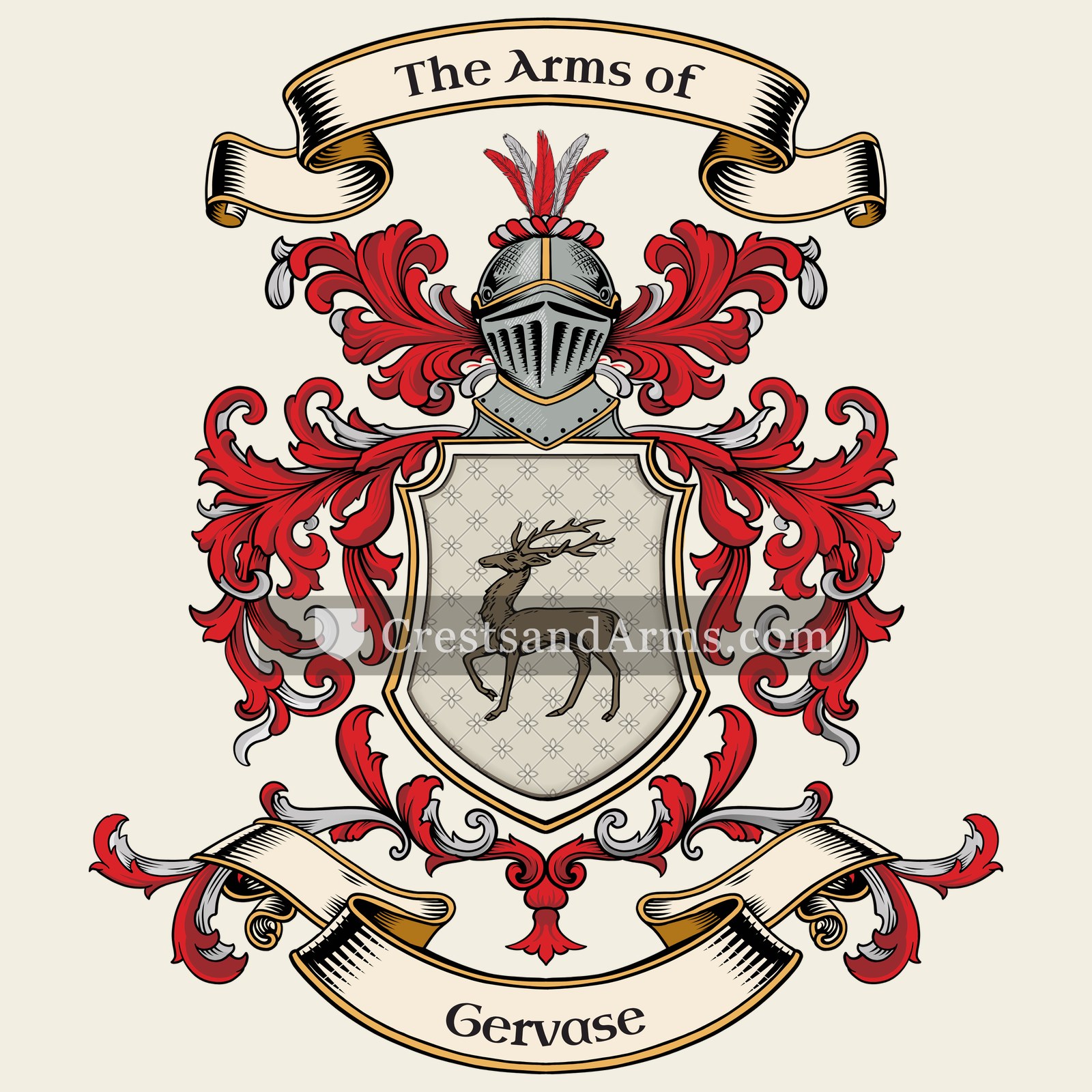
Symbols on this shield
stagPeace and harmony, and one who will not fight unprovoked
Colours
Silver (Argent)Means: Peace and sincerity
Historical info
Source
J. B. Rietstap, Armorial Général, Gouda: G. B. van Goor Zonen, 1884–87
Blazon (the actual original written record)
“D'arg. à un cerf pass. au nat.”
SicilySicily, c. 1775
Digital archive packCoat of arms PNG, gold border print PDF, vector SVG and the certificate of authenticity. Sent to your email in minutes.
Map of Italy showing where the Gervase arms are recorded
The Gervase arms were recorded in Sicily, c. 1775.
Sicily was ruled in turn by Normans, Germans, French and Spanish, and each left landed families behind. The island kept formal lists of its noble houses, which is why so many Sicilian names carry recorded arms.
This is where the arms were entered in the register. Families often moved to other parts of the country, so the same name can turn up in more than one region.
The body that granted and recorded arms in Italy in this period.
Alvise Giovanni Mocenigo
Sovereign of the period
Alvise Giovanni Mocenigo
1763–1778
Reigning in France when the Gervase arms are first recorded.
How Arms Worked in Italy
In the Italian states, coats of arms were often used by noble families to show their status and history. These symbols were passed down through the generations to all legitimate male descendants. Younger branches of a family usually kept the original design but sometimes added small changes to distinguish their specific line from the main branch.
Granting authority
Various local rulers and city governments controlled the use of coats of arms across the different Italian states.
How they got arms
Families often assumed their own arms or received them as official grants from local lords, popes, or city councils.
Where arms were recorded
Arms were recorded in local city archives or private family books rather than in one single national register.
The family's standing
Recorded among the armigerous families of Sicily.
Origin & History of the Gervase Family in Italy
The family name Gervase finds its roots in the ancient Latin name Gervasius, which evolved over centuries as it spread across the Mediterranean. By the time the family was firmly established in Sicily in 1775, they were part of a society shaped by centuries of cultural blending between local traditions and various ruling powers. In the late eighteenth century, Sicily was a hub of agricultural and social change under the Bourbon monarchy. Families like the Gervase often lived in areas where they contributed to the local economy and participated in the civic life of their towns. While the name carries a sense of classical history, its presence in Sicily during this period reflects the broader movement of families who settled into the island’s unique landscape to build their lives during a time of significant transition for the Italian peninsula.
Gervase Meaning & Related Branches
Root word
Gervasius
Derived from the Latin word for spear or servant.
This name
GervaseAn ancient name signifying one who is noble, spear-bearing, or a faithful servant.
also spelled
Gervais
Gervasio
Jervasi
Gervasee
Gervase
Documented Sources
J. B. Rietstap, Armorial Général, Gouda: G. B. van Goor Zonen, 1884–87
Dauzat, Albert. Dictionnaire étymologique des noms et prénoms de France. 1951
Digital archive packCoat of arms PNG, gold border print PDF, vector SVG and the certificate of authenticity. Sent to your email in minutes.


 cross symbolChristian faith and service
 roseThe seventh son, and beauty with grace
 cross symbolChristian faith and service
 roseThe seventh son, and beauty with grace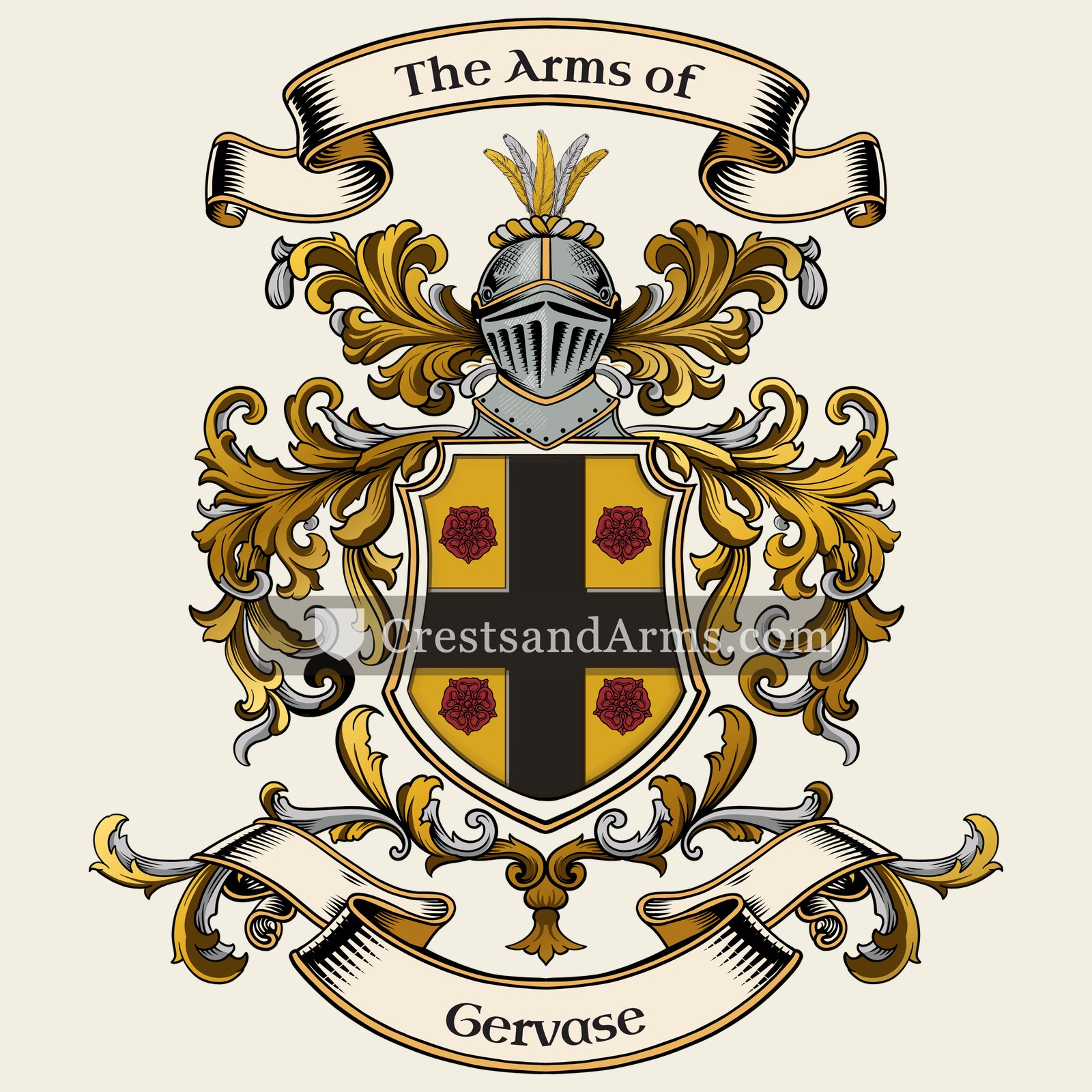


 stagPeace and harmony, and one who will not fight unprovoked