A record of documented arms, meaning and origin, researched for the Gilles family lines. Documented in 3 countries.
Reg. 1637 · Belgian, G–I
Coat of Arms & Family Crest Details
Symbols on this shield
fessThe military belt, and readiness to serve
mountThe ground held, and steadfastness upon it
swanGrace, light and the poet's art
wheatsheafPlenty, and the harvest of one's own labour
Colours
Silver (Argent)Means: Peace and sincerity
Red (Gules)Means: Military strength
Gold (Or)Means: Generosity
Historical info
Source
J. B. Rietstap, Armorial Général, Gouda: G. B. van Goor Zonen, 1884–87
Blazon (the actual original written record)
“D'arg. à la fasce de gu., supp. une eau au nat., sur laquelle nage un cygne au nat.; la fasce acc. en p. de trois épis d'or, tigés et feuillés de sin., sur une terrasse au nat. C.: le cygne.”
Belgiumc. 1737
Digital archive packCoat of arms PNG, gold border print PDF, vector SVG and the certificate of authenticity. Sent to your email in minutes.
Map of Belgium showing where the Gilles arms are recorded
The Gilles arms were recorded in Belgium, c. 1737.
Arms such as these were typically recorded in Brabant.
Brabant lay at the heart of the Low Countries, where the trade routes met. Its towns were wealthy and its landowners many, and both kinds of family kept arms, which is why the region is so heavily represented.
This is where the arms were entered in the register. Families often moved to other parts of the country, so the same name can turn up in more than one region.
The body that granted and recorded arms in Belgium in this period.
Charles VI, Holy Roman Emperor
Sovereign of the period
Charles VI, Holy Roman Emperor
1711–1740
Reigning in Belgium when the Gilles arms are first recorded.
How Arms Worked in Belgium
In Belgium, a coat of arms is considered personal property that is passed down through the male line to legitimate descendants. Families often use the same shield design across generations to show their shared heritage. If a branch of the family wants to change the design, they must apply for an official update to their specific version of the arms.
Granting authority
The Conseil héraldique is the official body that regulates and approves all coats of arms in Belgium.
How they got arms
Families obtain their coats of arms through formal royal grants or by confirming their historical right to use existing designs.
Where arms were recorded
All approved coats of arms are officially recorded in the public registers of the Conseil héraldique since 1844.
The family's standing
Recorded among the armigerous families of Belgium.
Origin & History of the Gilles Family in Belgium
The family name Gilles finds its roots in the ancient Germanic and French traditions, serving as a shortened form of the name Aegidius. By the time the family was firmly established in the Duchy of Brabant in 1737, the name had already become a common fixture across the Low Countries. During this period, the region was a bustling hub of trade and agricultural development under the Habsburg Netherlands. Families bearing this name were often integrated into the local social fabric as skilled laborers or landowners who contributed to the stability of the Brabant countryside. As the name spread through the parishes of Belgium, it evolved alongside the local dialects, reflecting the linguistic blend of the region. The presence of the Gilles family in 18th-century Brabant highlights their role as part of the hardworking population that navigated the complex political and economic shifts of the Belgian territories during the Enlightenment era.
Coat of Arms & Family Crest Details
Symbols on this shield
applePeace, plenty and long-standing settlement
dropletsTears, and grief borne with patience
Colours
Red (Gules)Means: Military strength
Gold (Or)Means: Generosity
Historical info
Source
J. B. Rietstap, Armorial Général, Gouda: G. B. van Goor Zonen, 1884–87
Blazon (the actual original written record)
“Ec. en saut.: au 1 de gu. à une pomme d'or; aux 2 et 3 d'or à trois bandes d'azur; au 4 de gu. à une larme d'or.”
LorraineLorraine, c. 1522
Digital archive packCoat of arms PNG, gold border print PDF, vector SVG and the certificate of authenticity. Sent to your email in minutes.
Map of France showing where the Gilles arms are recorded
The Gilles arms were recorded in Lorraine, c. 1522.
Lorraine sat on the border between France and the German lands, and border country bred soldiers. Families here held small estates and served in arms, and a fighting man was exactly the sort who carried a shield of his own.
This is where the arms were entered in the register. Families often moved to other parts of the country, so the same name can turn up in more than one region.
The body that granted and recorded arms in France in this period.
Francis I of France
Sovereign of the period
Francis I of France
1515–1547
Reigning in Belgium when the Gilles arms are first recorded.
How Arms Worked in France
In France, a coat of arms was a mark of honor that passed down through the male line to all legitimate descendants. Families often used the same shield without changes to show their shared heritage. If a branch wanted to stand out, they could add a small mark to their shield to show their specific place in the family tree.
Granting authority
The Juge d'armes de France acted as the official authority that regulated and verified coats of arms across the country.
How they got arms
Families typically inherited their arms from ancestors, though they could also receive them through royal grants or by proving their noble status.
Where arms were recorded
Coats of arms were officially recorded in the Armorial Général de France, which began its main collection in the year 1696.
The family's standing
Recorded among the armigerous families of Lorraine.
Origin & History of the Gilles Family in France
The surname Gilles finds its roots in the medieval period as a patronymic name, derived from the popular given name Gilles, which is the French form of the Greek name Aegidius. By the early 16th century, the family established a notable presence in the province of Lorraine, a region then caught between the influences of the Holy Roman Empire and the Kingdom of France. Records confirm that members of the family were living in this area by 1522, a time when Lorraine was a vibrant center for trade and cultural exchange. Families bearing this name often lived as artisans or landholders, integrating into the local social fabric of the borderlands. As the name spread through the French-speaking territories, it became associated with the steady growth of rural and urban communities throughout the eastern provinces. The history of the Gilles name reflects the broader movement of families across the shifting borders of early modern Europe.
Coat of Arms & Family Crest Details
Symbols on this shield
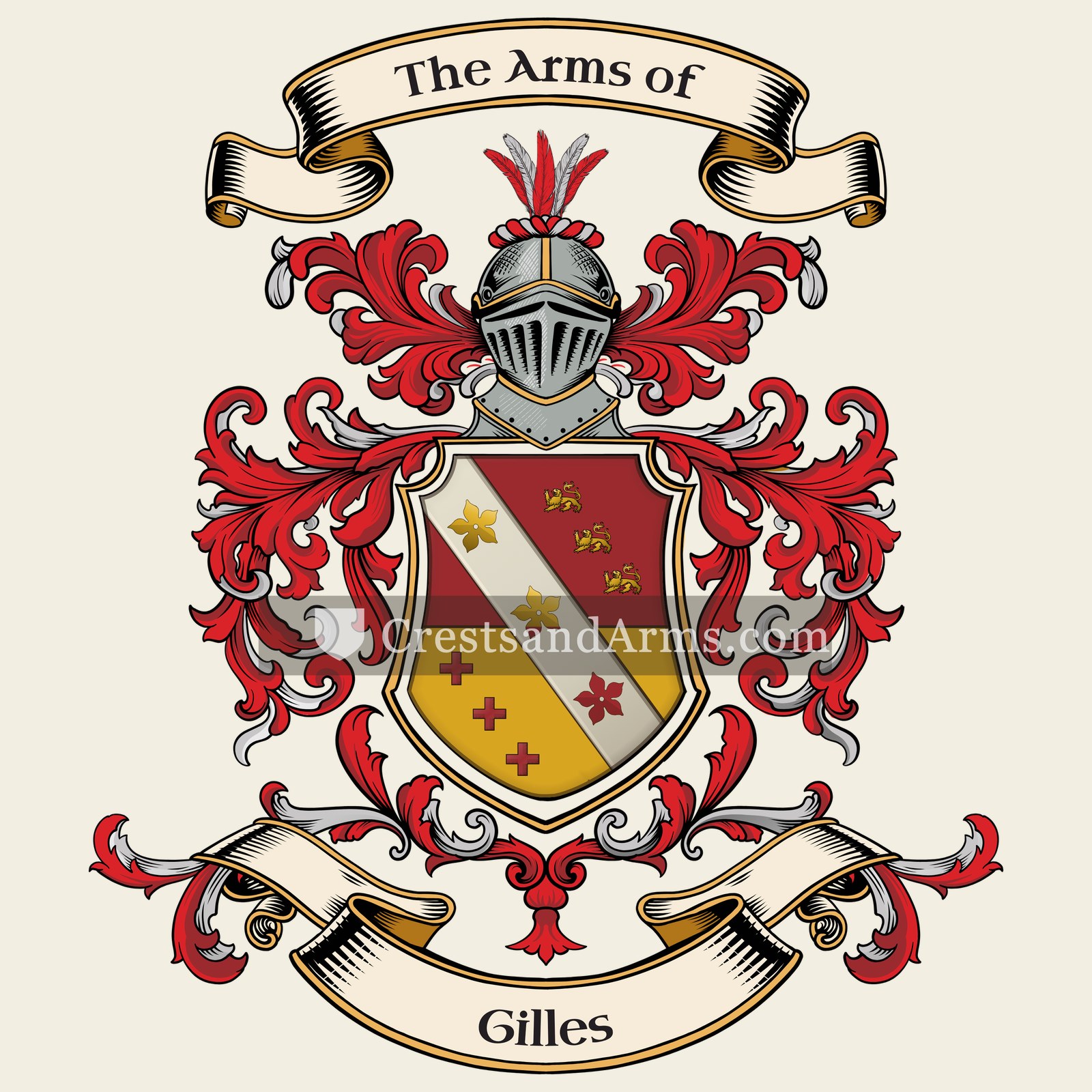
bendDefence, and the scarf of a commander
cross symbolChristian faith and service
lionCourage, strength and royalty
cinquefoilHope and joy
Colours
Red (Gules)Means: Military strength
Gold (Or)Means: Generosity
Silver (Argent)Means: Peace and sincerity
Historical info
Source
Sir Bernard Burke, The General Armory of England, Scotland, Ireland and Wales, London: Harrison & Sons, 1884
Blazon (the actual original written record)
“Per fesse gu. and or, on a bend engr. ar. betw. three lions' heads erased, two and one, in chief, and as many crosses crosslet, one and two, all counterchanged, as many cinquefoils of the first”
Englandc. 1620
Digital archive packCoat of arms PNG, gold border print PDF, vector SVG and the certificate of authenticity. Sent to your email in minutes.
Map of England showing where the Gilles arms are recorded
The Gilles arms were recorded in England, c. 1620.
Arms such as these were typically recorded in York.
Yorkshire is the largest of the English counties, and it held more gentry families than any other. Land there was split among a great many households rather than a few, so a great many of them carried arms.
This is where the arms were entered in the register. Families often moved to other parts of the country, so the same name can turn up in more than one region.
The body that granted and recorded arms in England in this period.
James VI and I
Sovereign of the period
James VI and I
1603–1625
Reigning in Belgium when the Gilles arms are first recorded.
How Arms Worked in England
English heraldry allowed arms to be shared by all legitimate descendants of the original owner. These symbols were treated as personal property that moved through the generations to all children. While the eldest son kept the original design, other family members could use the same shield without needing to change it or register their own unique versions.
Granting authority
The College of Arms in London has regulated the use of coats of arms throughout England and Wales since 1484.
How they got arms
Families typically obtained their coats of arms through a formal grant from the Crown or by proving their ancient right to them.
Where arms were recorded
All official coats of arms are recorded in the registers kept at the College of Arms, which date back to the fifteenth century.
The family's standing
Recorded among the armigerous families of England.
Origin & History of the Gilles Family in England
The family name Gilles has deep roots that trace back to the medieval period, evolving from the ancient personal name Giles, which signifies a young goat or a shield-bearer. By the time the seventeenth century arrived, members of this family were firmly established in the historic city of York. Records from 1620 confirm their presence in this northern hub, a time when York served as a vital center for trade, religion, and regional governance. Families living in York during this era often navigated the complexities of a changing England, balancing local agricultural life with the growing influence of the city’s merchant guilds. As the name spread through the region, it became part of the social fabric of Yorkshire, reflecting the migration patterns and community ties that defined life in northern England during the early modern period.
Gilles Meaning & Related Branches
Root word
Aigidios
Ancient Greek term referring to a goat or a protective shield.
This name
GillesA French and Belgian derivative signifying a youth or a shield bearer.
also spelled
Gillis
Jil
Gylles
Gyllis
Gyles
Related arms
Piot de Courcellessimilar arms
Gillisvariant spelling
Gylesvariant spelling
Gyllvariant spelling
Documented Sources
J. B. Rietstap, Armorial Général, Gouda: G. B. van Goor Zonen, 1884–87
Debrabandere, Frans. Woordenboek van de familienamen in België en Noord-Frankrijk, 2003
State Archives in Belgium (Rijksarchief), Parochieregisters van de provincie Brabant
Digital archive packCoat of arms PNG, gold border print PDF, vector SVG and the certificate of authenticity. Sent to your email in minutes.


 fessThe military belt, and readiness to serve
 mountThe ground held, and steadfastness upon it
 swanGrace, light and the poet's art
 wheatsheafPlenty, and the harvest of one's own labour
 fessThe military belt, and readiness to serve
 mountThe ground held, and steadfastness upon it
 swanGrace, light and the poet's art
 wheatsheafPlenty, and the harvest of one's own labour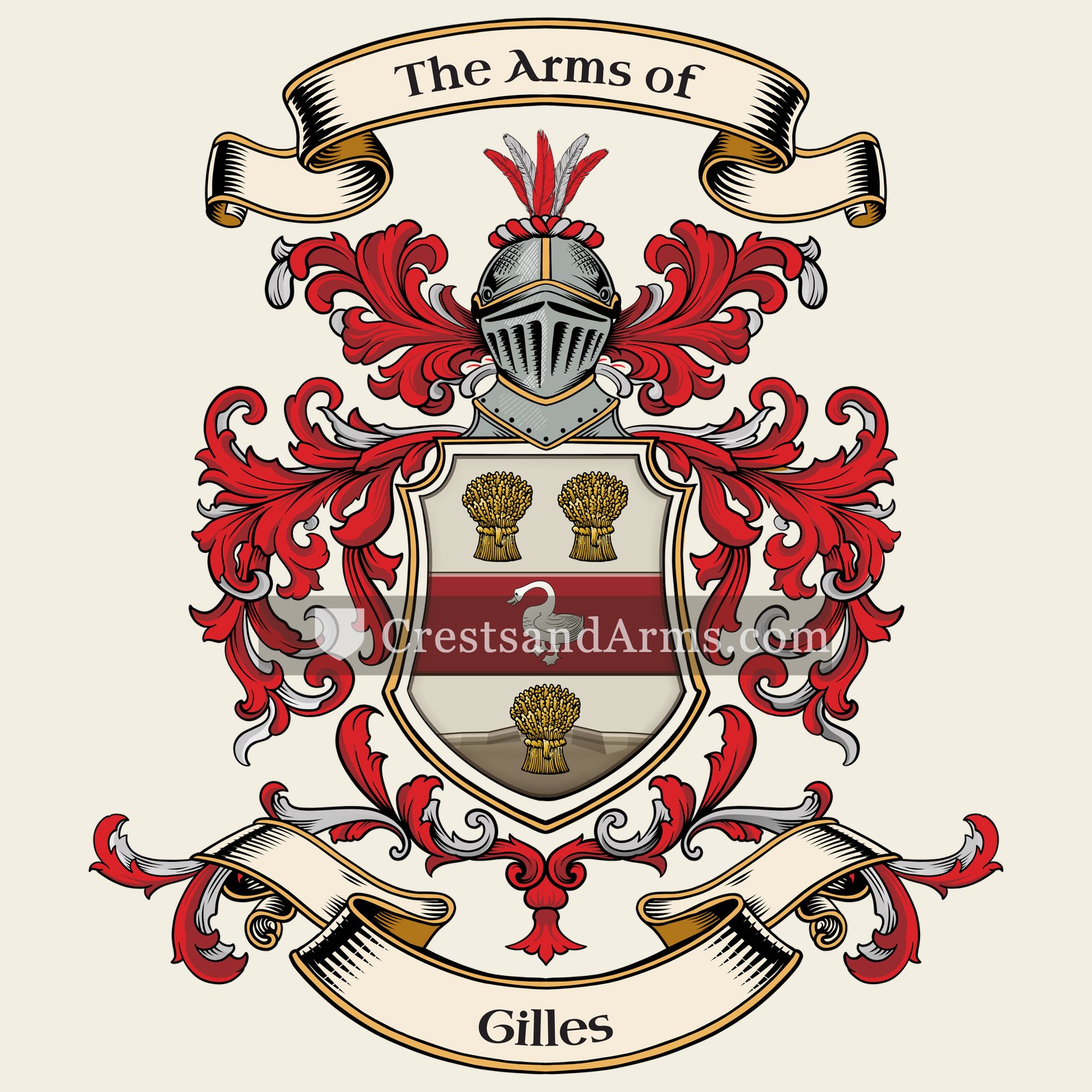


 applePeace, plenty and long-standing settlement
 dropletsTears, and grief borne with patience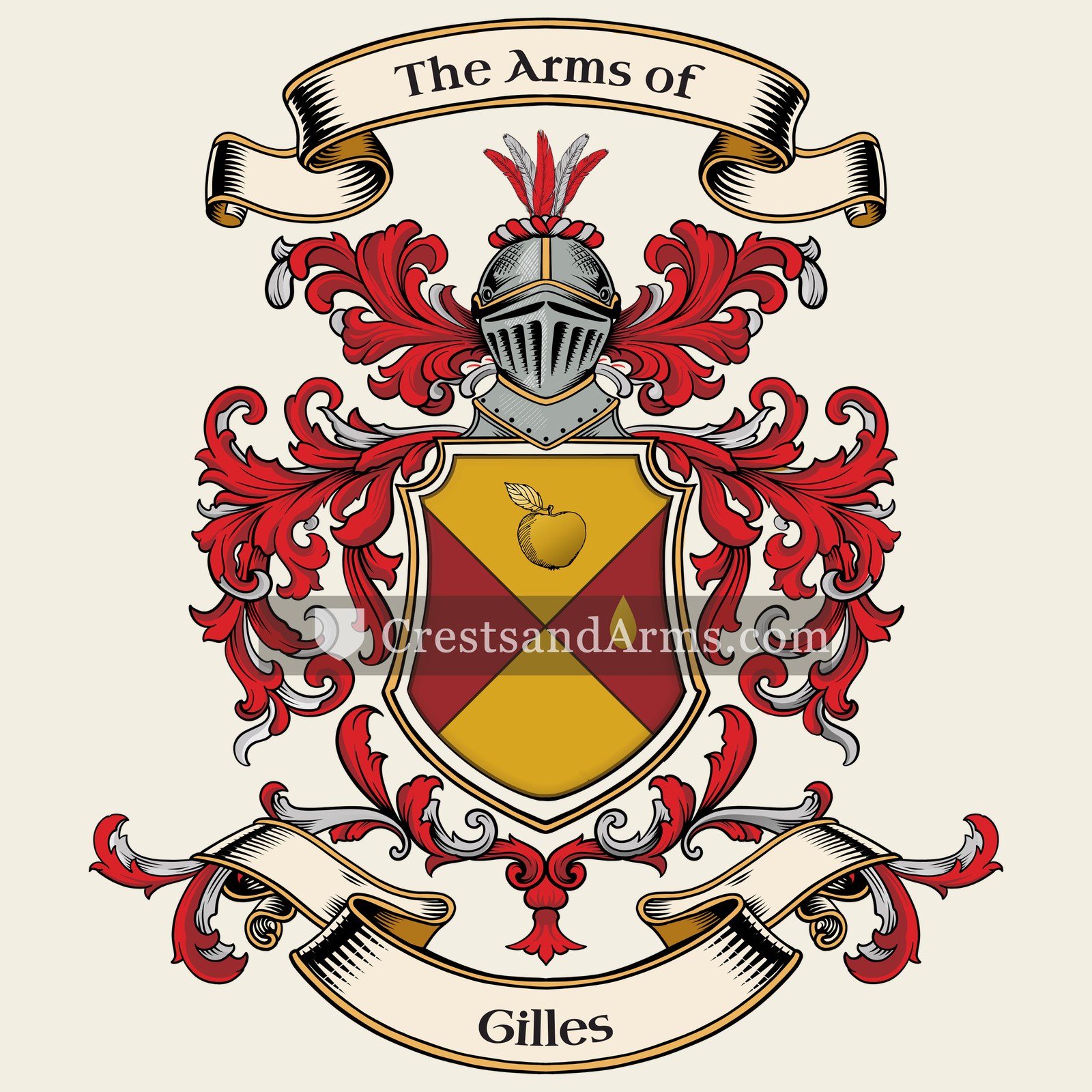


 bendDefence, and the scarf of a commander
 cross symbolChristian faith and service
 lionCourage, strength and royalty
 cinquefoilHope and joy