Map of France showing where the Gilson arms are recorded
The Gilson arms were recorded in Lorraine, c. 1667.
Lorraine sat on the border between France and the German lands, and border country bred soldiers. Families here held small estates and served in arms, and a fighting man was exactly the sort who carried a shield of his own.
This is where the arms were entered in the register. Families often moved to other parts of the country, so the same name can turn up in more than one region.
The body that granted and recorded arms in France in this period.
Louis XIV of France
Sovereign of the period
Louis XIV of France
1643–1715
Reigning in France when the Gilson arms are first recorded.
How Arms Worked in France
In France, a coat of arms was a mark of honor that passed down through the male line to all legitimate descendants. Families often used the same shield without changes to show their shared heritage. If a branch wanted to stand out, they could add a small mark to their shield to show their specific place in the family tree.
Granting authority
The Juge d'armes de France acted as the official authority that regulated and verified coats of arms across the country.
How they got arms
Families typically inherited their arms from ancestors, though they could also receive them through royal grants or by proving their noble status.
Where arms were recorded
Coats of arms were officially recorded in the Armorial Général de France, which began its main collection in the year 1696.
The family's standing
Recorded among the armigerous families of Lorraine.
Origin & History of the Gilson Family in France
The family name Gilson finds its roots in the northeastern region of France known as Lorraine. By the year 1667, records confirm that members of the family were well-established in this area, which served as a cultural crossroads between French and Germanic influences. The name itself likely originated as a diminutive form of the name Giles, which was a popular choice among families in the region during the Middle Ages. As the family grew, they became deeply integrated into the local social fabric of Lorraine, often working in trades that supported the agricultural and artisanal economy of the seventeenth century. Their presence in this specific province suggests that the Gilsons were part of the steady population that helped maintain the identity of the borderlands during a time of significant political change in Europe.
Coat of Arms & Family Crest Details
Symbols on this shield
fessThe military belt, and readiness to serve
martletA younger son, who must win his own land
roundelA coin, and one who has been to the crusades
Colours
Silver (Argent)Means: Peace and sincerity
Red (Gules)Means: Military strength
Black (Sable)Means: Constancy
Historical info
Source
J. B. Rietstap, Armorial Général, Gouda: G. B. van Goor Zonen, 1884–87
Blazon (the actual original written record)
“D'arg. à la fasce de gu., acc. en chef de trois merlettes de sa., 2 et 1, et en p. d'une fontaine de deux bassins superposés de sa., jaillissante de plusieurs traits. C.: une merlette de sa.”
Belgiumc. 1737
Digital archive packCoat of arms PNG, gold border print PDF, vector SVG and the certificate of authenticity. Sent to your email in minutes.
Map of Belgium showing where the Gilson arms are recorded
The Gilson arms were recorded in Belgium, c. 1737.
Arms such as these were typically recorded in Brabant.
Brabant lay at the heart of the Low Countries, where the trade routes met. Its towns were wealthy and its landowners many, and both kinds of family kept arms, which is why the region is so heavily represented.
This is where the arms were entered in the register. Families often moved to other parts of the country, so the same name can turn up in more than one region.
The body that granted and recorded arms in Belgium in this period.
Charles VI, Holy Roman Emperor
Sovereign of the period
Charles VI, Holy Roman Emperor
1711–1740
Reigning in France when the Gilson arms are first recorded.
How Arms Worked in Belgium
In Belgium, a coat of arms is considered personal property that is passed down through the male line to legitimate descendants. Families often use the same shield design across generations to show their shared heritage. If a branch of the family wants to change the design, they must apply for an official update to their specific version of the arms.
Granting authority
The Conseil héraldique is the official body that regulates and approves all coats of arms in Belgium.
How they got arms
Families obtain their coats of arms through formal royal grants or by confirming their historical right to use existing designs.
Where arms were recorded
All approved coats of arms are officially recorded in the public registers of the Conseil héraldique since 1844.
The family's standing
Recorded among the armigerous families of Belgium.
Origin & History of the Gilson Family in Belgium
The Gilson family name has deep roots in the historical region of Brabant, where records confirm their presence as early as 1737. The name itself is a patronymic, which means it originated as a way to identify someone as the son of a man named Gilles. In the Dutch and French-speaking areas of Belgium, Gilles served as a popular variation of the name Giles. During the eighteenth century, families in Brabant were often tied to the land and local trade guilds, which helped the Gilson name become established within the rural and semi-urban communities of the region. As the family grew, they became part of the social fabric of the Duchy of Brabant, living through a period of significant political change as the territory transitioned between various European powers. By maintaining their presence in these local parishes, the early Gilsons helped preserve their identity across generations in what would eventually become the modern nation of Belgium.
Coat of Arms & Family Crest Details
Symbols on this shield
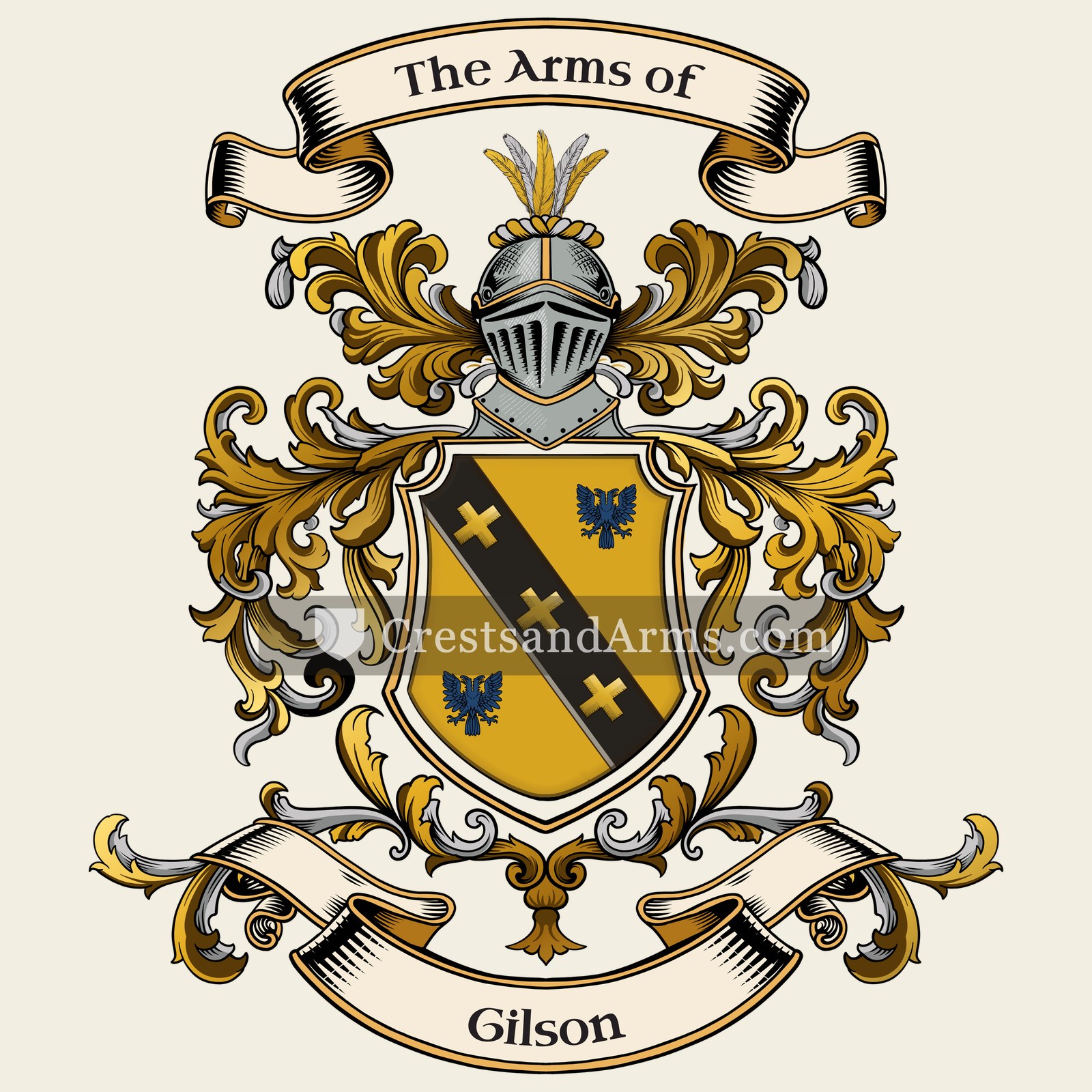
bendDefence, and the scarf of a commander
cross symbolChristian faith and service
eagleNobility, strength and a keen mind
Colours
Gold (Or)Means: Generosity
Black (Sable)Means: Constancy
Blue (Azure)Means: Loyalty and truth
Historical info
Source
Sir Bernard Burke, The General Armory of England, Scotland, Ireland and Wales, London: Harrison & Sons, 1884
Blazon (the actual original written record)
“Or, on a bend sa. betw. two eagles displ. az. armed and langued gu. three crosses crosslet of the first”
Irelandc. 1610
Digital archive packCoat of arms PNG, gold border print PDF, vector SVG and the certificate of authenticity. Sent to your email in minutes.
Map of Ireland showing where the Gilson arms are recorded
The Gilson arms were recorded in Ireland, c. 1610.
Arms such as these were typically recorded in Dublin.
Dublin was the seat of government in Ireland and the place where grants were sought and recorded. Families with business at the castle or the courts settled nearby, and settling there put their arms on record.
This is where the arms were entered in the register. Families often moved to other parts of the country, so the same name can turn up in more than one region.
The body that granted and recorded arms in Ireland in this period.
James VI and I
Sovereign of the period
James VI and I
1603–1625
Reigning in France when the Gilson arms are first recorded.
How Arms Worked in Ireland
The Ulster King of Arms granted coats of arms to individuals who proved their social standing and good character. These symbols were typically inherited by all legitimate descendants of the original holder. If a family branch wanted a unique look, they could apply for a specific change to their design through the office to ensure their identity remained distinct.
Granting authority
The Ulster King of Arms acted as the official body that regulated and issued all coats of arms throughout Ireland.
How they got arms
Families obtained their arms through formal grants issued by the office after proving their eligibility and paying the required fees.
Where arms were recorded
All official grants were recorded in the registers held by the Ulster King of Arms starting from the year 1552.
The family's standing
Recorded among the armigerous families of Ireland.
Origin & History of the Gilson Family in Ireland
The family name Gilson has roots that trace back to the early seventeenth century in Ireland, with documented evidence placing members of the family in Dublin as early as 1610. During this period, Dublin was a rapidly evolving urban center, and the presence of the Gilson name suggests that these early ancestors were likely part of the growing merchant or administrative classes that defined the city’s expansion. The name itself is thought to be a patronymic, meaning it was originally used to identify an individual as the son of a man named Gill or Gille, a common practice in naming conventions of that era. As these families settled into the social fabric of Dublin, they became integrated into the local community, navigating the complex political and economic shifts of the time. While the name is often associated with later migration patterns, its early appearance in the capital city highlights the long-standing history of the family within the Irish landscape.
Gilson Meaning & Related Branches
Root word
Gilles
Derived from the Greek name Aegidius meaning young goat or shield bearer.
This name
GilsonA patronymic surname meaning son of Gilles, reflecting a descendant of the shield bearer.
also spelled
Gilsone
Gilsonn
Gilsen
Gylson
Gyllson
Related arms
Charpysame arms
Faur (du) de Gavardiesame arms
Lambert de Frondevillesame arms
Auzaysimilar arms
Documented Sources
J. B. Rietstap, Armorial Général, Gouda: G. B. van Goor Zonen, 1884–87
Archives: Archives départementales de la Meurthe-et-Moselle, Registres paroissiaux de l'ancien régime
Books: Lepage, Henri, Les communes de la Meurthe: journal historique des villes, bourgs, villages, hameaux et censes de ce département, 1853
Books: Moreri, Louis, Le grand dictionnaire historique ou le mélange curieux de l'histoire sacrée et profane, 1759
Digital archive packCoat of arms PNG, gold border print PDF, vector SVG and the certificate of authenticity. Sent to your email in minutes.


 chiefAuthority, wisdom and dominion
 lionCourage, strength and royalty
 mulletThe third son, and a divine quality from above
 chiefAuthority, wisdom and dominion
 lionCourage, strength and royalty
 mulletThe third son, and a divine quality from above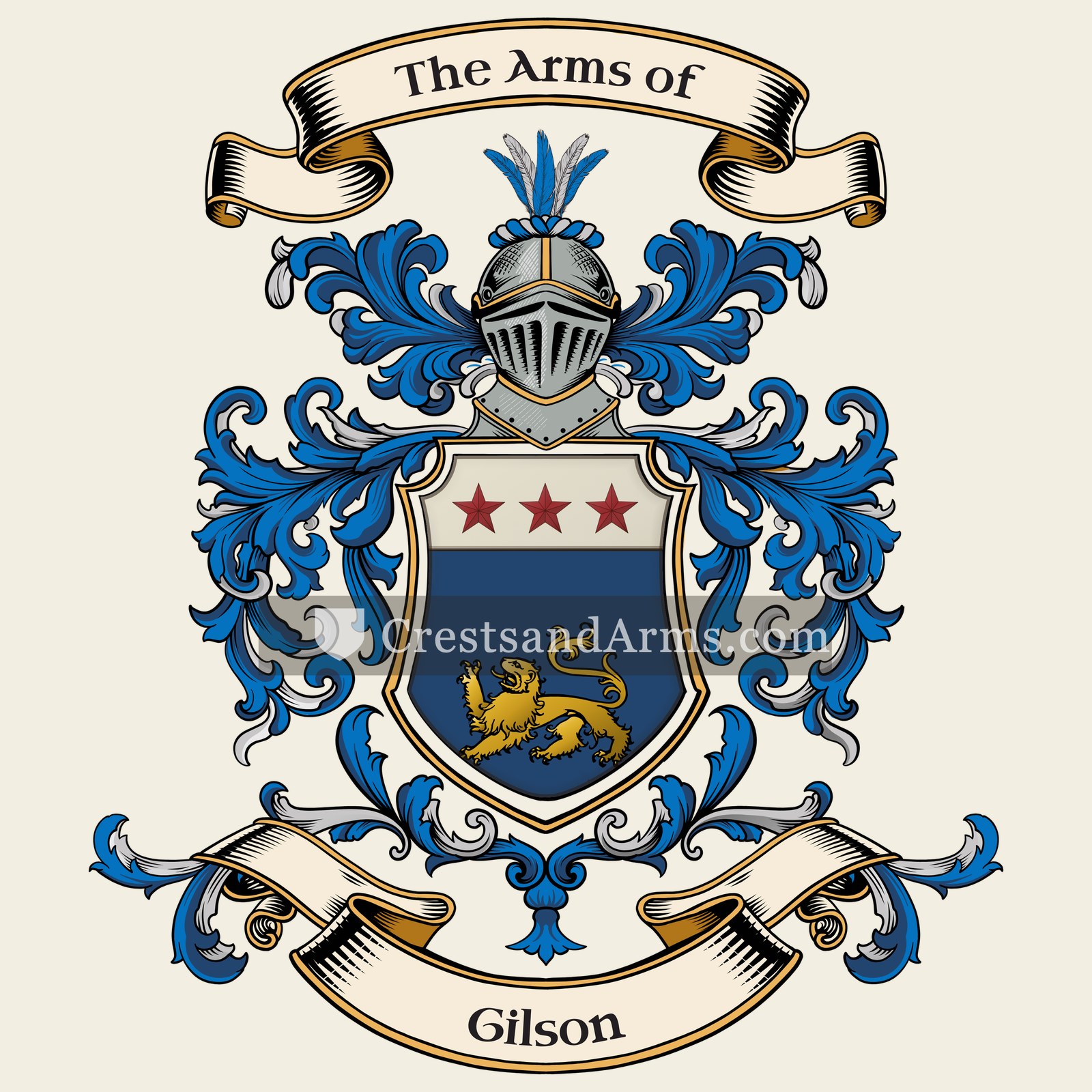


 fessThe military belt, and readiness to serve
 martletA younger son, who must win his own land
 roundelA coin, and one who has been to the crusades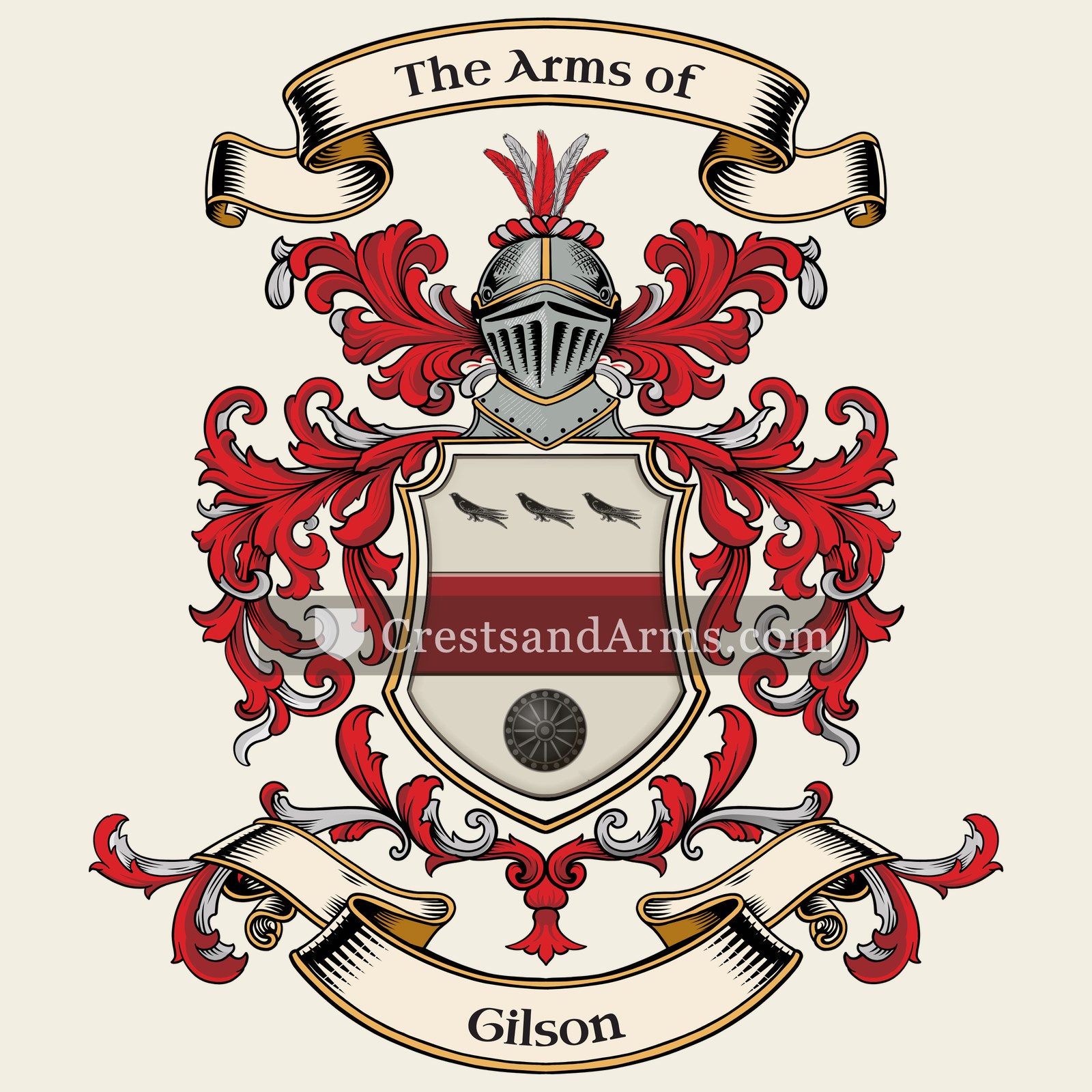


 bendDefence, and the scarf of a commander
 cross symbolChristian faith and service
 eagleNobility, strength and a keen mind