Map of Italy showing where the Ginn arms are recorded
The Ginn arms were recorded in Florence, c. 1775.
This is where the arms were entered in the register. Families often moved to other parts of the country, so the same name can turn up in more than one region.
The body that granted and recorded arms in Italy in this period.
Alvise Giovanni Mocenigo
Sovereign of the period
Alvise Giovanni Mocenigo
1763–1778
Reigning in Italy when the Ginn arms are first recorded.
How Arms Worked in Italy
In the Italian states, coats of arms were often used by noble families to show their status and history. These symbols were passed down through the generations to all legitimate male descendants. Younger branches of a family usually kept the original design but sometimes added small changes to distinguish their specific line from the main branch.
Granting authority
Various local rulers and city governments controlled the use of coats of arms across the different Italian states.
How they got arms
Families often assumed their own arms or received them as official grants from local lords, popes, or city councils.
Where arms were recorded
Arms were recorded in local city archives or private family books rather than in one single national register.
The family's standing
Recorded among the armigerous families of Italy.
Origin & History of the Ginn Family in Italy
The history of the Ginn family in Italy is deeply tied to the vibrant cultural landscape of Florence during the late eighteenth century. By 1775, members of the family were well-established residents within the city, a period when Florence served as a major hub for European art, trade, and intellectual exchange. Living in such a prominent center of the Enlightenment suggests that the family likely participated in the professional or merchant classes that defined the city’s social structure at the time. As Florence transitioned through various political shifts, families like the Ginns often navigated the complexities of urban life by building strong connections within local guilds and civic institutions. Their presence in the city during this era reflects a legacy of resilience and adaptation, as they navigated the changing tides of Italian history while maintaining their place in one of the most influential cities in the world.
Coat of Arms & Family Crest Details
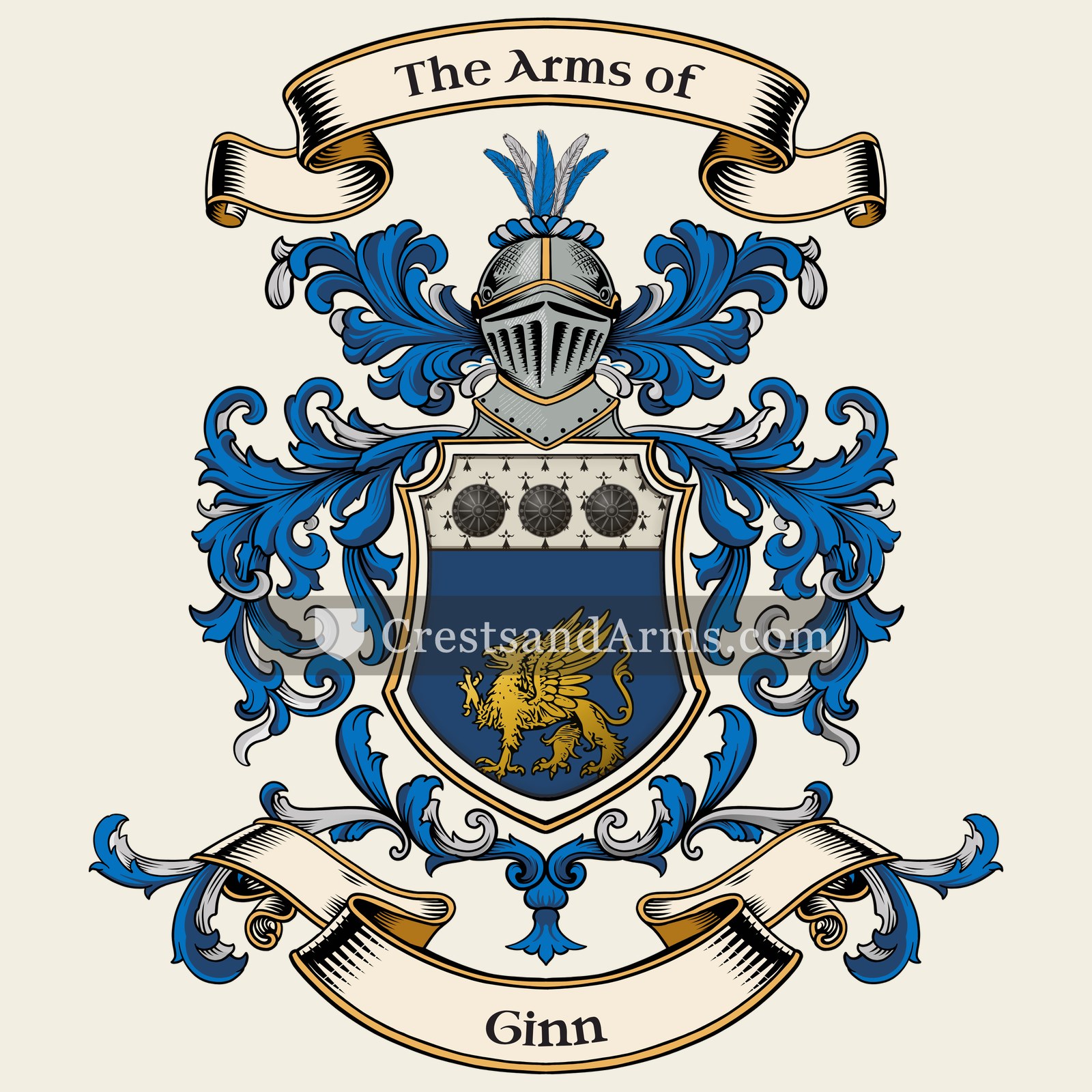
Symbols on this shield
chiefAuthority, wisdom and dominion
griffinValour and vigilance, guarding great treasure
roundelA coin, and one who has been to the crusades
Colours
Blue (Azure)Means: Loyalty and truth
ErmineMeans: Dignity
Gold (Or)Means: Generosity
Black (Sable)Means: Constancy
Historical info
Source
Sir Bernard Burke, The General Armory of England, Scotland, Ireland and Wales, London: Harrison & Sons, 1884
Blazon (the actual original written record)
“Az. a griffin segreant or, on a chief indented erm. three pellets”
HertfordHertford, c. 1620
Digital archive packCoat of arms PNG, gold border print PDF, vector SVG and the certificate of authenticity. Sent to your email in minutes.
Map of England showing where the Ginn arms are recorded
The Ginn arms were recorded in Hertford, c. 1620.
Hertfordshire lay just north of London and filled with families who had made money in the City. Buying an estate within a day's ride was the usual next step, and an estate brought arms with it.
This is where the arms were entered in the register. Families often moved to other parts of the country, so the same name can turn up in more than one region.
The body that granted and recorded arms in England in this period.
James VI and I
Sovereign of the period
James VI and I
1603–1625
Reigning in Italy when the Ginn arms are first recorded.
How Arms Worked in England
English heraldry allowed arms to be shared by all legitimate descendants of the original owner. These symbols were treated as personal property that moved through the generations to all children. While the eldest son kept the original design, other family members could use the same shield without needing to change it or register their own unique versions.
Granting authority
The College of Arms in London has regulated the use of coats of arms throughout England and Wales since 1484.
How they got arms
Families typically obtained their coats of arms through a formal grant from the Crown or by proving their ancient right to them.
Where arms were recorded
All official coats of arms are recorded in the registers kept at the College of Arms, which date back to the fifteenth century.
The family's standing
Recorded among the armigerous families of Hertford.
Origin & History of the Ginn Family in England
The surname Ginn has deep roots in the English county of Hertfordshire, where records confirm the family was well-established by the year 1620. During this period, the name was often associated with families living in the rural parishes surrounding the town of Hertford. Historians suggest that the name likely evolved as a locative or occupational identifier, potentially linked to the Middle English word "gin," which referred to a mechanical device or a snare used in farming and trade. As the family grew, they became deeply integrated into the local community, serving as yeoman farmers and tradespeople who helped shape the agricultural landscape of the region. By the early seventeenth century, the Ginn family had become a permanent fixture of the local parish registers, reflecting a stable life rooted in the traditions and social structures of early modern England.
Ginn Meaning & Related Branches
Root word
Ginnus
A Latin diminutive form derived from the name Ginus or Ginnus.
This name
GinnAn Italian surname likely originating as a patronymic or a nickname for a person of short stature.
also spelled
Ginie
Ginii
Ginn
Jini
Documented Sources
J. B. Rietstap, Armorial Général, Gouda: G. B. van Goor Zonen, 1884–87
Archivio di Stato di Firenze, Stato Civile della Restaurazione (1815–1865)
Archivio di Stato di Firenze, Archivio della Magistratura dei Nove Conservatori del Dominio e della Giurisdizione Fiorentina (1775)
Bocci, Giovanni, Storia della città di Firenze, 1892
Cioni, Alfredo, Le famiglie storiche di Firenze, 1955
Digital archive packCoat of arms PNG, gold border print PDF, vector SVG and the certificate of authenticity. Sent to your email in minutes.


 wingSwiftness, and protection under a raised wing
 wingSwiftness, and protection under a raised wing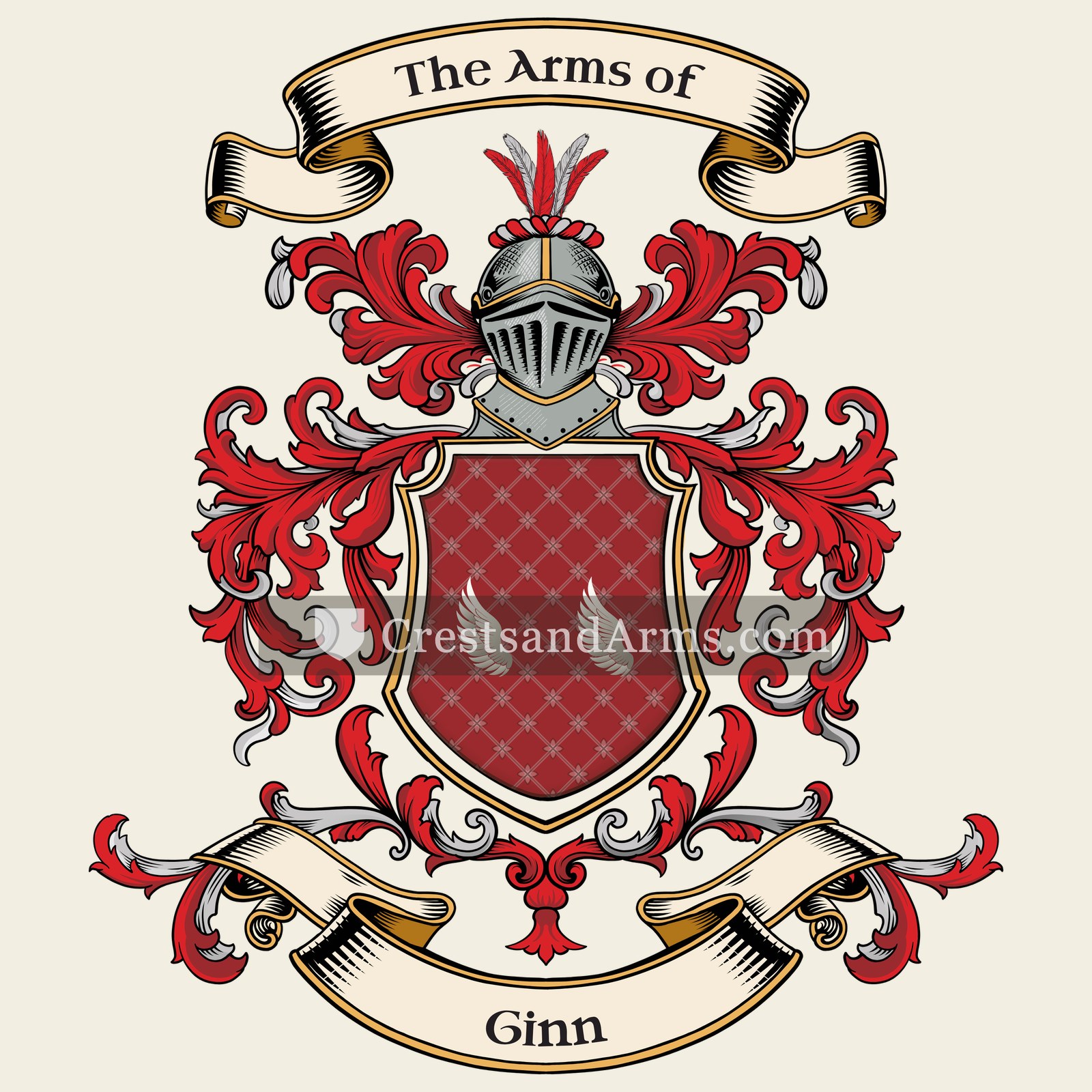


 chiefAuthority, wisdom and dominion
 griffinValour and vigilance, guarding great treasure
 roundelA coin, and one who has been to the crusades