Map of Netherlands showing where the Gio arms are recorded
The Gio arms were recorded in Netherlands, c. 1815.
Arms such as these were typically recorded in Friesland.
Friesland was low, wet country on the northern coast of the Netherlands, farmed by families who had held the same land for centuries. Free landholders were unusually common there, and a free landholder could carry arms.
This is where the arms were entered in the register. Families often moved to other parts of the country, so the same name can turn up in more than one region.
Region
Friesland
First recorded
1815
Granting Authority for the Gio Arms
Hoge Raad van Adel
Photograph made by me · CC BY-SA 3.0
The body that granted and recorded arms in Netherlands in this period.
William I of the Netherlands
Sovereign of the period
William I of the Netherlands
1815–1840
Reigning in Netherlands when the Gio arms are first recorded.
How Arms Worked in Netherlands
In the Netherlands, coats of arms were often used by noble families and those who held specific public offices. These arms were passed down through the generations to legitimate descendants. Younger branches of a family usually kept the original design without needing to add special marks. This system ensured that the family identity remained clear and consistent over many years.
Granting authority
The Hoge Raad van Adel is the official body that regulates and manages noble titles and coats of arms in the Netherlands.
How they got arms
Families typically obtained their coats of arms through official royal grants or by proving their long-standing historical use of the symbols.
Where arms were recorded
Coats of arms are officially recorded in the registers held by the Hoge Raad van Adel, which began its work in 1814.
The family's standing
Recorded among the armigerous families of Netherlands.
Origin & History of the Gio Family in Netherlands
The history of the Gio family in the Netherlands is deeply rooted in the northern province of Friesland, where records confirm their presence by 1815. During this period, the Netherlands underwent significant changes in how citizens registered their surnames due to the influence of French administration under Napoleon. Many families in the northern regions adopted or solidified their family names during this time to comply with new national civil registry laws. The name Gio likely emerged from these local naming traditions, reflecting the unique linguistic landscape of the Frisian people who often maintained distinct identities separate from the rest of the country. As the family settled into life in Friesland, they became part of the agricultural and maritime communities that defined the region throughout the nineteenth century. Their early documentation serves as a window into how families transitioned from traditional naming patterns to the formal, state-regulated systems that remain in place today.
Coat of Arms & Family Crest Details
Symbols on this shield
arrowReadiness for battle, and affliction endured
mulletThe third son, and a divine quality from above
Colours
Blue (Azure)Means: Loyalty and truth
Silver (Argent)Means: Peace and sincerity
Historical info
Source
J. B. Rietstap, Armorial Général, Gouda: G. B. van Goor Zonen, 1884–87
Blazon (the actual original written record)
“D'azur à deux dards d'arg., arm. d'or, posés en chev. renv. et acc. de trois étoiles du sec.”
BrabantBrabant, c. 1561
Digital archive packCoat of arms PNG, gold border print PDF, vector SVG and the certificate of authenticity. Sent to your email in minutes.
Map of Belgium showing where the Gio arms are recorded
The Gio arms were recorded in Brabant, c. 1561.
Brabant lay at the heart of the Low Countries, where the trade routes met. Its towns were wealthy and its landowners many, and both kinds of family kept arms, which is why the region is so heavily represented.
This is where the arms were entered in the register. Families often moved to other parts of the country, so the same name can turn up in more than one region.
The body that granted and recorded arms in Belgium in this period.
Philip II of Spain
Sovereign of the period
Philip II of Spain
1556–1598
Reigning in Netherlands when the Gio arms are first recorded.
How Arms Worked in Belgium
In Belgium, a coat of arms is considered personal property that is passed down through the male line to legitimate descendants. Families often use the same shield design across generations to show their shared heritage. If a branch of the family wants to change the design, they must apply for an official update to their specific version of the arms.
Granting authority
The Conseil héraldique is the official body that regulates and approves all coats of arms in Belgium.
How they got arms
Families obtain their coats of arms through formal royal grants or by confirming their historical right to use existing designs.
Where arms were recorded
All approved coats of arms are officially recorded in the public registers of the Conseil héraldique since 1844.
The family's standing
Recorded among the armigerous families of Brabant.
Origin & History of the Gio Family in Belgium
The history of the Gio family in Belgium begins in the sixteenth century within the historic Duchy of Brabant. Records confirm that members of this family were established in the region by 1561, a time when the Low Countries were undergoing significant political and religious shifts. During this era, Brabant served as a central hub for trade and cultural exchange, placing the family at the heart of European development. As the family settled into local life, they became part of the social fabric of the region, navigating the complexities of urban growth and the changing administrative landscape of the Habsburg Netherlands. Their presence in the area during this period suggests they were likely involved in the professional or merchant classes that defined the prosperity of Brabant cities. By maintaining their roots in this territory, the family contributed to the long-standing continuity of local lineages that shaped the identity of modern-day Belgium.
Coat of Arms & Family Crest Details
Symbols on this shield
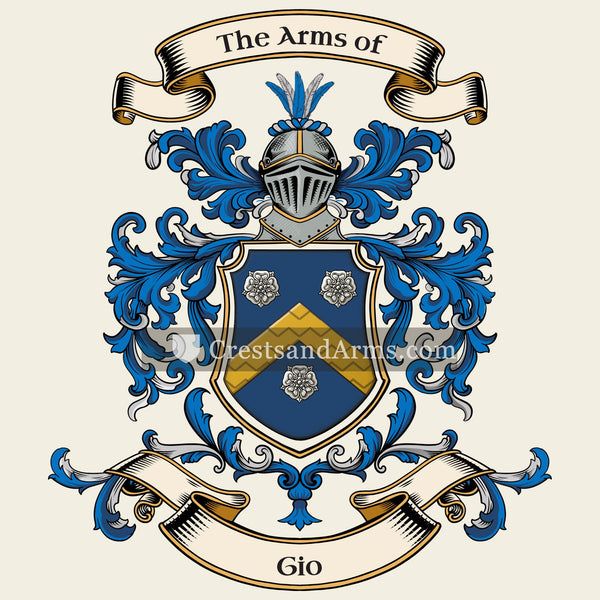
chevronProtection, and faithful service completed
roseThe seventh son, and beauty with grace
Colours
Blue (Azure)Means: Loyalty and truth
Gold (Or)Means: Generosity
Silver (Argent)Means: Peace and sincerity
Historical info
Source
J. B. Rietstap, Armorial Général, Gouda: G. B. van Goor Zonen, 1884–87
Blazon (the actual original written record)
“D'azur au chev. d'or, acc. de trois roses d'arg.”
FlandreFlandre, c. 1663
Digital archive packCoat of arms PNG, gold border print PDF, vector SVG and the certificate of authenticity. Sent to your email in minutes.
Map of France showing where the Gio arms are recorded
The Gio arms were recorded in Flandre, c. 1663.
Flandre grew rich on cloth, and its towns were among the busiest in Europe. Merchant families bought land with their profits and took arms to go with it, so trade put as many names in the registers here as land did.
This is where the arms were entered in the register. Families often moved to other parts of the country, so the same name can turn up in more than one region.
The body that granted and recorded arms in France in this period.
Louis XIV of France
Sovereign of the period
Louis XIV of France
1643–1715
Reigning in Netherlands when the Gio arms are first recorded.
How Arms Worked in France
In France, a coat of arms was a mark of honor that passed down through the male line to all legitimate descendants. Families often used the same shield without changes to show their shared heritage. If a branch wanted to stand out, they could add a small mark to their shield to show their specific place in the family tree.
Granting authority
The Juge d'armes de France acted as the official authority that regulated and verified coats of arms across the country.
How they got arms
Families typically inherited their arms from ancestors, though they could also receive them through royal grants or by proving their noble status.
Where arms were recorded
Coats of arms were officially recorded in the Armorial Général de France, which began its main collection in the year 1696.
The family's standing
Recorded among the armigerous families of Flandre.
Origin & History of the Gio Family in France
The family name Gio has roots that trace back to the northern regions of France, specifically within the historic territory of Flandre. By the year 1663, records confirm that members of this family were already established residents in this area. During the seventeenth century, Flandre was a vibrant crossroads of trade and cultural exchange between France and the neighboring Low Countries. Families living there often navigated a complex landscape of shifting borders and local traditions. The name Gio likely evolved as a regional variation or a shortened form of longer names common to the area at that time. Because the region was a hub for merchants and skilled laborers, the early Gio family members were likely integrated into the local economy through agriculture or specialized craftsmanship. Their presence in the official records of 1663 suggests they were settled members of the community who participated in the social and legal life of the French provinces.
Gio Meaning & Related Branches
Root word
Johannes
Hebrew origin meaning God is gracious
This name
GioA short form or variant derived from the biblical name John
also spelled
Guiot
Geeyo
Gio
Documented Sources
J. B. Rietstap, Armorial Général, Gouda: G. B. van Goor Zonen, 1884–87
Tresoar (Fries Historisch en Letterkundig Centrum), Burgerlijke Stand van Friesland
Nationaal Archief, Registers van de Burgerlijke Stand
Meertens, P.J., De betekenis van de Nederlandse familienamen, 1959
Van Berkel, G. and Samplonius, K., Nederlandse plaatsnamen verklaard, 2018
Digital archive packCoat of arms PNG, gold border print PDF, vector SVG and the certificate of authenticity. Sent to your email in minutes.


 fishA true and generous mind, and Christian faith
 mulletThe third son, and a divine quality from above
 fishA true and generous mind, and Christian faith
 mulletThe third son, and a divine quality from above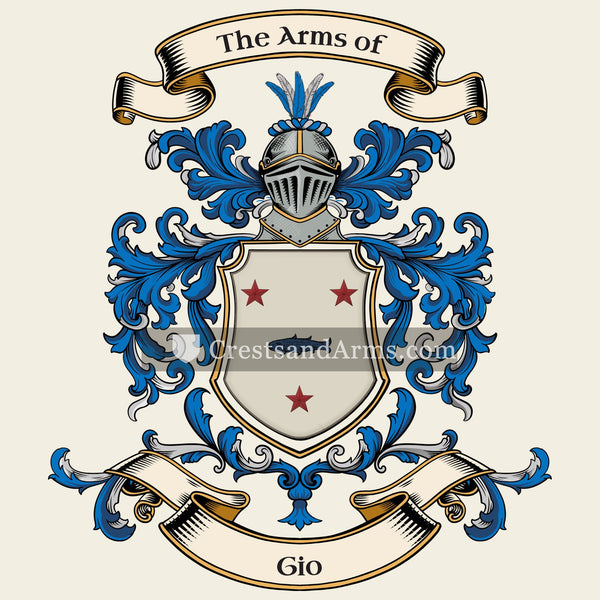


 arrowReadiness for battle, and affliction endured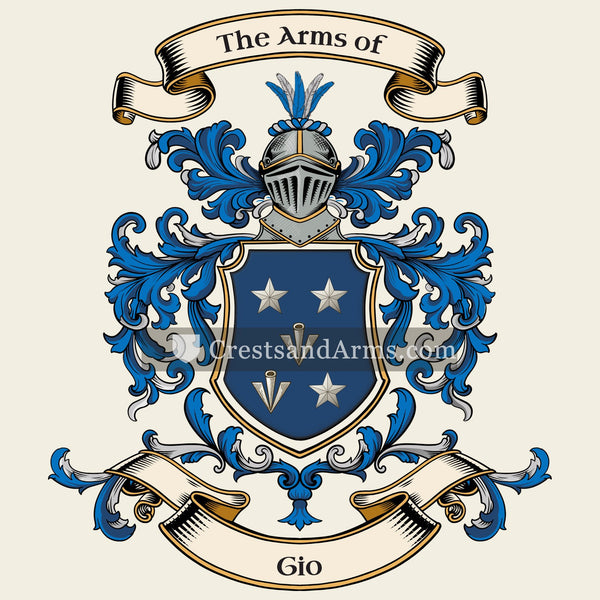


 chevronProtection, and faithful service completed
 roseThe seventh son, and beauty with grace