Map of Netherlands showing where the Gips arms are recorded
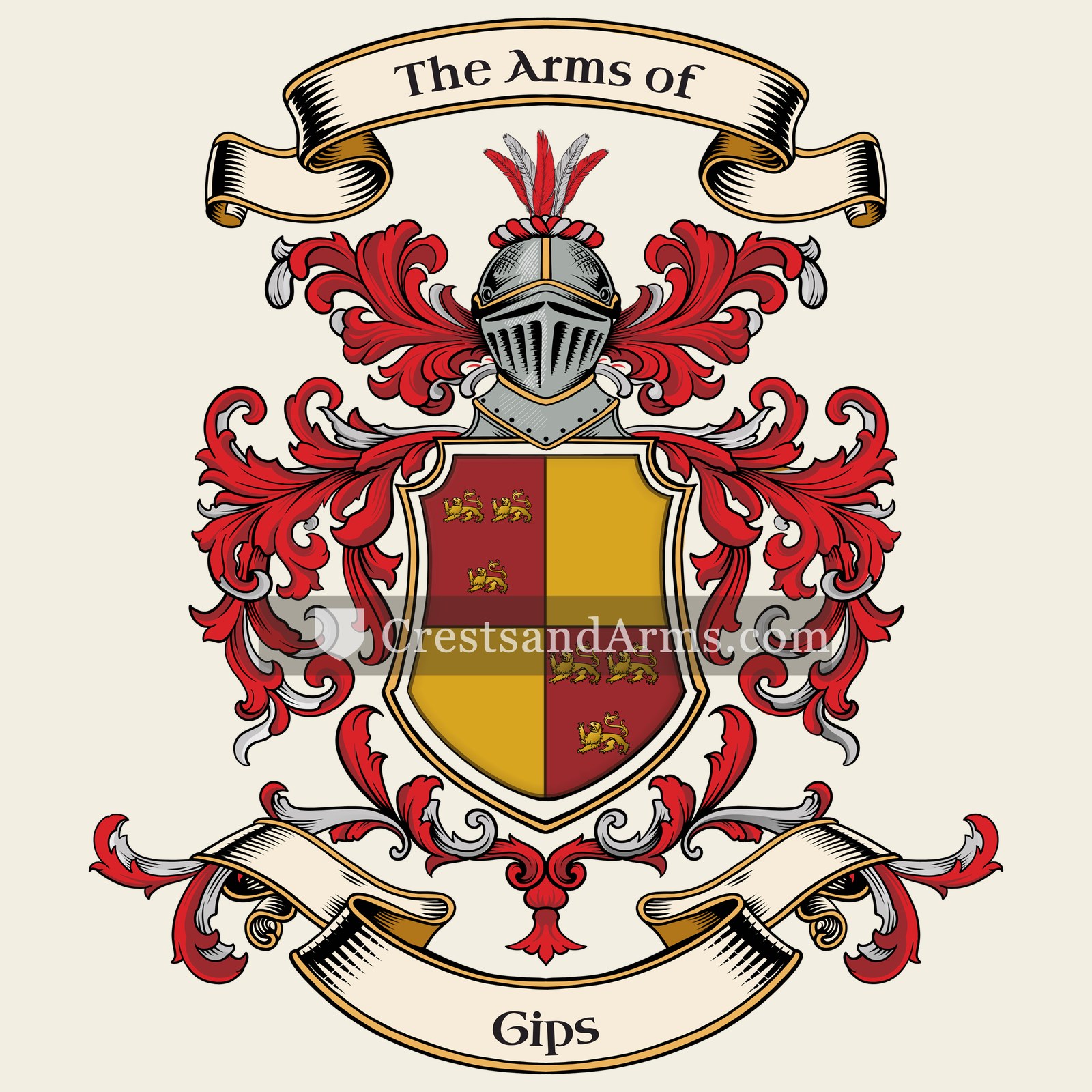
The Gips arms were recorded in Dordrecht, c. 1815.
This is where the arms were entered in the register. Families often moved to other parts of the country, so the same name can turn up in more than one region.
Region
Dordrecht
Town
Dordrecht
First recorded
1815
Granting Authority for the Gips Arms
Hoge Raad van Adel
Photograph made by me · CC BY-SA 3.0
The body that granted and recorded arms in Netherlands in this period.
William I of the Netherlands
Sovereign of the period
William I of the Netherlands
1815–1840
Reigning in Netherlands when the Gips arms are first recorded.
How Arms Worked in Netherlands
In the Netherlands, coats of arms were often used by noble families and those who held specific public offices. These arms were passed down through the generations to legitimate descendants. Younger branches of a family usually kept the original design without needing to add special marks. This system ensured that the family identity remained clear and consistent over many years.
Granting authority
The Hoge Raad van Adel is the official body that regulates and manages noble titles and coats of arms in the Netherlands.
How they got arms
Families typically obtained their coats of arms through official royal grants or by proving their long-standing historical use of the symbols.
Where arms were recorded
Coats of arms are officially recorded in the registers held by the Hoge Raad van Adel, which began its work in 1814.
The family's standing
Recorded among the armigerous families of Netherlands.
Origin & History of the Gips Family in Netherlands
The family name Gips has deep roots in the city of Dordrecht, where members of the family were firmly established by the early nineteenth century. During this period, Dordrecht served as a vital center for trade and shipping, which likely influenced the professional lives of the early Gips family members. Many families in this region during the 1800s were involved in the bustling maritime economy or local craftsmanship, as the city was a key hub for goods moving along the rivers. The name itself is often associated with regional naming patterns found in the Low Countries, where surnames frequently evolved from nicknames or descriptions of a person’s trade and character. By 1815, the family was already a recognized part of the local community, contributing to the social and economic fabric of this historic Dutch city as it transitioned into the modern era.
Gips Meaning & Related Branches
Root word
Gijsbrecht
A Germanic compound meaning bright pledge or radiant hostage.
This name
GipsA patronymic or shortened form derived from the personal name Gijs, signifying a bright or shining individual.
also spelled
Gipse
Gipss
Gip
Documented Sources
J. B. Rietstap, Armorial Général, Gouda: G. B. van Goor Zonen, 1884–87


 lionCourage, strength and royalty
 lionCourage, strength and royalty