Map of Germany showing where the Giraffe arms are recorded
The Giraffe arms were recorded in Dachau Bav, c. 1765.
This is where the arms were entered in the register. Families often moved to other parts of the country, so the same name can turn up in more than one region.
The body that granted and recorded arms in Germany in this period.
Francis I, Holy Roman Emperor
Sovereign of the period
Francis I, Holy Roman Emperor
1745–1765
Reigning in Germany when the Giraffe arms are first recorded.
How Arms Worked in Germany
In the Holy Roman Empire, coats of arms were often granted to individuals by the Emperor or his representatives. These arms were then passed down through the generations to all legitimate descendants of the original holder. Younger branches of a family usually kept the same shield design without needing to change it, as the arms belonged to the entire lineage.
Granting authority
The Holy Roman Emperor held the sole power to grant new coats of arms throughout his vast imperial territories.
How they got arms
Families typically obtained their coats of arms through a formal imperial grant or by proving their noble status to the authorities.
Where arms were recorded
These grants were officially recorded in the Imperial Chancery registers, which began keeping formal records of such honors during the Middle Ages.
The family's standing
Recorded among the armigerous families of Germany.
Origin & History of the Giraffe Family in Germany
The family name Giraffe, while unusual in its modern spelling, likely emerged from the linguistic shifts of the Bavarian region during the eighteenth century. Historical records confirm that members of this family were established in the town of Dachau by 1765, where they lived as part of the local community long before the area became known for later, darker events. In this period, surnames were often derived from nicknames or descriptive traits, and it is possible that the name evolved from local dialects or phonetic interpretations of older German terms. Life in Dachau during the mid-1700s was centered around agriculture and the local market trade, providing a stable environment for families to put down deep roots. By tracking these early residents, we see a family that was integrated into the social fabric of the Electorate of Bavaria, participating in the daily rhythms of a growing market town.
Coat of Arms & Family Crest Details
Symbols on this shield
lionCourage, strength and royalty
towerGrandeur and solidity, and a stronghold defended
eagleNobility, strength and a keen mind
Colours
Blue (Azure)Means: Loyalty and truth
Gold (Or)Means: Generosity
Red (Gules)Means: Military strength
Silver (Argent)Means: Peace and sincerity
Black (Sable)Means: Constancy
Historical info
Source
J. B. Rietstap, Armorial Général, Gouda: G. B. van Goor Zonen, 1884–87
Blazon (the actual original written record)
“Ec.: aux 1 et 4 d'azur à un mur crén. d'arg., touchant les flancs du quartier et percé d'une archière de sa.; aux 2 et 3 d'or à l'aigle de sa., celle du 3 cont. Sur le tout de gu. au lion léopardé d'or, tenant une épée d'arg. Trois cq. cour. C.: 1° l'aigle du 3; 2° le lion du surtout, iss.; 3° un vol à l'antique, aux armes du 1. L.: à dextre d'or et de sa., à sen. d'arg. et d'azur.”
Austriac. 1763
Digital archive packCoat of arms PNG, gold border print PDF, vector SVG and the certificate of authenticity. Sent to your email in minutes.
Map of Austria showing where the Giraffe arms are recorded
The Giraffe arms were recorded in Austria, c. 1763.
Arms such as these were typically recorded in Tyrol.
Tyrol was mountain country in western Austria, where the valleys were held by families who had been there a very long time. Old tenure counted for more than money, and old families carried arms.
This is where the arms were entered in the register. Families often moved to other parts of the country, so the same name can turn up in more than one region.
Region
Tyrol
First recorded
1763
Granting Authority for the Giraffe Arms
Imperial and Royal chancery
Sodacan · CC BY-SA 3.0
The body that granted and recorded arms in Austria in this period.
Francis I, Holy Roman Emperor
Sovereign of the period
Francis I, Holy Roman Emperor
1745–1765
Reigning in Germany when the Giraffe arms are first recorded.
How Arms Worked in Austria
Austrian coats of arms were often linked directly to noble titles granted by the Emperor. These symbols belonged to the entire family line rather than just one individual. When a family grew, new branches kept the original design without needing to change it. This system allowed all members of a noble house to share the same identity across many generations.
Granting authority
The Imperial and Royal chancery managed all heraldic matters and controlled the official granting of arms throughout the Austrian lands.
How they got arms
Families typically received their arms through a formal imperial decree that often accompanied the elevation of a person to noble status.
Where arms were recorded
Official records of these grants were kept in the Imperial Register of Nobility which began its formal documentation process in 1453.
The family's standing
Recorded among the armigerous families of Austria.
Origin & History of the Giraffe Family in Austria
The family name Giraffe first appears in the historical record within the rugged landscape of the Austrian Tyrol in 1763. During this period, the region was a vital crossroads for trade and migration between the Germanic lands and northern Italy. Families in this area often adopted names that reflected their unique experiences or the specific roles they played in their mountain communities. The name likely emerged as a descriptive identifier during a time when local officials began keeping more formal registers of residents for tax and census purposes. Because the Tyrol was a hub for travelers and merchants, it is possible that the name was linked to the movement of goods or individuals passing through the Alpine passes. Over the following decades, the family established itself within the local social structure, transitioning from transient origins to becoming part of the permanent fabric of the Tyrolean population.
Coat of Arms & Family Crest Details
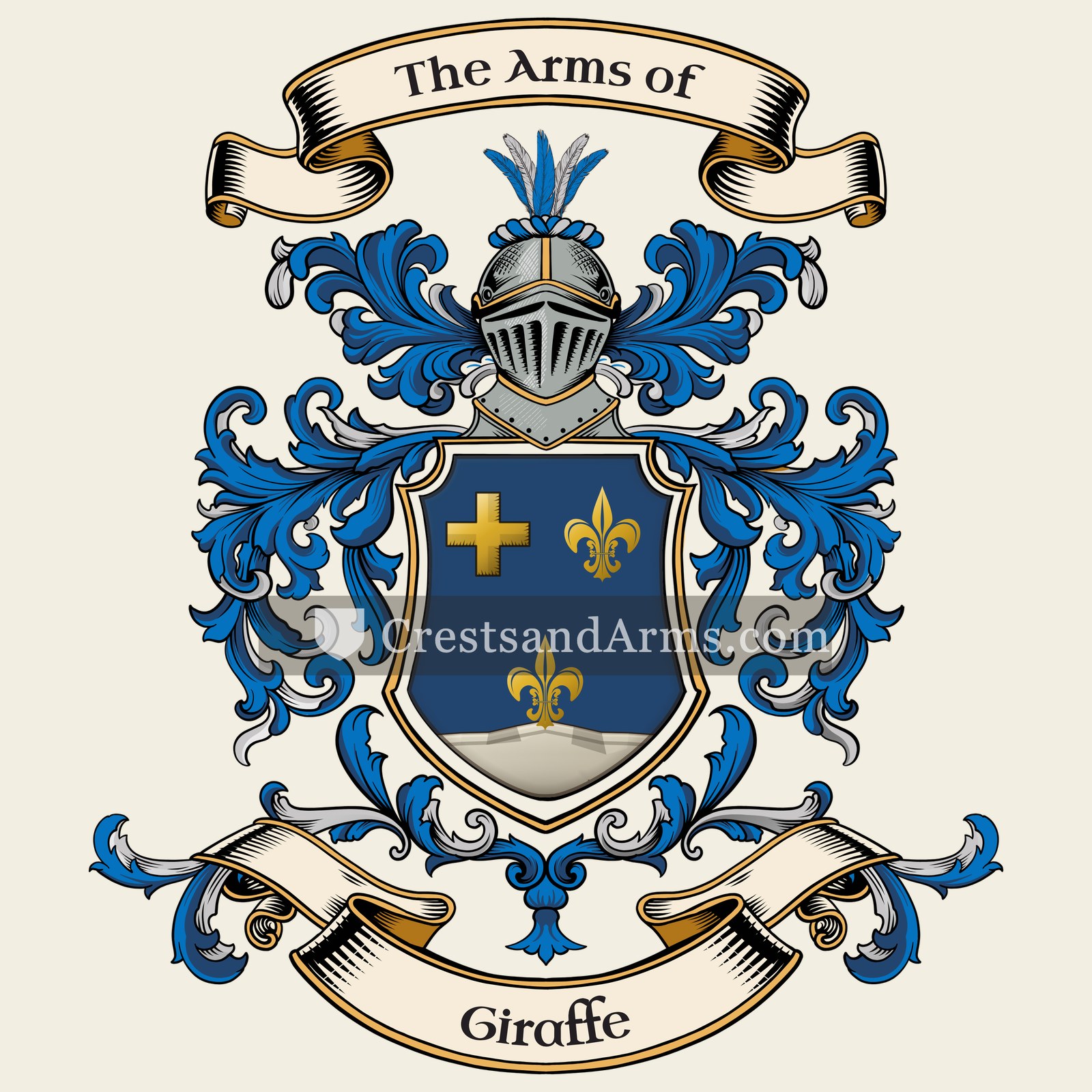
Symbols on this shield
cross symbolChristian faith and service
mountThe ground held, and steadfastness upon it
fleur de lisPurity, light, and the sixth son
Colours
Blue (Azure)Means: Loyalty and truth
Silver (Argent)Means: Peace and sincerity
Gold (Or)Means: Generosity
Historical info
Source
J. B. Rietstap, Armorial Général, Gouda: G. B. van Goor Zonen, 1884–87
Blazon (the actual original written record)
“D'azur à une croix latine pattée, le pied terminé en croiss. versé, le fût accosté de deux fleurs-de-lis, le tout d'or, ladite croix surmontant une terrasse rocheuse d'arg. C.: un demi-vol, aux armes de l'écu. L. d'or et d'azur.”
SwitzerlandSoleure, c. 1745
Digital archive packCoat of arms PNG, gold border print PDF, vector SVG and the certificate of authenticity. Sent to your email in minutes.
Map of Switzerland showing where the Giraffe arms are recorded
The Giraffe arms were recorded in Soleure, c. 1745.
This is where the arms were entered in the register. Families often moved to other parts of the country, so the same name can turn up in more than one region.
The body that granted and recorded arms in Switzerland in this period.
How Arms Worked in Switzerland
In Switzerland, coats of arms were not restricted to the nobility and were often adopted by common citizens and families. These symbols were passed down through generations to show family identity. When branches of a family grew, they often changed small details of the design to distinguish their own line from the original group.
Granting authority
Cantonal and civic authorities managed the use of coats of arms within their specific regions and local jurisdictions.
How they got arms
Families typically assumed their own coats of arms based on local custom rather than receiving them from a central monarch.
Where arms were recorded
Arms were recorded in various cantonal and civic registers starting from the fourteenth century throughout the Swiss region.
The family's standing
Recorded among the armigerous families of Switzerland.
Origin & History of the Giraffe Family in Switzerland
The history of the Giraffe family in Switzerland is deeply rooted in the cultural landscape of the eighteenth century. Records confirm that members of this family were established in the city of Soleure by 1745. During this period, Soleure served as a prominent center for political and social life, often hosting ambassadors and influential figures. Families living in the region were frequently involved in the local craft guilds or agricultural trade that defined the Swiss economy of the time. The name likely emerged from regional linguistic shifts or descriptive nicknames common in the German-speaking cantons. As the family integrated into the community of Soleure, they participated in the daily traditions and civic duties that shaped the development of the city. Their presence in the historical registers of Soleure provides a clear link to the broader narrative of Swiss migration and settlement patterns during the mid-1700s.
Related Branches & Arms
Root word
camelopardalis
A creature resembling both a camel and a leopard.
This name
GiraffeA topographic or nickname surname derived from the animal, likely referring to a tall person.
also spelled
Graf
Documented Sources
J. B. Rietstap, Armorial Général, Gouda: G. B. van Goor Zonen, 1884–87


 mountThe ground held, and steadfastness upon it
 unicornPurity, and extreme courage in defence of honour
 mountThe ground held, and steadfastness upon it
 unicornPurity, and extreme courage in defence of honour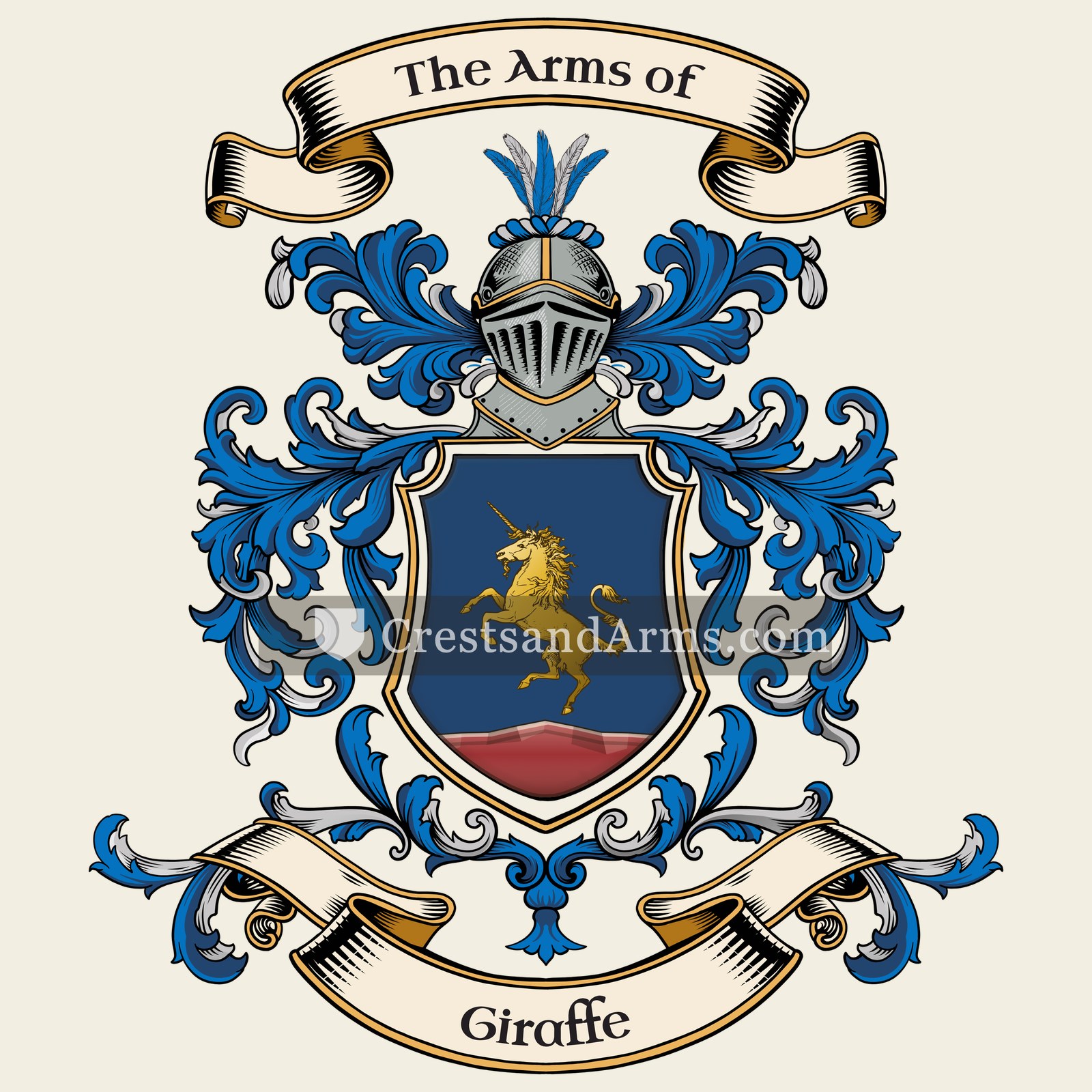


 lionCourage, strength and royalty
 towerGrandeur and solidity, and a stronghold defended
 eagleNobility, strength and a keen mind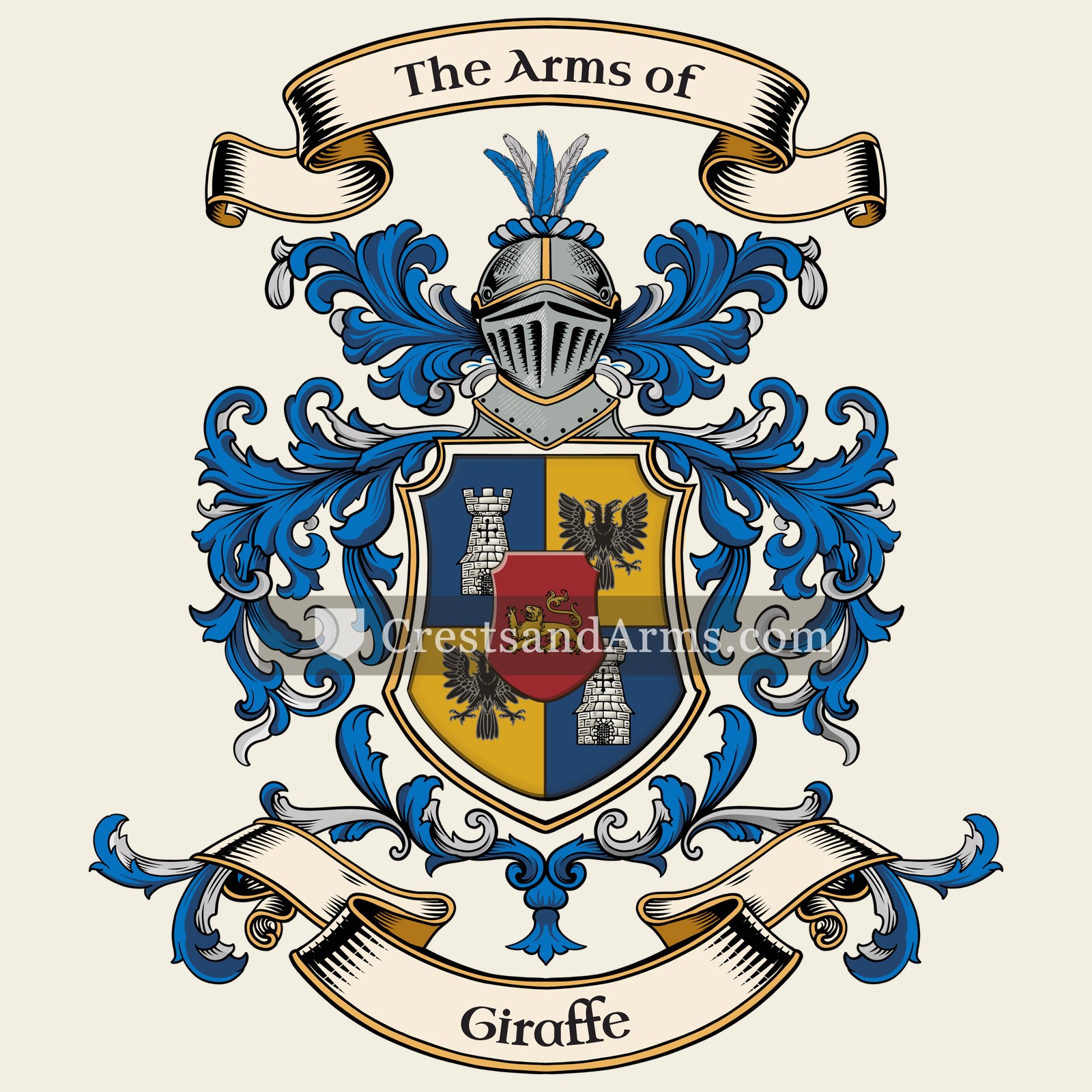

 cross symbolChristian faith and service
 fleur de lisPurity, light, and the sixth son