A record of documented arms, meaning and origin, researched for the Göbel family lines. Documented in 3 countries.
Reg. 5570 · German, G–I
Coat of Arms & Family Crest Details
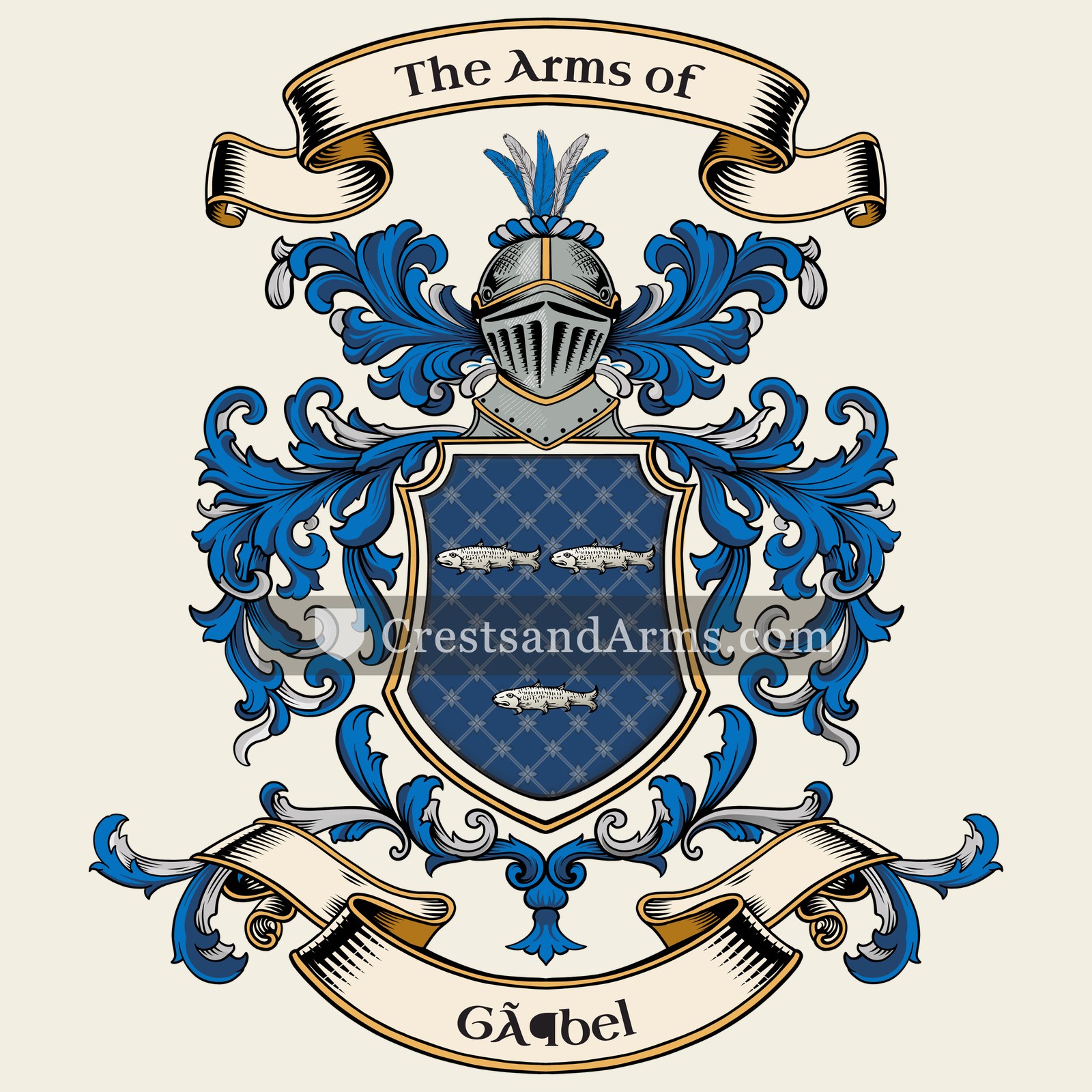
Symbols on this shield
fishA true and generous mind, and Christian faith
Colours
Blue (Azure)Means: Loyalty and truth
Silver (Argent)Means: Peace and sincerity
Historical info
Source
J. B. Rietstap, Armorial Général, Gouda: G. B. van Goor Zonen, 1884–87
Blazon (the actual original written record)
“D'azur à trois poissons d'arg., entrelacés en triangle. C.: un homme marin de carn., peutré d'arg., tenant de sa main dextre un trident du même.”
FranconiaFranconia, c. 1765
Where the Göbel Arms Were Recorded
Franconia
Map of Germany showing where the Göbel arms are recorded
The Göbel arms were recorded in Franconia, c. 1765.
Franconia was a patchwork of small territories in central Germany, full of minor landowners and prosperous market towns. So many separate households held land there that the region produced a great many coats of arms.
This is where the arms were entered in the register. Families often moved to other parts of the country, so the same name can turn up in more than one region.
The body that granted and recorded arms in Germany in this period.
Francis I, Holy Roman Emperor
Sovereign of the period
Francis I, Holy Roman Emperor
1745–1765
Reigning in Germany when the Göbel arms are first recorded.
How Arms Worked in Germany
In the Holy Roman Empire, coats of arms were often granted to individuals by the Emperor or his representatives. These arms were then passed down through the generations to all legitimate descendants of the original holder. Younger branches of a family usually kept the same shield design without needing to change it, as the arms belonged to the entire lineage.
Granting authority
The Holy Roman Emperor held the sole power to grant new coats of arms throughout his vast imperial territories.
How they got arms
Families typically obtained their coats of arms through a formal imperial grant or by proving their noble status to the authorities.
Where arms were recorded
These grants were officially recorded in the Imperial Chancery registers, which began keeping formal records of such honors during the Middle Ages.
The family's standing
Recorded among the armigerous families of Franconia.
Origin & History of the Göbel Family in Germany
The surname Göbel is a patronymic name, which means it originated as a shortened form of the medieval given name Godebert. This name was composed of the Germanic elements "god," meaning god, and "berht," meaning bright or famous. By the late Middle Ages, the name had evolved into various nicknames and diminutive forms across German-speaking regions. In the mid-18th century, records confirm that families bearing this name were well-established in the Franconia region of Germany. During this era, life in Franconia was largely defined by agricultural traditions and the influence of local ecclesiastical or noble estates. Families like the Göbels often lived as farmers or skilled craftsmen within small village communities. As the population grew, these families became deeply rooted in the local social structure, contributing to the regional culture and economy that defined the heart of Germany during the 1700s.
Coat of Arms & Family Crest Details
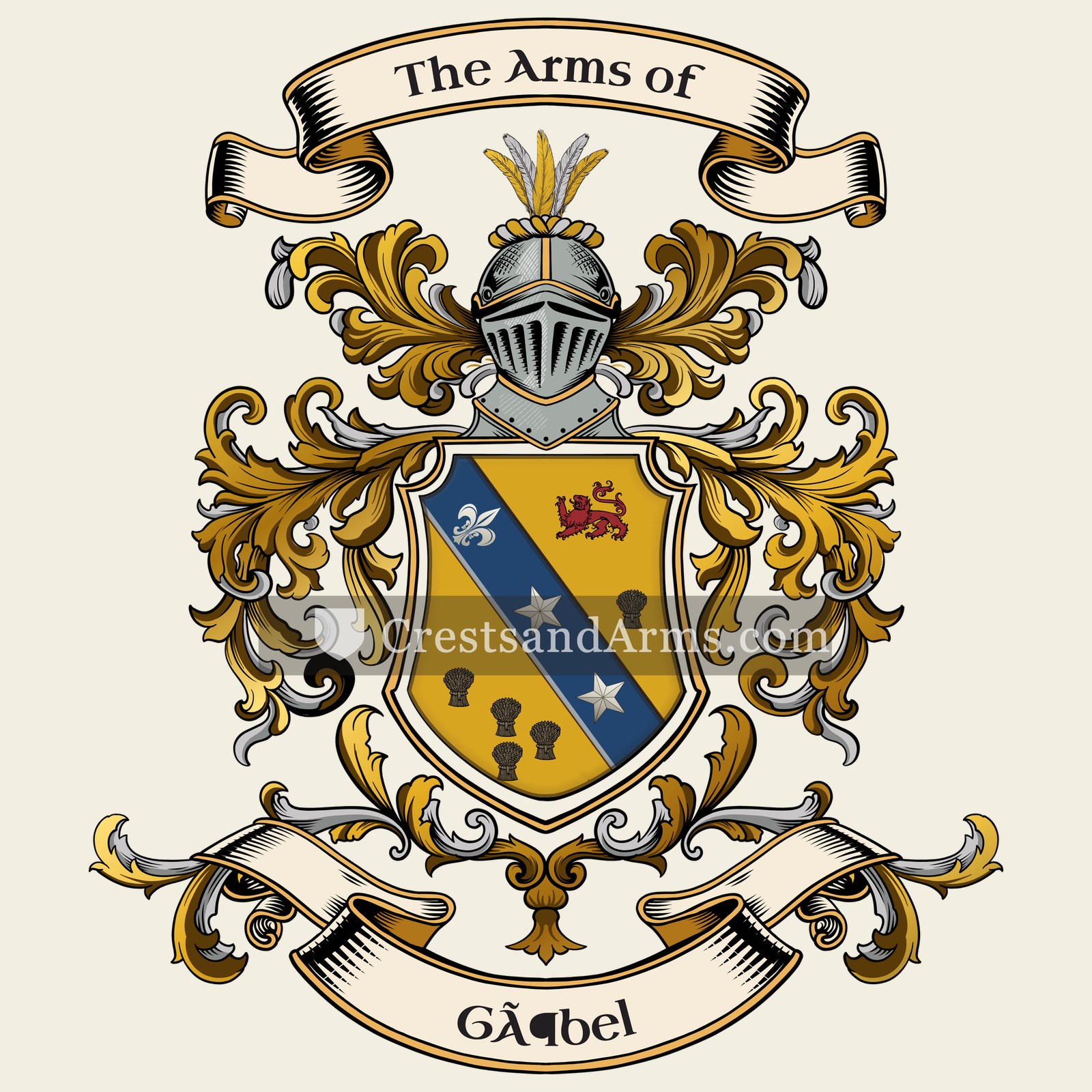
Symbols on this shield
bendDefence, and the scarf of a commander
fleur de lisPurity, light, and the sixth son
mulletThe third son, and a divine quality from above
lionCourage, strength and royalty
wheatsheafPlenty, and the harvest of one's own labour
Colours
Gold (Or)Means: Generosity
Blue (Azure)Means: Loyalty and truth
Silver (Argent)Means: Peace and sincerity
Red (Gules)Means: Military strength
Historical info
Source
J. B. Rietstap, Armorial Général, Gouda: G. B. van Goor Zonen, 1884–87
Blazon (the actual original written record)
“D'or à la bande d'azur, ch. d'une fleur-de-lis d'arg., posée en pal, et de deux étoiles du même, et acc. en chef d'un lion de gu. et en p. de cinq épis au nat., mouv. de la p. Cq. cour. C.: une fleur-de-lis d'arg., entre un vol coupé, à dextre d'azur sur arg., à sen. d'or sur gu. L. conformes aux émaux du vol.”
Austriac. 1867
Where the Göbel Arms Were Recorded
Tyrol
Map of Austria showing where the Göbel arms are recorded
The Göbel arms were recorded in Austria, c. 1867.
Arms such as these were typically recorded in Tyrol.
Tyrol was mountain country in western Austria, where the valleys were held by families who had been there a very long time. Old tenure counted for more than money, and old families carried arms.
This is where the arms were entered in the register. Families often moved to other parts of the country, so the same name can turn up in more than one region.
Region
Tyrol
First recorded
1867
Granting Authority for the Göbel Arms
Imperial and Royal chancery
Sodacan · CC BY-SA 3.0
The body that granted and recorded arms in Austria in this period.
Franz Joseph I of Austria
Sovereign of the period
Franz Joseph I of Austria
1848–1916
Reigning in Germany when the Göbel arms are first recorded.
How Arms Worked in Austria
Austrian coats of arms were often linked directly to noble titles granted by the Emperor. These symbols belonged to the entire family line rather than just one individual. When a family grew, new branches kept the original design without needing to change it. This system allowed all members of a noble house to share the same identity across many generations.
Granting authority
The Imperial and Royal chancery managed all heraldic matters and controlled the official granting of arms throughout the Austrian lands.
How they got arms
Families typically received their arms through a formal imperial decree that often accompanied the elevation of a person to noble status.
Where arms were recorded
Official records of these grants were kept in the Imperial Register of Nobility which began its formal documentation process in 1453.
The family's standing
Recorded among the armigerous families of Austria.
Origin & History of the Göbel Family in Austria
The surname Göbel is a diminutive form of the name Godbert, which traces its roots back to the Germanic word for god combined with the word for bright or shining. By the time the family was firmly established in the Tyrol region of Austria in 1867, the name had already evolved through centuries of linguistic shifts across Central Europe. In the mountainous landscape of Tyrol, families like the Göbels often lived in tight-knit alpine communities where names were closely tied to local trade or ancestral lineage. As the nineteenth century progressed, the Göbel family became part of the broader administrative history of the Austro-Hungarian Empire. Their presence in regional records during this era reflects the movement of families who sought new opportunities within the changing borders of the Habsburg territories. This period marked a time of significant transition for many families in the region as they navigated the shift from traditional rural life to the more structured bureaucracy of the late nineteenth century.
Coat of Arms & Family Crest Details
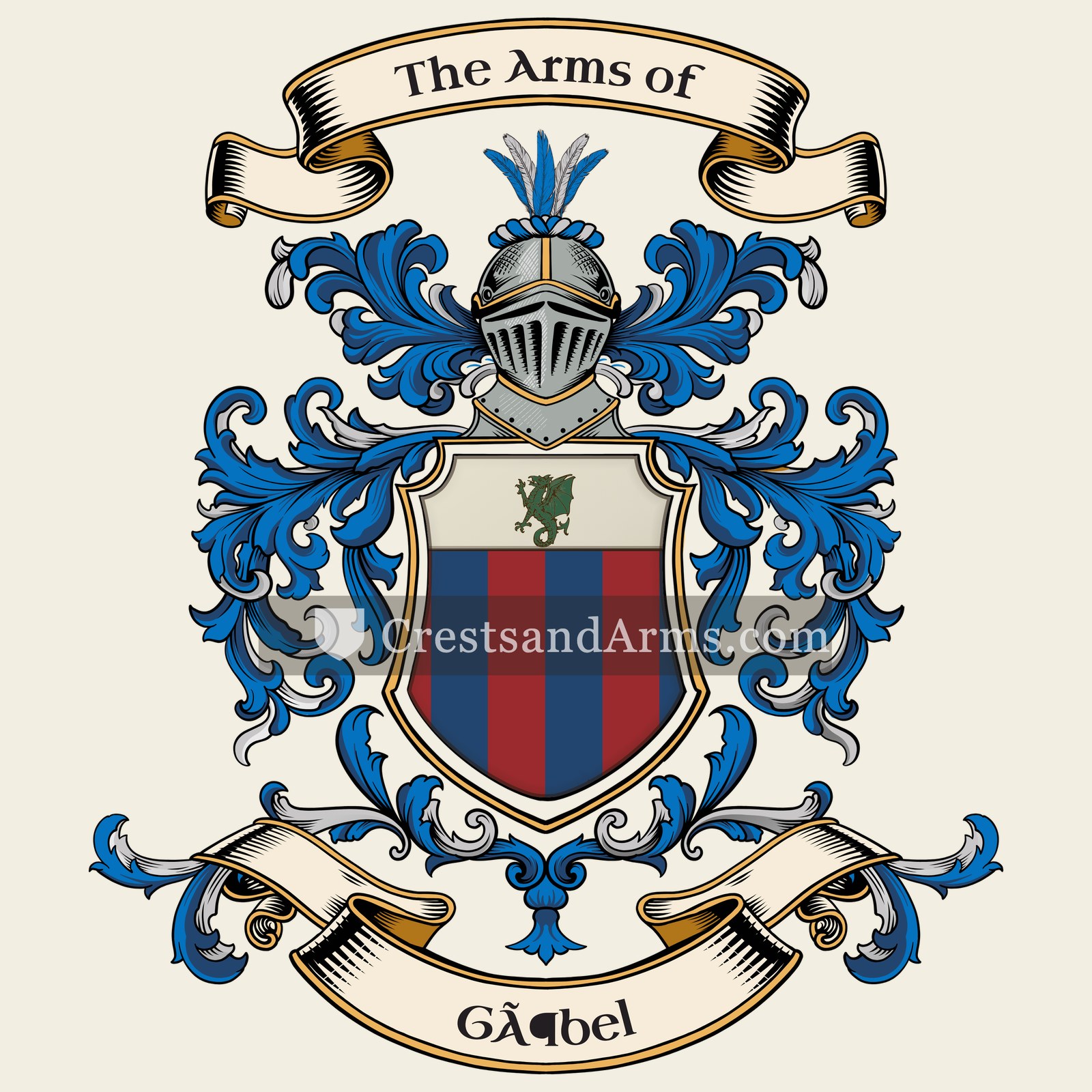
Symbols on this shield
chiefAuthority, wisdom and dominion
wyvernValour and protection, and victory over the plague
Colours
Blue (Azure)Means: Loyalty and truth
Silver (Argent)Means: Peace and sincerity
Green (Vert)Means: Hope
Red (Gules)Means: Military strength
Historical info
Source
Sir Bernard Burke, The General Armory of England, Scotland, Ireland and Wales, London: Harrison & Sons, 1884
Blazon (the actual original written record)
“Paly of six az. and gu. on a chief ar. a wivern vert”
Englandc. 1620
Where the Göbel Arms Were Recorded
York
Map of England showing where the Göbel arms are recorded
The Göbel arms were recorded in England, c. 1620.
Arms such as these were typically recorded in York.
Yorkshire is the largest of the English counties, and it held more gentry families than any other. Land there was split among a great many households rather than a few, so a great many of them carried arms.
This is where the arms were entered in the register. Families often moved to other parts of the country, so the same name can turn up in more than one region.
The body that granted and recorded arms in England in this period.
James VI and I
Sovereign of the period
James VI and I
1603–1625
Reigning in Germany when the Göbel arms are first recorded.
How Arms Worked in England
English heraldry allowed arms to be shared by all legitimate descendants of the original owner. These symbols were treated as personal property that moved through the generations to all children. While the eldest son kept the original design, other family members could use the same shield without needing to change it or register their own unique versions.
Granting authority
The College of Arms in London has regulated the use of coats of arms throughout England and Wales since 1484.
How they got arms
Families typically obtained their coats of arms through a formal grant from the Crown or by proving their ancient right to them.
Where arms were recorded
All official coats of arms are recorded in the registers kept at the College of Arms, which date back to the fifteenth century.
The family's standing
Recorded among the armigerous families of England.
Origin & History of the Göbel Family in England
The surname Göbel originates from the German-speaking regions of Europe as a diminutive form of the name Godbert, which translates roughly to bright or shining god. By the early 17th century, members of the family had migrated across the North Sea and established a presence in the historic city of York by 1620. During this period, York was a major center for trade and religious activity, making it a natural destination for skilled immigrants looking to integrate into English society. These early settlers likely worked as craftsmen or merchants, blending their continental heritage with the local customs of Northern England. As they settled into the community, the spelling of their name often shifted to match English phonetic patterns, helping the family transition from newcomers to established residents of the region. This migration reflects the broader movement of families who sought new opportunities in England during the early modern era, leaving behind their ancestral roots to build a new life in a rapidly changing country.
Related Branches & Arms
Root word
Godebert
Derived from Germanic elements meaning god and bright or famous.
This name
GöbelA diminutive form of names beginning with the element god, indicating a divine or godly connection.
also spelled
Goebel
Goebell
Gebel
Goble
Gobelot
Related arms
Gebelvariant spelling
Goebelvariant spelling
Documented Sources
J. B. Rietstap, Armorial Général, Gouda: G. B. van Goor Zonen, 1884–87
Bahlow, Hans, Deutsches Namenlexikon: Familien- und Vornamen nach Ursprung und Sinn erklärt, 1967
Gottschald, Max, Deutsche Namenkunde: Unsere Familiennamen, 1971
Staatsarchiv Bamberg, Standesamtliche Unterlagen und Kirchenbücher der Region Franken, 1765
Digital archive packCoat of arms PNG, gold border print PDF, vector SVG and the certificate of authenticity. Sent to your email in minutes.


 fishA true and generous mind, and Christian faith
 fishA true and generous mind, and Christian faith

 bendDefence, and the scarf of a commander
 fleur de lisPurity, light, and the sixth son
 mulletThe third son, and a divine quality from above
 lionCourage, strength and royalty
 wheatsheafPlenty, and the harvest of one's own labour

 chiefAuthority, wisdom and dominion
 wyvernValour and protection, and victory over the plague