Map of Belgium showing where the Godina arms are recorded
The Godina arms were recorded in Belgium, c. 1737.
Arms such as these were typically recorded in Brabant.
Brabant lay at the heart of the Low Countries, where the trade routes met. Its towns were wealthy and its landowners many, and both kinds of family kept arms, which is why the region is so heavily represented.
This is where the arms were entered in the register. Families often moved to other parts of the country, so the same name can turn up in more than one region.
The body that granted and recorded arms in Belgium in this period.
Charles VI, Holy Roman Emperor
Sovereign of the period
Charles VI, Holy Roman Emperor
1711–1740
Reigning in Belgium when the Godina arms are first recorded.
How Arms Worked in Belgium
In Belgium, a coat of arms is considered personal property that is passed down through the male line to legitimate descendants. Families often use the same shield design across generations to show their shared heritage. If a branch of the family wants to change the design, they must apply for an official update to their specific version of the arms.
Granting authority
The Conseil héraldique is the official body that regulates and approves all coats of arms in Belgium.
How they got arms
Families obtain their coats of arms through formal royal grants or by confirming their historical right to use existing designs.
Where arms were recorded
All approved coats of arms are officially recorded in the public registers of the Conseil héraldique since 1844.
The family's standing
Recorded among the armigerous families of Belgium.
Origin & History of the Godina Family in Belgium
The history of the Godina family in Belgium is rooted in the fertile landscape of the Brabant region, where records confirm their presence as early as 1737. During the eighteenth century, Brabant served as a vital crossroads for trade and agriculture within the Austrian Netherlands. Families like the Godinas often lived in these rural or semi-urban communities, contributing to the local economy through farming or skilled craftsmanship. Because the name appears in parish registers and local administrative documents from this period, it suggests that the family was well-integrated into the social fabric of the region. Over time, these early ancestors helped shape the identity of their local parishes by participating in community life and maintaining long-standing ties to the land. While the name may have evolved in spelling or pronunciation over the centuries, its survival in the historical record of Brabant highlights the enduring legacy of families who built their lives in the heart of Belgium.
Coat of Arms & Family Crest Details
Symbols on this shield
cantonA mark of honour granted by the sovereign
eagleNobility, strength and a keen mind
lionCourage, strength and royalty
cupFaith, office, and a trust discharged
cometA great event foretold, and swift renown
Colours
Silver (Argent)Means: Peace and sincerity
Gold (Or)Means: Generosity
Black (Sable)Means: Constancy
Red (Gules)Means: Military strength
Historical info
Source
J. B. Rietstap, Armorial Général, Gouda: G. B. van Goor Zonen, 1884–87
Blazon (the actual original written record)
“Ec.: aux 1 et 4 d'arg. au lion de gu., celui du 1 cont.; au 2 de sin. à une coupe couverte d'or, posée à sen., acc. au canton dextre du chef d'une comète du même; au 3 comme au 2, sauf que la coupe se trouve à dextre et la comète à sen. Sur le tout d'or à l'aigle ép. de sa. Deux cq. cour. C.: 1° le lion du 1, iss., entre un vol coupé alt. d'arg. et de gu (ou: la coupe, entre un vol de sin.); 2° une comète d'or; entre deux prob., coupées alt. de sin. et d'or. L.: à dextre d'arg. et de gu., à sen. d'or et de sin.”
Germanyc. 1765
Digital archive packCoat of arms PNG, gold border print PDF, vector SVG and the certificate of authenticity. Sent to your email in minutes.
Map of Germany showing where the Godina arms are recorded
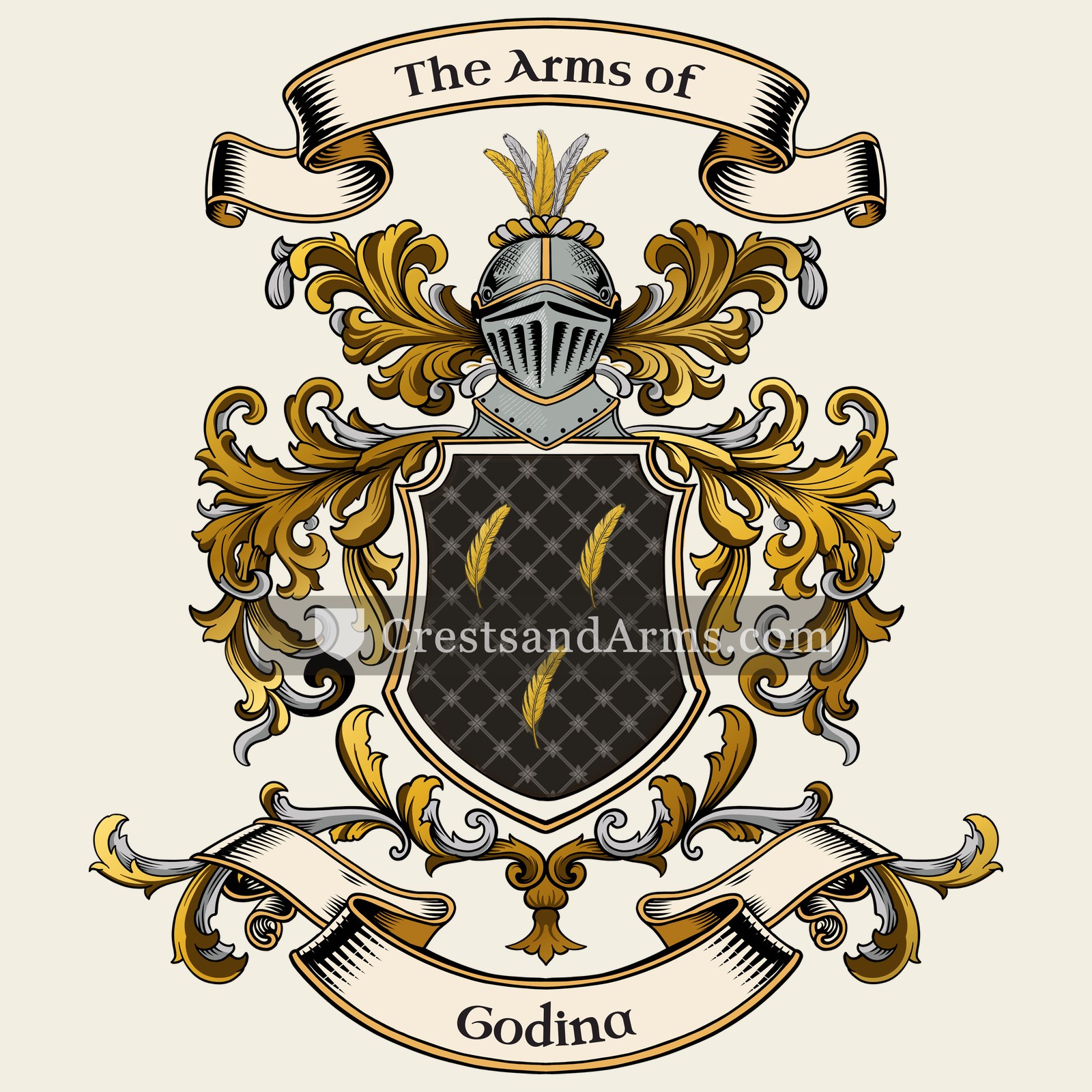
The Godina arms were recorded in Germany, c. 1765.
Arms such as these were typically recorded in Bavaria.
Bavaria was a country of old landed families and walled market towns. Estates passed down the same line for centuries, and both the landowners and the leading townsmen kept arms, which is why so many Bavarian names sit in the registers.
This is where the arms were entered in the register. Families often moved to other parts of the country, so the same name can turn up in more than one region.
The body that granted and recorded arms in Germany in this period.
Francis I, Holy Roman Emperor
Sovereign of the period
Francis I, Holy Roman Emperor
1745–1765
Reigning in Belgium when the Godina arms are first recorded.
How Arms Worked in Germany
In the Holy Roman Empire, coats of arms were often granted to individuals by the Emperor or his representatives. These arms were then passed down through the generations to all legitimate descendants of the original holder. Younger branches of a family usually kept the same shield design without needing to change it, as the arms belonged to the entire lineage.
Granting authority
The Holy Roman Emperor held the sole power to grant new coats of arms throughout his vast imperial territories.
How they got arms
Families typically obtained their coats of arms through a formal imperial grant or by proving their noble status to the authorities.
Where arms were recorded
These grants were officially recorded in the Imperial Chancery registers, which began keeping formal records of such honors during the Middle Ages.
The family's standing
Recorded among the armigerous families of Germany.
Origin & History of the Godina Family in Germany
The family name Godina has roots that trace back to the southern regions of Germany, specifically within the historical landscape of Bavaria. By the year 1765, records confirm that members of the family were established residents in this area, living during a time when Bavaria was a powerful electorate within the Holy Roman Empire. The name itself is often linked to Slavic linguistic origins, suggesting that the family may have migrated from eastern territories into the German lands during periods of regional movement or trade expansion. As they settled in Bavaria, these early family members likely worked within the local agricultural or craft-based economies that defined village life in the eighteenth century. Their presence in the region highlights the way families moved across borders to find new opportunities in the heart of Central Europe. By integrating into the local Bavarian community, the Godina family became part of the long history of migration and settlement that shaped the cultural identity of southern Germany.
Coat of Arms & Family Crest Details
Symbols on this shield
feathersWilling obedience and serenity
Colours
Black (Sable)Means: Constancy
Gold (Or)Means: Generosity
Historical info
Source
Sir Bernard Burke, The General Armory of England, Scotland, Ireland and Wales, London: Harrison & Sons, 1884
Blazon (the actual original written record)
“Sa. three ostrich feathers or”
Englandc. 1620
Digital archive packCoat of arms PNG, gold border print PDF, vector SVG and the certificate of authenticity. Sent to your email in minutes.
Map of England showing where the Godina arms are recorded
The Godina arms were recorded in England, c. 1620.
Arms such as these were typically recorded in York.
Yorkshire is the largest of the English counties, and it held more gentry families than any other. Land there was split among a great many households rather than a few, so a great many of them carried arms.
This is where the arms were entered in the register. Families often moved to other parts of the country, so the same name can turn up in more than one region.
The body that granted and recorded arms in England in this period.
James VI and I
Sovereign of the period
James VI and I
1603–1625
Reigning in Belgium when the Godina arms are first recorded.
How Arms Worked in England
English heraldry allowed arms to be shared by all legitimate descendants of the original owner. These symbols were treated as personal property that moved through the generations to all children. While the eldest son kept the original design, other family members could use the same shield without needing to change it or register their own unique versions.
Granting authority
The College of Arms in London has regulated the use of coats of arms throughout England and Wales since 1484.
How they got arms
Families typically obtained their coats of arms through a formal grant from the Crown or by proving their ancient right to them.
Where arms were recorded
All official coats of arms are recorded in the registers kept at the College of Arms, which date back to the fifteenth century.
The family's standing
Recorded among the armigerous families of England.
Origin & History of the Godina Family in England
The surname Godina carries a rich history that likely traces its roots back to the linguistic shifts of early modern England. While the name is often associated with Mediterranean origins, the presence of the family in York by 1620 suggests they were part of the diverse social fabric of Northern England during the seventeenth century. At that time, York was a bustling center of trade and religious life, and families with unique surnames often integrated into the local merchant or artisan classes. The name itself is thought to derive from ancient roots meaning "good" or "divine," reflecting a naming tradition that emphasized positive traits or religious devotion. By establishing themselves in a major city like York, the early members of this family were likely involved in the urban growth that defined the era, helping to preserve their name through local parish registers and legal documents that recorded their daily lives and contributions to the community.
Related Branches & Arms
Root word
Gode
Derived from the Germanic word for god or good.
This name
GodinaA patronymic or descriptive surname referring to a person of good character or divine association.
also spelled
Godine
Godinn
Godden
Godon
Godding
Documented Sources
J. B. Rietstap, Armorial Général, Gouda: G. B. van Goor Zonen, 1884–87
State Archives in Belgium (Rijksarchief te België), Parochieregisters van de provincie Brabant (1737)
Vannieuwenhuyze, Bram, Brabant in de achttiende eeuw: Een sociaal-economische geschiedenis, 2012
Digital archive packCoat of arms PNG, gold border print PDF, vector SVG and the certificate of authenticity. Sent to your email in minutes.


 paleMilitary strength, and a fortified defence
 paleMilitary strength, and a fortified defence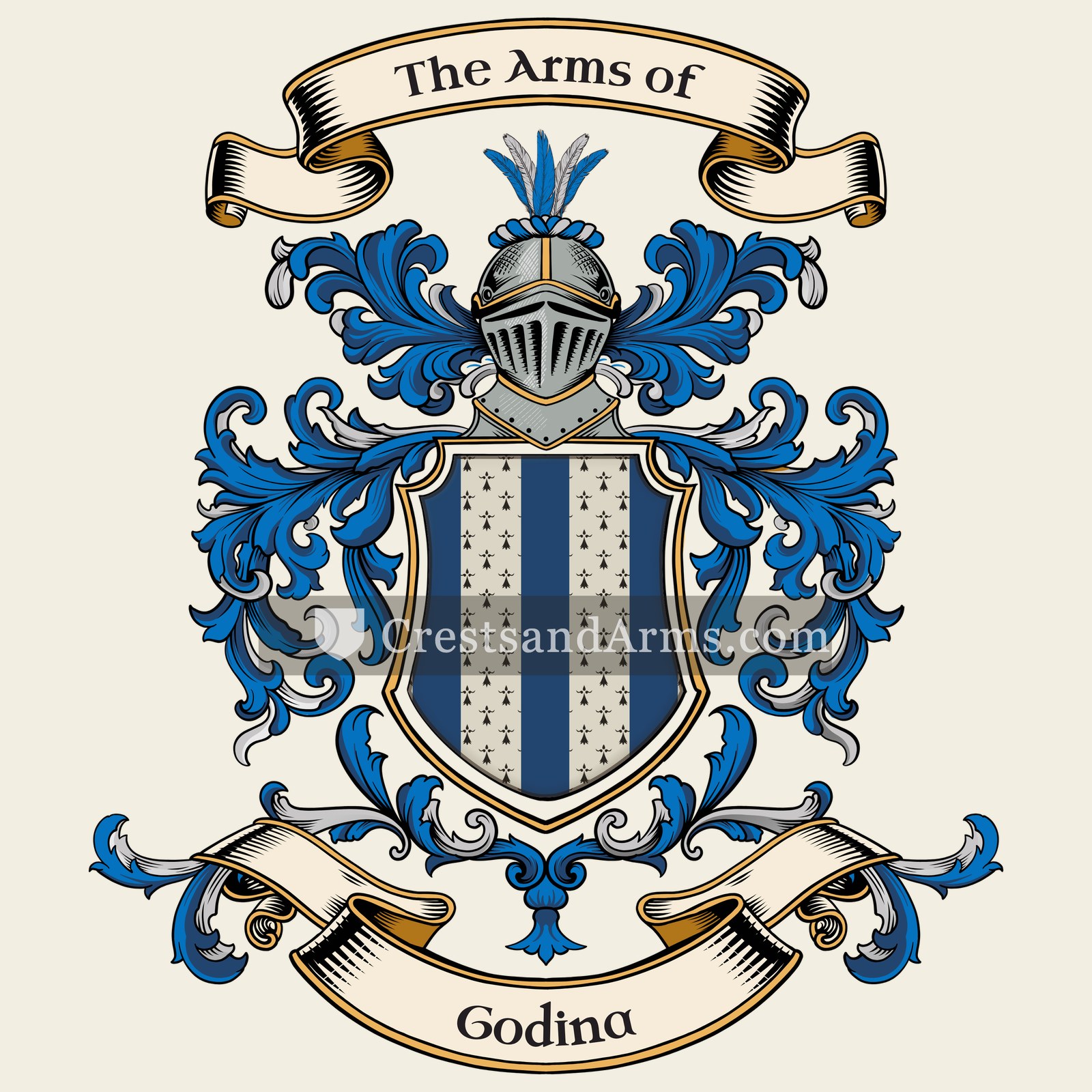


 cantonA mark of honour granted by the sovereign
 eagleNobility, strength and a keen mind
 lionCourage, strength and royalty
 cupFaith, office, and a trust discharged
 cometA great event foretold, and swift renown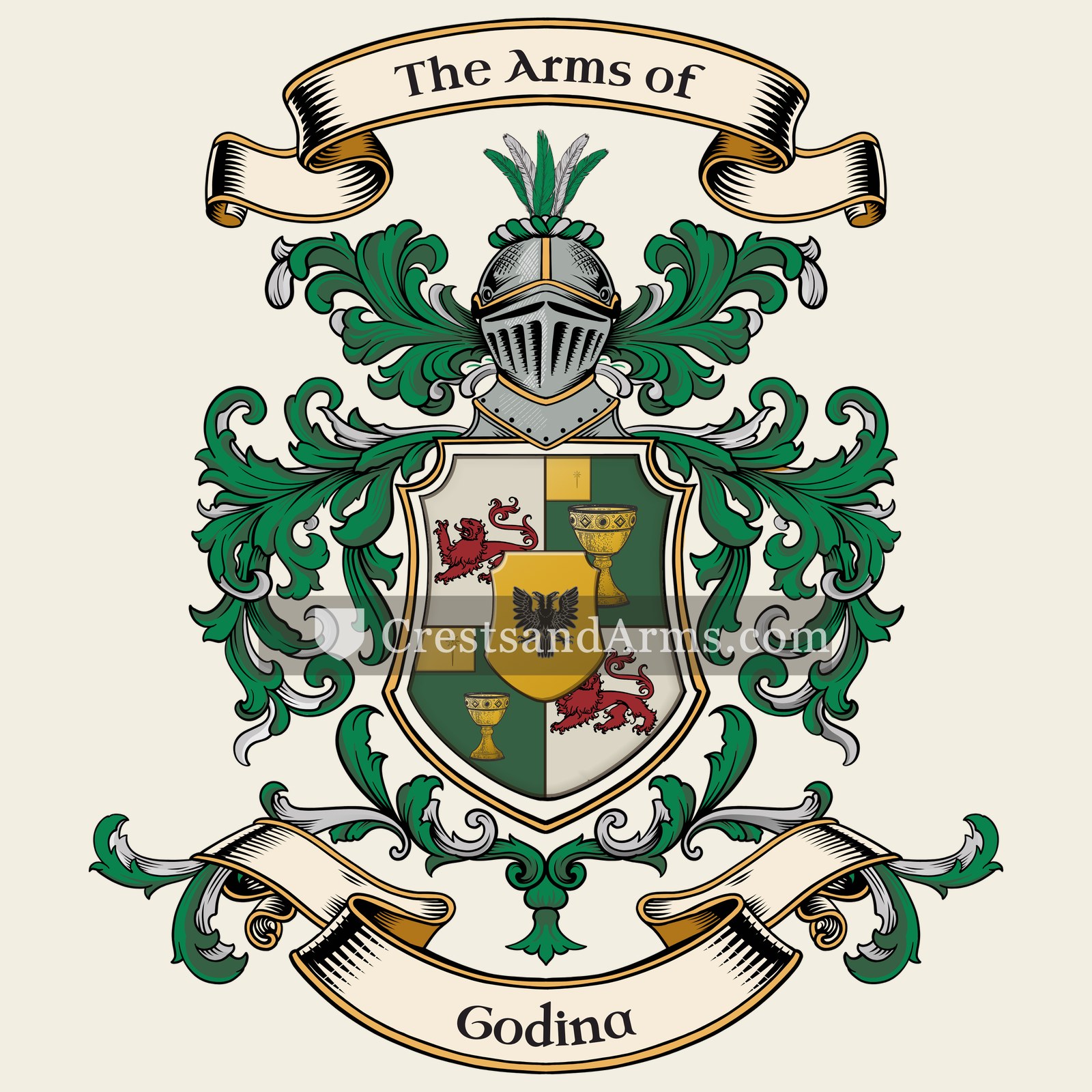


 feathersWilling obedience and serenity