Map of Belgium showing where the Gonne arms are recorded
The Gonne arms were recorded in Belgium, c. 1737.
Arms such as these were typically recorded in Brabant.
Brabant lay at the heart of the Low Countries, where the trade routes met. Its towns were wealthy and its landowners many, and both kinds of family kept arms, which is why the region is so heavily represented.
This is where the arms were entered in the register. Families often moved to other parts of the country, so the same name can turn up in more than one region.
The body that granted and recorded arms in Belgium in this period.
Charles VI, Holy Roman Emperor
Sovereign of the period
Charles VI, Holy Roman Emperor
1711–1740
Reigning in Belgium when the Gonne arms are first recorded.
How Arms Worked in Belgium
In Belgium, a coat of arms is considered personal property that is passed down through the male line to legitimate descendants. Families often use the same shield design across generations to show their shared heritage. If a branch of the family wants to change the design, they must apply for an official update to their specific version of the arms.
Granting authority
The Conseil héraldique is the official body that regulates and approves all coats of arms in Belgium.
How they got arms
Families obtain their coats of arms through formal royal grants or by confirming their historical right to use existing designs.
Where arms were recorded
All approved coats of arms are officially recorded in the public registers of the Conseil héraldique since 1844.
The family's standing
Recorded among the armigerous families of Belgium.
Origin & History of the Gonne Family in Belgium
The Gonne family has deep roots in the historical region of Brabant, where records confirm their presence as early as 1737. During this period, the area was part of the Austrian Netherlands, a time characterized by a complex mix of agricultural life and the slow growth of local trade. Families with this name often lived in rural or semi-urban settings, contributing to the local economy through farming or skilled craftsmanship. As the name appears in parish registers and local administrative documents from the eighteenth century, it reflects the steady lives of families who helped shape the social fabric of the Belgian provinces. Over the generations, the Gonne name became firmly established within the local community, moving alongside the shifting borders and political changes that eventually led to the formation of the modern Belgian state.
Coat of Arms & Family Crest Details
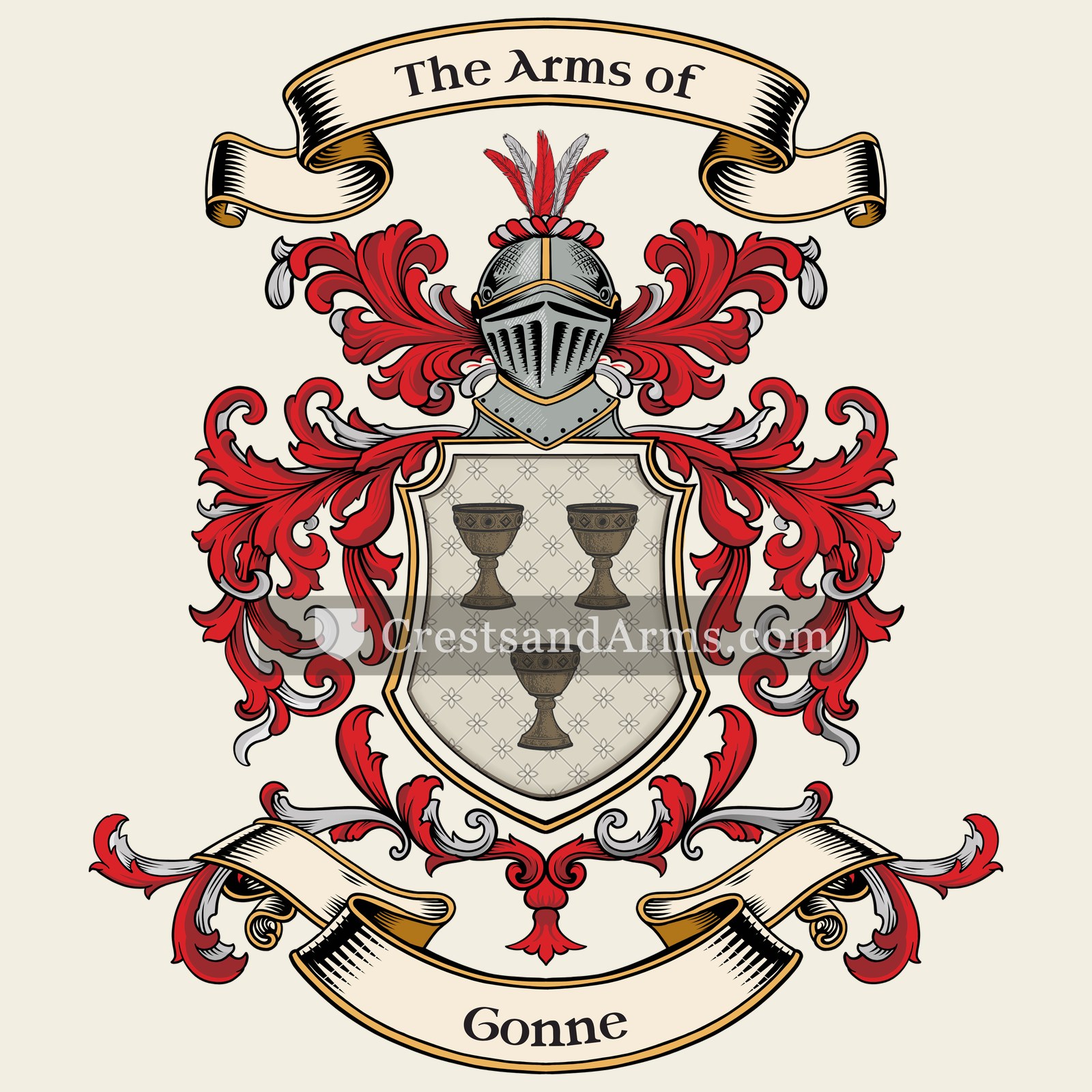
Symbols on this shield
cupFaith, office, and a trust discharged
Colours
Silver (Argent)Means: Peace and sincerity
Historical info
Source
Sir Bernard Burke, The General Armory of England, Scotland, Ireland and Wales, London: Harrison & Sons, 1884
Blazon (the actual original written record)
“Ar. three cannon barrels fesseways ppr”
KerryRattoo · Kerry, c. 1645
Digital archive packCoat of arms PNG, gold border print PDF, vector SVG and the certificate of authenticity. Sent to your email in minutes.
Map of Ireland showing where the Gonne arms are recorded
The Gonne arms were recorded in Kerry, c. 1645.
Kerry was mountain and coast country in the far south-west of Ireland. Its land was poor and held by a few families for a very long time, and long unbroken holding fills a register.
This is where the arms were entered in the register. Families often moved to other parts of the country, so the same name can turn up in more than one region.
The body that granted and recorded arms in Ireland in this period.
Charles I of England
Sovereign of the period
Charles I of England
1625–1649
Reigning in Belgium when the Gonne arms are first recorded.
How Arms Worked in Ireland
The Ulster King of Arms granted coats of arms to individuals who proved their social standing and good character. These symbols were typically inherited by all legitimate descendants of the original holder. If a family branch wanted a unique look, they could apply for a specific change to their design through the office to ensure their identity remained distinct.
Granting authority
The Ulster King of Arms acted as the official body that regulated and issued all coats of arms throughout Ireland.
How they got arms
Families obtained their arms through formal grants issued by the office after proving their eligibility and paying the required fees.
Where arms were recorded
All official grants were recorded in the registers held by the Ulster King of Arms starting from the year 1552.
The family's standing
Recorded among the armigerous families of Kerry.
Origin & History of the Gonne Family in Ireland
The Gonne family name has a distinct presence in the historical records of County Kerry dating back to at least 1645. During this period, Ireland was undergoing significant political and social upheaval, which often forced families to relocate or solidify their presence in specific rural regions. The name likely originated as a descriptive term or a variation of older Gaelic or Anglo-Norman surnames that were common in the southwestern parts of the country. By settling in Kerry, the early members of the Gonne family became part of a complex local landscape defined by land ownership shifts and the influence of regional power structures. These early ancestors were likely involved in the agricultural or trade-based economy that sustained the coastal communities of the region. Their ability to maintain a documented presence during the mid-seventeenth century suggests that they were integrated into the local social fabric, surviving the turbulent transitions of the era to establish a lasting connection to the Irish landscape.
Gonne Meaning & Related Branches
Root word
Gund
Ancient Germanic element referring to battle or war.
This name
GonneA diminutive or patronymic form derived from names containing the element for battle.
also spelled
Gonne
Gosnee
Gozne
Gonn
Documented Sources
J. B. Rietstap, Armorial Général, Gouda: G. B. van Goor Zonen, 1884–87
Algemeen Rijksarchief (General State Archives), Parochieregisters van Brabant (Parish Registers of Brabant), 1737
De Smet, A., Geschiedenis van Brabant, 1968
Vandenbroeke, C., Sociale geschiedenis van het Vlaamse volk, 1981
Digital archive packCoat of arms PNG, gold border print PDF, vector SVG and the certificate of authenticity. Sent to your email in minutes.


 bendDefence, and the scarf of a commander
 bendDefence, and the scarf of a commander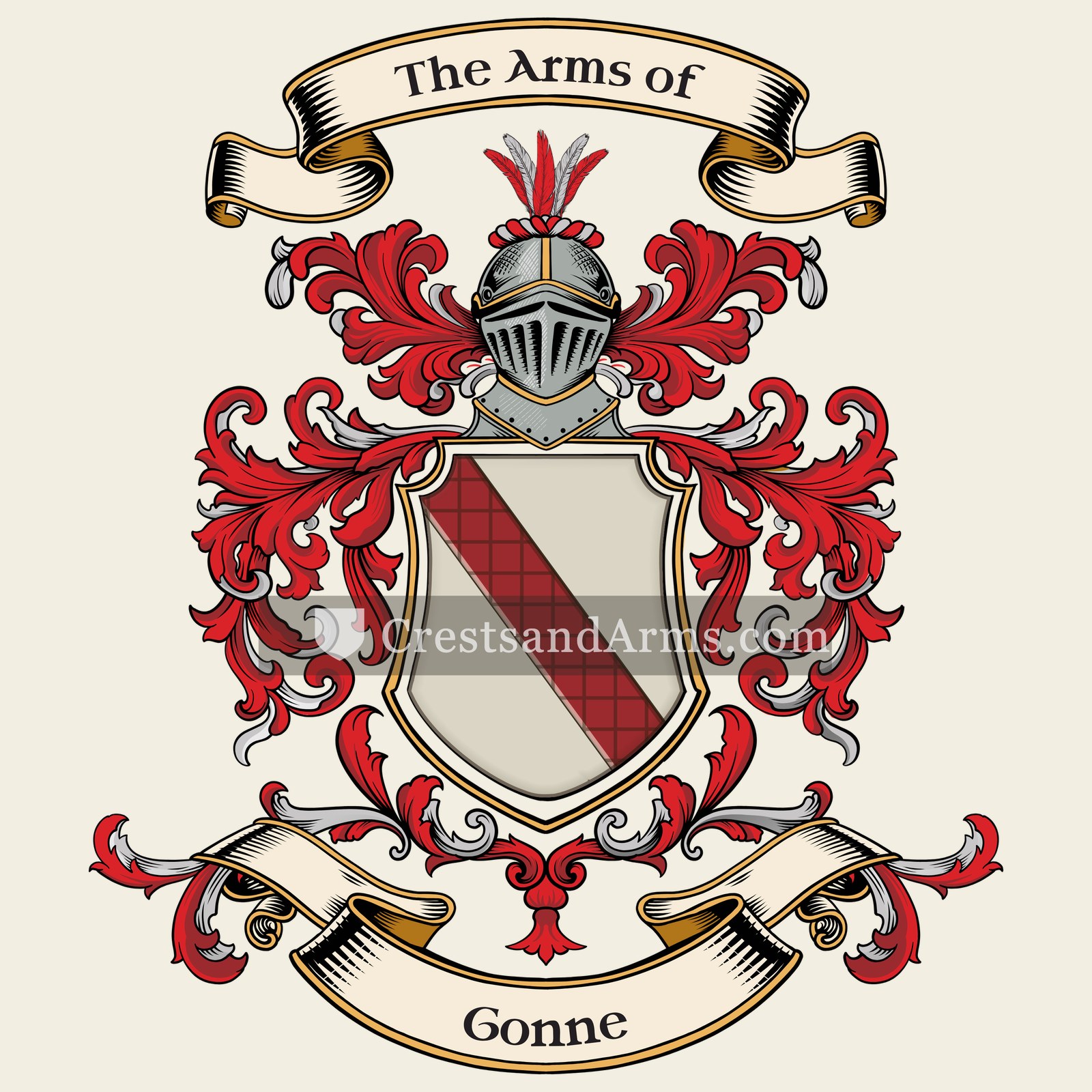


 cupFaith, office, and a trust discharged