A record of documented arms, meaning and origin, researched for the Gorge family lines. Documented in 3 countries.
Reg. 8420 · Belgian, G–I
Coat of Arms & Family Crest Details
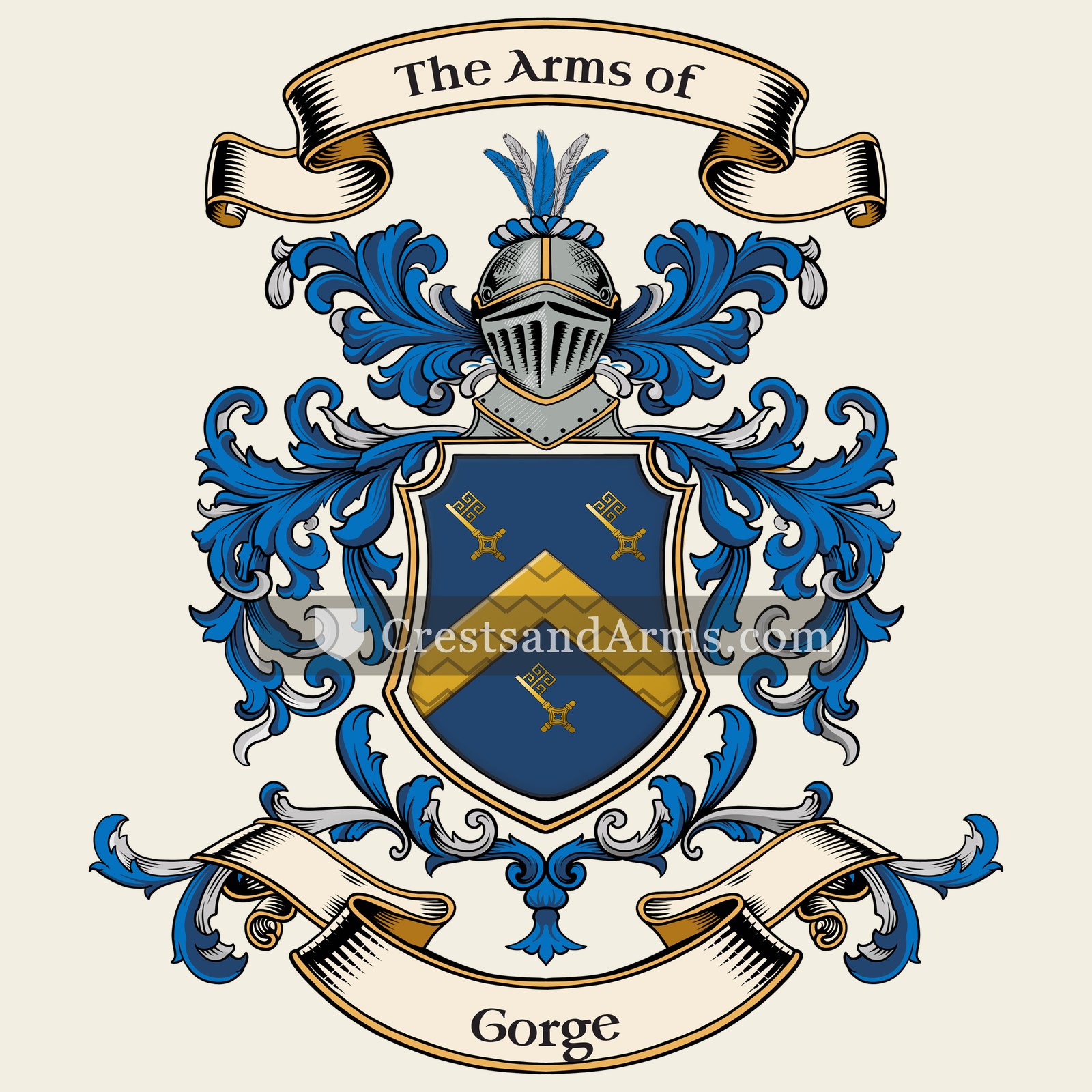
Symbols on this shield
chevronProtection, and faithful service completed
keyGuardianship, and the office of a steward
Colours
Blue (Azure)Means: Loyalty and truth
Gold (Or)Means: Generosity
Historical info
Source
J. B. Rietstap, Armorial Général, Gouda: G. B. van Goor Zonen, 1884–87
Blazon (the actual original written record)
“D'azur au chev. d'or, acc. de trois clés du même.”
HainautHainaut, c. 1737
Where the Gorge Arms Were Recorded
Hainaut
Map of Belgium showing where the Gorge arms are recorded
The Gorge arms were recorded in Hainaut, c. 1737.
Hainaut sat on the border between France and the Low Countries and was fought over for centuries. Families there held their land under arms and expected to defend it, so a shield was a working thing.
This is where the arms were entered in the register. Families often moved to other parts of the country, so the same name can turn up in more than one region.
The body that granted and recorded arms in Belgium in this period.
Charles VI, Holy Roman Emperor
Sovereign of the period
Charles VI, Holy Roman Emperor
1711–1740
Reigning in Belgium when the Gorge arms are first recorded.
How Arms Worked in Belgium
In Belgium, a coat of arms is considered personal property that is passed down through the male line to legitimate descendants. Families often use the same shield design across generations to show their shared heritage. If a branch of the family wants to change the design, they must apply for an official update to their specific version of the arms.
Granting authority
The Conseil héraldique is the official body that regulates and approves all coats of arms in Belgium.
How they got arms
Families obtain their coats of arms through formal royal grants or by confirming their historical right to use existing designs.
Where arms were recorded
All approved coats of arms are officially recorded in the public registers of the Conseil héraldique since 1844.
The family's standing
Recorded among the armigerous families of Hainaut.
Origin & History of the Gorge Family in Belgium
The family name Gorge has deep roots in the historical province of Hainaut, where records confirm members of the family were living as early as 1737. During the eighteenth century, this region was a bustling crossroads of trade and agriculture located within the Austrian Netherlands. Families like the Gorges often lived in small rural communities or growing market towns where they worked as skilled laborers or farmers. Because the name is linked to the French word for throat, it likely began as a nickname used to describe a person with a distinct voice or a specific physical trait. Over time, these families became part of the local social fabric, contributing to the development of the region through their daily work and community ties. As the family grew, they moved through the changing landscapes of Belgium, adapting to the shifts in government and industry that defined the area throughout the nineteenth century.
Coat of Arms & Family Crest Details
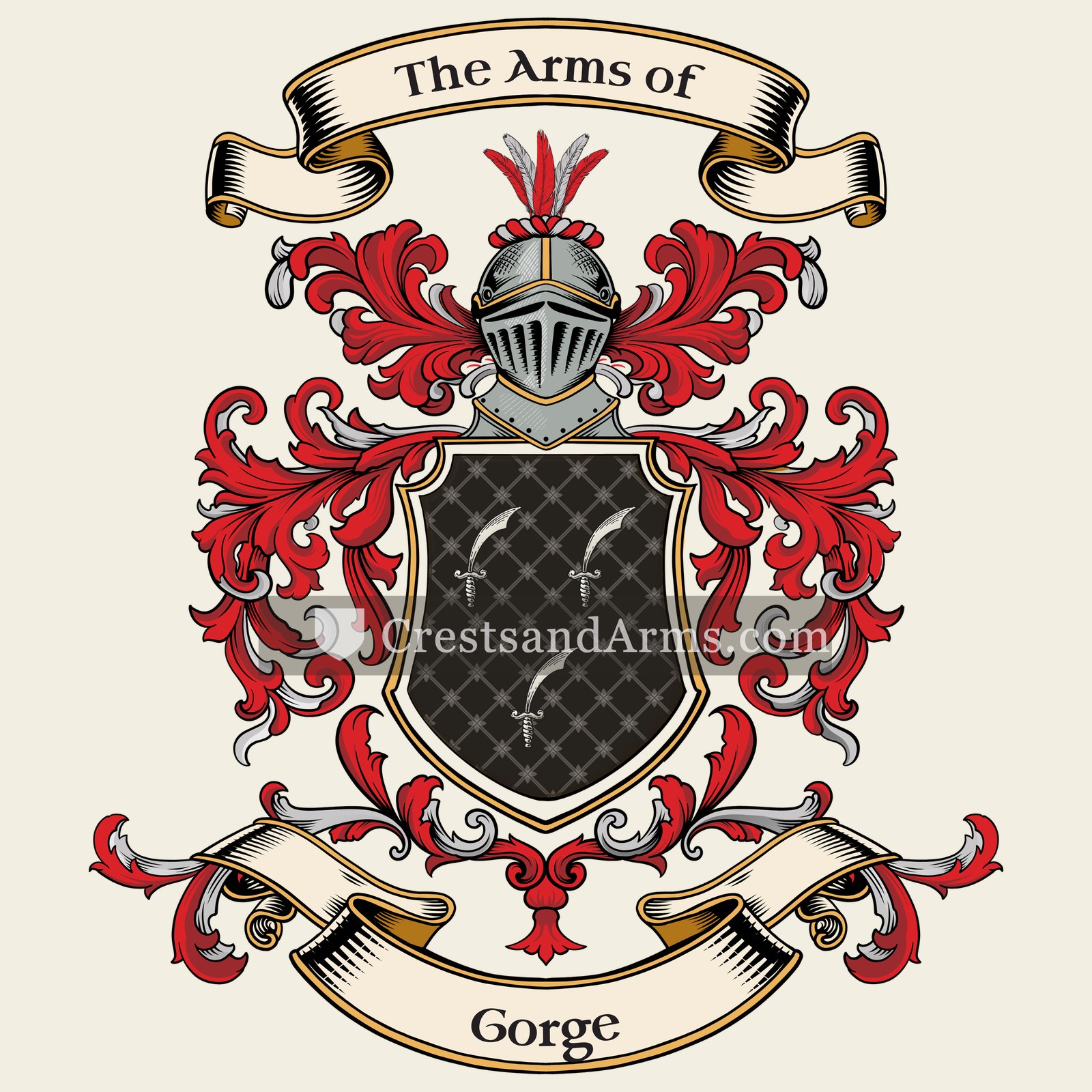
Symbols on this shield
swordJustice, and military honour
Colours
Black (Sable)Means: Constancy
Silver (Argent)Means: Peace and sincerity
Historical info
Source
J. B. Rietstap, Armorial Général, Gouda: G. B. van Goor Zonen, 1884–87
Blazon (the actual original written record)
“De sa. à trois épées d'arg., garnies d'or, rangées en fasce.”
LorraineLorraine, c. 1665
Where the Gorge Arms Were Recorded
Lorraine
Map of France showing where the Gorge arms are recorded
The Gorge arms were recorded in Lorraine, c. 1665.
Lorraine sat on the border between France and the German lands, and border country bred soldiers. Families here held small estates and served in arms, and a fighting man was exactly the sort who carried a shield of his own.
This is where the arms were entered in the register. Families often moved to other parts of the country, so the same name can turn up in more than one region.
The body that granted and recorded arms in France in this period.
Louis XIV of France
Sovereign of the period
Louis XIV of France
1643–1715
Reigning in Belgium when the Gorge arms are first recorded.
How Arms Worked in France
In France, a coat of arms was a mark of honor that passed down through the male line to all legitimate descendants. Families often used the same shield without changes to show their shared heritage. If a branch wanted to stand out, they could add a small mark to their shield to show their specific place in the family tree.
Granting authority
The Juge d'armes de France acted as the official authority that regulated and verified coats of arms across the country.
How they got arms
Families typically inherited their arms from ancestors, though they could also receive them through royal grants or by proving their noble status.
Where arms were recorded
Coats of arms were officially recorded in the Armorial Général de France, which began its main collection in the year 1696.
The family's standing
Recorded among the armigerous families of Lorraine.
Origin & History of the Gorge Family in France
The family name Gorge has deep roots in the northeastern region of France known as Lorraine. By the year 1665, records confirm that members of the family were already established residents within this area. During the seventeenth century, Lorraine was a crossroads of European culture and politics, often caught between the influence of the French crown and the Holy Roman Empire. Families living in this region during that time frequently navigated a landscape shaped by shifting borders and the aftermath of the Thirty Years' War. The name itself likely evolved from local linguistic traditions, reflecting the agricultural or geographical features of the landscape where the family first settled. Because Lorraine served as a vital hub for trade and migration, the early Gorge family members were part of a resilient population that helped maintain the social and economic structure of the province during a period of significant historical change.
Coat of Arms & Family Crest Details
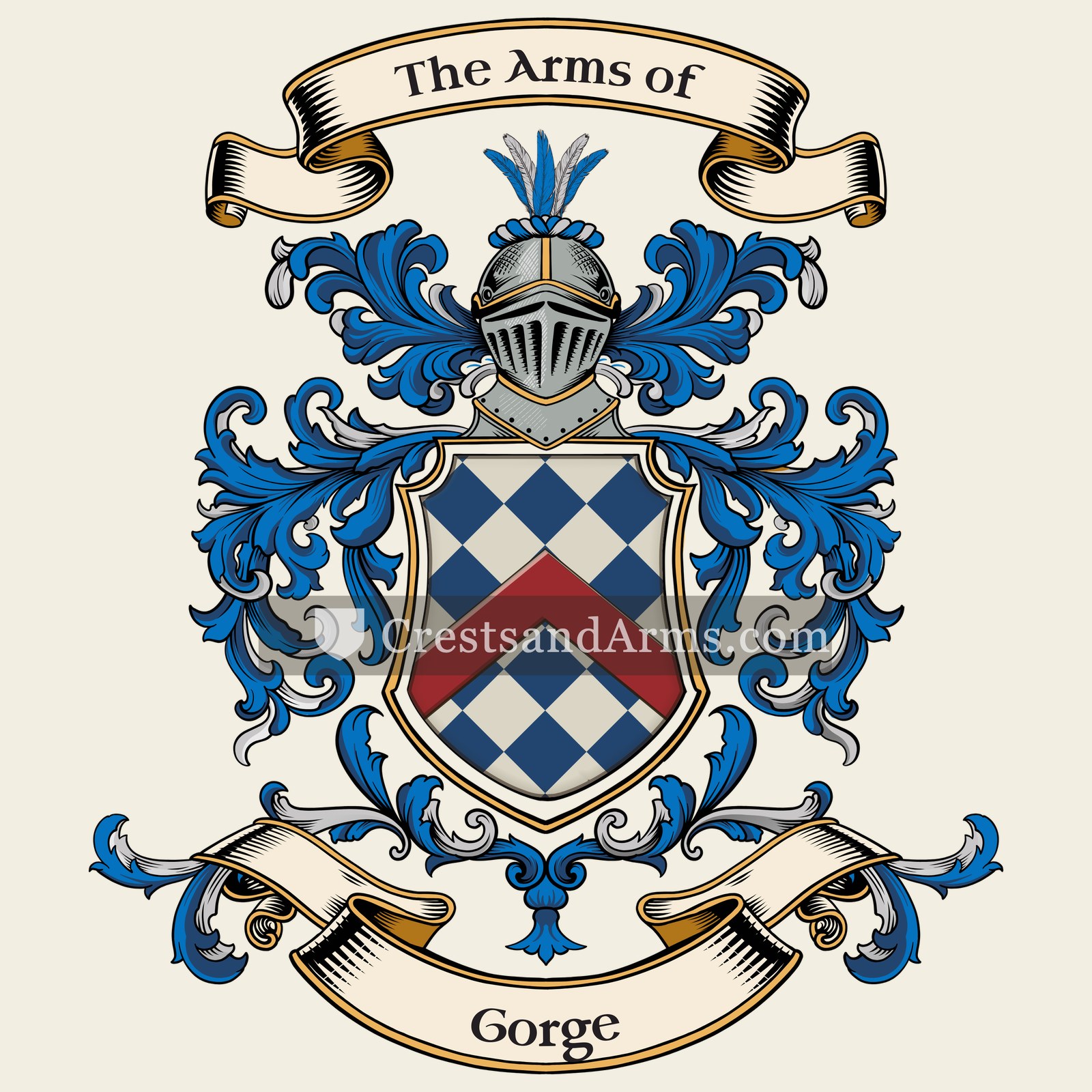
Symbols on this shield
chevronProtection, and faithful service completed
Colours
Silver (Argent)Means: Peace and sincerity
Red (Gules)Means: Military strength
Blue (Azure)Means: Loyalty and truth
Historical info
Source
Sir Bernard Burke, The General Armory of England, Scotland, Ireland and Wales, London: Harrison & Sons, 1884
Blazon (the actual original written record)
“Lozengy ar. and az. a chev. gu”
MiddlesexHillingdon · Middlesex, c. 1663
Where the Gorge Arms Were Recorded
Middlesex
Map of England showing where the Gorge arms are recorded
The Gorge arms were recorded in Middlesex, c. 1663.
Middlesex was the county around London, and City money flowed straight into it. Merchants and officials bought estates within reach of the capital, and a new estate brought a coat of arms with it.
This is where the arms were entered in the register. Families often moved to other parts of the country, so the same name can turn up in more than one region.
The body that granted and recorded arms in England in this period.
Charles II of England
Sovereign of the period
Charles II of England
1660–1685
Reigning in Belgium when the Gorge arms are first recorded.
How Arms Worked in England
English heraldry allowed arms to be shared by all legitimate descendants of the original owner. These symbols were treated as personal property that moved through the generations to all children. While the eldest son kept the original design, other family members could use the same shield without needing to change it or register their own unique versions.
Granting authority
The College of Arms in London has regulated the use of coats of arms throughout England and Wales since 1484.
How they got arms
Families typically obtained their coats of arms through a formal grant from the Crown or by proving their ancient right to them.
Where arms were recorded
All official coats of arms are recorded in the registers kept at the College of Arms, which date back to the fifteenth century.
The family's standing
Recorded among the armigerous families of Middlesex.
Origin & History of the Gorge Family in England
The history of the Gorge family name in England is deeply tied to the social and geographical shifts of the seventeenth century. While the name appears in various regional records, a significant concentration of the family was well-established in Middlesex by 1663. During this period, Middlesex served as a vital hub for families moving toward the growing influence of London, often seeking new opportunities in trade or local administration. The presence of the Gorge family in this area suggests they were part of a stable middle class that helped shape the local community during the Restoration era. By settling in this region, the family became part of the complex network of landowners and citizens who navigated the changing political landscape of post-Civil War England. Their history reflects the broader movement of English families who sought to build lasting legacies in the heart of the nation.
Related Branches & Arms
Root word
Georgios
Derived from the Greek words for earth and worker.
This name
GorgeA surname indicating an ancestor who was a farmer or tiller of the soil.
also spelled
Gorger
Related arms
Goargevariant spelling
Folkesrecorded with Gorge, same area
Treswallenrecorded with Gorge, same area
Walkerrecorded with Gorge, same area
Documented Sources
J. B. Rietstap, Armorial Général, Gouda: G. B. van Goor Zonen, 1884–87
Archives de l'État à Mons, Registres paroissiaux de la province de Hainaut (1737)
Fourez, Lucien, Les noms de famille en Belgique, 1968
Herbillon, Jules and Germain, Jean, Dictionnaire des noms de famille en Belgique romane et dans les régions limitrophes, 1996
Digital archive packCoat of arms PNG, gold border print PDF, vector SVG and the certificate of authenticity. Sent to your email in minutes.


 chevronProtection, and faithful service completed
 keyGuardianship, and the office of a steward
 chevronProtection, and faithful service completed
 keyGuardianship, and the office of a steward

 swordJustice, and military honour