Map of Sweden showing where the Gorilla arms are recorded
The Gorilla arms were recorded in Sweden, c. 1700.
Arms such as these were typically recorded in Stockholm.
Stockholm held the Swedish court and the House of Nobility, where every noble family's arms were entered and kept. Families ennobled for service registered there, which is why so many are recorded around the city.
This is where the arms were entered in the register. Families often moved to other parts of the country, so the same name can turn up in more than one region.
The body that granted and recorded arms in Sweden in this period.
Carl XII of Sweden
Sovereign of the period
Carl XII of Sweden
1697–1718
Reigning in Sweden when the Gorilla arms are first recorded.
How Arms Worked in Sweden
In Sweden, a coat of arms belonged to a noble family as a whole rather than just one individual. These arms were passed down through the generations to all legitimate descendants. Younger branches of the family used the same shield without needing to change it. This system ensured that the entire lineage shared the same identity and status under the law.
Granting authority
The Riddarhuset, or House of Nobility, regulated all noble coats of arms in Sweden under royal authority.
How they got arms
Families received their coats of arms through royal grants of nobility which were then officially registered with the House.
Where arms were recorded
Coats of arms were officially recorded in the Swedish House of Nobility register starting in the year 1626.
The family's standing
Recorded among the armigerous families of Sweden.
Origin & History of the Gorilla Family in Sweden
The family name Gorilla first appeared in the historical landscape of Stockholm during the early 1700s, a period when the city was a bustling center of trade and social transition. During this era, surnames in Sweden were often fluid, and the adoption of such a distinct name suggests that the early members of this family likely held a unique position within the urban merchant class or the growing administrative workforce. Because the name does not follow the traditional Swedish naming patterns of the time, it is probable that these ancestors were either travelers who settled permanently in the capital or individuals who chose a name to signify a specific trade or personal trait. By the mid-18th century, these early residents had integrated into the local parish records, marking their transition from newcomers to established citizens of Stockholm. Their presence reflects the broader movement of people into the city as it expanded its influence across the Baltic region.
Meaning of the Gorilla family crest colors & symbols
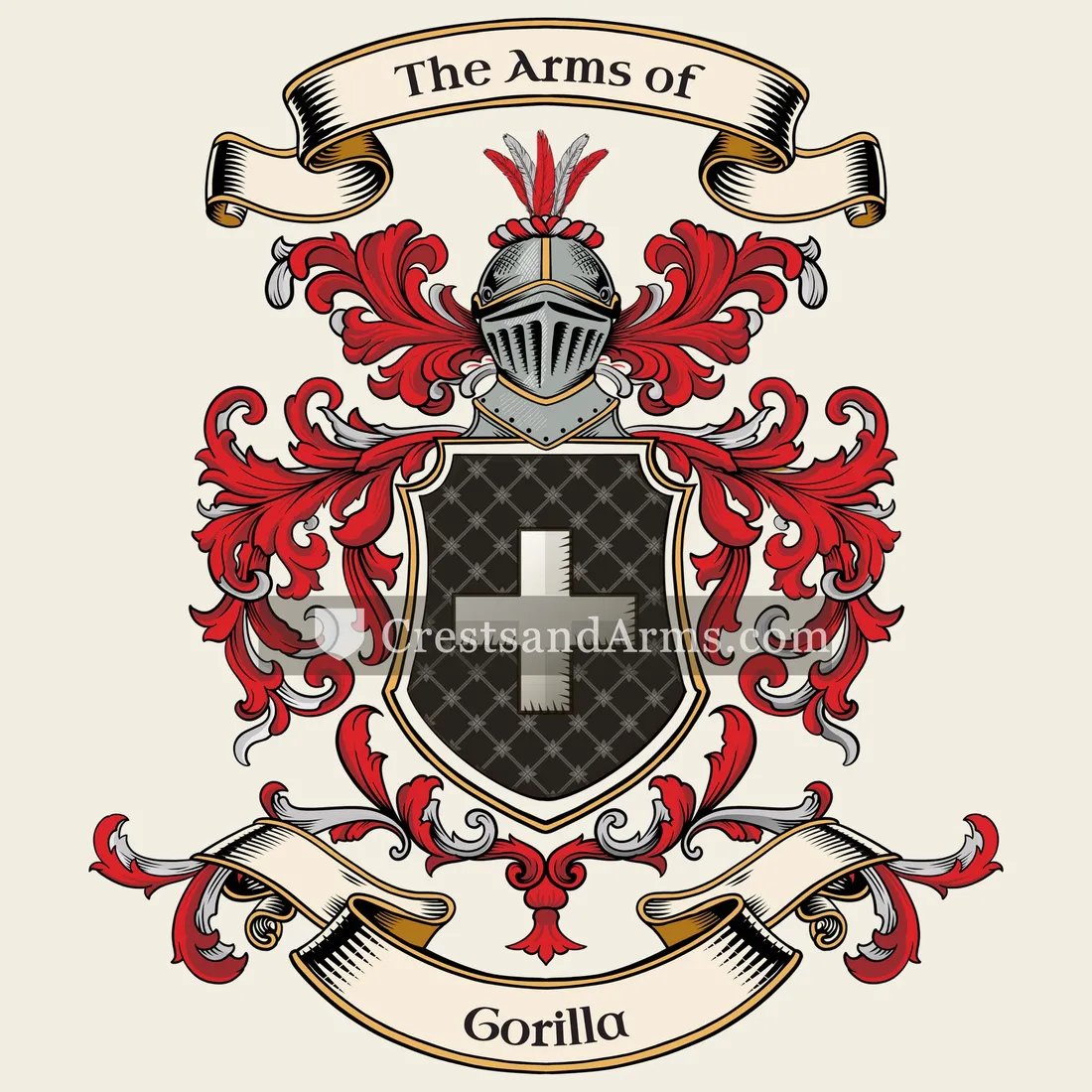
Symbols on this shield
cross symbolChristian faith and service
Colours
Black (Sable)Means: Constancy
Silver (Argent)Means: Peace and sincerity
Historical info
Source
Sir Bernard Burke, The General Armory of England, Scotland, Ireland and Wales, London: Harrison & Sons, 1884
Blazon (the actual original written record)
“Sa. a cross couped and pierced ar”
Englandc. 1620
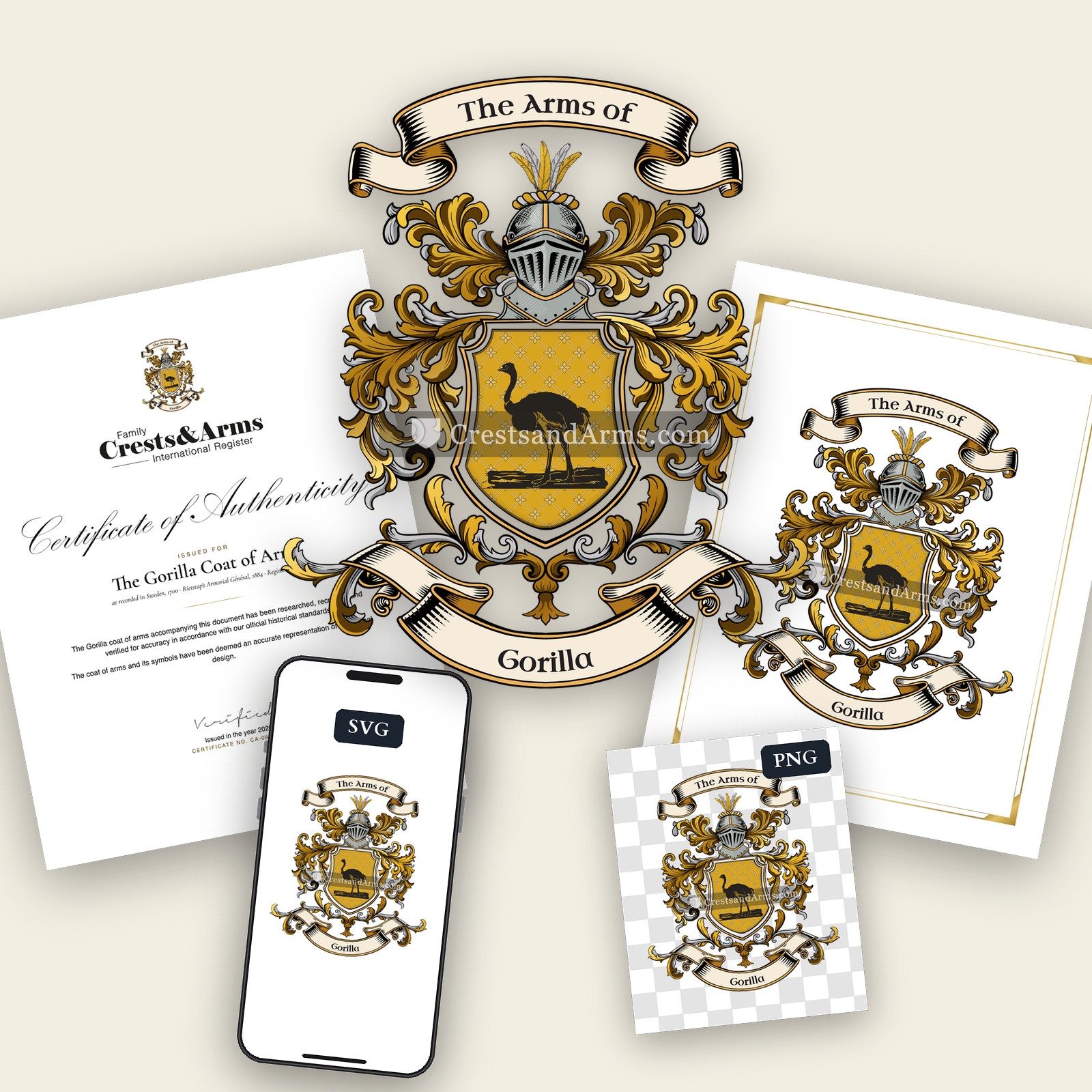
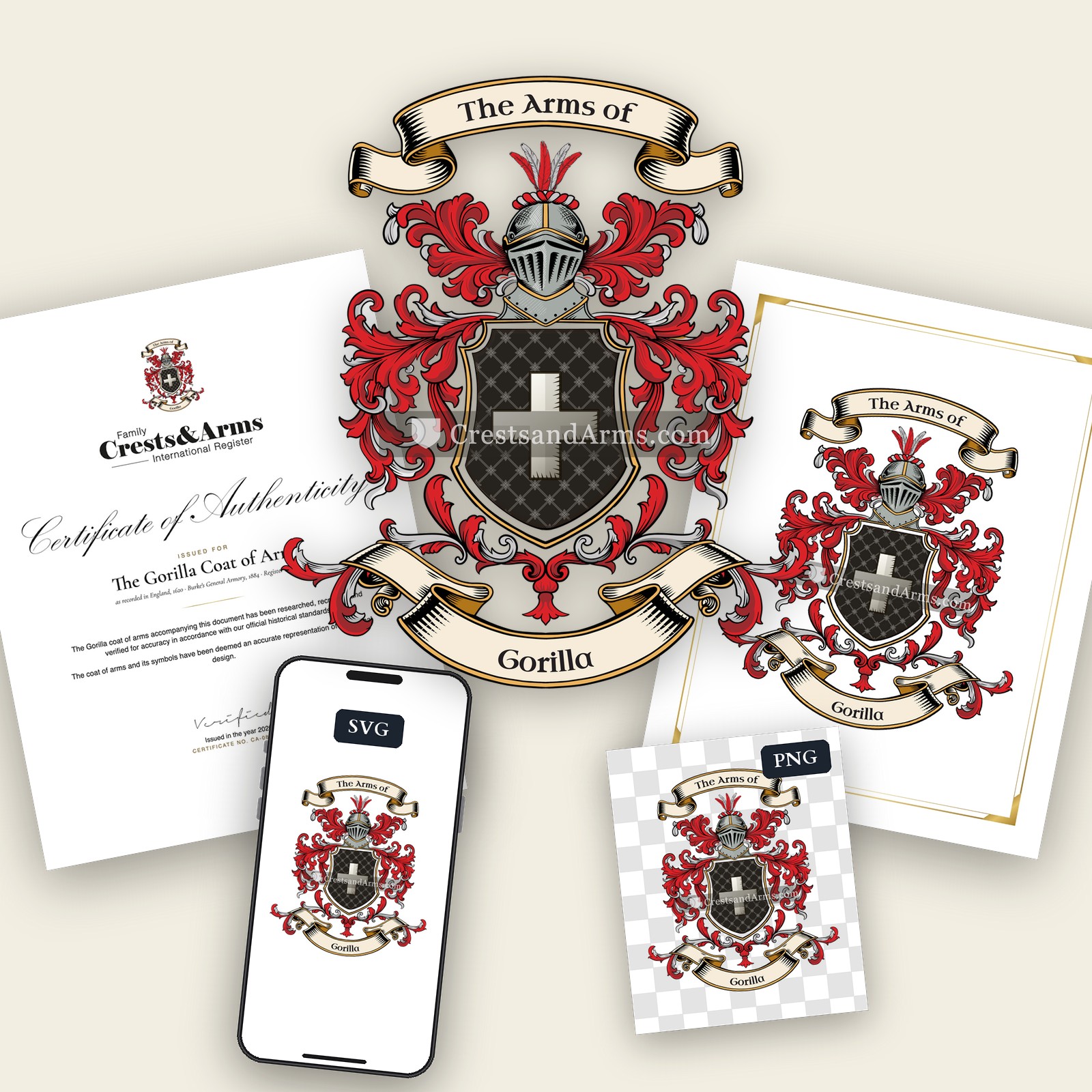
Digital archive packCoat of arms PNG, gold border print PDF, vector SVG and the certificate of authenticity. Sent to your email in minutes.
Map of England showing where the Gorilla arms are recorded
The Gorilla arms were recorded in England, c. 1620.
Arms such as these were typically recorded in York.
Yorkshire is the largest of the English counties, and it held more gentry families than any other. Land there was split among a great many households rather than a few, so a great many of them carried arms.
This is where the arms were entered in the register. Families often moved to other parts of the country, so the same name can turn up in more than one region.
The body that granted and recorded arms in England in this period.
James VI and I
Sovereign of the period
James VI and I
1603–1625
Reigning in Sweden when the Gorilla arms are first recorded.
How Arms Worked in England
English heraldry allowed arms to be shared by all legitimate descendants of the original owner. These symbols were treated as personal property that moved through the generations to all children. While the eldest son kept the original design, other family members could use the same shield without needing to change it or register their own unique versions.
Granting authority
The College of Arms in London has regulated the use of coats of arms throughout England and Wales since 1484.
How they got arms
Families typically obtained their coats of arms through a formal grant from the Crown or by proving their ancient right to them.
Where arms were recorded
All official coats of arms are recorded in the registers kept at the College of Arms, which date back to the fifteenth century.
The family's standing
Recorded among the armigerous families of England.
Origin & History of the Gorilla Family in England
The family name Gorilla first appears in the historical record of York around 1620, marking a distinct presence in Northern England during the early seventeenth century. During this period, York served as a bustling hub for trade and craftsmanship, and families often adopted surnames based on local nicknames or specific physical traits noted by their neighbors. While the name sounds unusual to modern ears, it likely originated from a descriptive term used in the local dialect of the time to identify a person of great strength or a specific temperament. These early ancestors were likely integrated into the working class of the city, participating in the guilds and parish life that defined York’s social structure. By settling in such a prominent administrative center, the family established a foothold that allowed them to navigate the shifting political and economic landscape of England as the century progressed.
Gorilla Meaning & Related Branches
Root word
Göran
Derived from the Greek name Georgios meaning farmer or earth worker.
This name
GorillaA Swedish surname likely originating as a patronymic form of the given name Göran.
also spelled
Grille
Gril
Gryll
Griles
Grylls
Documented Sources
J. B. Rietstap, Armorial Général, Gouda: G. B. van Goor Zonen, 1884–87
Stockholm City Archives (Stockholms stadsarkiv), Överståthållarämbetet för uppbördsärenden
National Archives of Sweden (Riksarkivet), Kyrkoarkiv: Födelse- och dopböcker
Hellquist, Elof, Svensk etymologisk ordbok, 1922
Modéer, Ivar, Svenska personnamn: Handbok för universitetsbruk, 1964
Digital archive packCoat of arms PNG, gold border print PDF, vector SVG and the certificate of authenticity. Sent to your email in minutes.


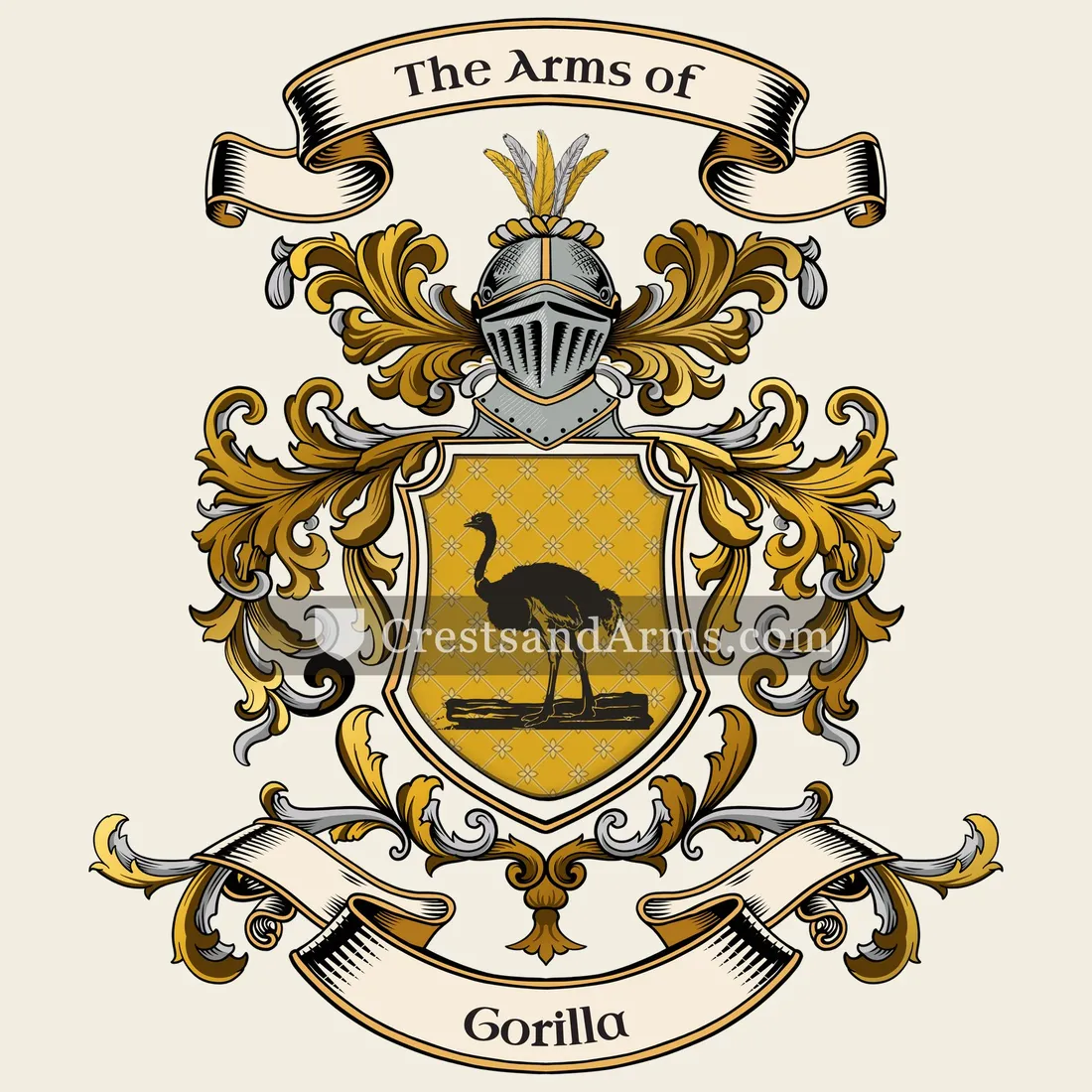
 ostrichWilling obedience and serious thought
 ostrichWilling obedience and serious thought


 cross symbolChristian faith and service