Map of Netherlands showing where the Gose arms are recorded
The Gose arms were recorded in Leyde, c. 1815.
This is where the arms were entered in the register. Families often moved to other parts of the country, so the same name can turn up in more than one region.
Region
Leyde
Town
Leyde
First recorded
1815
Granting Authority for the Gose Arms
Hoge Raad van Adel
Photograph made by me · CC BY-SA 3.0
The body that granted and recorded arms in Netherlands in this period.
William I of the Netherlands
Sovereign of the period
William I of the Netherlands
1815–1840
Reigning in Netherlands when the Gose arms are first recorded.
How Arms Worked in Netherlands
In the Netherlands, coats of arms were often used by noble families and those who held specific public offices. These arms were passed down through the generations to legitimate descendants. Younger branches of a family usually kept the original design without needing to add special marks. This system ensured that the family identity remained clear and consistent over many years.
Granting authority
The Hoge Raad van Adel is the official body that regulates and manages noble titles and coats of arms in the Netherlands.
How they got arms
Families typically obtained their coats of arms through official royal grants or by proving their long-standing historical use of the symbols.
Where arms were recorded
Coats of arms are officially recorded in the registers held by the Hoge Raad van Adel, which began its work in 1814.
The family's standing
Recorded among the armigerous families of Netherlands.
Origin & History of the Gose Family in Netherlands
The history of the Gose family in the Netherlands is deeply connected to the urban development of Leiden during the early nineteenth century. By 1815, records confirm that members of the family were established residents of this historic city, which was then transitioning into a new era following the French occupation. The name Gose likely originated as a topographic or descriptive surname, reflecting the linguistic shifts common in the border regions between the Low Countries and neighboring German territories. During this period, families like the Goses often moved to cities like Leiden to participate in the growing textile industry and the administrative reforms introduced after the formation of the United Kingdom of the Netherlands. As they settled into the local community, the family became part of the steady social fabric of the city, contributing to the labor and trade networks that defined Leiden’s recovery in the post-Napoleonic age.
Meaning of the Gose family crest colors & symbols
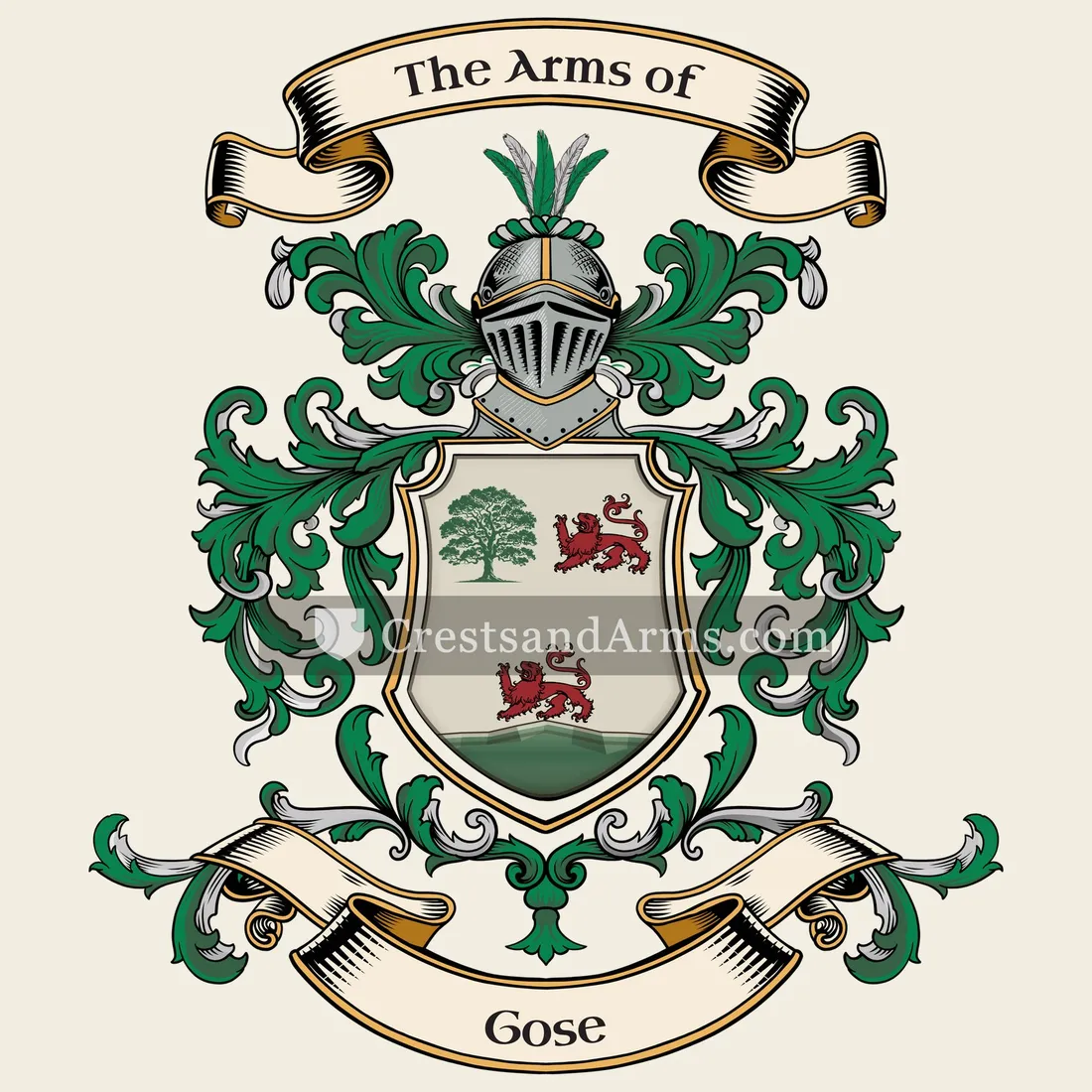
Symbols on this shield
mountThe ground held, and steadfastness upon it
treeLife, endurance and deep roots
lionCourage, strength and royalty
Colours
Silver (Argent)Means: Peace and sincerity
Green (Vert)Means: Hope
Red (Gules)Means: Military strength
Historical info
Source
J. B. Rietstap, Armorial Général, Gouda: G. B. van Goor Zonen, 1884–87
Blazon (the actual original written record)
“D'arg. à un arbre de sin., accosté de deux lions affr. de gu., ramp. contre le fût; le tout soutenu d'une terrasse de sin. C.: un arbre de sin.”
Belgiumc. 1737
Digital archive packCoat of arms PNG, gold border print PDF, vector SVG and the certificate of authenticity. Sent to your email in minutes.
Map of Belgium showing where the Gose arms are recorded
The Gose arms were recorded in Belgium, c. 1737.
Arms such as these were typically recorded in Brabant.
Brabant lay at the heart of the Low Countries, where the trade routes met. Its towns were wealthy and its landowners many, and both kinds of family kept arms, which is why the region is so heavily represented.
This is where the arms were entered in the register. Families often moved to other parts of the country, so the same name can turn up in more than one region.
The body that granted and recorded arms in Belgium in this period.
Charles VI, Holy Roman Emperor
Sovereign of the period
Charles VI, Holy Roman Emperor
1711–1740
Reigning in Netherlands when the Gose arms are first recorded.
How Arms Worked in Belgium
In Belgium, a coat of arms is considered personal property that is passed down through the male line to legitimate descendants. Families often use the same shield design across generations to show their shared heritage. If a branch of the family wants to change the design, they must apply for an official update to their specific version of the arms.
Granting authority
The Conseil héraldique is the official body that regulates and approves all coats of arms in Belgium.
How they got arms
Families obtain their coats of arms through formal royal grants or by confirming their historical right to use existing designs.
Where arms were recorded
All approved coats of arms are officially recorded in the public registers of the Conseil héraldique since 1844.
The family's standing
Recorded among the armigerous families of Belgium.
Origin & History of the Gose Family in Belgium
The family name Gose has deep roots in the historical region of Brabant, where records confirm members of the family were established by 1737. During the eighteenth century, Brabant was a central hub of trade and agriculture within the Southern Netherlands, and families like the Goses were often integrated into the local social fabric of these growing communities. The name likely evolved from regional dialects common to the area, reflecting the linguistic blend of Dutch and French influences that defined the province. As inhabitants of this territory, the early Gose family members lived through a period of significant political transition as the region moved between various European powers. By maintaining a presence in Brabant, the family participated in the steady development of local village life and the rural economy that characterized this part of Belgium long before the modern nation was formed.
Gose Meaning & Related Branches
Root word
Gode
Derived from the Germanic word for god or good.
This name
GoseA patronymic or descriptive name referring to a person of good character or divine association.
also spelled
Gose
Gos
Documented Sources
J. B. Rietstap, Armorial Général, Gouda: G. B. van Goor Zonen, 1884–87
Erfgoed Leiden en Omstreken, Bevolkingsregister Leiden 1815-1850
Digital archive packCoat of arms PNG, gold border print PDF, vector SVG and the certificate of authenticity. Sent to your email in minutes.


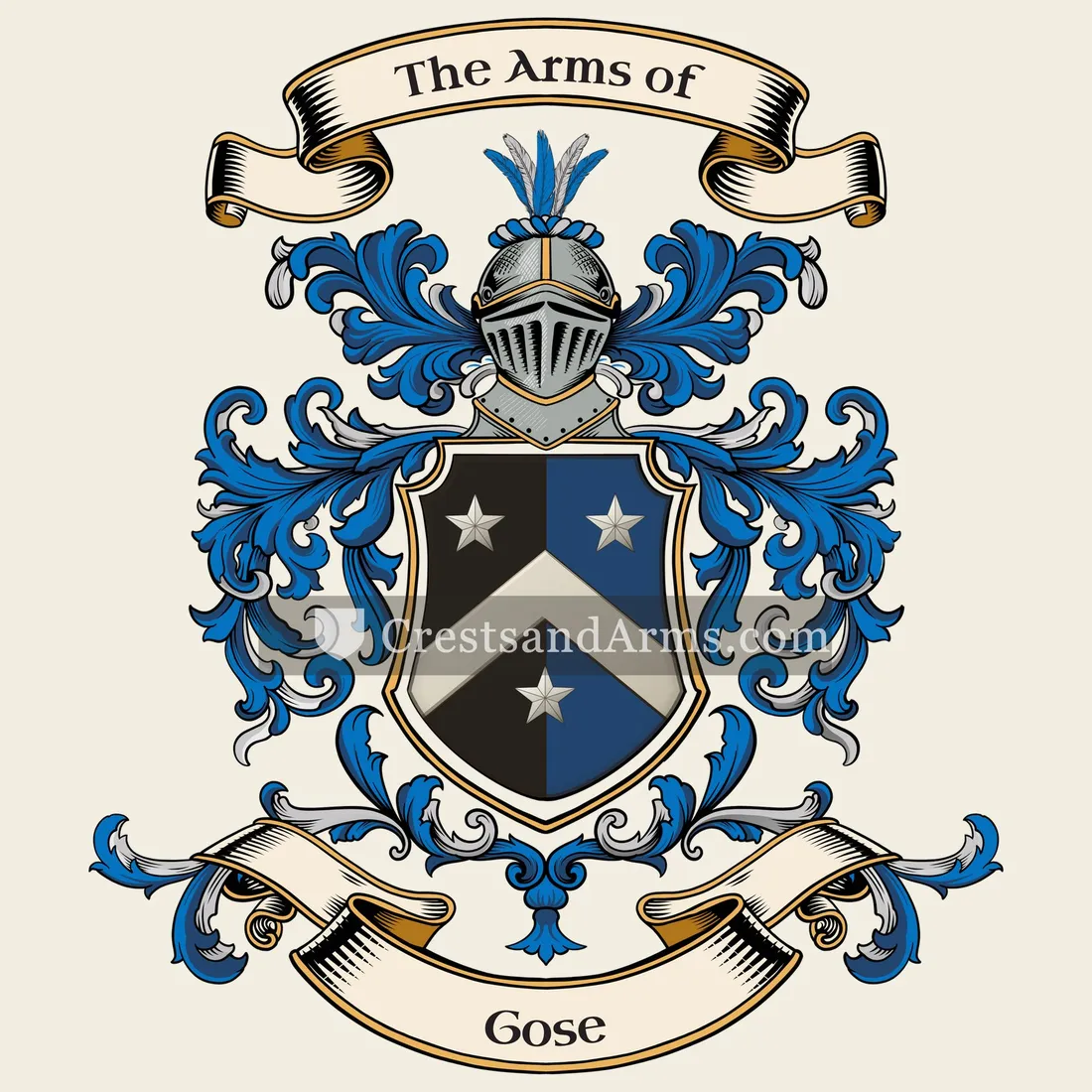
 chevronProtection, and faithful service completed
 mulletThe third son, and a divine quality from above
 chevronProtection, and faithful service completed
 mulletThe third son, and a divine quality from above


 mountThe ground held, and steadfastness upon it
 treeLife, endurance and deep roots
 lionCourage, strength and royalty