Map of Austria showing where the Gossman arms are recorded
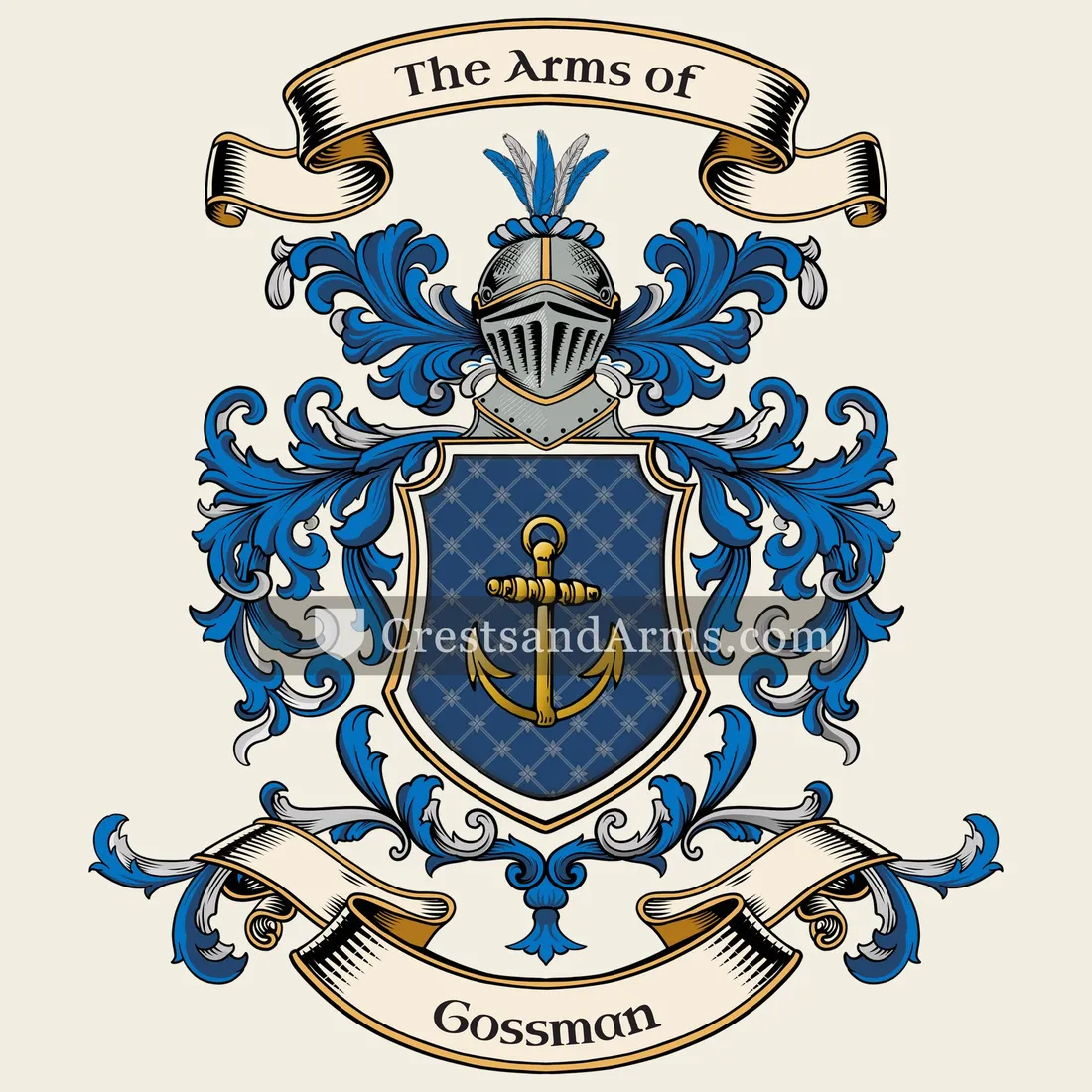
The Gossman arms were recorded in Galicia, c. 1772.
Galicia was eastern country of large estates and small farming villages, held by families who had been there for a very long time. Land was what entitled a family to arms, and land there rarely changed hands.
This is where the arms were entered in the register. Families often moved to other parts of the country, so the same name can turn up in more than one region.
Region
Galicia
First recorded
1772
Granting Authority for the Gossman Arms
Imperial and Royal chancery
Sodacan · CC BY-SA 3.0
The body that granted and recorded arms in Austria in this period.
Joseph II, Holy Roman Emperor
Sovereign of the period
Joseph II, Holy Roman Emperor
1765–1790
Reigning in Austria when the Gossman arms are first recorded.
How Arms Worked in Austria
Austrian coats of arms were often linked directly to noble titles granted by the Emperor. These symbols belonged to the entire family line rather than just one individual. When a family grew, new branches kept the original design without needing to change it. This system allowed all members of a noble house to share the same identity across many generations.
Granting authority
The Imperial and Royal chancery managed all heraldic matters and controlled the official granting of arms throughout the Austrian lands.
How they got arms
Families typically received their arms through a formal imperial decree that often accompanied the elevation of a person to noble status.
Where arms were recorded
Official records of these grants were kept in the Imperial Register of Nobility which began its formal documentation process in 1453.
The family's standing
Recorded among the armigerous families of Galicia.
Origin & History of the Gossman Family in Austria
The name Gossman likely originated as a descriptive occupational or personal identifier within the German-speaking regions of Central Europe. By 1772, members of the family were established in the region of Galicia, which had recently come under the administration of the Habsburg Monarchy following the First Partition of Poland. During this period, the Austrian government encouraged ethnic Germans to settle in Galician territories to help develop the local economy and infrastructure. Families like the Gossmans often worked as skilled tradespeople, farmers, or administrators in these new settlements. Because the region was a crossroads of many cultures, the name persisted as a mark of the family’s Germanic heritage while they adapted to the complex social and political landscape of Eastern Europe.
Gossman Meaning & Related Branches
Root word
Goz
Old High German term meaning god or good.
This name
GossmanA person who served or was associated with a man named Goz.
also spelled
Gusman
Gussman
Documented Sources
J. B. Rietstap, Armorial Général, Gouda: G. B. van Goor Zonen, 1884–87
Magocsi, Paul R., Galicia: A Historical Survey and Bibliographic Guide, 1983
Wynot, Edward D., The Polish-German Borderlands: A Study of Cultural and Political Integration, 1999
Stumpp, Karl, Die Auswanderung aus Deutschland nach Russland in den Jahren 1763 bis 1862, 1972
Central State Historical Archives of Ukraine in Lviv, Fond 146: Galicia Viceroyalty Records
Austrian State Archives, Allgemeines Verwaltungsarchiv: Galizische Ansiedlungsakten
Digital archive packCoat of arms PNG, gold border print PDF, vector SVG and the certificate of authenticity. Sent to your email in minutes.


 anchorHope, and steadfastness in trouble
 anchorHope, and steadfastness in trouble