A record of documented arms, meaning and origin, researched for the Gowar family lines. Documented in 3 countries.
Reg. 4701 · Scottish, G–I
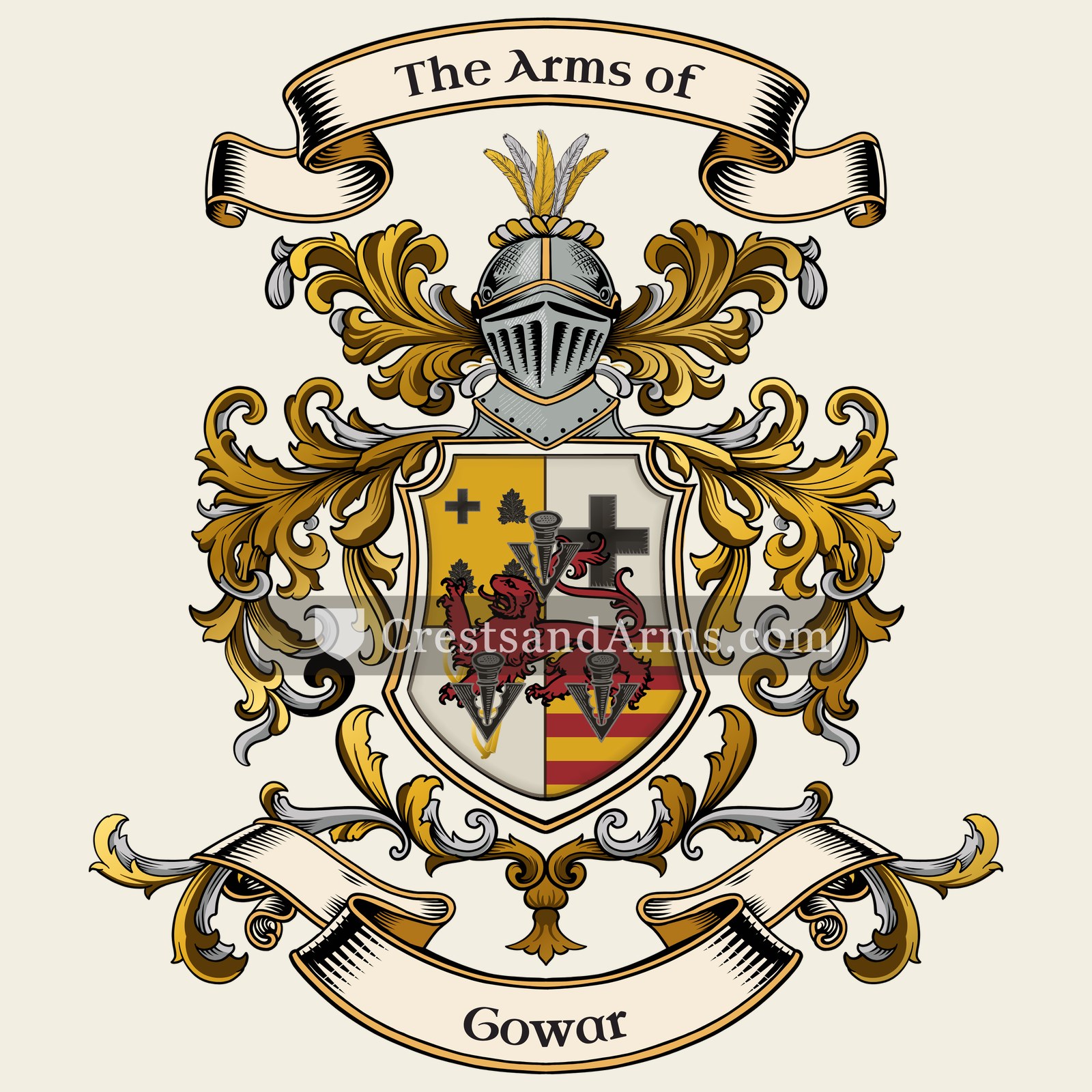
Coat of Arms & Family Crest Details
Symbols on this shield
cross symbolChristian faith and service
bendDefence, and the scarf of a commander
paleMilitary strength, and a fortified defence
cantonA mark of honour granted by the sovereign
chequyConstancy, and the counting-board
fessThe military belt, and readiness to serve
bordureA difference between branches of one family
lionCourage, strength and royalty
arms pheon arrowheadReadiness for battle, and the broad arrow of the sovereign
leafHappiness and abundance
harpWell-tuned governance and love of music
Colours
Gold (Or)Means: Generosity
Silver (Argent)Means: Peace and sincerity
Red (Gules)Means: Military strength
Black (Sable)Means: Constancy
Historical info
Source
Sir Bernard Burke, The General Armory of England, Scotland, Ireland and Wales, London: Harrison & Sons, 1884
Blazon (the actual original written record)
“Quarterly of eight, 1st, quarterly, 1st and 4th, barry of eight or and gu. over all a cross flory sa., for GOWER, 2nd and 3rd az. three laurel leaves or, for LEVESON; 2nd, barry of eight ar. and gu. over all a cross patonce sa., for GOWER; 3rd, gu. three organ rests or sufflues or, for GRANVILLE, Earl of Bath; 4th, ar. a lion ramp. gu. betw. three pheons' heads sa., for EGERTON, Duke of Bridgewater; 5th, ar. on a bend az. three bucks' heads cabossed or, for STANLEY; 6th, gu. two lions pass. ar. for STRANGE, of Knockyn; 7th, barry of ten ar. and gu. over all a lion ramp. or, crowned per pale of the first and second, for BRANDON, Duke of Suffolk, on a canton chequy or and az. a fesse gu., for CLIFFORD, Earl of Cumberland; 8th, Royal arms, over all on an escutcheon of pretence, surmounted by an earl's coronet gu. three stars within a bordure or, charged with a double tressure flory counterflory of the field, being the arms of the ancient Earls of Sutherland”
SutherlandSutherland, c. 1748
Where the Gowar Arms Were Recorded
Sutherland
Map of Scotland showing where the Gowar arms are recorded
The Gowar arms were recorded in Sutherland, c. 1748.
Sutherland was empty Highland country in the far north, held by a very small number of families. Land there rarely changed hands, and families who held it appear in the records.
This is where the arms were entered in the register. Families often moved to other parts of the country, so the same name can turn up in more than one region.
The body that granted and recorded arms in Scotland in this period.
George II of Great Britain
Sovereign of the period
George II of Great Britain
1727–1760
Reigning in Scotland when the Gowar arms are first recorded.
How Arms Worked in Scotland
Scottish heraldry is unique because it treats a coat of arms as a piece of personal property protected by law. Only one person can own a specific design at any given time. When a family grows, the head keeps the original shield while other relatives must apply for their own distinct version with slight changes to prove their specific identity.
Granting authority
The Court of the Lord Lyon acts as the official body that regulates and controls all heraldic matters throughout Scotland.
How they got arms
Individuals obtain a legal right to their arms through a formal petition process that confirms their identity and family connection.
Where arms were recorded
All valid coats of arms are officially entered into the Public Register of All Arms and Bearings starting from 1672.
The family's standing
Recorded among the armigerous families of Sutherland.
Origin & History of the Gowar Family in Scotland
The family name Gowar has deep roots in the rugged landscape of Sutherland, Scotland, where members of the family were documented as early as 1748. During this period, the region was defined by a traditional clan-based society where families often lived in small, tight-knit farming communities. The name likely emerged as a descriptive identifier for individuals living in or near specific geographical features or those who practiced particular trades within the local parish. Life in eighteenth-century Sutherland was shaped by the harsh northern climate and the transition toward modern agricultural practices, which forced many families to adapt their way of life to survive on the land. By tracing these early records, we see the Gowar family as part of the resilient population that navigated the social and economic changes occurring in the Scottish Highlands during the mid-eighteenth century.
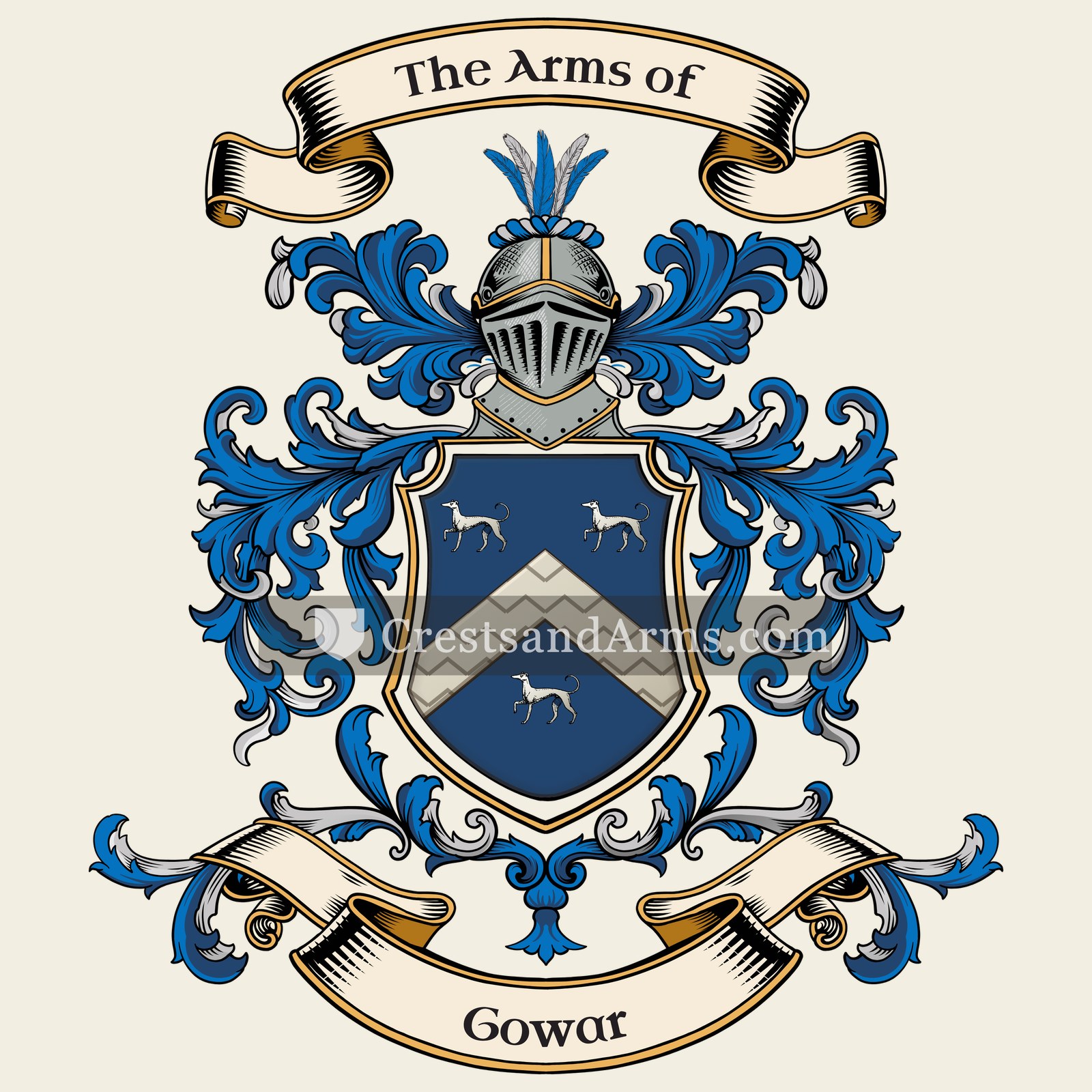
Coat of Arms & Family Crest Details
Symbols on this shield
chevronProtection, and faithful service completed
greyhoundCourage, vigilance and loyalty
Colours
Blue (Azure)Means: Loyalty and truth
Silver (Argent)Means: Peace and sincerity
Historical info
Source
Sir Bernard Burke, The General Armory of England, Scotland, Ireland and Wales, London: Harrison & Sons, 1884
Blazon (the actual original written record)
“Az. a chev. betw. three talbots pass. ar”
WorcesterWorcester, c. 1533
Where the Gowar Arms Were Recorded
Worcester
Map of England showing where the Gowar arms are recorded
The Gowar arms were recorded in Worcester, c. 1533.
Worcestershire was orchard and farming country with a scattering of old manors. Its gentry were middling rather than great, but a manor was a manor, and holding one was what brought arms.
This is where the arms were entered in the register. Families often moved to other parts of the country, so the same name can turn up in more than one region.
The body that granted and recorded arms in England in this period.
Henry VIII of England
Sovereign of the period
Henry VIII of England
1509–1547
Reigning in Scotland when the Gowar arms are first recorded.
How Arms Worked in England
English heraldry allowed arms to be shared by all legitimate descendants of the original owner. These symbols were treated as personal property that moved through the generations to all children. While the eldest son kept the original design, other family members could use the same shield without needing to change it or register their own unique versions.
Granting authority
The College of Arms in London has regulated the use of coats of arms throughout England and Wales since 1484.
How they got arms
Families typically obtained their coats of arms through a formal grant from the Crown or by proving their ancient right to them.
Where arms were recorded
All official coats of arms are recorded in the registers kept at the College of Arms, which date back to the fifteenth century.
The family's standing
Recorded among the armigerous families of Worcester.
Origin & History of the Gowar Family in England
The history of the Gowar family in England is firmly rooted in the city of Worcester, where records confirm their presence as early as 1533. During this period, the name was often spelled in various ways, reflecting the fluid nature of English surnames before standardized spelling became common. The family likely belonged to the growing class of tradespeople or local citizens who helped shape the economic life of the West Midlands. Living in a cathedral city like Worcester, members of the Gowar family would have been part of a tight-knit community influenced by the religious and political shifts of the sixteenth century. By remaining in this region for generations, the family established a lasting connection to the local landscape and the social fabric of early modern England.
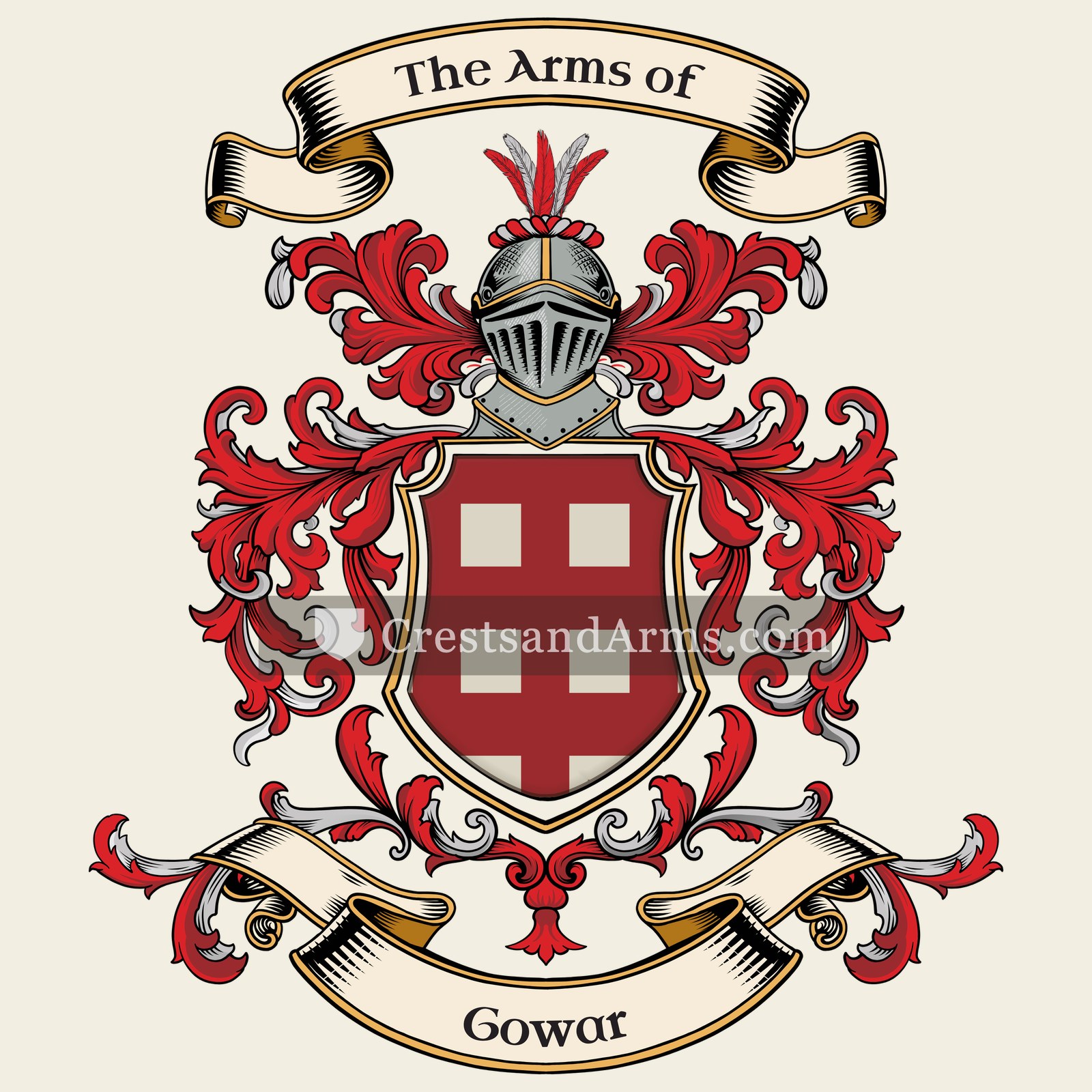
Coat of Arms & Family Crest Details
Symbols on this shield
paleMilitary strength, and a fortified defence
Colours
Silver (Argent)Means: Peace and sincerity
Red (Gules)Means: Military strength
Historical info
Source
Sir Bernard Burke, The General Armory of England, Scotland, Ireland and Wales, London: Harrison & Sons, 1884
Blazon (the actual original written record)
“Barry of six ar. and gu. in chief three pallets”
Irelandc. 1645
Where the Gowar Arms Were Recorded
Dublin
Map of Ireland showing where the Gowar arms are recorded
The Gowar arms were recorded in Ireland, c. 1645.
Arms such as these were typically recorded in Dublin.
Dublin was the seat of government in Ireland and the place where grants were sought and recorded. Families with business at the castle or the courts settled nearby, and settling there put their arms on record.
This is where the arms were entered in the register. Families often moved to other parts of the country, so the same name can turn up in more than one region.
The body that granted and recorded arms in Ireland in this period.
Charles I of England
Sovereign of the period
Charles I of England
1625–1649
Reigning in Scotland when the Gowar arms are first recorded.
How Arms Worked in Ireland
The Ulster King of Arms granted coats of arms to individuals who proved their social standing and good character. These symbols were typically inherited by all legitimate descendants of the original holder. If a family branch wanted a unique look, they could apply for a specific change to their design through the office to ensure their identity remained distinct.
Granting authority
The Ulster King of Arms acted as the official body that regulated and issued all coats of arms throughout Ireland.
How they got arms
Families obtained their arms through formal grants issued by the office after proving their eligibility and paying the required fees.
Where arms were recorded
All official grants were recorded in the registers held by the Ulster King of Arms starting from the year 1552.
The family's standing
Recorded among the armigerous families of Ireland.
Origin & History of the Gowar Family in Ireland
The family name Gowar has roots in Ireland that can be traced back to the mid-seventeenth century, specifically appearing in records from Dublin around 1645. During this period, Dublin was a bustling center of trade and political change, and families with this name were likely part of the growing urban population navigating the complexities of post-rebellion Ireland. While the name may have arrived through migration or shifting linguistic patterns, its presence in the capital suggests that these early family members were integrated into the city’s administrative and social life. By living in Dublin during the 1640s, the Gowar family was positioned at the heart of Irish history, witnessing the significant upheavals that defined the era. Over time, the name became a small but steady thread in the fabric of the city, reflecting the broader movement of people who settled in Ireland and helped shape its developing urban identity.
Related Branches & Arms
Root word
Gaufridus
A Germanic name meaning territory or district peace.
This name
GowarA Scottish locational or patronymic surname derived from the Old French personal name Geoffrey.
also spelled
Gowar
Gowre
Documented Sources
Sir Bernard Burke, The General Armory of England, Scotland, Ireland and Wales, London: Harrison & Sons, 1884
National Records of Scotland, Sutherland Estate Papers, 1748
Adam, R. J., Papers on Sutherland Estate Management, 1972
Digital archive packCoat of arms PNG, gold border print PDF, vector SVG and the certificate of authenticity. Sent to your email in minutes.