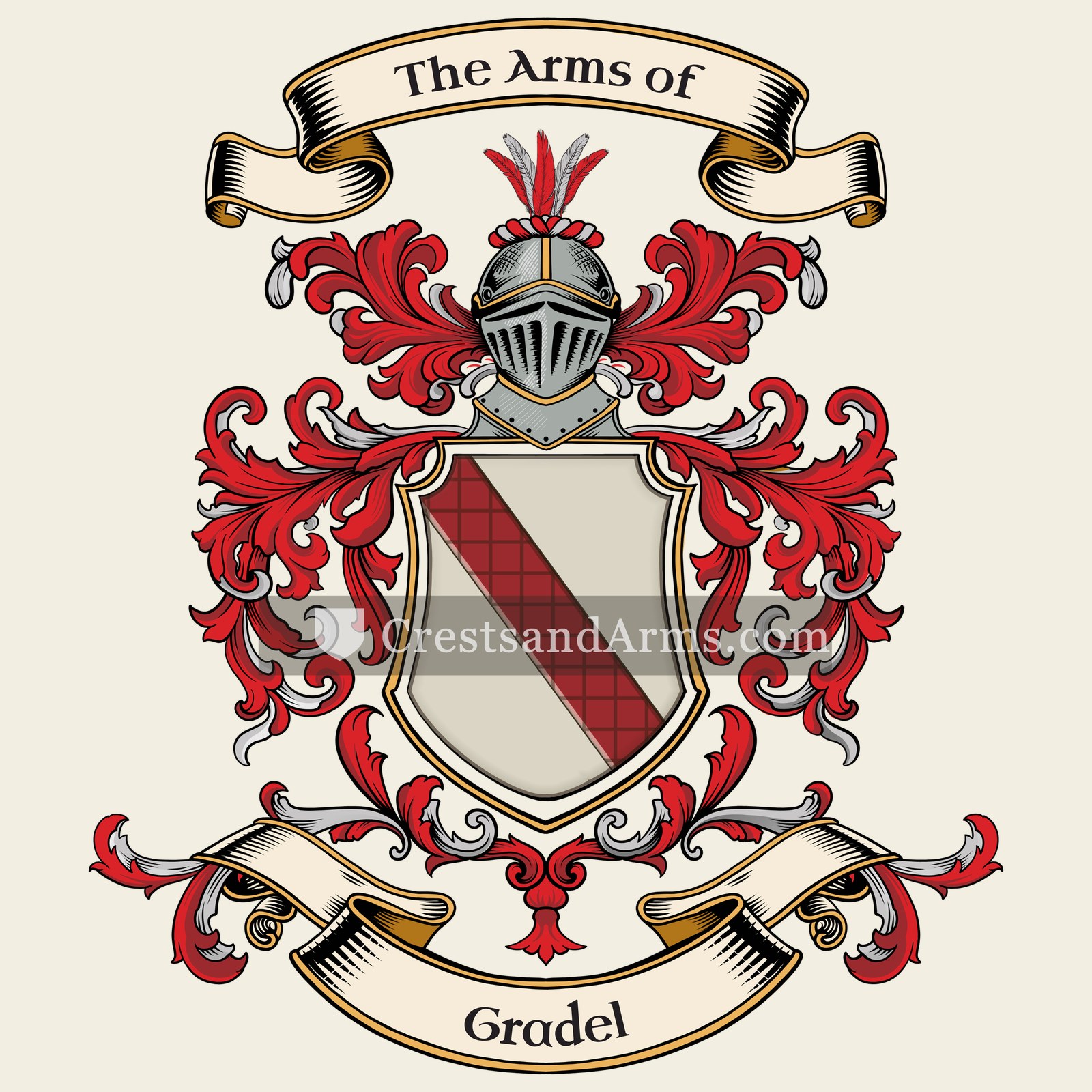
A record of documented arms, meaning and origin, researched for the Gradel family lines. Documented in 2 countries.
Reg. 0074 · Italian, G–I
Coat of Arms & Family Crest Details
Colours
Red (Gules)Means: Military strength
Historical info
Source
J. B. Rietstap, Armorial Général, Gouda: G. B. van Goor Zonen, 1884–87
Blazon (the actual original written record)
“De gu. à un escalier d'arg., posé en bande, aboutissant dans les cantons de l'écu. Cq. cour. C.: un sphynx ramp., tenant de ses deux mains un listel de gu., flottant au-dessus de sa tête, inscrit du mot SPES en lettres d'arg.”
ItalyRaguse, c. 1817
Digital archive packCoat of arms PNG, gold border print PDF, vector SVG and the certificate of authenticity. Sent to your email in minutes.
Map of Italy showing where the Gradel arms are recorded
The Gradel arms were recorded in Raguse, c. 1817.
This is where the arms were entered in the register. Families often moved to other parts of the country, so the same name can turn up in more than one region.
The body that granted and recorded arms in Italy in this period.
How Arms Worked in Italy
In the Italian states, coats of arms were often used by noble families to show their status and history. These symbols were passed down through the generations to all legitimate male descendants. Younger branches of a family usually kept the original design but sometimes added small changes to distinguish their specific line from the main branch.
Granting authority
Various local rulers and city governments controlled the use of coats of arms across the different Italian states.
How they got arms
Families often assumed their own arms or received them as official grants from local lords, popes, or city councils.
Where arms were recorded
Arms were recorded in local city archives or private family books rather than in one single national register.
The family's standing
Recorded among the armigerous families of Italy.
Origin & History of the Gradel Family in Italy
The history of the Gradel family in the Italian sphere is closely tied to the maritime and commercial influence of the Adriatic region. By the early 19th century, members of the family were established in Ragusa, which is known today as Dubrovnik. During this period, Ragusa functioned as a vital crossroads for trade between the Italian peninsula and the Balkan territories. Families living in this port city often navigated a complex cultural landscape where Italian language and customs blended with local traditions. The presence of the Gradel name in official records from 1817 suggests that the family was part of the merchant or administrative class that kept the city connected to the broader Mediterranean economy. As these individuals moved through the region, they helped maintain the social and economic links that defined life in the Adriatic during the post-Napoleonic era.
Coat of Arms & Family Crest Details
Symbols on this shield
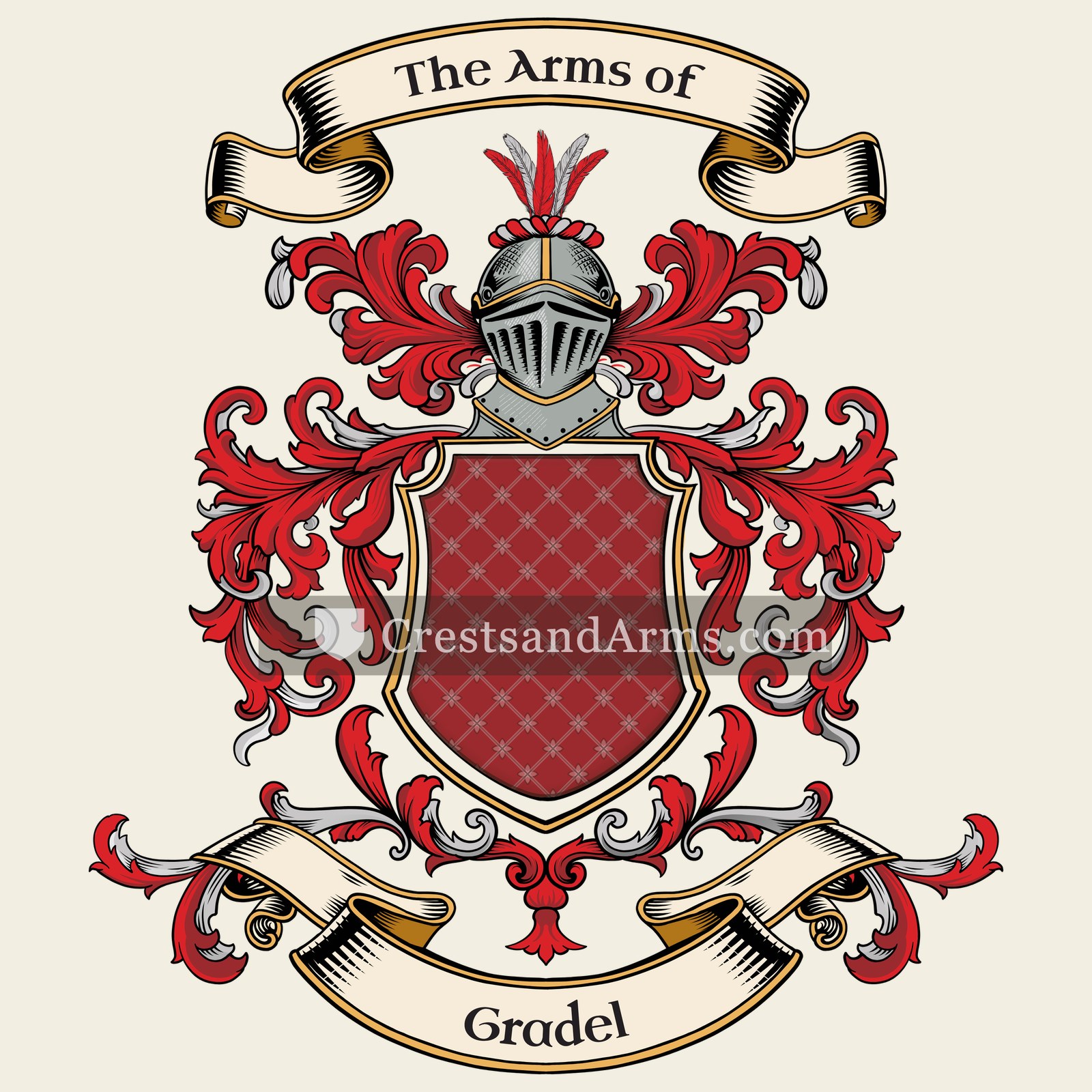
bendDefence, and the scarf of a commander
Colours
Silver (Argent)Means: Peace and sincerity
Red (Gules)Means: Military strength
Historical info
Source
J. B. Rietstap, Armorial Général, Gouda: G. B. van Goor Zonen, 1884–87
Blazon (the actual original written record)
“D'arg. à la bande de gu., ch.”
AustriaVienne, c. 1772
Digital archive packCoat of arms PNG, gold border print PDF, vector SVG and the certificate of authenticity. Sent to your email in minutes.
Map of Austria showing where the Gradel arms are recorded
The Gradel arms were recorded in Vienne, c. 1772.
This is where the arms were entered in the register. Families often moved to other parts of the country, so the same name can turn up in more than one region.
Region
Vienne
Town
Vienne
First recorded
1772
Granting Authority for the Gradel Arms
Imperial and Royal chancery
Sodacan · CC BY-SA 3.0
The body that granted and recorded arms in Austria in this period.
Joseph II, Holy Roman Emperor
Sovereign of the period
Joseph II, Holy Roman Emperor
1765–1790
Reigning in Italy when the Gradel arms are first recorded.
How Arms Worked in Austria
Austrian coats of arms were often linked directly to noble titles granted by the Emperor. These symbols belonged to the entire family line rather than just one individual. When a family grew, new branches kept the original design without needing to change it. This system allowed all members of a noble house to share the same identity across many generations.
Granting authority
The Imperial and Royal chancery managed all heraldic matters and controlled the official granting of arms throughout the Austrian lands.
How they got arms
Families typically received their arms through a formal imperial decree that often accompanied the elevation of a person to noble status.
Where arms were recorded
Official records of these grants were kept in the Imperial Register of Nobility which began its formal documentation process in 1453.
The family's standing
Recorded among the armigerous families of Austria.
Origin & History of the Gradel Family in Austria
The Gradel family name has deep roots in the historical landscape of Austria, with documented evidence placing members of the family in Vienna as early as 1772. During this period, Vienna served as the vibrant capital of the Habsburg Monarchy, acting as a central hub for trade, administration, and cultural growth. Families like the Gradels often occupied roles within the growing urban middle class, contributing to the city’s development during the Enlightenment era. As the city expanded, the family likely navigated the complex social structures of the time, moving through the bustling markets and neighborhoods that defined eighteenth-century Austrian life. By establishing themselves in such a prominent metropolitan center, the early Gradels became part of the enduring fabric of Austrian history, reflecting the broader patterns of migration and settlement that shaped the region for generations.
Gradel Meaning & Related Branches
Root word
Gradus
Latin term meaning a step, degree, or progression.
This name
GradelRefers to a person who lived near a set of stairs or a terraced landscape.
also spelled
Gradel
Documented Sources
J. B. Rietstap, Armorial Général, Gouda: G. B. van Goor Zonen, 1884–87
Krekic, Barisa. Dubrovnik in the 14th and 15th Centuries: A City between Two Worlds. 1972
State Archives in Dubrovnik (Državni arhiv u Dubrovniku), Consilium Minus (Small Council) records, 1817
Digital archive packCoat of arms PNG, gold border print PDF, vector SVG and the certificate of authenticity. Sent to your email in minutes.



 bendDefence, and the scarf of a commander