Map of Belgium showing where the Grady arms are recorded
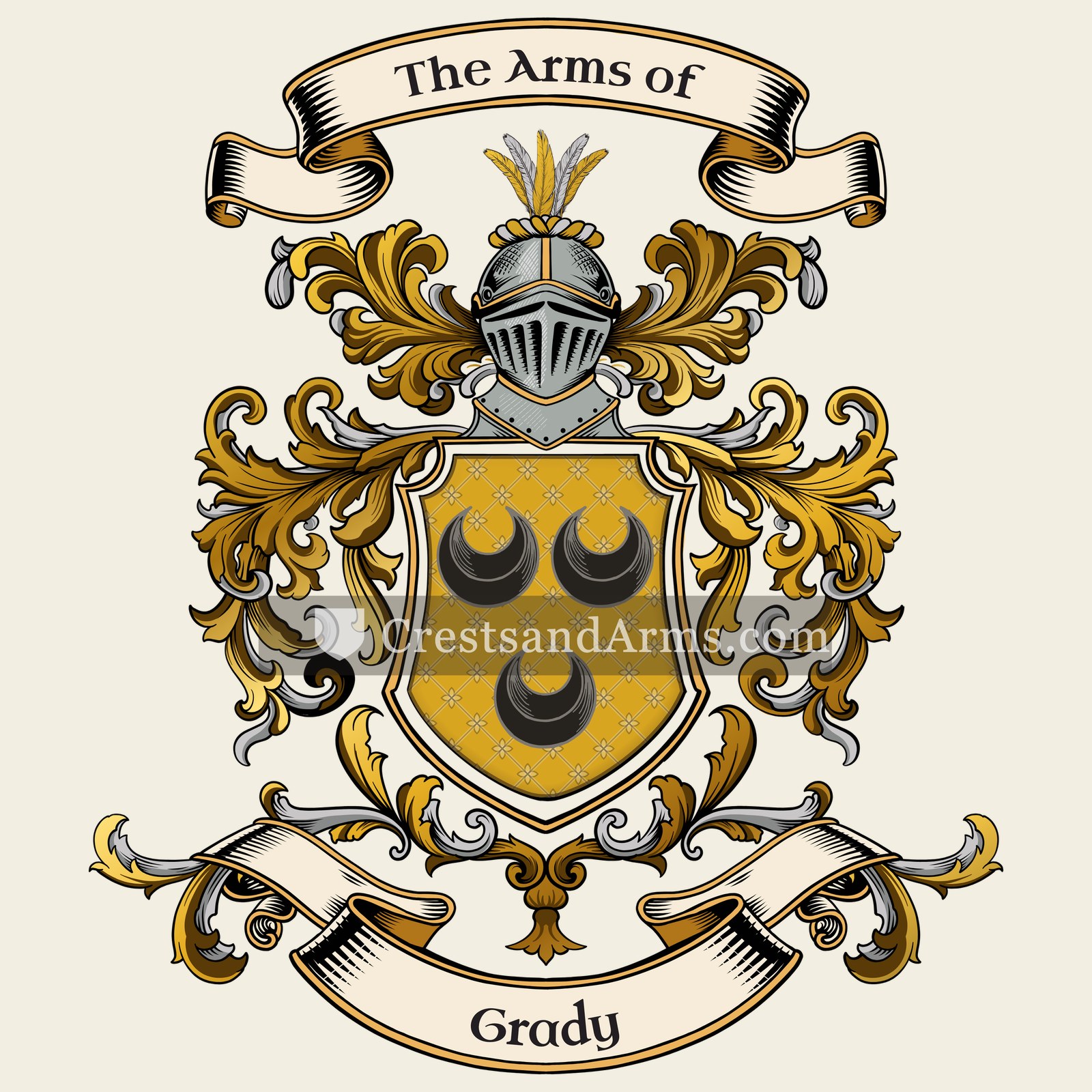
The Grady arms were recorded in Belgium, c. 1688.
Arms such as these were typically recorded in Brabant.
Brabant lay at the heart of the Low Countries, where the trade routes met. Its towns were wealthy and its landowners many, and both kinds of family kept arms, which is why the region is so heavily represented.
This is where the arms were entered in the register. Families often moved to other parts of the country, so the same name can turn up in more than one region.
The body that granted and recorded arms in Belgium in this period.
Charles II of Spain
Sovereign of the period
Charles II of Spain
1665–1700
Reigning in Belgium when the Grady arms are first recorded.
How Arms Worked in Belgium
In Belgium, a coat of arms is considered personal property that is passed down through the male line to legitimate descendants. Families often use the same shield design across generations to show their shared heritage. If a branch of the family wants to change the design, they must apply for an official update to their specific version of the arms.
Granting authority
The Conseil héraldique is the official body that regulates and approves all coats of arms in Belgium.
How they got arms
Families obtain their coats of arms through formal royal grants or by confirming their historical right to use existing designs.
Where arms were recorded
All approved coats of arms are officially recorded in the public registers of the Conseil héraldique since 1844.
The family's standing
Recorded among the armigerous families of Belgium.
Origin & History of the Grady Family in Belgium
The family name Grady has deep roots that trace back to the Gaelic tradition of Ireland, where it originated from the name Ó Gráda. This name is derived from the word gráda, which carries the meaning of noble or illustrious. While the family is most famously associated with the region of County Clare in Ireland, history shows that members of the family moved across Europe during periods of political and social change. By 1688, records confirm that members of the family were established in the Duchy of Brabant, a historic region that spanned parts of modern-day Belgium and the Netherlands. This presence in Brabant suggests that the family was part of the wider movement of people who traveled across the continent for military service or trade during the late seventeenth century. Their ability to integrate into new regions while maintaining their distinct identity highlights the adaptability of the family throughout its long history.
Grady Meaning & Related Branches
Root word
Gráda
An Irish Gaelic term meaning noble or illustrious.
This name
GradyDerived from a Gaelic descriptor for a person of noble or honorable character.
also spelled
Gratie
Gratty
Grati
Documented Sources
J. B. Rietstap, Armorial Général, Gouda: G. B. van Goor Zonen, 1884–87
Woulfe, Patrick. Sloinnte Gaedheal is Gall: Irish Names and Surnames. 1923
MacLysaght, Edward. The Surnames of Ireland. 1985
Digital archive packCoat of arms PNG, gold border print PDF, vector SVG and the certificate of authenticity. Sent to your email in minutes.


 crescentHonour by the sovereign, and the second son
 crescentHonour by the sovereign, and the second son