Map of Switzerland showing where the Graeter arms are recorded
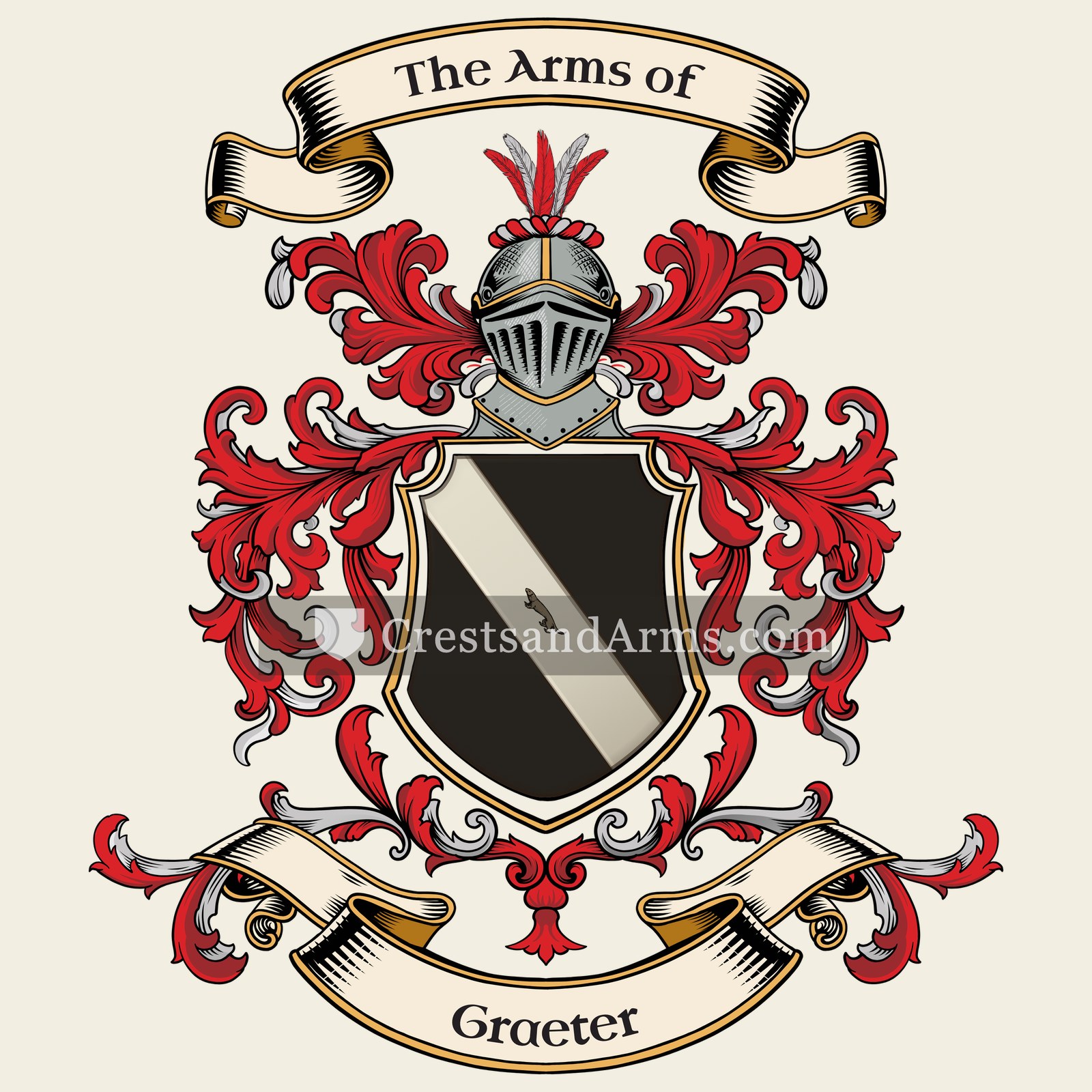
The Graeter arms were recorded in Coire, c. 1725.
This is where the arms were entered in the register. Families often moved to other parts of the country, so the same name can turn up in more than one region.
The body that granted and recorded arms in Switzerland in this period.
How Arms Worked in Switzerland
In Switzerland, coats of arms were not restricted to the nobility and were often adopted by common citizens and families. These symbols were passed down through generations to show family identity. When branches of a family grew, they often changed small details of the design to distinguish their own line from the original group.
Granting authority
Cantonal and civic authorities managed the use of coats of arms within their specific regions and local jurisdictions.
How they got arms
Families typically assumed their own coats of arms based on local custom rather than receiving them from a central monarch.
Where arms were recorded
Arms were recorded in various cantonal and civic registers starting from the fourteenth century throughout the Swiss region.
The family's standing
Recorded among the armigerous families of Switzerland.
Origin & History of the Graeter Family in Switzerland
The family name Graeter has deep roots in the Alpine regions of Europe, with documented evidence placing members of the family in the city of Coire, also known as Chur, by the year 1725. The name likely originated as a descriptive occupational or topographical surname, common in the German-speaking territories of the Swiss Confederation. During the eighteenth century, families in this area were often deeply involved in the local trade guilds and the civic administration of the city. As residents of Coire, which served as a vital crossroads for mountain trade routes, the Graeter family would have been part of a vibrant cultural environment where German, Romansh, and Italian influences met. Over time, the family name became firmly established within the region, reflecting the steady growth and social integration of the Graeter lineage in the heart of the Grisons canton.
Graeter Meaning & Related Branches
Root word
Grat
A mountain ridge or a sharp edge of a mountain.
This name
GraeterA person who lived on or near a mountain ridge.
also spelled
Graete
Grater
Documented Sources
J. B. Rietstap, Armorial Général, Gouda: G. B. van Goor Zonen, 1884–87
Staatsarchiv Graubünden, Bürgerregister der Stadt Chur (1725)
Stadtarchiv Chur, Ratsprotokolle der Stadt Chur (1720–1730)
Ganz, Peter, Die Geschichte der Stadt Chur, 1985
Schorta, Andrea, Wie unsere Ortschaften zu ihren Namen kamen, 1989
Digital archive packCoat of arms PNG, gold border print PDF, vector SVG and the certificate of authenticity. Sent to your email in minutes.


 bendDefence, and the scarf of a commander
 otterOne who lives life to the full
 bendDefence, and the scarf of a commander
 otterOne who lives life to the full