A record of documented arms, meaning and origin, researched for the Graft family lines. Documented in 2 countries.
Reg. 8610 · German, G–I
Coat of Arms & Family Crest Details
Symbols on this shield
mountThe ground held, and steadfastness upon it
griffinValour and vigilance, guarding great treasure
roseThe seventh son, and beauty with grace
swanGrace, light and the poet's art
Colours
Gold (Or)Means: Generosity
Red (Gules)Means: Military strength
Green (Vert)Means: Hope
Black (Sable)Means: Constancy
Silver (Argent)Means: Peace and sincerity
Historical info
Source
J. B. Rietstap, Armorial Général, Gouda: G. B. van Goor Zonen, 1884–87
Blazon (the actual original written record)
“Ec.: au 1 d'or à un griffon de sa., tenant une épée au nat.; aux 2 et 3 de gu. chapé-ployé d'arg., à trois roses de l'un à l'autre; au 4 d'azur à un cygne d'arg., cour. d'or, posé sur un tertre de sin., le vol levé, la poitrine percée d'une flèche au nat. en barre, la pointe en haut. Cq. cour. C.: le cygne, dans l'attitude d'une aigle héraldique, entre deux banderoles coupées, à dextre de sa. sur or, à sen. de gu. sur arg. L. conformes aux émaux des banderoles.”
Germanyc. 1765
Digital archive packCoat of arms PNG, gold border print PDF, vector SVG and the certificate of authenticity. Sent to your email in minutes.
Map of Germany showing where the Graft arms are recorded
The Graft arms were recorded in Germany, c. 1765.
Arms such as these were typically recorded in Bavaria.
Bavaria was a country of old landed families and walled market towns. Estates passed down the same line for centuries, and both the landowners and the leading townsmen kept arms, which is why so many Bavarian names sit in the registers.
This is where the arms were entered in the register. Families often moved to other parts of the country, so the same name can turn up in more than one region.
The body that granted and recorded arms in Germany in this period.
Francis I, Holy Roman Emperor
Sovereign of the period
Francis I, Holy Roman Emperor
1745–1765
Reigning in Germany when the Graft arms are first recorded.
How Arms Worked in Germany
In the Holy Roman Empire, coats of arms were often granted to individuals by the Emperor or his representatives. These arms were then passed down through the generations to all legitimate descendants of the original holder. Younger branches of a family usually kept the same shield design without needing to change it, as the arms belonged to the entire lineage.
Granting authority
The Holy Roman Emperor held the sole power to grant new coats of arms throughout his vast imperial territories.
How they got arms
Families typically obtained their coats of arms through a formal imperial grant or by proving their noble status to the authorities.
Where arms were recorded
These grants were officially recorded in the Imperial Chancery registers, which began keeping formal records of such honors during the Middle Ages.
The family's standing
Recorded among the armigerous families of Germany.
Origin & History of the Graft Family in Germany
The family name Graft is deeply rooted in the historical landscape of southern Germany, particularly within the region of Bavaria. By the mid-eighteenth century, records confirm that members of the Graft family were established residents in this area. The name itself is likely derived from the Middle High German word *graf*, which historically referred to a count or a high-ranking administrative official. Families often acquired such names based on their occupation, their social status, or their connection to a local lord’s estate. During the 1700s, Bavaria was a collection of territories governed by the Electorate of Bavaria, and life for families like the Grafts was defined by agricultural work and local community ties. As the family settled into their lives in 1765, they were part of a society transitioning through the Enlightenment, where surnames were becoming more standardized in official church and civil registries. This period marked a time of stability for the family as they contributed to the local economy and social fabric of their Bavarian home.
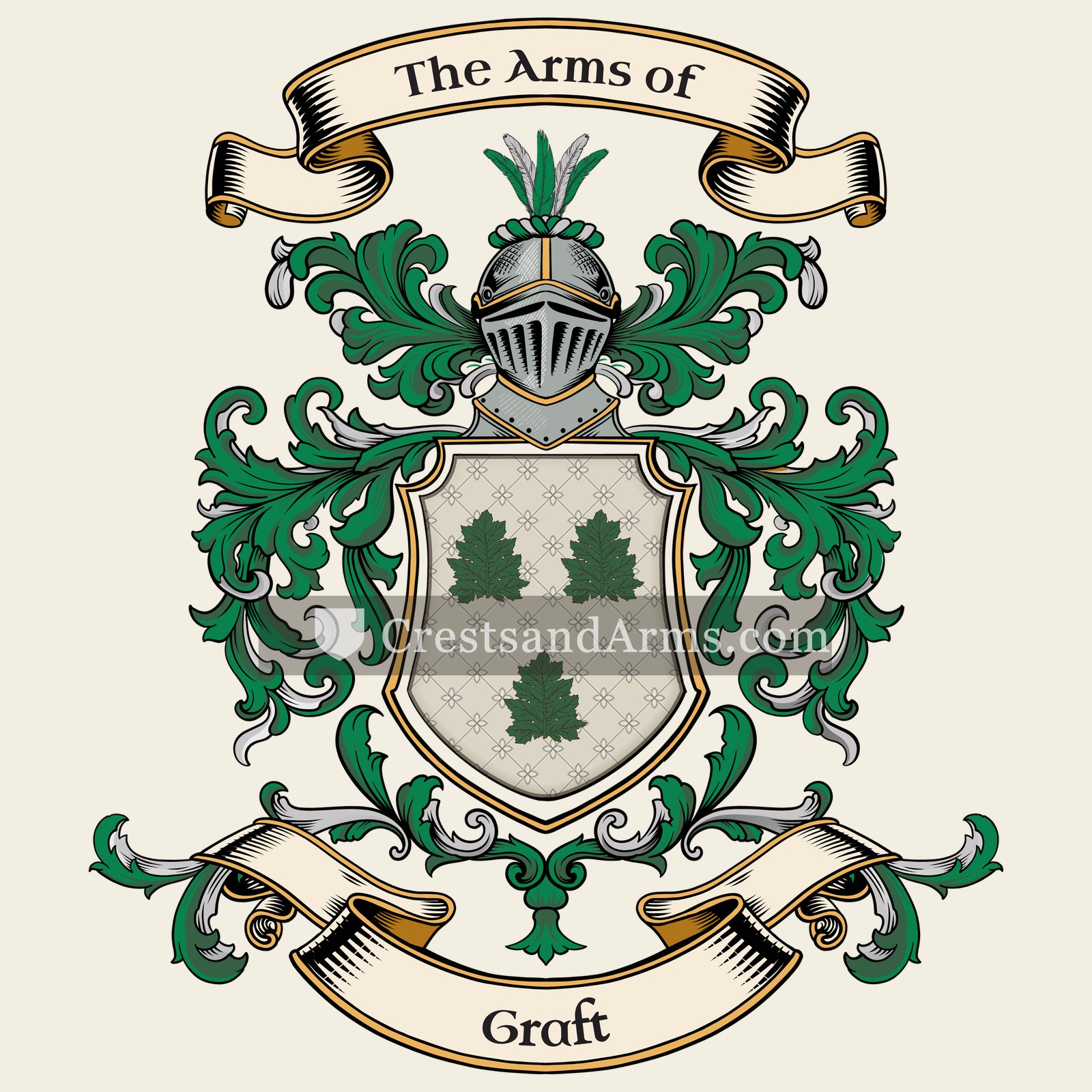
Coat of Arms & Family Crest Details
Symbols on this shield
leafHappiness and abundance
Colours
Silver (Argent)Means: Peace and sincerity
Green (Vert)Means: Hope
Historical info
Source
J. B. Rietstap, Armorial Général, Gouda: G. B. van Goor Zonen, 1884–87
Blazon (the actual original written record)
“D'arg. à trois feuilles de nénuphar de sin., tigées, les tiges en haut. C.: une feuille de l'écu.”
NetherlandsMiddelbourg, c. 1815
Digital archive packCoat of arms PNG, gold border print PDF, vector SVG and the certificate of authenticity. Sent to your email in minutes.
Map of Netherlands showing where the Graft arms are recorded
The Graft arms were recorded in Middelbourg, c. 1815.
This is where the arms were entered in the register. Families often moved to other parts of the country, so the same name can turn up in more than one region.
Region
Middelbourg
Town
Middelbourg
First recorded
1815
Granting Authority for the Graft Arms
Hoge Raad van Adel
Photograph made by me · CC BY-SA 3.0
The body that granted and recorded arms in Netherlands in this period.
William I of the Netherlands
Sovereign of the period
William I of the Netherlands
1815–1840
Reigning in Germany when the Graft arms are first recorded.
How Arms Worked in Netherlands
In the Netherlands, coats of arms were often used by noble families and those who held specific public offices. These arms were passed down through the generations to legitimate descendants. Younger branches of a family usually kept the original design without needing to add special marks. This system ensured that the family identity remained clear and consistent over many years.
Granting authority
The Hoge Raad van Adel is the official body that regulates and manages noble titles and coats of arms in the Netherlands.
How they got arms
Families typically obtained their coats of arms through official royal grants or by proving their long-standing historical use of the symbols.
Where arms were recorded
Coats of arms are officially recorded in the registers held by the Hoge Raad van Adel, which began its work in 1814.
The family's standing
Recorded among the armigerous families of Netherlands.
Origin & History of the Graft Family in Netherlands
The family name Graft is deeply rooted in the geography of the Netherlands, as the word itself refers to a canal or a trench used for drainage and water management. In a country defined by its struggle to reclaim land from the sea, a name like Graft likely originated as a topographical descriptor for ancestors who lived near these vital waterways. By 1815, records confirm that members of the family were established in the city of Middelburg. This location was a major center for trade and maritime activity during the nineteenth century, suggesting that the family was part of the industrious urban life of the Zeeland province. As the Netherlands modernized during this period, families with names tied to the landscape often transitioned from local agricultural or water-management roles into the growing professional and merchant classes of Dutch port cities.
Graft Meaning & Related Branches
Root word
Graf
A German noble title equivalent to a count or earl.
This name
GraftAn occupational or status-based name for someone who served a count or acted in a count-like manner.
also spelled
Grafft
Graftt
Graeft
Documented Sources
J. B. Rietstap, Armorial Général, Gouda: G. B. van Goor Zonen, 1884–87
Bavarian State Archives (Bayerisches Hauptstaatsarchiv), Kurbayern Hofkammer Buchhaltung
Heintze, Albert, Die deutschen Familiennamen: geschichtlich, geographisch, sprachlich, 1903
Kohlheim, Rosa and Volker Kohlheim, Duden Familiennamen: Herkunft und Bedeutung von 20.000 Nachnamen, 2005
Digital archive packCoat of arms PNG, gold border print PDF, vector SVG and the certificate of authenticity. Sent to your email in minutes.


 mountThe ground held, and steadfastness upon it
 griffinValour and vigilance, guarding great treasure
 roseThe seventh son, and beauty with grace
 swanGrace, light and the poet's art
 mountThe ground held, and steadfastness upon it
 griffinValour and vigilance, guarding great treasure
 roseThe seventh son, and beauty with grace
 swanGrace, light and the poet's art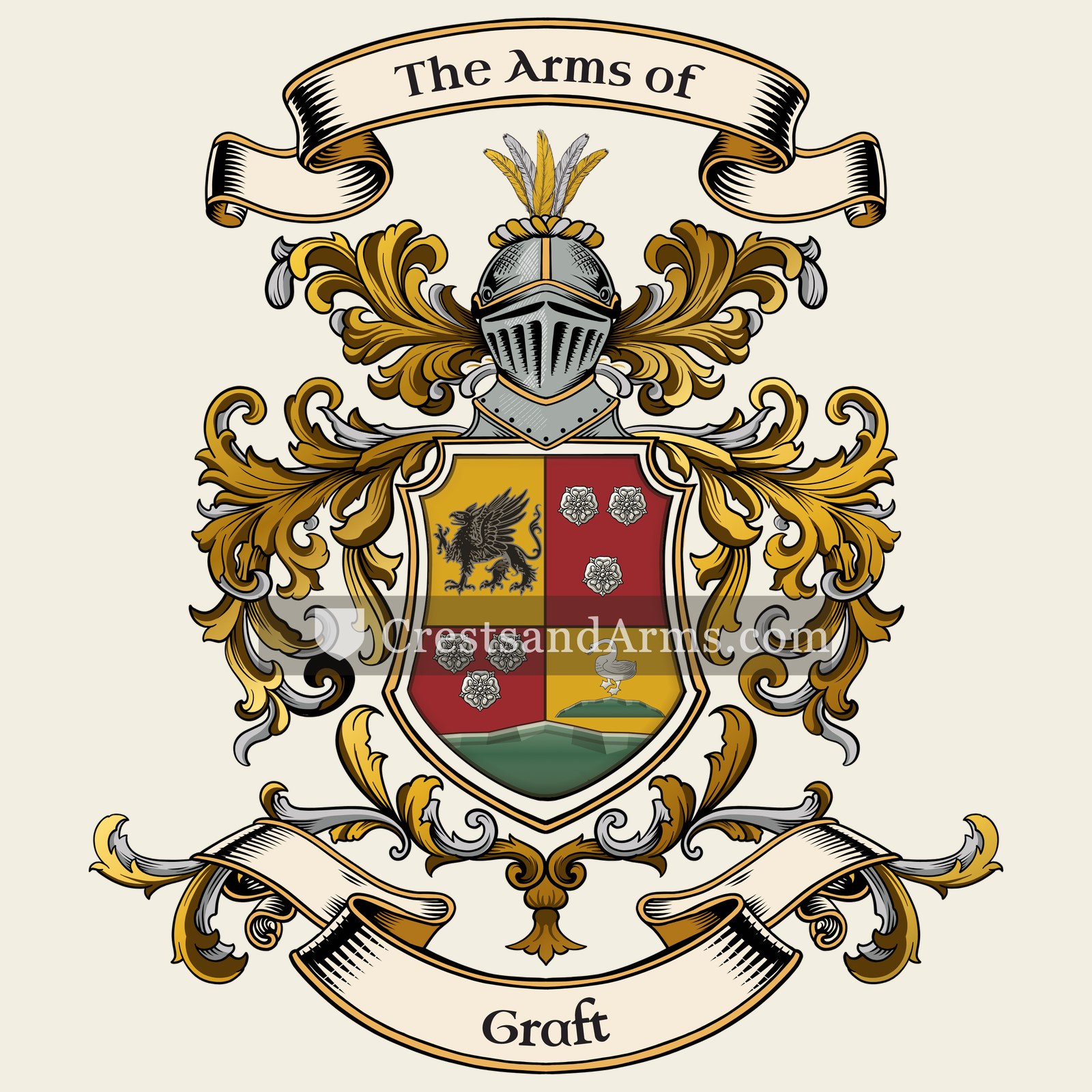


 leafHappiness and abundance