Map of France showing where the Grange arms are recorded
The Grange arms were recorded in Lorraine, c. 1528.
Lorraine sat on the border between France and the German lands, and border country bred soldiers. Families here held small estates and served in arms, and a fighting man was exactly the sort who carried a shield of his own.
This is where the arms were entered in the register. Families often moved to other parts of the country, so the same name can turn up in more than one region.
The body that granted and recorded arms in France in this period.
Francis I of France
Sovereign of the period
Francis I of France
1515–1547
Reigning in France when the Grange arms are first recorded.
How Arms Worked in France
In France, a coat of arms was a mark of honor that passed down through the male line to all legitimate descendants. Families often used the same shield without changes to show their shared heritage. If a branch wanted to stand out, they could add a small mark to their shield to show their specific place in the family tree.
Granting authority
The Juge d'armes de France acted as the official authority that regulated and verified coats of arms across the country.
How they got arms
Families typically inherited their arms from ancestors, though they could also receive them through royal grants or by proving their noble status.
Where arms were recorded
Coats of arms were officially recorded in the Armorial Général de France, which began its main collection in the year 1696.
The family's standing
Recorded among the armigerous families of Lorraine.
Origin & History of the Grange Family in France
The family name Grange originates from the French word for a barn or a granary, which suggests that the earliest ancestors were likely farmers or managers of agricultural estates. By the early sixteenth century, records confirm that members of the family were well-established in the Lorraine region of France. During this period, Lorraine was a crossroads of European culture and trade, and families with this name often held positions related to the administration of land or the collection of grain taxes. Because the name was tied to a specific type of building, it was likely adopted as a way to identify people by their workplace or their role in the local rural economy. As the family grew, they moved across different provinces, but their roots remained deeply connected to the fertile landscape of eastern France. This history reflects a time when surnames were evolving from simple descriptions of a person’s daily life into permanent markers of family identity.
Coat of Arms & Family Crest Details
Symbols on this shield
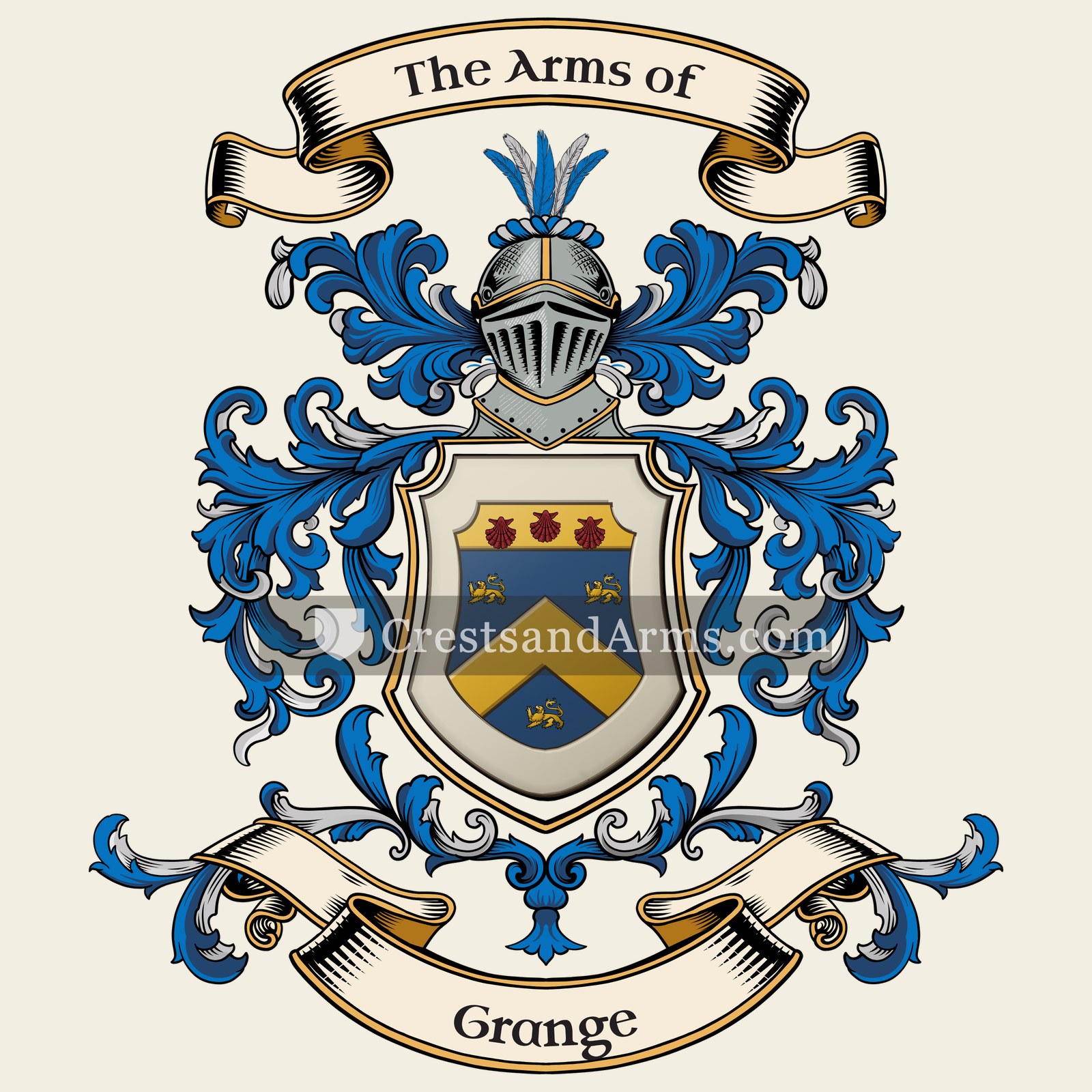
chiefAuthority, wisdom and dominion
lionCourage, strength and royalty
Colours
Gold (Or)Means: Generosity
Red (Gules)Means: Military strength
Silver (Argent)Means: Peace and sincerity
Historical info
Source
J. B. Rietstap, Armorial Général, Gouda: G. B. van Goor Zonen, 1884–87
Blazon (the actual original written record)
“D'or au lion de gu.; au chef du même, ch. de trois lionceaux ramp. d'arg.”
SwitzerlandNeufchâtel, c. 1745
Digital archive packCoat of arms PNG, gold border print PDF, vector SVG and the certificate of authenticity. Sent to your email in minutes.
Map of Switzerland showing where the Grange arms are recorded
The Grange arms were recorded in Neufchâtel, c. 1745.
This is where the arms were entered in the register. Families often moved to other parts of the country, so the same name can turn up in more than one region.
The body that granted and recorded arms in Switzerland in this period.
How Arms Worked in Switzerland
In Switzerland, coats of arms were not restricted to the nobility and were often adopted by common citizens and families. These symbols were passed down through generations to show family identity. When branches of a family grew, they often changed small details of the design to distinguish their own line from the original group.
Granting authority
Cantonal and civic authorities managed the use of coats of arms within their specific regions and local jurisdictions.
How they got arms
Families typically assumed their own coats of arms based on local custom rather than receiving them from a central monarch.
Where arms were recorded
Arms were recorded in various cantonal and civic registers starting from the fourteenth century throughout the Swiss region.
The family's standing
Recorded among the armigerous families of Switzerland.
Origin & History of the Grange Family in Switzerland
The name Grange is a topographic surname that originated from the French word for a barn or a granary. In the context of Switzerland, families bearing this name were often associated with agricultural life and the management of rural estates. By the mid-eighteenth century, the Grange family had established a notable presence in the region of Neuchâtel. Records confirm that members of the family were living there as early as 1745, likely integrated into the local community as farmers or landholders. During this era, the area of Neuchâtel was a unique principality with strong ties to both Swiss traditions and French culture, which influenced how families like the Granges settled and grew. The name served as a practical identifier for those who lived near or worked within the large storage buildings that were essential to the survival of mountain farming villages. Over time, these families became deeply rooted in the local social structure, contributing to the development of the region through their work on the land.
Coat of Arms & Family Crest Details
Symbols on this shield
chevronProtection, and faithful service completed
chiefAuthority, wisdom and dominion
bordureA difference between branches of one family
lionCourage, strength and royalty
escallopThe pilgrim's shell, and a long journey made
Colours
Blue (Azure)Means: Loyalty and truth
Gold (Or)Means: Generosity
Silver (Argent)Means: Peace and sincerity
Red (Gules)Means: Military strength
Historical info
Source
Sir Bernard Burke, The General Armory of England, Scotland, Ireland and Wales, London: Harrison & Sons, 1884
Blazon (the actual original written record)
“Az. a chev. betw. three lions ramp. or, on a chief of the last as many escallops gu. a border compony of the second and last”
ChesterWolsingham · Chester, c. 1568
Digital archive packCoat of arms PNG, gold border print PDF, vector SVG and the certificate of authenticity. Sent to your email in minutes.
Map of England showing where the Grange arms are recorded
The Grange arms were recorded in Chester, c. 1568.
Cheshire was governed apart from the rest of England for much of its history, with its own courts and its own gentry. That separateness bred a strong local landed class, and landed families carried arms.
This is where the arms were entered in the register. Families often moved to other parts of the country, so the same name can turn up in more than one region.
The body that granted and recorded arms in England in this period.
Elizabeth I of England
Sovereign of the period
Elizabeth I of England
1558–1603
Reigning in France when the Grange arms are first recorded.
How Arms Worked in England
English heraldry allowed arms to be shared by all legitimate descendants of the original owner. These symbols were treated as personal property that moved through the generations to all children. While the eldest son kept the original design, other family members could use the same shield without needing to change it or register their own unique versions.
Granting authority
The College of Arms in London has regulated the use of coats of arms throughout England and Wales since 1484.
How they got arms
Families typically obtained their coats of arms through a formal grant from the Crown or by proving their ancient right to them.
Where arms were recorded
All official coats of arms are recorded in the registers kept at the College of Arms, which date back to the fifteenth century.
The family's standing
Recorded among the armigerous families of Chester.
Origin & History of the Grange Family in England
The surname Grange is a locational name that emerged in England during the Middle Ages. It was originally given to people who lived near or worked on a grange, which was a farmstead owned by a monastery or a feudal lord. These sites served as storehouses for grain and wool, making them vital centers of local agricultural life. By the time the family appeared in Chester in 1568, the name had become well-established among the local population. Families with this name were often connected to the land and the trade networks that defined the economy of Northern England. As the centuries passed, the name spread from these rural farming communities into the growing urban centers of the region. This transition reflects the broader movement of English families from traditional manorial life toward the developing commercial society of the late sixteenth century.
Grange Meaning & Related Branches
Root word
granica
A Latin term referring to a grain store or barn.
This name
GrangeAn occupational surname for someone who worked at or lived near a farm barn.
also spelled
Granges
Grang
Grangey
Gronj
Graunge
Related arms
Selliersimilar arms
Graungesimilar arms
Documented Sources
J. B. Rietstap, Armorial Général, Gouda: G. B. van Goor Zonen, 1884–87
Dauzat, Albert. Dictionnaire étymologique des noms de famille et prénoms de France. 1951
Morlet, Marie-Thérèse. Dictionnaire étymologique des noms de famille. 1991
Archives départementales de Meurthe-et-Moselle, Série B: Cours et juridictions
Digital archive packCoat of arms PNG, gold border print PDF, vector SVG and the certificate of authenticity. Sent to your email in minutes.


 chevronProtection, and faithful service completed
 chevronProtection, and faithful service completed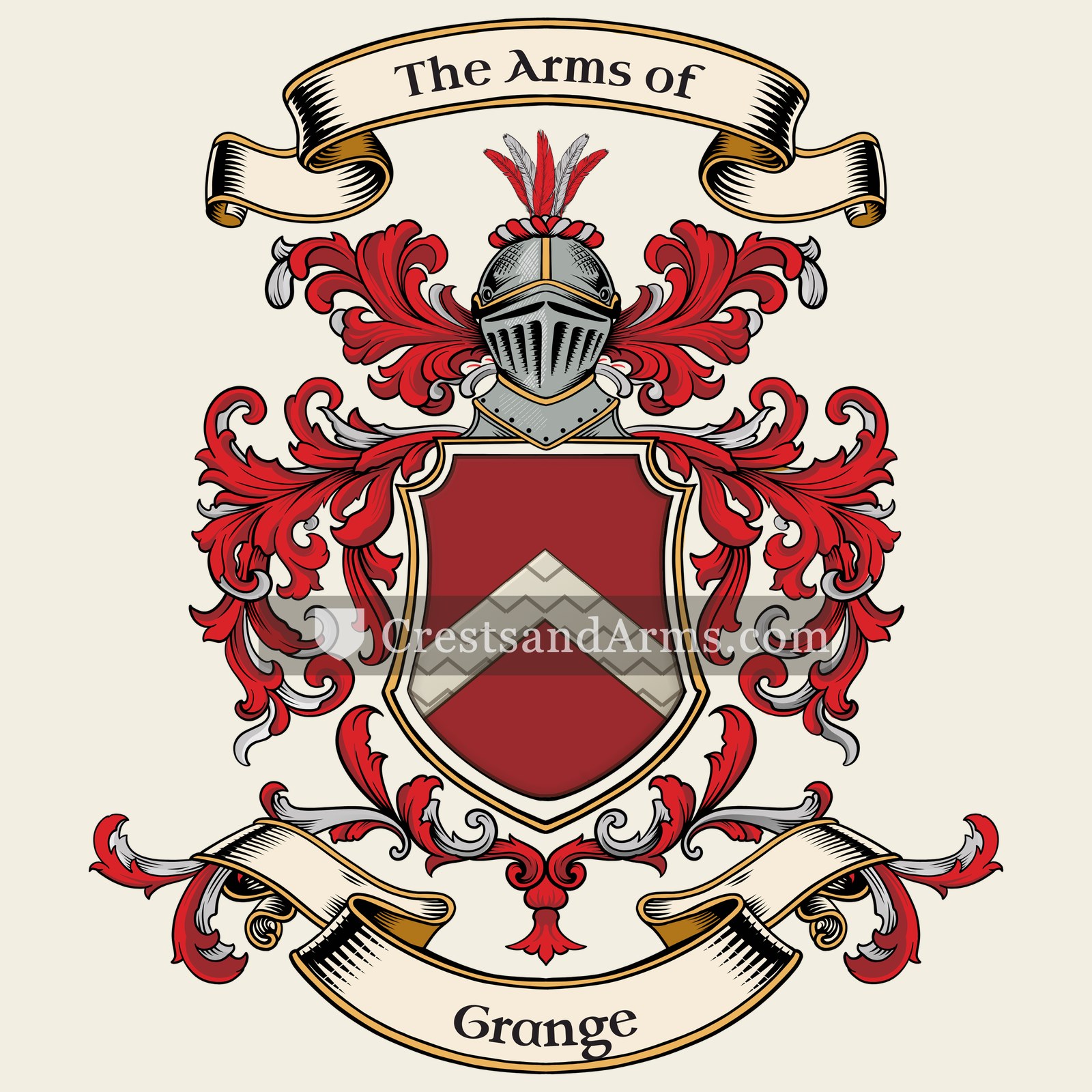


 chiefAuthority, wisdom and dominion
 lionCourage, strength and royalty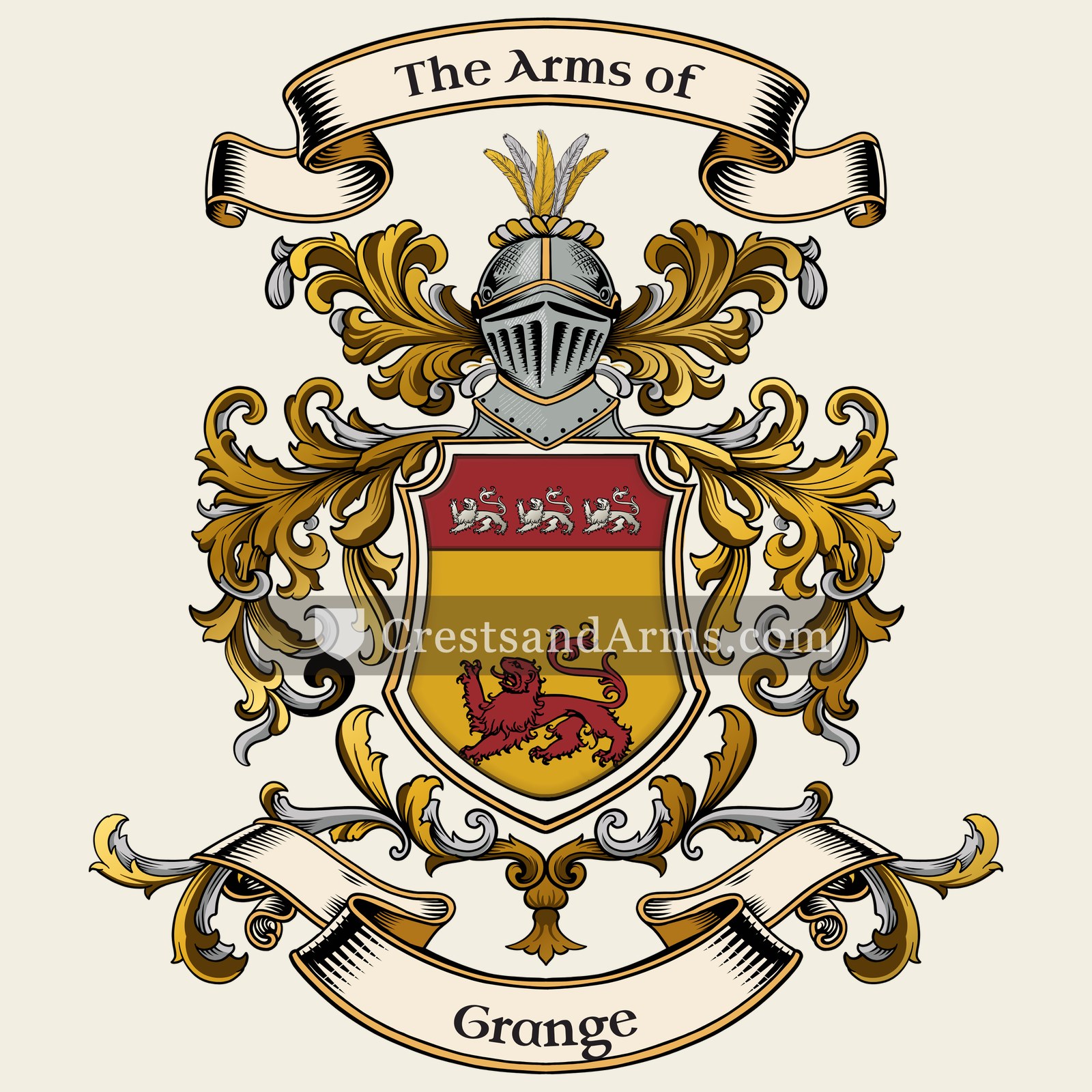

 bordureA difference between branches of one family
 escallopThe pilgrim's shell, and a long journey made