Map of Spain showing where the Gras arms are recorded
The Gras arms were recorded in Spain, c. 1722.
Arms such as these were typically recorded in Castile.
Castile was the heart of Spain and the source of most of its noble families. Land won in the long wars against the Moors was granted out to fighting men, and a man granted land was granted arms along with it.
This is where the arms were entered in the register. Families often moved to other parts of the country, so the same name can turn up in more than one region.
The body that granted and recorded arms in Spain in this period.
Philip V of Spain
Sovereign of the period
Philip V of Spain
1714–1724
Reigning in Spain when the Gras arms are first recorded.
How Arms Worked in Spain
In Spain, a coat of arms was considered a form of property that belonged to the entire family line. These arms were passed down from a father to all his children equally. Younger branches of the family usually kept the original design without needing to add any special marks to distinguish their specific line.
Granting authority
The Cronista Rey de Armas was the official body that regulated and granted coats of arms throughout Spain.
How they got arms
Families often obtained their arms through royal grants or by proving their noble status to the official heraldic authority.
Where arms were recorded
Coats of arms were officially recorded in the registers of the Cronista Rey de Armas starting in 1496.
The family's standing
Recorded among the armigerous families of Spain.
Origin & History of the Gras Family in Spain
The family name Gras has deep roots in the Iberian Peninsula, where it functioned as a descriptive surname during the Middle Ages. In the Spanish context, the name is often linked to the Catalan word for fat or stout, which was frequently used as a nickname to describe a person’s physical build or robust nature. By the early 18th century, the family had established a presence in the heart of Castile. Records from 1722 confirm that members of the Gras family were active participants in the social and economic life of this region during the Bourbon reforms. As they settled into Castilian society, they integrated into local communities, likely working as landowners or tradespeople. This period marked a transition for the family as they moved from their origins in the eastern territories of Spain to the central plateau, helping to spread the name across the diverse landscape of the Spanish kingdom.
Coat of Arms & Family Crest Details
Symbols on this shield
armA person of action, industrious and laborious
Colours
Blue (Azure)Means: Loyalty and truth
Historical info
Source
J. B. Rietstap, Armorial Général, Gouda: G. B. van Goor Zonen, 1884–87
Blazon (the actual original written record)
“D'azur à un dextrochère sortant d'un nuage et tenant trois flèches d'arg.”
ForezForez, c. 1663
Digital archive packCoat of arms PNG, gold border print PDF, vector SVG and the certificate of authenticity. Sent to your email in minutes.
Map of France showing where the Gras arms are recorded
The Gras arms were recorded in Forez, c. 1663.
Forez was a small upland county in central France, thick with minor gentry holding modest estates. Its families were more numerous than wealthy, and even a small holding was enough for a shield of one's own.
This is where the arms were entered in the register. Families often moved to other parts of the country, so the same name can turn up in more than one region.
The body that granted and recorded arms in France in this period.
Louis XIV of France
Sovereign of the period
Louis XIV of France
1643–1715
Reigning in Spain when the Gras arms are first recorded.
How Arms Worked in France
In France, a coat of arms was a mark of honor that passed down through the male line to all legitimate descendants. Families often used the same shield without changes to show their shared heritage. If a branch wanted to stand out, they could add a small mark to their shield to show their specific place in the family tree.
Granting authority
The Juge d'armes de France acted as the official authority that regulated and verified coats of arms across the country.
How they got arms
Families typically inherited their arms from ancestors, though they could also receive them through royal grants or by proving their noble status.
Where arms were recorded
Coats of arms were officially recorded in the Armorial Général de France, which began its main collection in the year 1696.
The family's standing
Recorded among the armigerous families of Forez.
Origin & History of the Gras Family in France
The surname Gras is deeply rooted in the historical landscape of the Forez region in central France. By the mid-seventeenth century, records confirm that families bearing this name were well-established within the local community. The name itself likely originated as a descriptive nickname, a common practice in medieval France where individuals were often identified by their physical traits or personal characteristics. In the context of the rural Forez province, families named Gras were typically tied to the land and the agricultural traditions of the Loire valley. These early ancestors lived through a period of significant social transition as the French monarchy consolidated power and local administrative record-keeping became more standardized. By 1663, the presence of the Gras family in this area suggests they were integrated into the social fabric of their parishes, participating in the daily life and economic activities that defined life in the old province of Forez.
Coat of Arms & Family Crest Details
Symbols on this shield
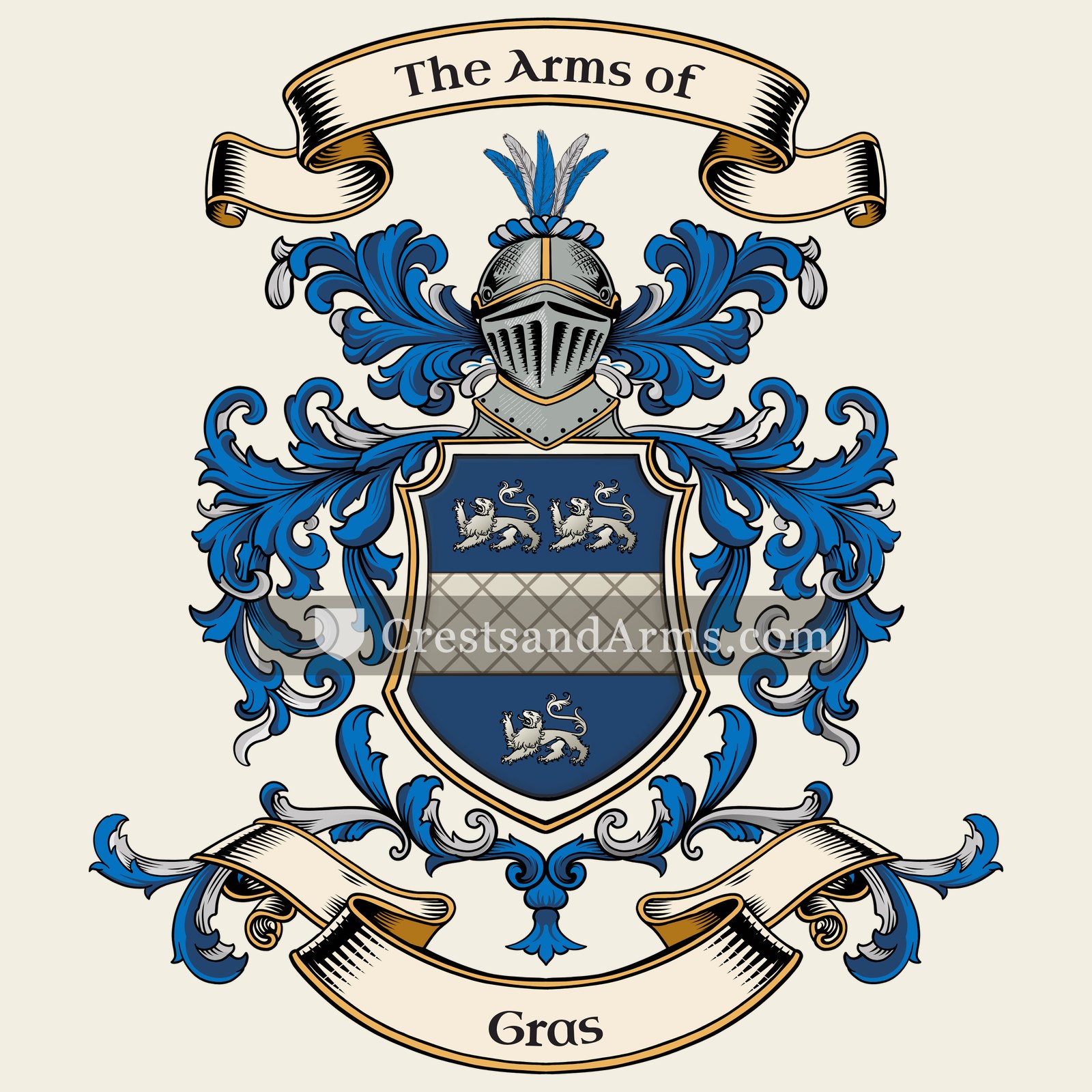
fessThe military belt, and readiness to serve
lionCourage, strength and royalty
Colours
Blue (Azure)Means: Loyalty and truth
Silver (Argent)Means: Peace and sincerity
Historical info
Source
Sir Bernard Burke, The General Armory of England, Scotland, Ireland and Wales, London: Harrison & Sons, 1884
Blazon (the actual original written record)
“Az. a fesse betw. three lions ramp. ar”
Englandc. 1620
Digital archive packCoat of arms PNG, gold border print PDF, vector SVG and the certificate of authenticity. Sent to your email in minutes.
Map of England showing where the Gras arms are recorded
The Gras arms were recorded in England, c. 1620.
Arms such as these were typically recorded in York.
Yorkshire is the largest of the English counties, and it held more gentry families than any other. Land there was split among a great many households rather than a few, so a great many of them carried arms.
This is where the arms were entered in the register. Families often moved to other parts of the country, so the same name can turn up in more than one region.
The body that granted and recorded arms in England in this period.
James VI and I
Sovereign of the period
James VI and I
1603–1625
Reigning in Spain when the Gras arms are first recorded.
How Arms Worked in England
English heraldry allowed arms to be shared by all legitimate descendants of the original owner. These symbols were treated as personal property that moved through the generations to all children. While the eldest son kept the original design, other family members could use the same shield without needing to change it or register their own unique versions.
Granting authority
The College of Arms in London has regulated the use of coats of arms throughout England and Wales since 1484.
How they got arms
Families typically obtained their coats of arms through a formal grant from the Crown or by proving their ancient right to them.
Where arms were recorded
All official coats of arms are recorded in the registers kept at the College of Arms, which date back to the fifteenth century.
The family's standing
Recorded among the armigerous families of England.
Origin & History of the Gras Family in England
The family name Gras likely originated as a descriptive nickname in medieval Europe, often used to identify someone with a stout or robust physical build. By the time the name appeared in English historical records during the early 17th century, it had become a stable surname passed down through generations. Records confirm that members of the Gras family were established residents of York by 1620, a period when the city served as a major northern hub for trade and administration. During this era, families in York often lived near the city walls or within the shadow of the Minster, participating in the local economy as merchants or skilled tradespeople. The presence of the family in such a prominent urban center suggests they were well-integrated into the social fabric of Northern England long before the mass migrations of later centuries.
Gras Meaning & Related Branches
Root word
Grassus
Latin term meaning thick, fat, or dense.
This name
GrasA topographic surname for someone who lived near a grassy area or pasture.
also spelled
Grass
Grase
Grasss
Gra
Grasse
Related arms
Graasvariant spelling
Documented Sources
J. B. Rietstap, Armorial Général, Gouda: G. B. van Goor Zonen, 1884–87
Moll, Francesc de Borja. Els llinatges catalans: Catalunya, País Valencià, Illes Balears. 1959
Archivo General de Simancas. Consejo de Castilla, Sala de Alcaldes de Casa y Corte. 1722
Pérez-Bustamante, Rogelio. El gobierno y la administración de los reinos de la Corona de Castilla. 1976
Digital archive packCoat of arms PNG, gold border print PDF, vector SVG and the certificate of authenticity. Sent to your email in minutes.


 martletA younger son, who must win his own land
 martletA younger son, who must win his own land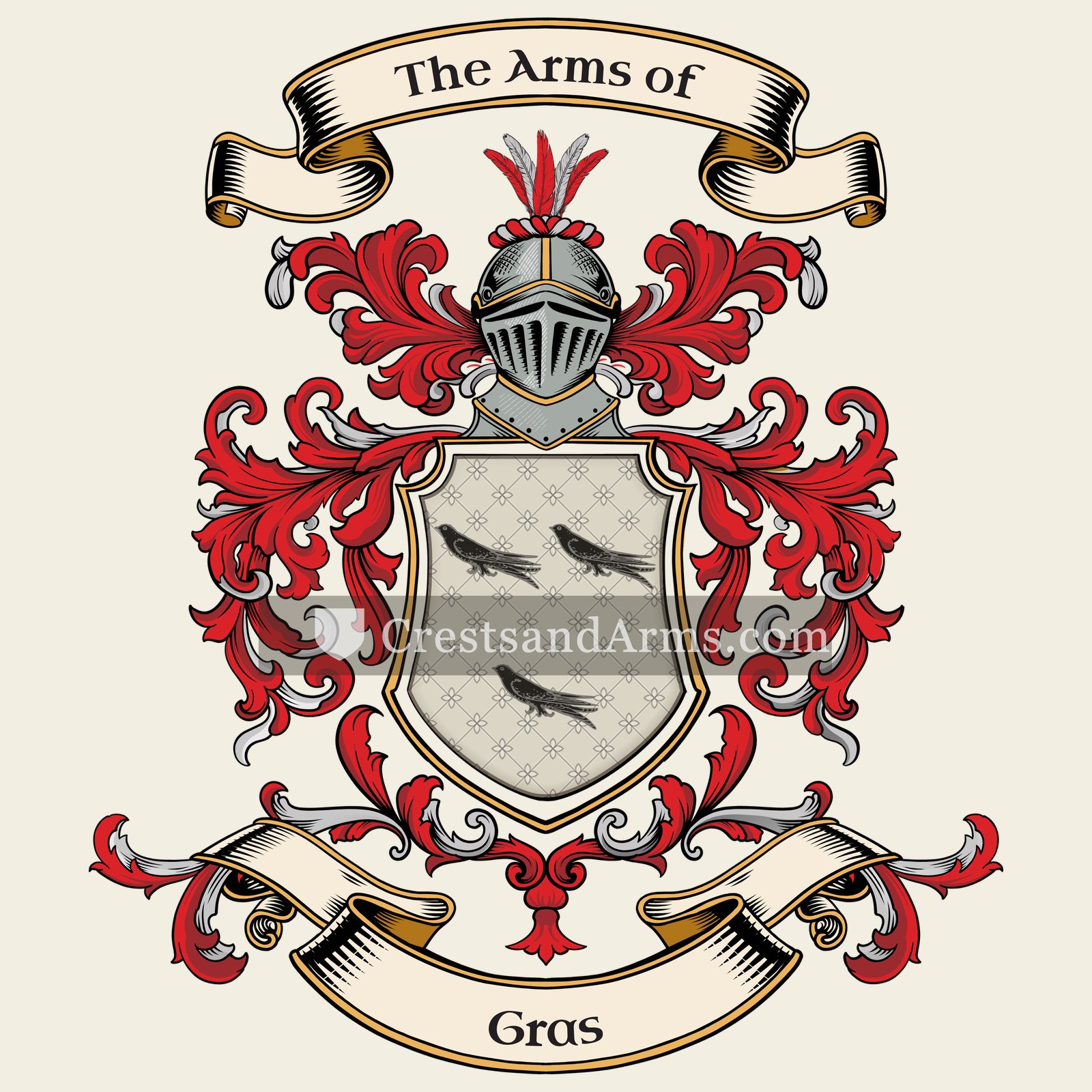


 armA person of action, industrious and laborious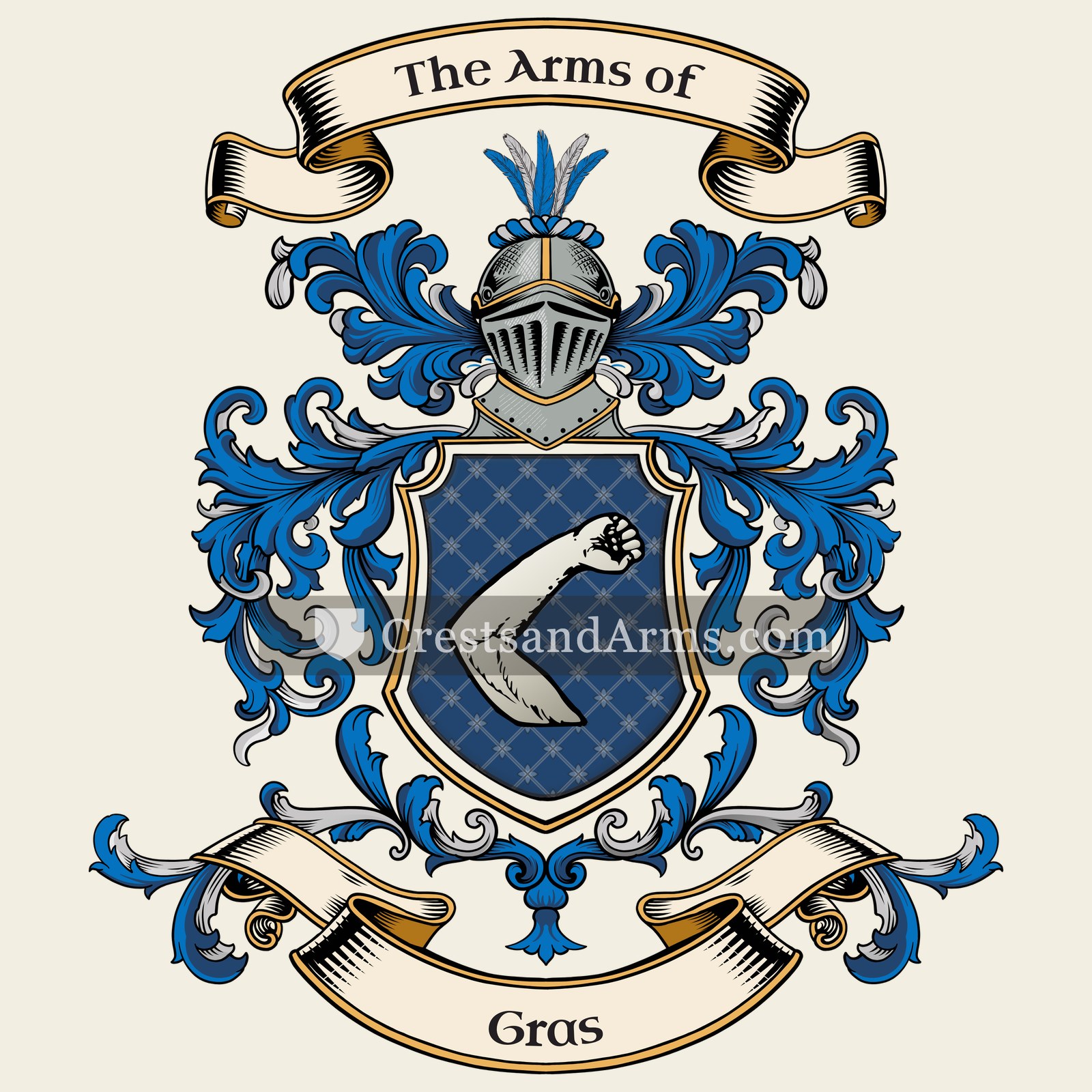


 fessThe military belt, and readiness to serve
 lionCourage, strength and royalty