Map of Germany showing where the Grasse arms are recorded
The Grasse arms were recorded in Germany, c. 1765.
Arms such as these were typically recorded in Bavaria.
Bavaria was a country of old landed families and walled market towns. Estates passed down the same line for centuries, and both the landowners and the leading townsmen kept arms, which is why so many Bavarian names sit in the registers.
This is where the arms were entered in the register. Families often moved to other parts of the country, so the same name can turn up in more than one region.
The body that granted and recorded arms in Germany in this period.
Francis I, Holy Roman Emperor
Sovereign of the period
Francis I, Holy Roman Emperor
1745–1765
Reigning in Germany when the Grasse arms are first recorded.
How Arms Worked in Germany
In the Holy Roman Empire, coats of arms were often granted to individuals by the Emperor or his representatives. These arms were then passed down through the generations to all legitimate descendants of the original holder. Younger branches of a family usually kept the same shield design without needing to change it, as the arms belonged to the entire lineage.
Granting authority
The Holy Roman Emperor held the sole power to grant new coats of arms throughout his vast imperial territories.
How they got arms
Families typically obtained their coats of arms through a formal imperial grant or by proving their noble status to the authorities.
Where arms were recorded
These grants were officially recorded in the Imperial Chancery registers, which began keeping formal records of such honors during the Middle Ages.
The family's standing
Recorded among the armigerous families of Germany.
Origin & History of the Grasse Family in Germany
The family name Grasse finds its roots in the linguistic traditions of the German-speaking regions of Central Europe. By the mid-eighteenth century, historical records confirm that members of the family were established in the southern territory of Bavaria. During this era, surnames often evolved from nicknames or descriptions of a person's physical traits, occupation, or place of origin. The name Grasse likely stems from Middle High German terms related to the word gras, which could refer to a person who lived near a grassy meadow or someone who worked as a farmer or herdsman. As families in Bavaria became more settled, the name became a permanent marker of their identity and social standing within their local village communities. This transition from descriptive nicknames to fixed hereditary names reflects the broader movement toward organized record-keeping in German parishes during the 1700s.
Coat of Arms & Family Crest Details
Symbols on this shield
lionCourage, strength and royalty
Colours
Blue (Azure)Means: Loyalty and truth
Gold (Or)Means: Generosity
Historical info
Source
J. B. Rietstap, Armorial Général, Gouda: G. B. van Goor Zonen, 1884–87
Blazon (the actual original written record)
“D'azur au lion d'or.”
BerryBerry, c. 1663
Digital archive packCoat of arms PNG, gold border print PDF, vector SVG and the certificate of authenticity. Sent to your email in minutes.
Map of France showing where the Grasse arms are recorded
The Grasse arms were recorded in Berry, c. 1663.
Berry was central French farming country, quiet and long-settled. Its estates were modest and stayed in the same hands for centuries, and steady landholding of that kind is exactly what puts a name into the heraldic records.
This is where the arms were entered in the register. Families often moved to other parts of the country, so the same name can turn up in more than one region.
The body that granted and recorded arms in France in this period.
Louis XIV of France
Sovereign of the period
Louis XIV of France
1643–1715
Reigning in Germany when the Grasse arms are first recorded.
How Arms Worked in France
In France, a coat of arms was a mark of honor that passed down through the male line to all legitimate descendants. Families often used the same shield without changes to show their shared heritage. If a branch wanted to stand out, they could add a small mark to their shield to show their specific place in the family tree.
Granting authority
The Juge d'armes de France acted as the official authority that regulated and verified coats of arms across the country.
How they got arms
Families typically inherited their arms from ancestors, though they could also receive them through royal grants or by proving their noble status.
Where arms were recorded
Coats of arms were officially recorded in the Armorial Général de France, which began its main collection in the year 1696.
The family's standing
Recorded among the armigerous families of Berry.
Origin & History of the Grasse Family in France
The history of the Grasse family in France is deeply rooted in the historical province of Berry, where records confirm their presence by the year 1663. The name itself is thought to be a topographic surname, which was a common way for families to identify themselves based on the land they occupied. In the French language, the word "grasse" often relates to fertile or rich soil, suggesting that the earliest members of the family may have been successful farmers or landowners who were known for working productive fields. During the seventeenth century, families in regions like Berry were often tied closely to the local agricultural economy and the social structure of the rural countryside. As the family established their roots in this central part of France, they became part of the local fabric of village life, contributing to the development of the region through their work and community connections. Over time, the name served as a link to their ancestral home, preserving the memory of their early life in the French heartland.
Coat of Arms & Family Crest Details
Symbols on this shield
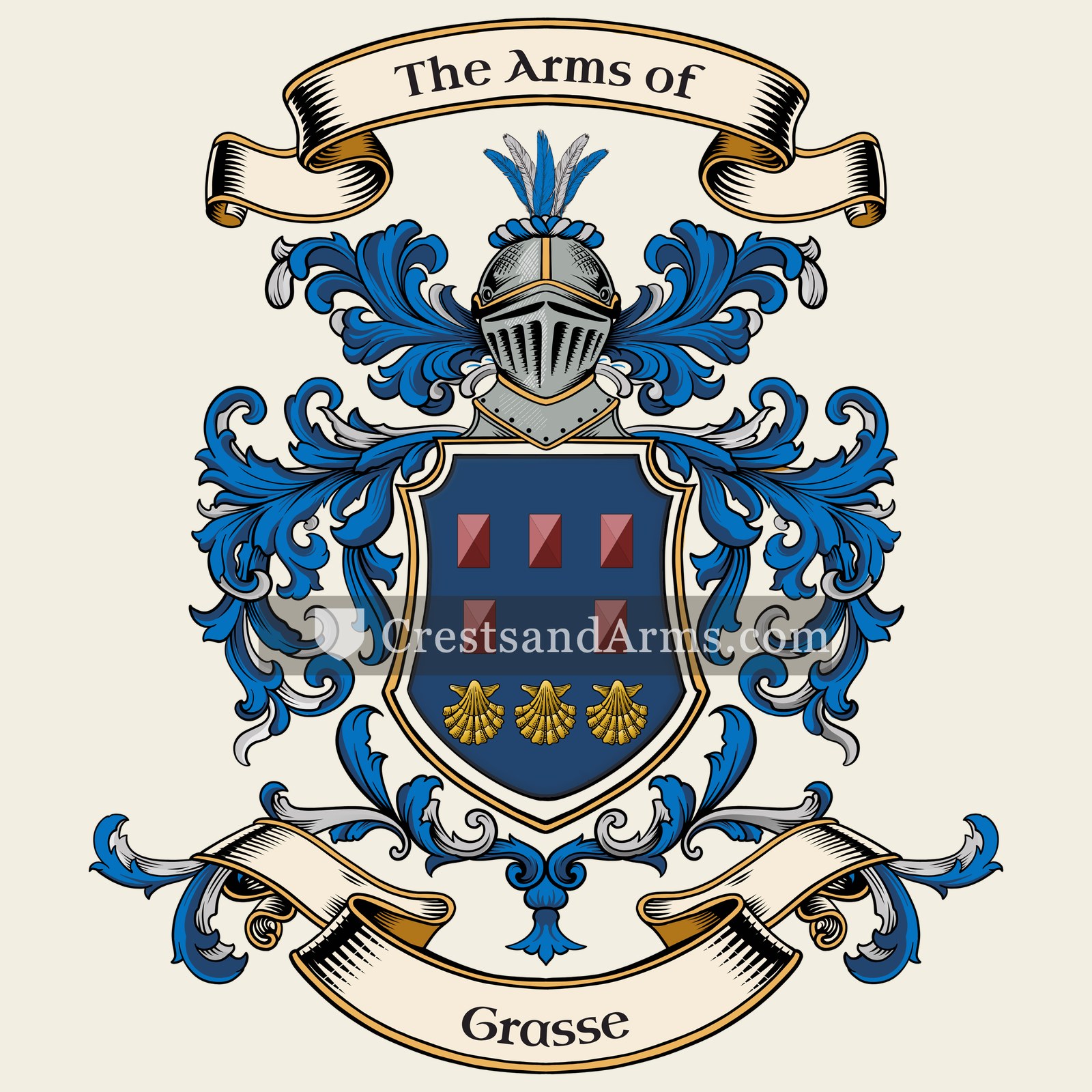
billetThe sealed letter, and a message delivered
escallopThe pilgrim's shell, and a long journey made
Colours
Blue (Azure)Means: Loyalty and truth
Red (Gules)Means: Military strength
Gold (Or)Means: Generosity
Historical info
Source
Sir Bernard Burke, The General Armory of England, Scotland, Ireland and Wales, London: Harrison & Sons, 1884
Blazon (the actual original written record)
“Az. five billets barways conjoined in fesse, three and two, gu. betw. three escallops or”
SuffolkSuffolk, c. 1620
Digital archive packCoat of arms PNG, gold border print PDF, vector SVG and the certificate of authenticity. Sent to your email in minutes.
Map of England showing where the Grasse arms are recorded
The Grasse arms were recorded in Suffolk, c. 1620.
Suffolk was wool country, and its cloth towns were among the wealthiest in England. Clothier families bought manors with their profits, and holding a manor was the ordinary route to a coat of arms.
This is where the arms were entered in the register. Families often moved to other parts of the country, so the same name can turn up in more than one region.
The body that granted and recorded arms in England in this period.
James VI and I
Sovereign of the period
James VI and I
1603–1625
Reigning in Germany when the Grasse arms are first recorded.
How Arms Worked in England
English heraldry allowed arms to be shared by all legitimate descendants of the original owner. These symbols were treated as personal property that moved through the generations to all children. While the eldest son kept the original design, other family members could use the same shield without needing to change it or register their own unique versions.
Granting authority
The College of Arms in London has regulated the use of coats of arms throughout England and Wales since 1484.
How they got arms
Families typically obtained their coats of arms through a formal grant from the Crown or by proving their ancient right to them.
Where arms were recorded
All official coats of arms are recorded in the registers kept at the College of Arms, which date back to the fifteenth century.
The family's standing
Recorded among the armigerous families of Suffolk.
Origin & History of the Grasse Family in England
The history of the Grasse family in England begins with their documented presence in the county of Suffolk by the year 1620. During the early seventeenth century, Suffolk was a bustling region known for its agricultural productivity and its connection to the growing textile trade. Families like the Grasses often settled in these rural communities to participate in local farming or skilled craftsmanship. While the name itself may have roots tied to descriptive terms for grassy landscapes or specific geographical locations, its appearance in English parish records during this era suggests a family that was well-integrated into the local social fabric. These early settlers lived through a time of significant transition in England, as the country moved toward a period of political unrest and eventual migration to the American colonies. By establishing roots in Suffolk, the family became part of the long history of English provincial life, contributing to the local economy and community structure for generations.
Grasse Meaning & Related Branches
Root word
Grass
A Middle High German term referring to grass or pasture land.
This name
GrasseA topographic name for someone who lived near a grassy area or meadow.
also spelled
Gras
Grass
Graas
Related arms
Grasvariant spelling
Grassvariant spelling
Graasvariant spelling
Documented Sources
J. B. Rietstap, Armorial Général, Gouda: G. B. van Goor Zonen, 1884–87
Bahlow, Hans, Deutsches Namenlexikon: Familien- und Vornamen nach Ursprung und Sinn erklärt, 1967


 mulletThe third son, and a divine quality from above
 mulletThe third son, and a divine quality from above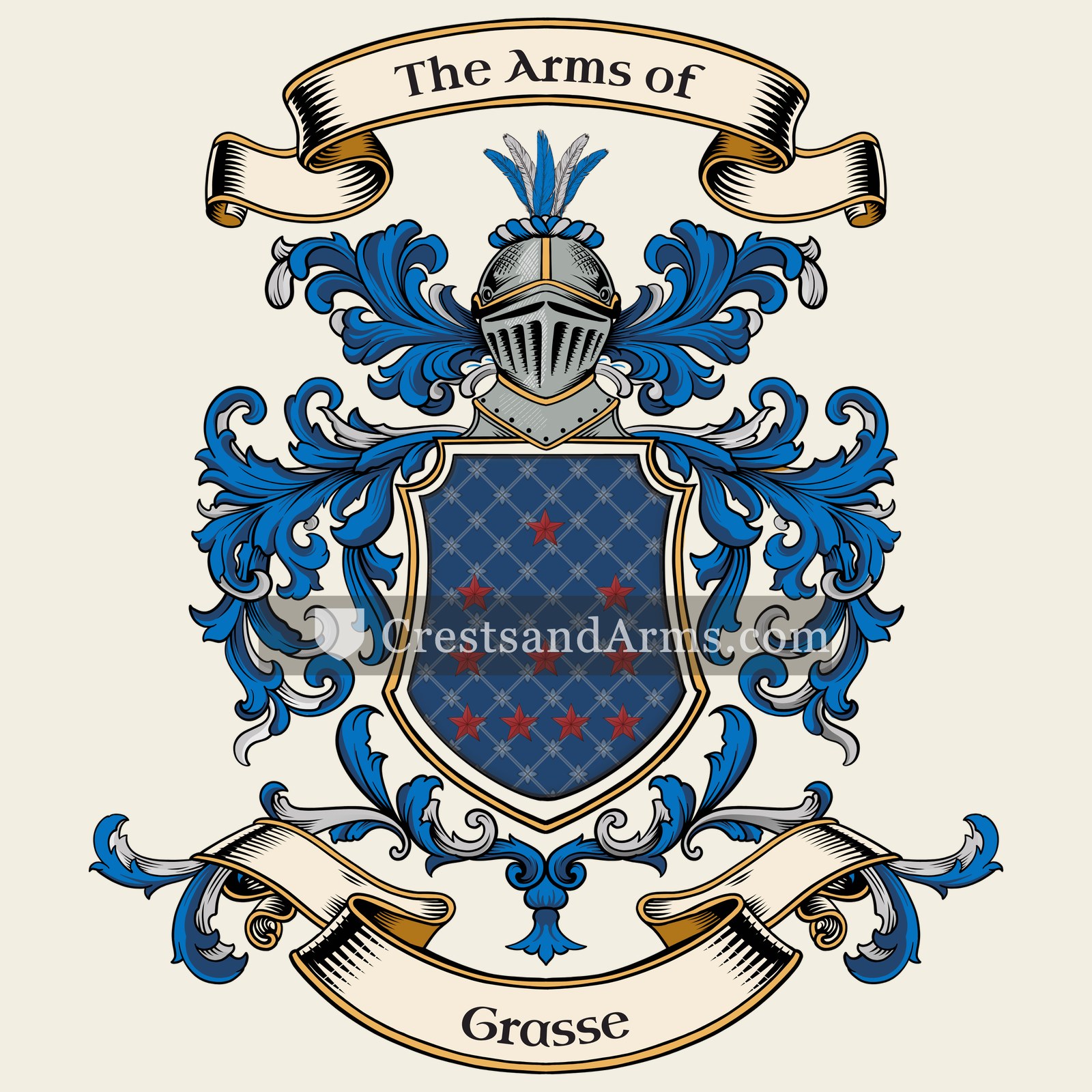


 lionCourage, strength and royalty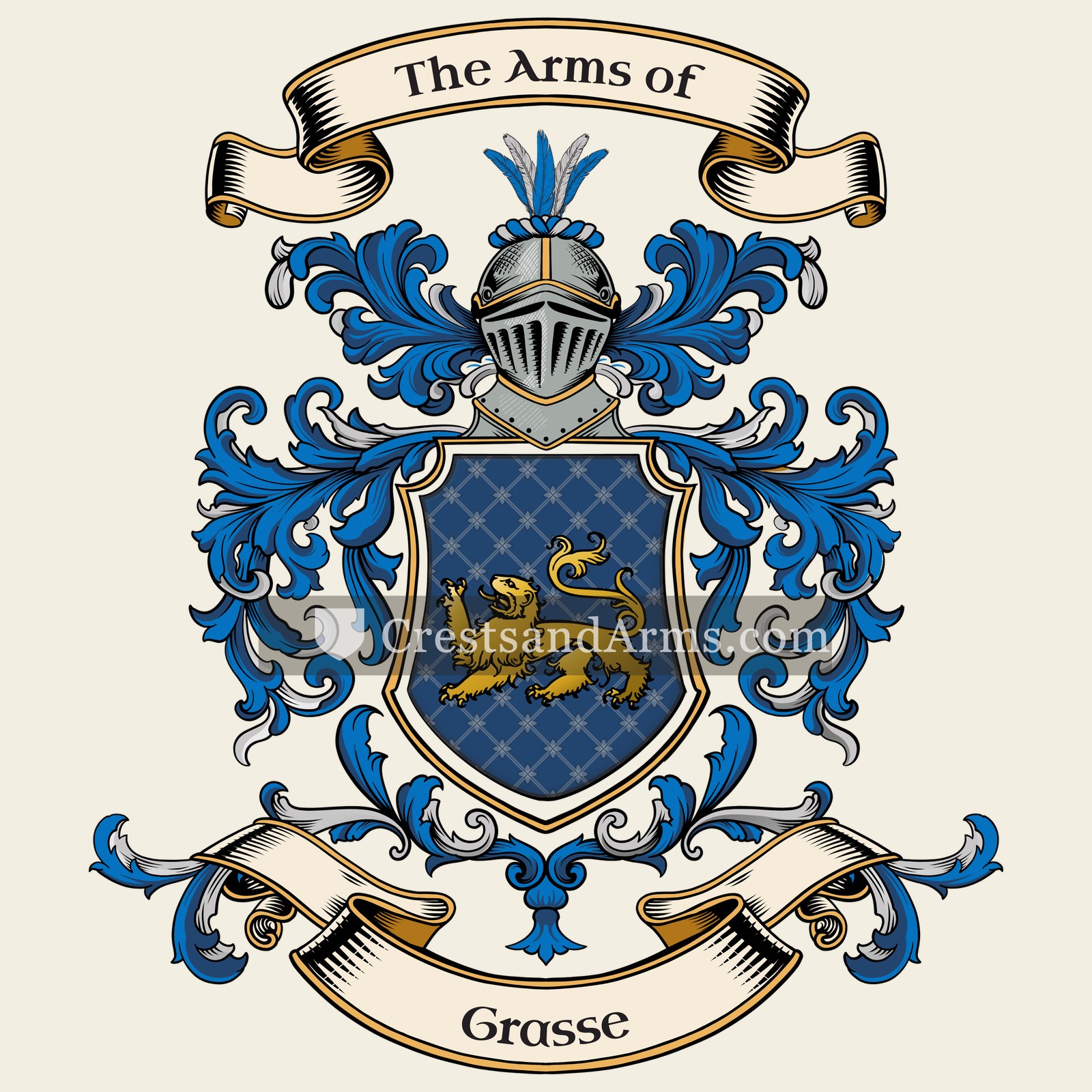


 billetThe sealed letter, and a message delivered
 escallopThe pilgrim's shell, and a long journey made