A record of documented arms, meaning and origin, researched for the Grave family lines. Documented in 3 countries.
Reg. 9785 · Dutch, G–I
Coat of Arms & Family Crest Details
Symbols on this shield
fessThe military belt, and readiness to serve
martletA younger son, who must win his own land
Colours
Blue (Azure)Means: Loyalty and truth
Gold (Or)Means: Generosity
Silver (Argent)Means: Peace and sincerity
Black (Sable)Means: Constancy
Historical info
Source
J. B. Rietstap, Armorial Général, Gouda: G. B. van Goor Zonen, 1884–87
Blazon (the actual original written record)
“Ec.: aux 1 et 4 d'azur à trois fasces ondées d'arg. (Grave); aux 2 et 3 d'or à cinq merlettes de sa., 2, 1 et 2 (Merle). C.: une tête de géant, percée d'une lance. S.: deux paons, à tête de femme.”
Netherlandsc. 1815
Digital archive packCoat of arms PNG, gold border print PDF, vector SVG and the certificate of authenticity. Sent to your email in minutes.
Map of Netherlands showing where the Grave arms are recorded
The Grave arms were recorded in Netherlands, c. 1815.
Arms such as these were typically recorded in Friesland.
Friesland was low, wet country on the northern coast of the Netherlands, farmed by families who had held the same land for centuries. Free landholders were unusually common there, and a free landholder could carry arms.
This is where the arms were entered in the register. Families often moved to other parts of the country, so the same name can turn up in more than one region.
Region
Friesland
First recorded
1815
Granting Authority for the Grave Arms
Hoge Raad van Adel
Photograph made by me · CC BY-SA 3.0
The body that granted and recorded arms in Netherlands in this period.
William I of the Netherlands
Sovereign of the period
William I of the Netherlands
1815–1840
Reigning in Netherlands when the Grave arms are first recorded.
How Arms Worked in Netherlands
In the Netherlands, coats of arms were often used by noble families and those who held specific public offices. These arms were passed down through the generations to legitimate descendants. Younger branches of a family usually kept the original design without needing to add special marks. This system ensured that the family identity remained clear and consistent over many years.
Granting authority
The Hoge Raad van Adel is the official body that regulates and manages noble titles and coats of arms in the Netherlands.
How they got arms
Families typically obtained their coats of arms through official royal grants or by proving their long-standing historical use of the symbols.
Where arms were recorded
Coats of arms are officially recorded in the registers held by the Hoge Raad van Adel, which began its work in 1814.
The family's standing
Recorded among the armigerous families of Netherlands.
Origin & History of the Grave Family in Netherlands
The history of the surname Grave in the Netherlands is deeply connected to the geography and naming customs of the northern provinces. In the early nineteenth century, the name was firmly established in the region of Friesland. During this period, the Dutch government began to standardize family names through the civil registry, which required citizens to officially record their surnames for the first time. The name Grave likely originated as a topographic descriptor, referring to individuals who lived near a ditch, a trench, or a fortified boundary. In the Frisian context, families often adopted names based on their physical surroundings or their specific location within the landscape. By 1815, families bearing this name were integrated into the local Frisian community, participating in the agricultural and maritime life that defined the region during the transition into the modern Dutch state.
Coat of Arms & Family Crest Details
Symbols on this shield
eagleNobility, strength and a keen mind
Colours
Red (Gules)Means: Military strength
Silver (Argent)Means: Peace and sincerity
Historical info
Source
Sir Bernard Burke, The General Armory of England, Scotland, Ireland and Wales, London: Harrison & Sons, 1884
Blazon (the actual original written record)
“Gu. an eagle ar. wings expanded, ducally gorged or”
YorkLondon · York, c. 1591
Digital archive packCoat of arms PNG, gold border print PDF, vector SVG and the certificate of authenticity. Sent to your email in minutes.
Map of England showing where the Grave arms are recorded
The Grave arms were recorded in York, c. 1591.
Yorkshire is the largest of the English counties, and it held more gentry families than any other. Land there was split among a great many households rather than a few, so a great many of them carried arms.
This is where the arms were entered in the register. Families often moved to other parts of the country, so the same name can turn up in more than one region.
The body that granted and recorded arms in England in this period.
Elizabeth I of England
Sovereign of the period
Elizabeth I of England
1558–1603
Reigning in Netherlands when the Grave arms are first recorded.
How Arms Worked in England
English heraldry allowed arms to be shared by all legitimate descendants of the original owner. These symbols were treated as personal property that moved through the generations to all children. While the eldest son kept the original design, other family members could use the same shield without needing to change it or register their own unique versions.
Granting authority
The College of Arms in London has regulated the use of coats of arms throughout England and Wales since 1484.
How they got arms
Families typically obtained their coats of arms through a formal grant from the Crown or by proving their ancient right to them.
Where arms were recorded
All official coats of arms are recorded in the registers kept at the College of Arms, which date back to the fifteenth century.
The family's standing
Recorded among the armigerous families of York.
Origin & History of the Grave Family in England
The surname Grave has deep roots in the English landscape, functioning originally as a descriptive occupational name. In medieval times, the term "grave" was a title for a local official, such as a reeve or a bailiff, who managed land and collected taxes for a lord. By the time the family appeared in the historical records of York in 1591, the name had transitioned from a job title into a fixed hereditary surname. Living in a major hub like York suggests that these early family members were likely part of the growing merchant or artisan classes that defined the city during the late sixteenth century. As England moved toward more formal record-keeping, families like the Graves became more visible in parish registers and legal documents, marking their transition from local officials to established members of the community.
Coat of Arms & Family Crest Details
Symbols on this shield
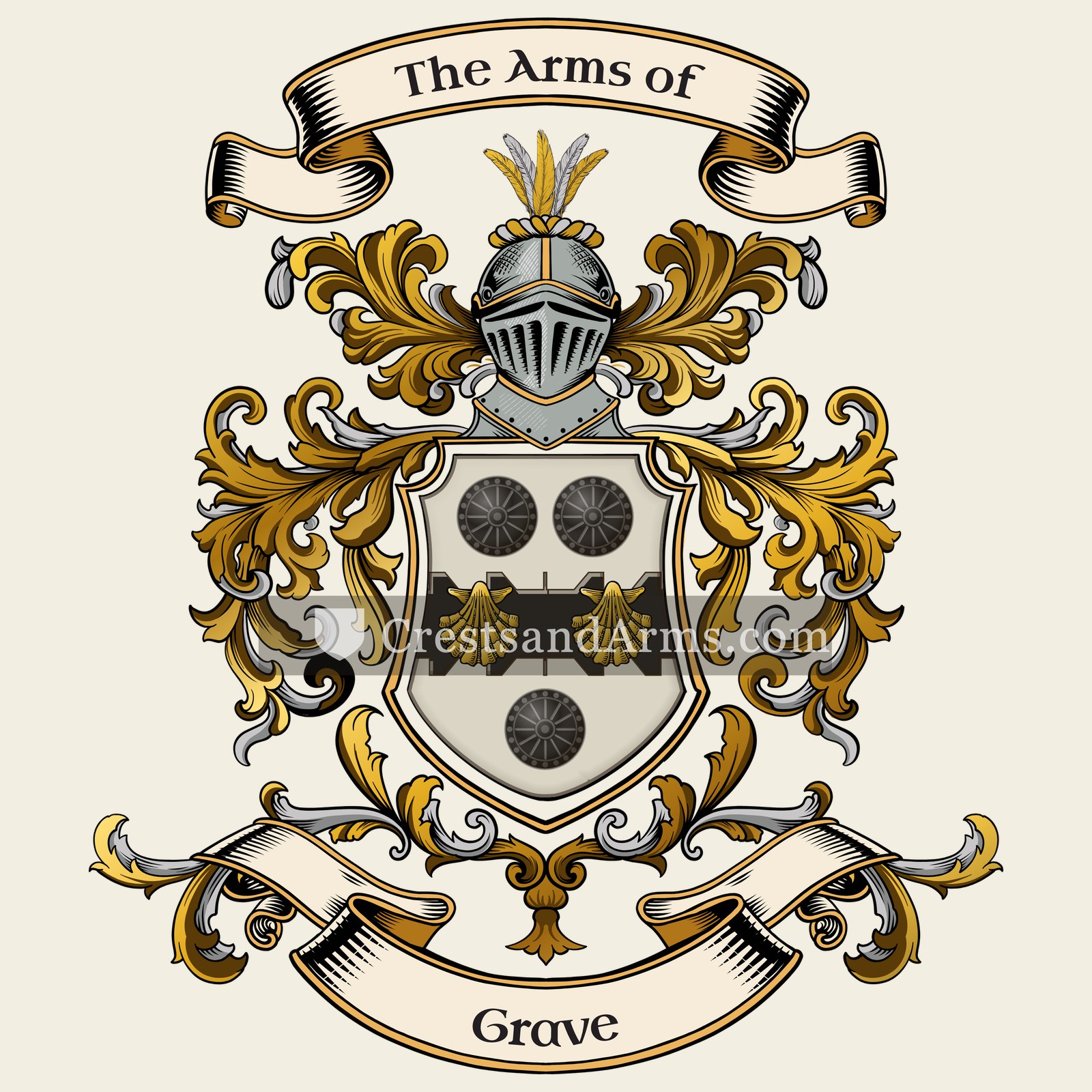
fessThe military belt, and readiness to serve
roundelA coin, and one who has been to the crusades
escallopThe pilgrim's shell, and a long journey made
Colours
Silver (Argent)Means: Peace and sincerity
Black (Sable)Means: Constancy
Gold (Or)Means: Generosity
Historical info
Source
Sir Bernard Burke, The General Armory of England, Scotland, Ireland and Wales, London: Harrison & Sons, 1884
Blazon (the actual original written record)
“Ar. on a fesse bately counter-bately sa. betw. three pellets, each charged with a talbot's head erased of the field, a martlet betw. two escallops or”
Irelandc. 1645
Digital archive packCoat of arms PNG, gold border print PDF, vector SVG and the certificate of authenticity. Sent to your email in minutes.
Map of Ireland showing where the Grave arms are recorded
The Grave arms were recorded in Ireland, c. 1645.
Arms such as these were typically recorded in Dublin.
Dublin was the seat of government in Ireland and the place where grants were sought and recorded. Families with business at the castle or the courts settled nearby, and settling there put their arms on record.
This is where the arms were entered in the register. Families often moved to other parts of the country, so the same name can turn up in more than one region.
The body that granted and recorded arms in Ireland in this period.
Charles I of England
Sovereign of the period
Charles I of England
1625–1649
Reigning in Netherlands when the Grave arms are first recorded.
How Arms Worked in Ireland
The Ulster King of Arms granted coats of arms to individuals who proved their social standing and good character. These symbols were typically inherited by all legitimate descendants of the original holder. If a family branch wanted a unique look, they could apply for a specific change to their design through the office to ensure their identity remained distinct.
Granting authority
The Ulster King of Arms acted as the official body that regulated and issued all coats of arms throughout Ireland.
How they got arms
Families obtained their arms through formal grants issued by the office after proving their eligibility and paying the required fees.
Where arms were recorded
All official grants were recorded in the registers held by the Ulster King of Arms starting from the year 1552.
The family's standing
Recorded among the armigerous families of Ireland.
Origin & History of the Grave Family in Ireland
The surname Grave has deep roots in the urban landscape of seventeenth-century Ireland, particularly within the bustling port city of Dublin. By the year 1645, records confirm that members of the Grave family were already established residents of the city, likely drawn to the capital by the opportunities for trade and civic administration that defined the era. During this period, Dublin was a melting pot of shifting populations, and families like the Graves often integrated into the local merchant classes or professional guilds. While the name itself may have originated from occupational or descriptive roots brought over by earlier settlers, its presence in mid-seventeenth-century Dublin suggests that the family was part of the growing administrative and commercial network that anchored the city. These early ancestors lived through a time of significant political transition in Ireland, and their ability to maintain a presence in the capital highlights their role in the evolving social fabric of the Irish urban experience.
Grave Meaning & Related Branches
Root word
Graaf
A noble title equivalent to a count or earl.
This name
GraveAn occupational or status-based name referring to someone who served a count or held that rank.
also spelled
Graave
Graeffe
Graves
Grav
Greave
Related arms
Graevevariant spelling
Grafvariant spelling
Greavesvariant spelling
Birdrecorded with Grave, same area
Documented Sources
J. B. Rietstap, Armorial Général, Gouda: G. B. van Goor Zonen, 1884–87
Meertens, P.J., De betekenis van de Nederlandse familienamen, 1959
Tresoar (Frisian Historical and Literary Center), Burgerlijke Stand van Friesland (Civil Registry of Friesland), 1811–1950
Van der Schaar, J., Woordenboek van voornamen, 1964
Digital archive packCoat of arms PNG, gold border print PDF, vector SVG and the certificate of authenticity. Sent to your email in minutes.


 fessThe military belt, and readiness to serve
 martletA younger son, who must win his own land
 fessThe military belt, and readiness to serve
 martletA younger son, who must win his own land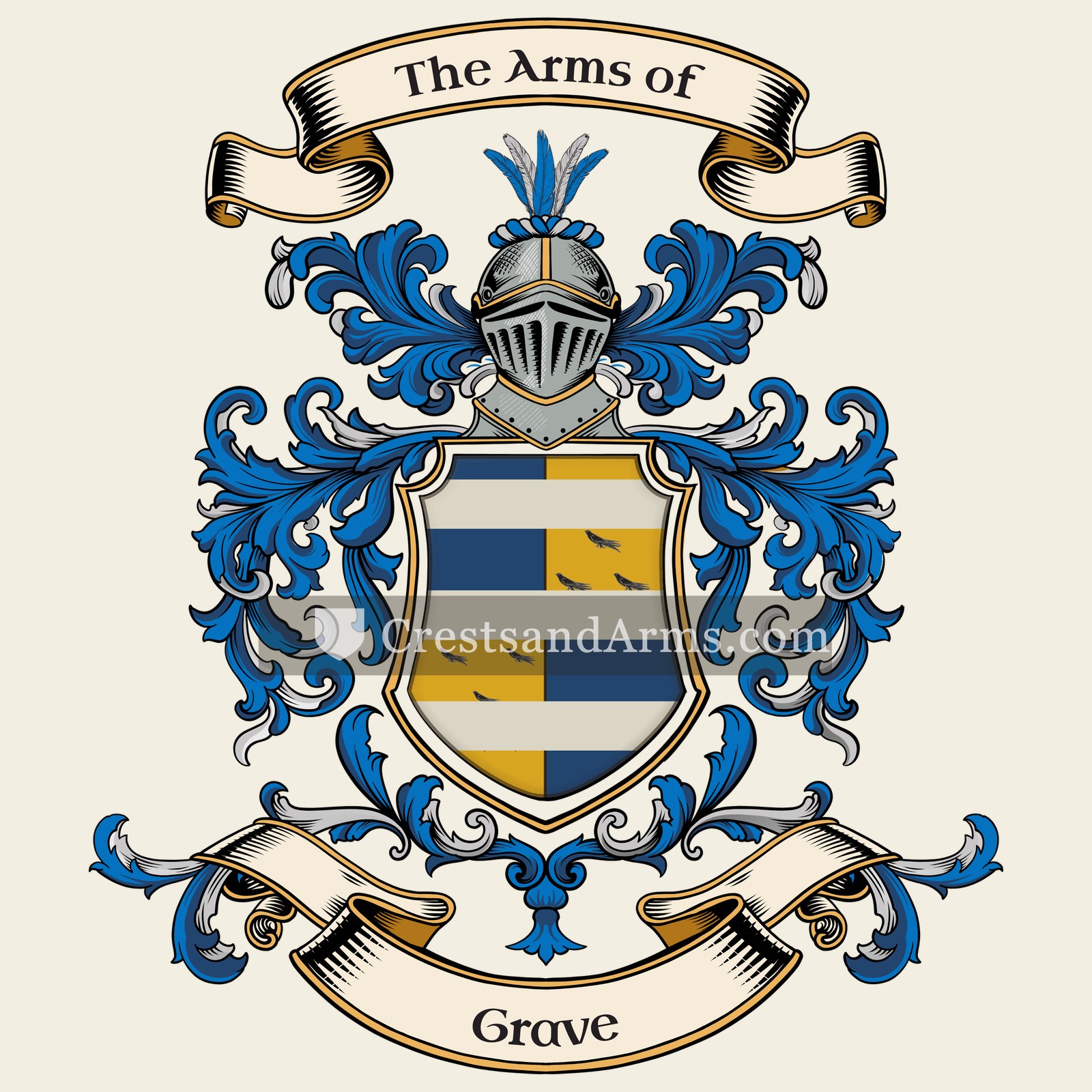


 eagleNobility, strength and a keen mind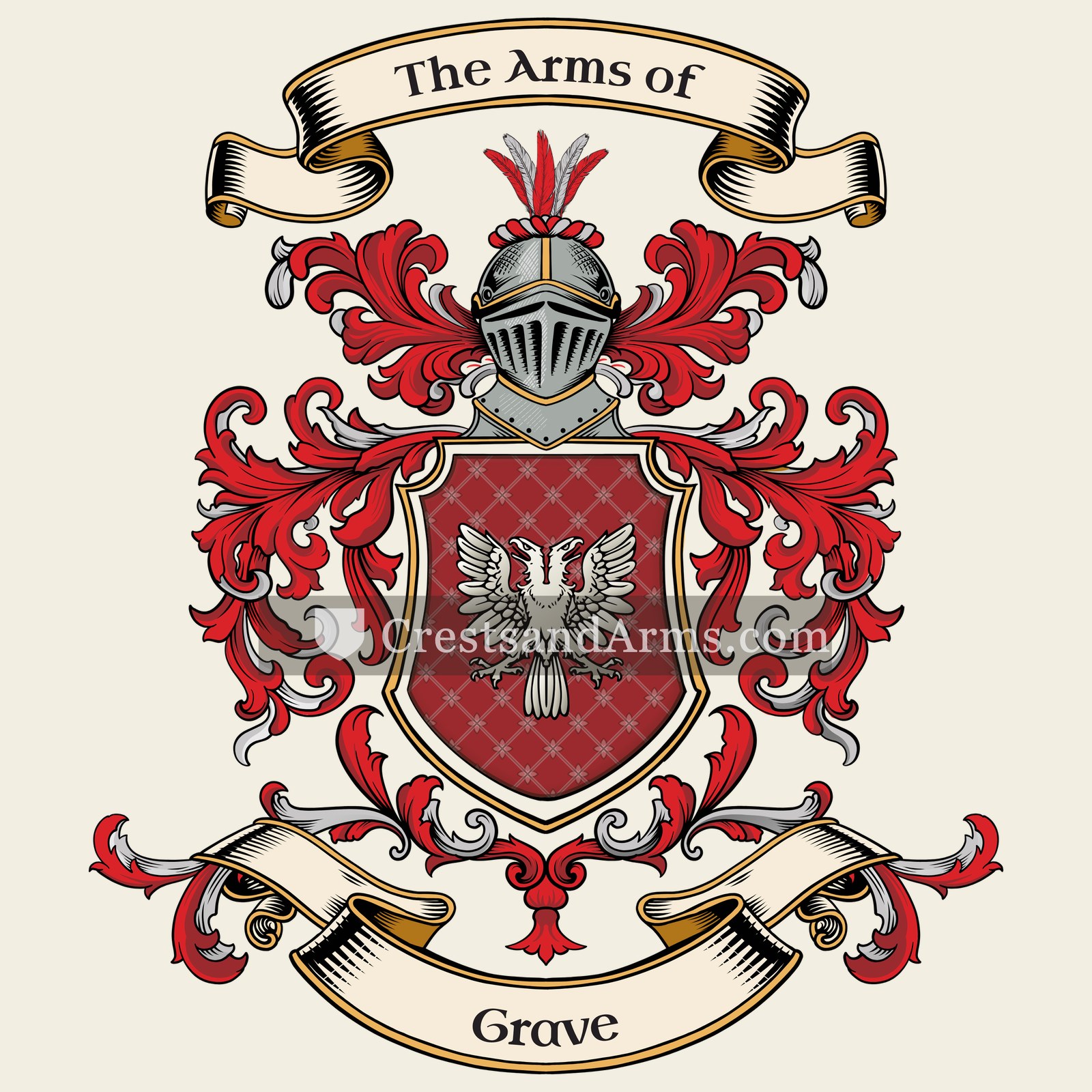


 roundelA coin, and one who has been to the crusades
 escallopThe pilgrim's shell, and a long journey made