Map of France showing where the Graybill arms are recorded
The Graybill arms were recorded in Maine, c. 1663.
Maine was quiet farming country in western France, held in small manors by families who stayed for generations. Nothing about it was grand, but steady landholding is exactly what puts a name in the registers.
This is where the arms were entered in the register. Families often moved to other parts of the country, so the same name can turn up in more than one region.
The body that granted and recorded arms in France in this period.
Louis XIV of France
Sovereign of the period
Louis XIV of France
1643–1715
Reigning in France when the Graybill arms are first recorded.
How Arms Worked in France
In France, a coat of arms was a mark of honor that passed down through the male line to all legitimate descendants. Families often used the same shield without changes to show their shared heritage. If a branch wanted to stand out, they could add a small mark to their shield to show their specific place in the family tree.
Granting authority
The Juge d'armes de France acted as the official authority that regulated and verified coats of arms across the country.
How they got arms
Families typically inherited their arms from ancestors, though they could also receive them through royal grants or by proving their noble status.
Where arms were recorded
Coats of arms were officially recorded in the Armorial Général de France, which began its main collection in the year 1696.
The family's standing
Recorded among the armigerous families of Maine.
Origin & History of the Graybill Family in France
The Graybill family name has roots that trace back to the early colonial period in North America, with historical records confirming that family members were established in Maine as early as 1663. The name is widely considered to be an anglicized version of the German surname Grebiel or Krähenbühl. Many families with this name originated from the regions of Switzerland and the Palatinate area of Germany. During the late 17th and 18th centuries, these families often migrated to escape religious persecution or economic hardship. Once they arrived in the American colonies, they frequently settled in areas like Pennsylvania and Maine, where they worked as farmers and tradespeople. Over time, the spelling of the name shifted to its modern form to better fit the phonetics of the English language. This transition reflects the common experience of many immigrant families who adapted their cultural identities while building new lives in a developing nation.
Graybill Meaning & Related Branches
Root word
Gräbiel
A Germanic diminutive form of the name Gabriel meaning God is strength.
This name
GraybillAn occupational or habitational surname likely referring to a person from a grave or pit area.
also spelled
Gravil
Documented Sources
J. B. Rietstap, Armorial Général, Gouda: G. B. van Goor Zonen, 1884–87
Faust, Albert Bernhardt, The German Element in the United States, 1909
Strassburger, Ralph Beaver, Pennsylvania German Pioneers: A Publication of the Original Lists of Arrivals in the Port of Philadelphia from 1727 to 1808, 1934
Maine State Archives, Province and Court Records of Maine, 1663
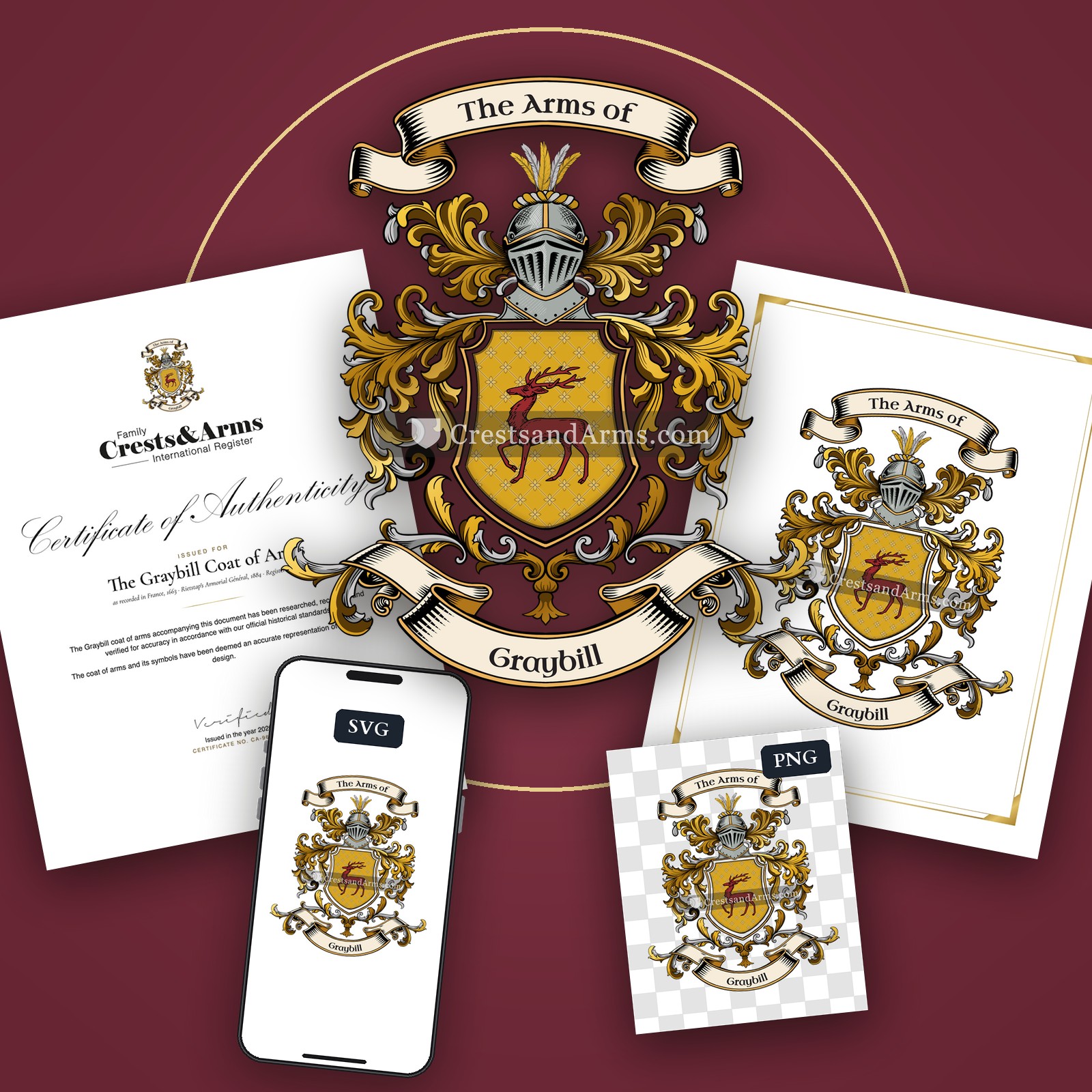
Digital archive packCoat of arms PNG, gold border print PDF, vector SVG and the certificate of authenticity. Sent to your email in minutes.


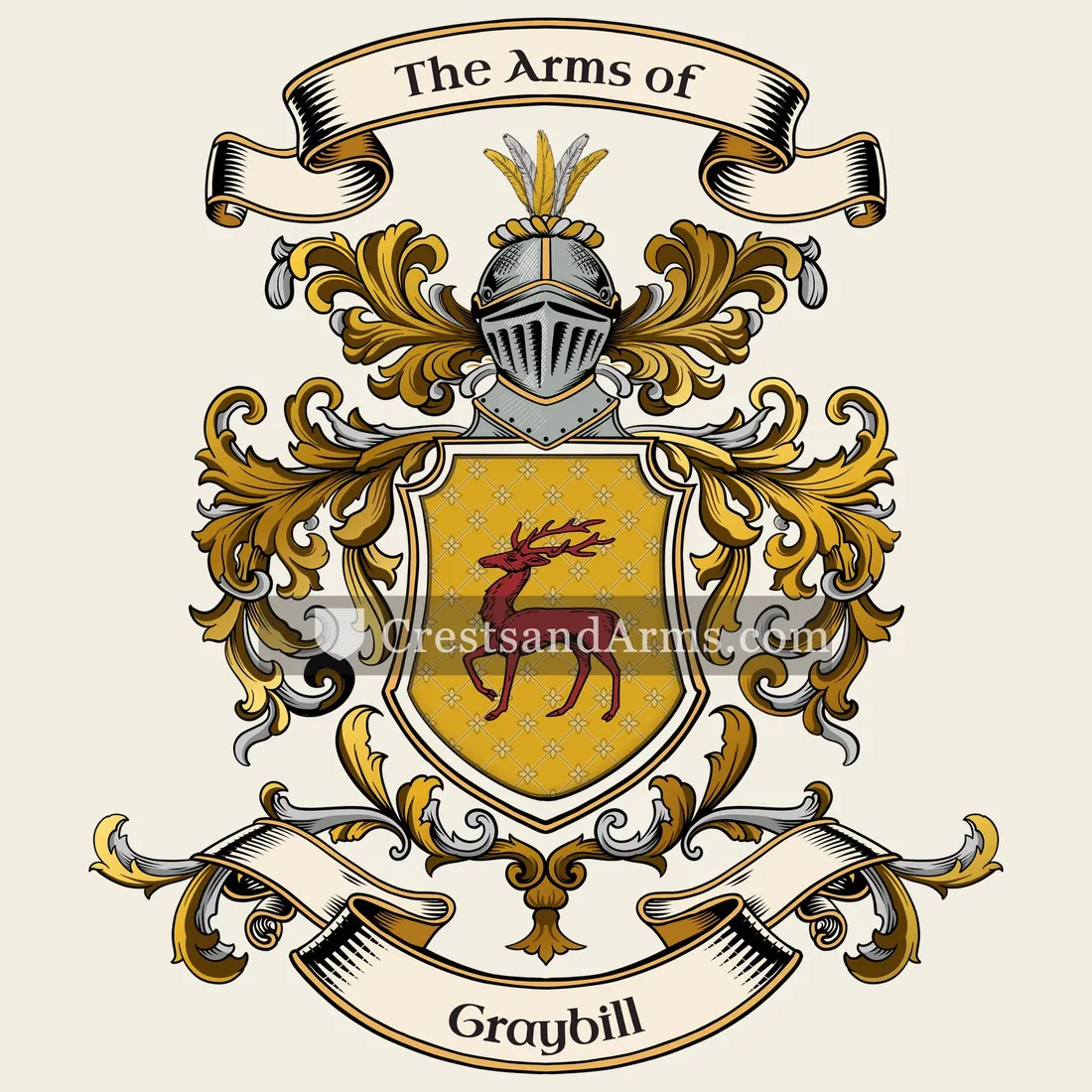
 stagPeace and harmony, and one who will not fight unprovoked
 stagPeace and harmony, and one who will not fight unprovoked