Map of Austria showing where the Greif arms are recorded
The Greif arms were recorded in Vienne, c. 1772.
This is where the arms were entered in the register. Families often moved to other parts of the country, so the same name can turn up in more than one region.
Region
Vienne
Town
Vienne
First recorded
1772
Granting Authority for the Greif Arms
Imperial and Royal chancery
Sodacan · CC BY-SA 3.0
The body that granted and recorded arms in Austria in this period.
Joseph II, Holy Roman Emperor
Sovereign of the period
Joseph II, Holy Roman Emperor
1765–1790
Reigning in Austria when the Greif arms are first recorded.
How Arms Worked in Austria
Austrian coats of arms were often linked directly to noble titles granted by the Emperor. These symbols belonged to the entire family line rather than just one individual. When a family grew, new branches kept the original design without needing to change it. This system allowed all members of a noble house to share the same identity across many generations.
Granting authority
The Imperial and Royal chancery managed all heraldic matters and controlled the official granting of arms throughout the Austrian lands.
How they got arms
Families typically received their arms through a formal imperial decree that often accompanied the elevation of a person to noble status.
Where arms were recorded
Official records of these grants were kept in the Imperial Register of Nobility which began its formal documentation process in 1453.
The family's standing
Recorded among the armigerous families of Austria.
Origin & History of the Greif Family in Austria
The surname Greif originates from the Middle High German word for griffin, a mythical creature often used in folklore to represent strength and vigilance. By the time the family was established in Vienna in 1772, the name had already been in use for centuries across German-speaking lands as a descriptive term for people with sharp or grasping personalities. In the context of eighteenth-century Austria, families like the Greifs were often part of the growing urban middle class that thrived during the reign of Empress Maria Theresa. As residents of a major imperial capital, these early family members likely participated in the city’s vibrant trade and bureaucratic life, which was expanding rapidly during the Enlightenment. The presence of the name in Viennese records from this period suggests that the family was well-integrated into the social fabric of the city, contributing to the administrative and commercial stability that defined the late Habsburg era.
Coat of Arms & Family Crest Details
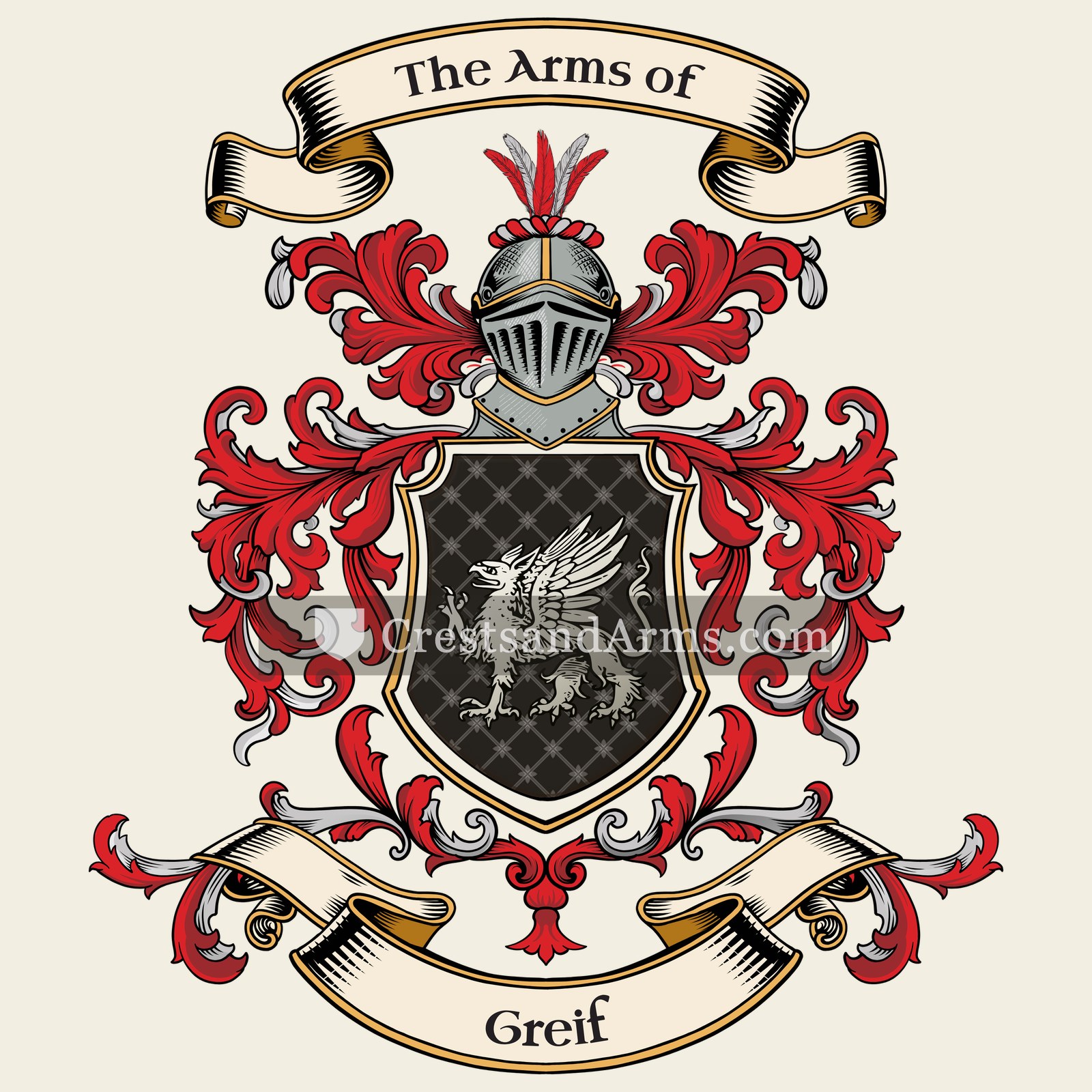
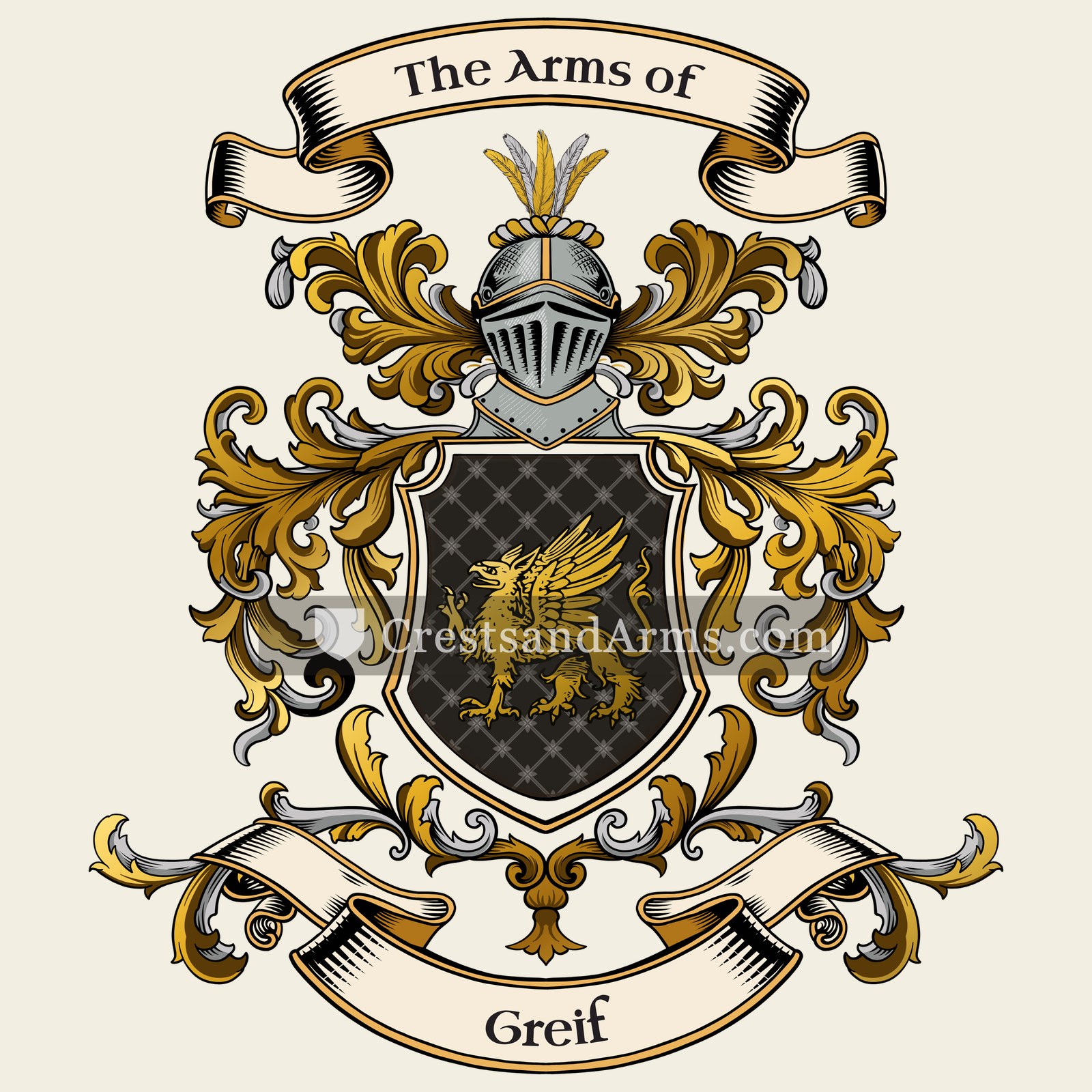
Symbols on this shield
griffinValour and vigilance, guarding great treasure
Colours
Black (Sable)Means: Constancy
Gold (Or)Means: Generosity
Historical info
Source
J. B. Rietstap, Armorial Général, Gouda: G. B. van Goor Zonen, 1884–87
Blazon (the actual original written record)
“De sa. à un griffon cour., tenant une épée, le tout d'or. Cq. cour. C.: le griffon, iss.”
BavariaBavaria, c. 1765
Digital archive packCoat of arms PNG, gold border print PDF, vector SVG and the certificate of authenticity. Sent to your email in minutes.
Map of Germany showing where the Greif arms are recorded
The Greif arms were recorded in Bavaria, c. 1765.
Bavaria was a country of old landed families and walled market towns. Estates passed down the same line for centuries, and both the landowners and the leading townsmen kept arms, which is why so many Bavarian names sit in the registers.
This is where the arms were entered in the register. Families often moved to other parts of the country, so the same name can turn up in more than one region.
The body that granted and recorded arms in Germany in this period.
Francis I, Holy Roman Emperor
Sovereign of the period
Francis I, Holy Roman Emperor
1745–1765
Reigning in Austria when the Greif arms are first recorded.
How Arms Worked in Germany
In the Holy Roman Empire, coats of arms were often granted to individuals by the Emperor or his representatives. These arms were then passed down through the generations to all legitimate descendants of the original holder. Younger branches of a family usually kept the same shield design without needing to change it, as the arms belonged to the entire lineage.
Granting authority
The Holy Roman Emperor held the sole power to grant new coats of arms throughout his vast imperial territories.
How they got arms
Families typically obtained their coats of arms through a formal imperial grant or by proving their noble status to the authorities.
Where arms were recorded
These grants were officially recorded in the Imperial Chancery registers, which began keeping formal records of such honors during the Middle Ages.
The family's standing
Recorded among the armigerous families of Bavaria.
Origin & History of the Greif Family in Germany
The surname Greif originates from the Middle High German word for a griffin, a mythical creature known for its strength and vigilance. In the context of German history, names derived from animals or legendary beasts were often used as nicknames to describe a person’s character or physical traits. By the time members of the Greif family were documented in Bavaria in 1765, the name had already been established for generations as a common identifier in southern German-speaking regions. These early families were typically part of the rural or artisan classes, living in small villages where local parish records served as the primary way to track their movements and family ties. Because Bavaria was a hub for trade and agriculture, the Greif name likely spread as individuals moved between towns to find work or settle on new farmland. This transition from a descriptive nickname to a permanent family name reflects the broader patterns of how surnames became fixed in German society during the late medieval and early modern periods.
Greif Meaning & Related Branches
Root word
Grif
A mythical creature with the body of a lion and eagle head.
This name
GreifA topographic or habitational name referring to someone who lived near a sign depicting a griffin.
also spelled
Gryf
Grif
Grife
Related arms
Gryfvariant spelling
Documented Sources
J. B. Rietstap, Armorial Général, Gouda: G. B. van Goor Zonen, 1884–87
Heintze, Albert. Die deutschen Familiennamen: geschichtlich, geographisch, sprachlich. 1882
Wiener Stadt- und Landesarchiv. Magistrat der Stadt Wien, Untertanen- und Bürgeraufnahmen. 1772
Digital archive packCoat of arms PNG, gold border print PDF, vector SVG and the certificate of authenticity. Sent to your email in minutes.


 griffinValour and vigilance, guarding great treasure
 griffinValour and vigilance, guarding great treasure