Map of England showing where the Grenon arms are recorded
The Grenon arms were recorded in Hereford, c. 1620.
Herefordshire lay on the Welsh border, where land was held in return for military service. Families there were expected to arm and to fight, and a fighting household needed a shield it could be known by.
This is where the arms were entered in the register. Families often moved to other parts of the country, so the same name can turn up in more than one region.
The body that granted and recorded arms in England in this period.
James VI and I
Sovereign of the period
James VI and I
1603–1625
Reigning in England when the Grenon arms are first recorded.
How Arms Worked in England
English heraldry allowed arms to be shared by all legitimate descendants of the original owner. These symbols were treated as personal property that moved through the generations to all children. While the eldest son kept the original design, other family members could use the same shield without needing to change it or register their own unique versions.
Granting authority
The College of Arms in London has regulated the use of coats of arms throughout England and Wales since 1484.
How they got arms
Families typically obtained their coats of arms through a formal grant from the Crown or by proving their ancient right to them.
Where arms were recorded
All official coats of arms are recorded in the registers kept at the College of Arms, which date back to the fifteenth century.
The family's standing
Recorded among the armigerous families of Hereford.
Origin & History of the Grenon Family in England
The family name Grenon has deep roots that connect to the social landscape of seventeenth-century England. By the year 1620, records confirm that members of the family were established in the county of Hereford. This region was a bustling area known for its agricultural production and its proximity to the Welsh border, which made it a significant hub for trade and local governance. Families like the Grenons during this era often lived as yeoman farmers or skilled tradespeople who contributed to the stability of their local parishes. Because the name appears in official documentation from this period, it suggests that the family was well-integrated into the community life of the West Midlands. Their presence in Hereford indicates that they were part of the foundational population that helped shape the local economy and social structure of the region during the early modern period.
Meaning of the Grenon family crest colors & symbols
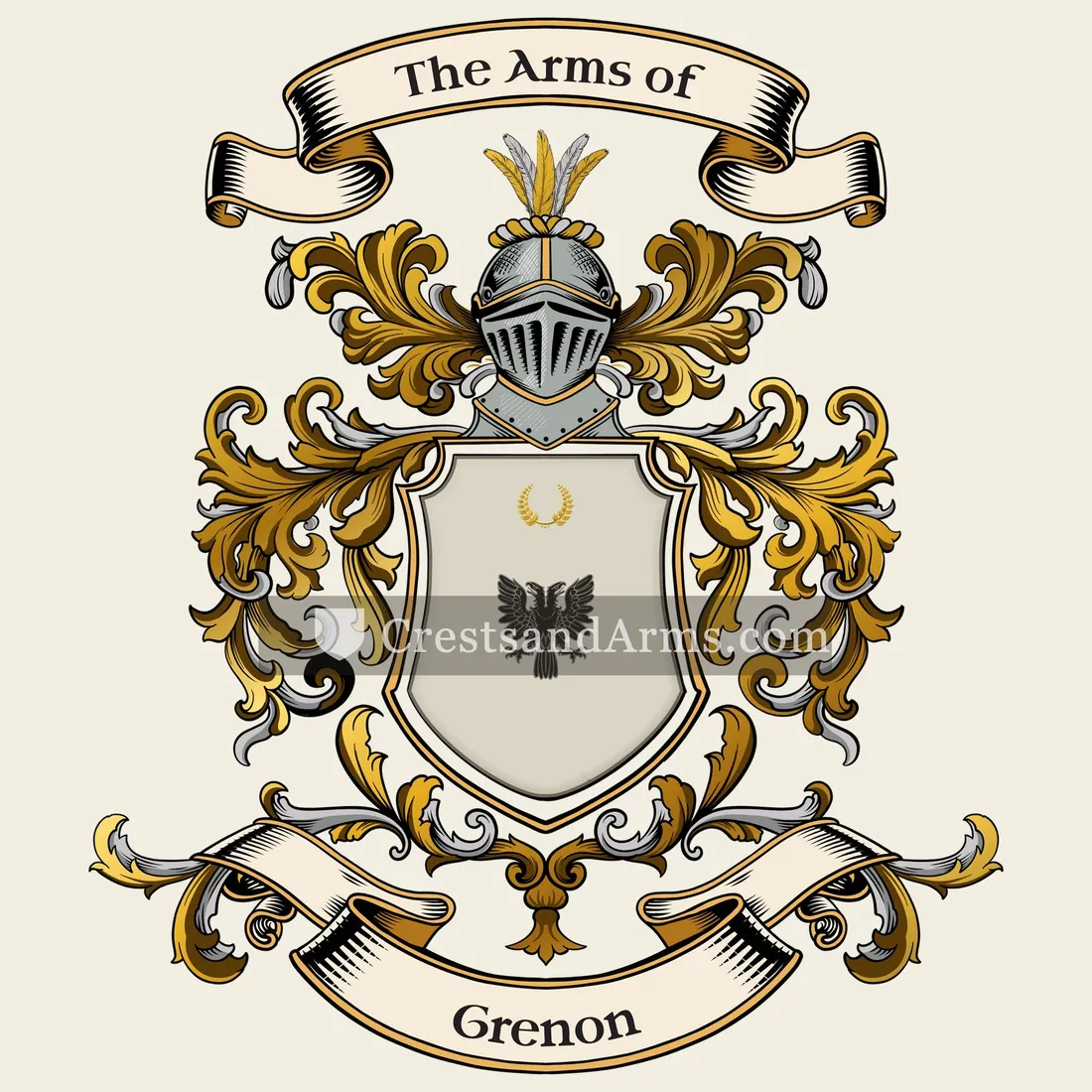
Symbols on this shield
eagleNobility, strength and a keen mind
wreathHonour, and a victory crowned
Colours
Silver (Argent)Means: Peace and sincerity
Black (Sable)Means: Constancy
Gold (Or)Means: Generosity
Historical info
Source
Sir Bernard Burke, The General Armory of England, Scotland, Ireland and Wales, London: Harrison & Sons, 1884
Blazon (the actual original written record)
“Ar. an eagle displ. sa. armed, beaked, and gorged with a chaplet or”
MeathGernonstown · Meath, c. 1172
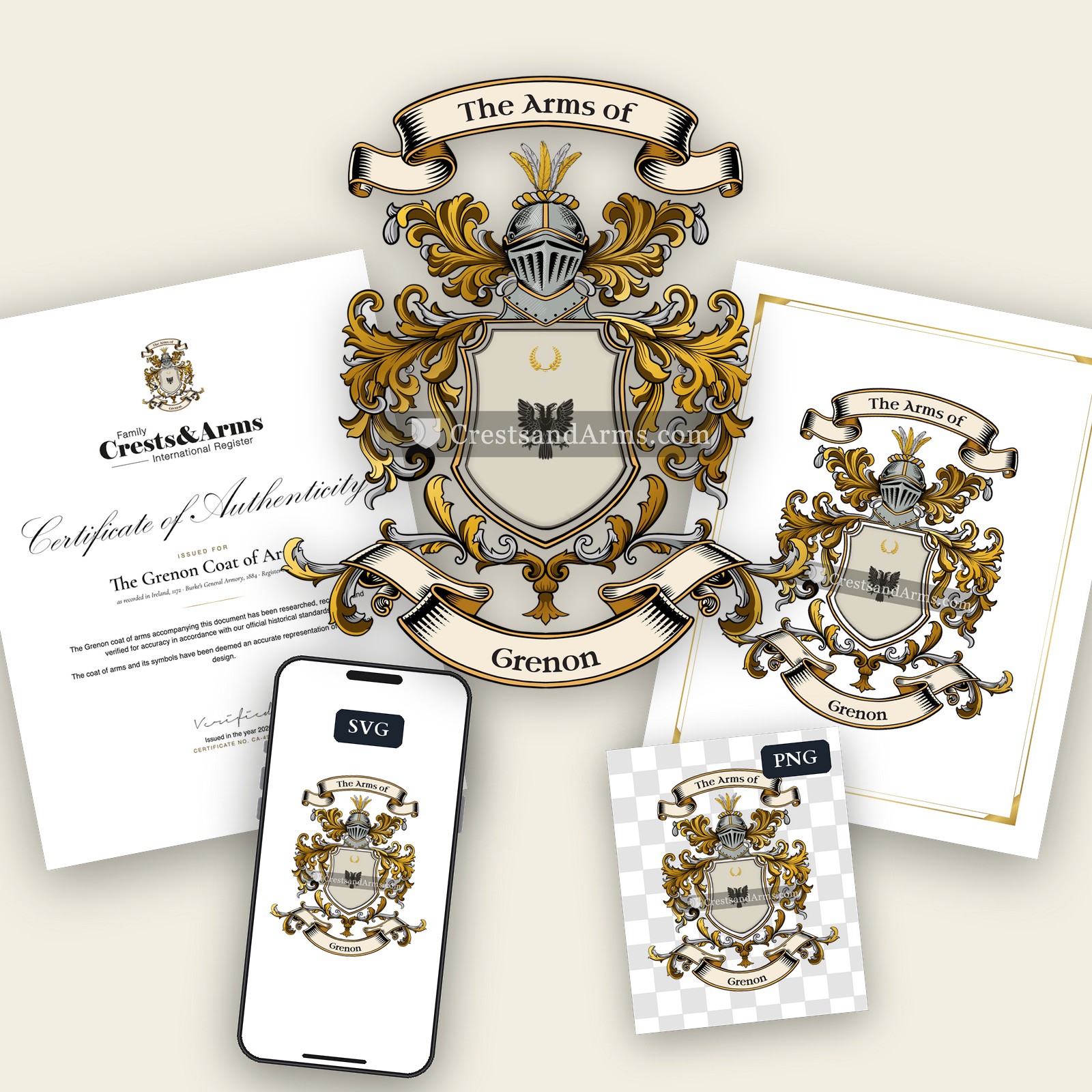
Digital archive packCoat of arms PNG, gold border print PDF, vector SVG and the certificate of authenticity. Sent to your email in minutes.
Map of Ireland showing where the Grenon arms are recorded
The Grenon arms were recorded in Meath, c. 1172.
Meath was the best farmland in Ireland and the old seat of its high kings. Norman families took it early and held it, and land of that quality kept the same families on it for centuries.
This is where the arms were entered in the register. Families often moved to other parts of the country, so the same name can turn up in more than one region.
The body that granted and recorded arms in Ireland in this period.
Henry II of England
Sovereign of the period
Henry II of England
1154–1189
Reigning in England when the Grenon arms are first recorded.
How Arms Worked in Ireland
The Ulster King of Arms granted coats of arms to individuals who proved their social standing and good character. These symbols were typically inherited by all legitimate descendants of the original holder. If a family branch wanted a unique look, they could apply for a specific change to their design through the office to ensure their identity remained distinct.
Granting authority
The Ulster King of Arms acted as the official body that regulated and issued all coats of arms throughout Ireland.
How they got arms
Families obtained their arms through formal grants issued by the office after proving their eligibility and paying the required fees.
Where arms were recorded
All official grants were recorded in the registers held by the Ulster King of Arms starting from the year 1552.
The family's standing
Recorded among the armigerous families of Meath.
Origin & History of the Grenon Family in Ireland
The Grenon family name has roots in Ireland that trace back to the Norman arrival in the late twelfth century. Historical records confirm that members of the family were established in County Meath by 1172, a period marked by the significant influence of the Anglo-Norman invasion. The name itself is believed to derive from the Old French term "grenon," which was a descriptive nickname for a person with a prominent mustache or beard. As these settlers integrated into the local landscape of Meath, they became part of the complex social and political shifts occurring in the region. Over the following centuries, the family transitioned from their initial role as newcomers to becoming a recognized part of the local community. Their presence in Meath serves as a window into how Norman families adapted to Irish life during the Middle Ages.
Grenon Meaning & Related Branches
Root word
Greno
Derived from the Old French word for a grain or seed.
This name
GrenonA nickname for a person with a small stature or a grain merchant.
also spelled
Gernoun
Documented Sources
Sir Bernard Burke, The General Armory of England, Scotland, Ireland and Wales, London: Harrison & Sons, 1884


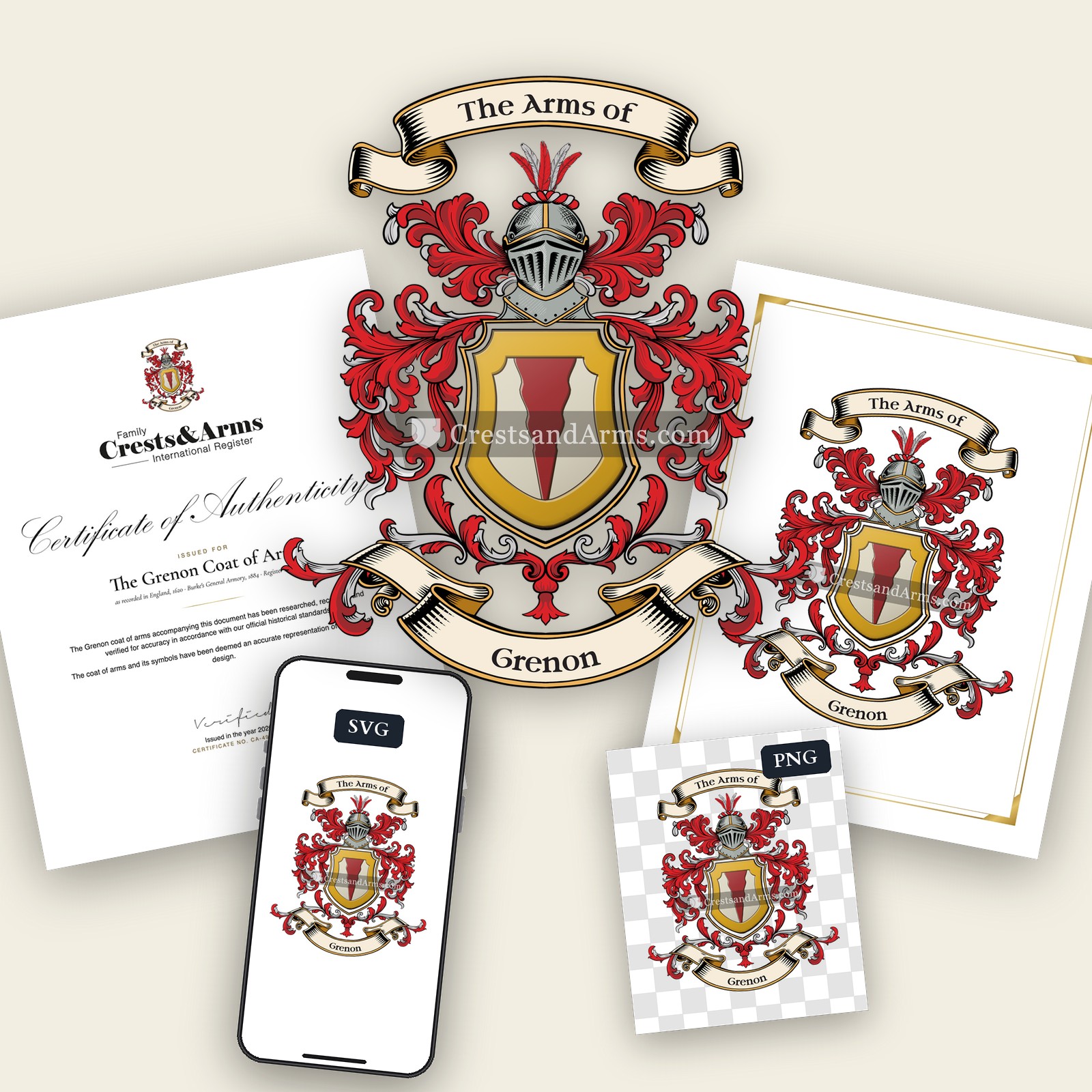
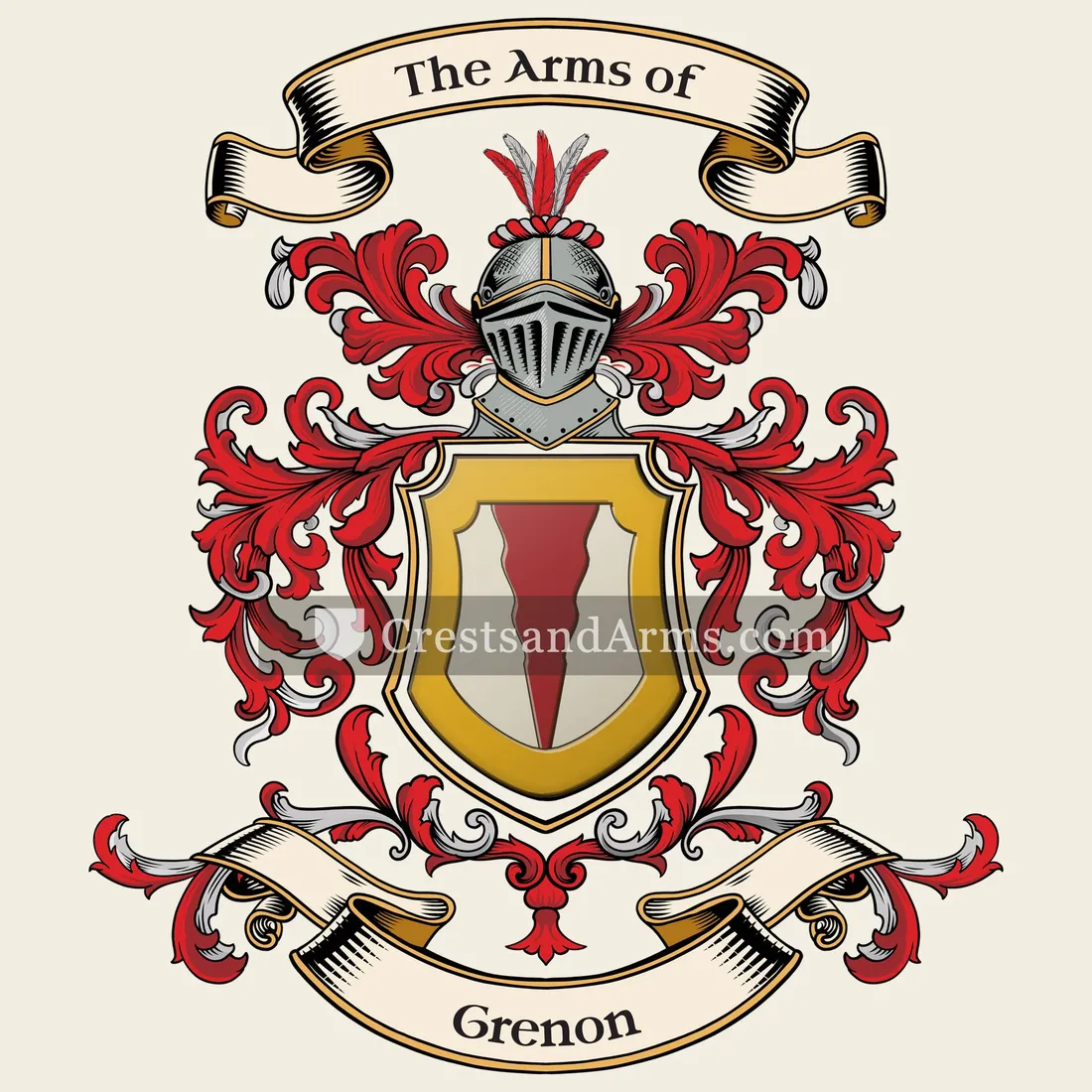
 pileWell-doing, and a mark of distinction
 bordureA difference between branches of one family
 pileWell-doing, and a mark of distinction
 bordureA difference between branches of one family


 eagleNobility, strength and a keen mind
 wreathHonour, and a victory crowned