Map of France showing where the Grille arms are recorded
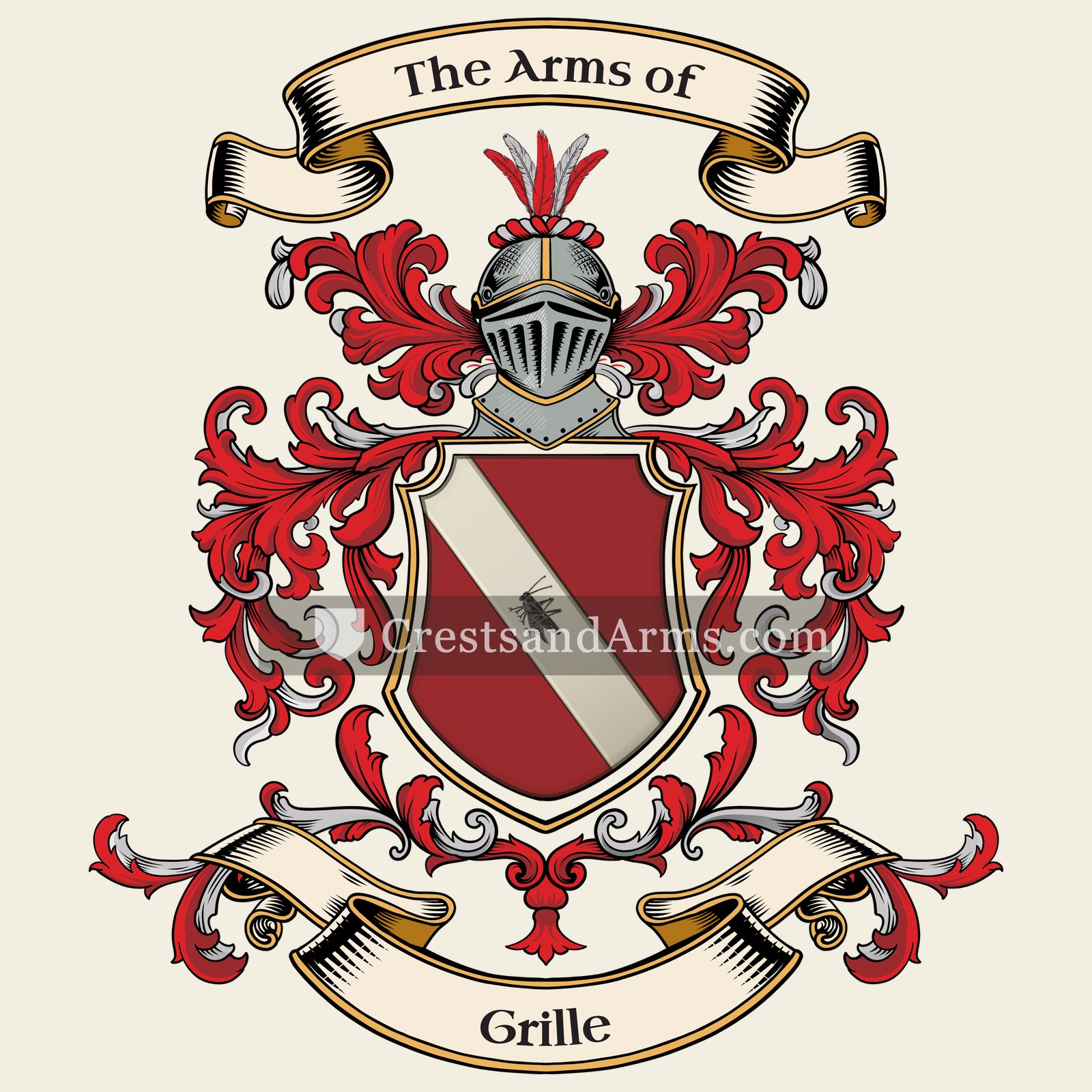
The Grille arms were recorded in Lorraine, c. 1572.
Lorraine sat on the border between France and the German lands, and border country bred soldiers. Families here held small estates and served in arms, and a fighting man was exactly the sort who carried a shield of his own.
This is where the arms were entered in the register. Families often moved to other parts of the country, so the same name can turn up in more than one region.
The body that granted and recorded arms in France in this period.
Charles IX of France
Sovereign of the period
Charles IX of France
1560–1574
Reigning in France when the Grille arms are first recorded.
How Arms Worked in France
In France, a coat of arms was a mark of honor that passed down through the male line to all legitimate descendants. Families often used the same shield without changes to show their shared heritage. If a branch wanted to stand out, they could add a small mark to their shield to show their specific place in the family tree.
Granting authority
The Juge d'armes de France acted as the official authority that regulated and verified coats of arms across the country.
How they got arms
Families typically inherited their arms from ancestors, though they could also receive them through royal grants or by proving their noble status.
Where arms were recorded
Coats of arms were officially recorded in the Armorial Général de France, which began its main collection in the year 1696.
The family's standing
Recorded among the armigerous families of Lorraine.
Origin & History of the Grille Family in France
The family name Grille has deep roots in the historical region of Lorraine, where members were firmly established by the year 1572. During this period, the name was closely linked to the social and economic fabric of northeastern France. Families in this area often derived their surnames from local occupations, physical traits, or specific landmarks near their homes. As the Grille family navigated the complex political landscape of the sixteenth century, they likely participated in the agricultural and trade activities that defined life in the duchies of Lorraine. Over time, the family spread across the region, adapting to the shifting borders and cultural influences that defined the French frontier. Their presence in official records from the late 1500s suggests they were part of a stable community that helped shape the local identity of the province long before modern national borders were fully set.
Coat of Arms & Family Crest Details
Symbols on this shield
bendDefence, and the scarf of a commander
grasshopperNobility of birth and joy in the summer of life
Colours
Red (Gules)Means: Military strength
Silver (Argent)Means: Peace and sincerity
Black (Sable)Means: Constancy
Historical info
Source
J. B. Rietstap, Armorial Général, Gouda: G. B. van Goor Zonen, 1884–87
Blazon (the actual original written record)
“De gu. à la bande d'arg., ch. d'un grillon de sa., posé dans le sens de la bande.”
LanguedocGènes · Languedoc, c. 1684
Digital archive packCoat of arms PNG, gold border print PDF, vector SVG and the certificate of authenticity. Sent to your email in minutes.
Map of Italy showing where the Grille arms are recorded
The Grille arms were recorded in Languedoc, c. 1684.
Languedoc stretched across the south of France, a country of small towns, vineyards and old local families. Its gentry were numerous rather than grand, and a great many of them held arms even where their estates were modest.
This is where the arms were entered in the register. Families often moved to other parts of the country, so the same name can turn up in more than one region.
The body that granted and recorded arms in Italy in this period.
Victor Amadeus II of Savoy
Sovereign of the period
Victor Amadeus II of Savoy
1675–1730
Reigning in France when the Grille arms are first recorded.
How Arms Worked in Italy
In the Italian states, coats of arms were often used by noble families to show their status and history. These symbols were passed down through the generations to all legitimate male descendants. Younger branches of a family usually kept the original design but sometimes added small changes to distinguish their specific line from the main branch.
Granting authority
Various local rulers and city governments controlled the use of coats of arms across the different Italian states.
How they got arms
Families often assumed their own arms or received them as official grants from local lords, popes, or city councils.
Where arms were recorded
Arms were recorded in local city archives or private family books rather than in one single national register.
The family's standing
Recorded among the armigerous families of Languedoc.
Origin & History of the Grille Family in Italy
The history of the Grille family name is deeply rooted in the cultural exchange between the Languedoc region of France and the neighboring Italian peninsula. While records confirm the family’s presence in Languedoc by 1684, the name itself reflects a linguistic evolution tied to the Mediterranean trade routes that connected southern France with northern Italy. In Italian, the word "grillo" refers to a cricket, a symbol often associated with good fortune and vigilance in rural folklore. As families moved across the porous borders of the Alps during the late seventeenth century, the name likely transitioned from a descriptive nickname into a formal surname. This migration was often driven by the movement of skilled artisans and merchants who sought new opportunities in the bustling cities of Piedmont and Liguria. By maintaining ties to both regions, the early Grille family navigated a landscape where French and Italian influences blended, allowing the name to persist as a marker of their cross-border heritage.
Grille Meaning & Related Branches
Root word
craticula
A small iron grate or gridiron used for cooking.
This name
GrilleA topographic name for someone living near a gate or a nickname for a cook.
also spelled
Grillee
Gril
Related arms
Grillvariant spelling
Documented Sources
J. B. Rietstap, Armorial Général, Gouda: G. B. van Goor Zonen, 1884–87
Bastien, Henri. Histoire de la Lorraine. 1965
Archives départementales de Meurthe-et-Moselle. Série B: Cours et juridictions. 1572
Lepage, Henri. Les communes de la Meurthe: Journal historique des villes, bourgs, villages, hameaux et censes de ce département. 1853
Digital archive packCoat of arms PNG, gold border print PDF, vector SVG and the certificate of authenticity. Sent to your email in minutes.


 batonAuthority and office held under the crown
 handFaith, sincerity and justice
 batonAuthority and office held under the crown
 handFaith, sincerity and justice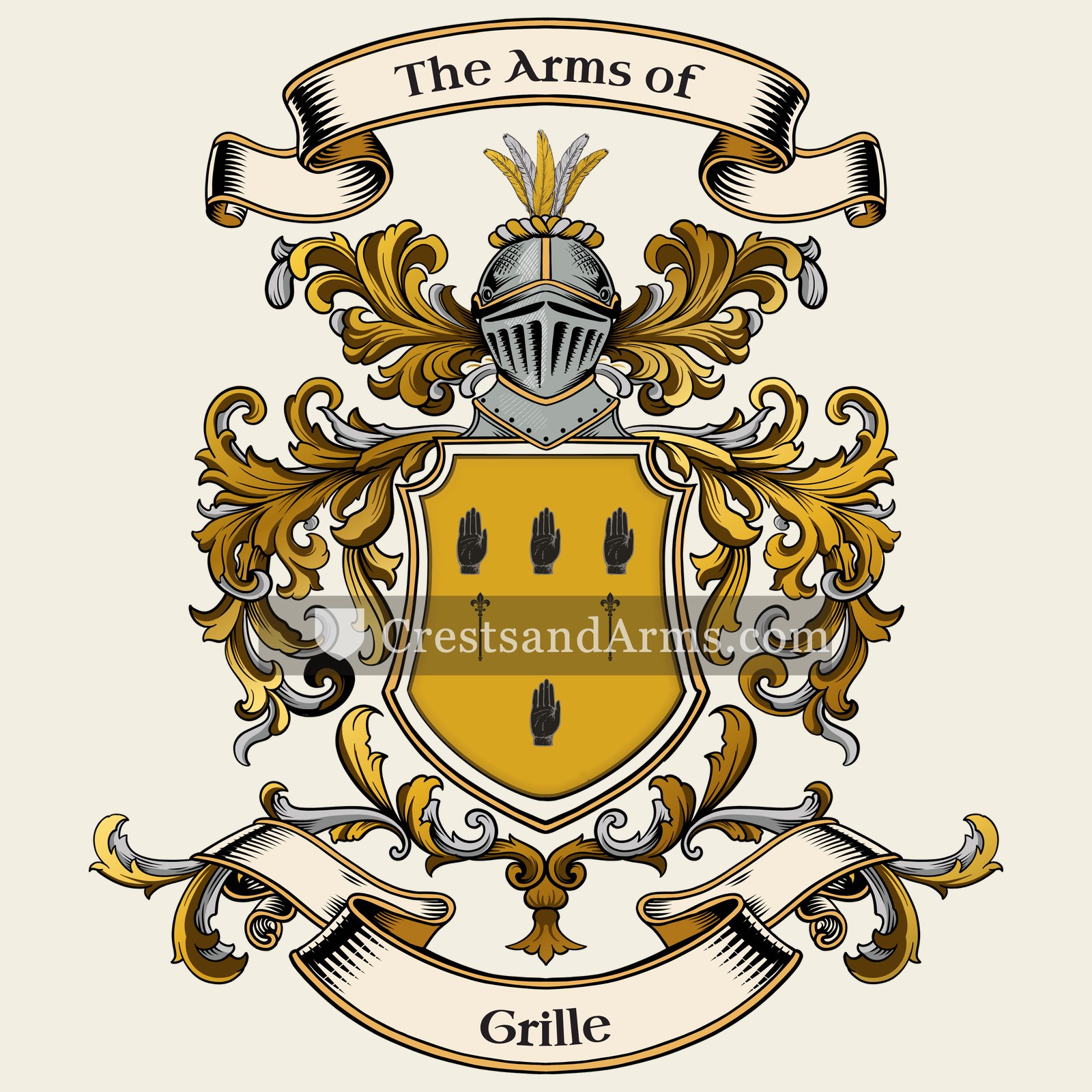


 bendDefence, and the scarf of a commander
 grasshopperNobility of birth and joy in the summer of life