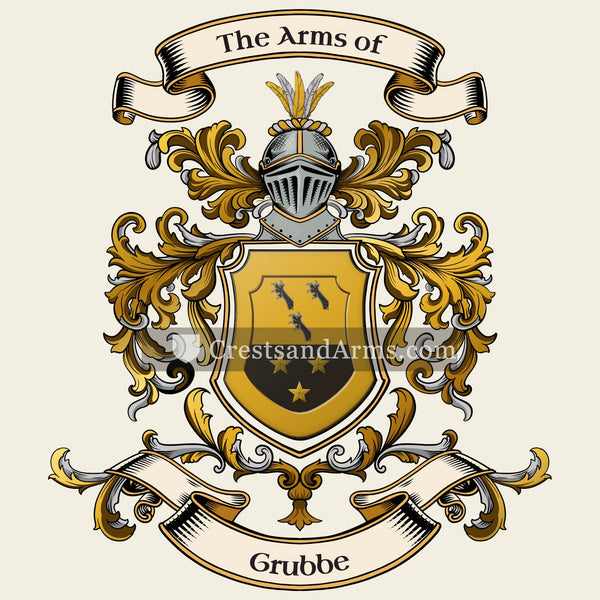
A record of documented arms, meaning and origin, researched for the Grubbe family lines. Documented in 3 countries.
Reg. 6744 · Dutch, G–I
Coat of Arms & Family Crest Details
Symbols on this shield
ramLeadership and authority
Colours
Red (Gules)Means: Military strength
Historical info
Source
J. B. Rietstap, Armorial Général, Gouda: G. B. van Goor Zonen, 1884–87
Blazon (the actual original written record)
“De gu. à un bélier ramp.”
Netherlandsc. 1815
Where the Grubbe Arms Were Recorded
Friesland
Map of Netherlands showing where the Grubbe arms are recorded
The Grubbe arms were recorded in Netherlands, c. 1815.
Arms such as these were typically recorded in Friesland.
Friesland was low, wet country on the northern coast of the Netherlands, farmed by families who had held the same land for centuries. Free landholders were unusually common there, and a free landholder could carry arms.
This is where the arms were entered in the register. Families often moved to other parts of the country, so the same name can turn up in more than one region.
Region
Friesland
First recorded
1815
Granting Authority for the Grubbe Arms
Hoge Raad van Adel
Photograph made by me · CC BY-SA 3.0
The body that granted and recorded arms in Netherlands in this period.
William I of the Netherlands
Sovereign of the period
William I of the Netherlands
1815–1840
Reigning in Netherlands when the Grubbe arms are first recorded.
How Arms Worked in Netherlands
In the Netherlands, coats of arms were often used by noble families and those who held specific public offices. These arms were passed down through the generations to legitimate descendants. Younger branches of a family usually kept the original design without needing to add special marks. This system ensured that the family identity remained clear and consistent over many years.
Granting authority
The Hoge Raad van Adel is the official body that regulates and manages noble titles and coats of arms in the Netherlands.
How they got arms
Families typically obtained their coats of arms through official royal grants or by proving their long-standing historical use of the symbols.
Where arms were recorded
Coats of arms are officially recorded in the registers held by the Hoge Raad van Adel, which began its work in 1814.
The family's standing
Recorded among the armigerous families of Netherlands.
Origin & History of the Grubbe Family in Netherlands
The history of the Grubbe name in the Netherlands is deeply connected to the unique cultural landscape of the northern province of Friesland. By the early 19th century, the family was well-established in this region, a time when the Netherlands was transitioning into a modern kingdom following the Napoleonic era. In Friesland, surnames were often influenced by the local Frisian language and the specific naming customs of the northern coastal communities. The name Grubbe likely evolved from descriptive terms related to the landscape or the physical characteristics of early ancestors, as was common for families living in the rural, agricultural districts of the north. As the Dutch government began to standardize civil registration in 1811, families like the Grubbes were officially recorded in local census and church documents, solidifying their place in the historical record of the province. This period marked a transition where the family became a permanent part of the Frisian social fabric, contributing to the local economy and community life long before the official records of 1815 were archived.
Coat of Arms & Family Crest Details
Colours
Silver (Argent)Means: Peace and sincerity
Red (Gules)Means: Military strength
Historical info
Source
J. B. Rietstap, Armorial Général, Gouda: G. B. van Goor Zonen, 1884–87
Blazon (the actual original written record)
“Parti-émanché de deux pièces et deux demies d'arg. et de gu. C.: deux prob., aux armes de l'écu.”
Denmarkc. 1722
Where the Grubbe Arms Were Recorded
Sjaælland
Map of Denmark showing where the Grubbe arms are recorded
The Grubbe arms were recorded in Denmark, c. 1722.
Arms such as these were typically recorded in Sjaælland.
Zealand held the Danish court, the crown's offices and Copenhagen itself. Families who served the king kept estates within reach of it, and royal service was the ordinary route to a coat of arms.
This is where the arms were entered in the register. Families often moved to other parts of the country, so the same name can turn up in more than one region.
The body that granted and recorded arms in Denmark in this period.
Frederik IV of Denmark
Sovereign of the period
Frederik IV of Denmark
1699–1730
Reigning in Netherlands when the Grubbe arms are first recorded.
How Arms Worked in Denmark
Danish heraldry during this period was closely tied to noble status and royal favor rather than being open to all citizens. Arms were typically granted by the monarch to individuals, and these symbols were then shared by all members of the noble house. If a family line died out, the right to use those specific arms ended with them.
Granting authority
The Danish royal chancery held the power to issue and regulate official coats of arms for the kingdom.
How they got arms
Families usually received their arms through a formal royal grant that confirmed their noble status and rights.
Where arms were recorded
These grants were officially recorded in the Danish Royal Chancery records starting in the sixteenth century.
The family's standing
Recorded among the armigerous families of Denmark.
Origin & History of the Grubbe Family in Denmark
The history of the Grubbe family in Denmark is deeply rooted in the landscape of the island of Sjælland. By the early 18th century, members of this family were well-established in the region, living as part of the local agrarian society. The name itself reflects a connection to the rugged terrain of the Danish countryside, as the term often related to digging or clearing land for farming. During the year 1722, records confirm that the family was actively participating in the life of their local parish, which was the center of social and legal identity at the time. These early ancestors were likely tenant farmers or craftsmen who helped shape the rural economy of the island. Over the following generations, the family maintained a steady presence in the area, gradually becoming a fixture in the local community through their work and their ties to the land.
Coat of Arms & Family Crest Details
Symbols on this shield
pawStrength held ready, the beast's power in a single limb
mulletThe third son, and a divine quality from above
Colours
Gold (Or)Means: Generosity
Black (Sable)Means: Constancy
Historical info
Source
J. B. Rietstap, Armorial Général, Gouda: G. B. van Goor Zonen, 1884–87
Blazon (the actual original written record)
“Coupé: au 1 d'or à trois pattes d'ours de sa., mouv. du coupé, les ongles en haut; au 2 de sa. à trois étoiles d'or. L'écu bordé d'or. C.: deux pattes d'ours adossées de sa., les ongles en haut, acc. de trois étoiles mal-ordonnées d'or.”
Swedenc. 1645
Where the Grubbe Arms Were Recorded
Stockholm
Map of Sweden showing where the Grubbe arms are recorded
The Grubbe arms were recorded in Sweden, c. 1645.
Arms such as these were typically recorded in Stockholm.
Stockholm held the Swedish court and the House of Nobility, where every noble family's arms were entered and kept. Families ennobled for service registered there, which is why so many are recorded around the city.
This is where the arms were entered in the register. Families often moved to other parts of the country, so the same name can turn up in more than one region.
The body that granted and recorded arms in Sweden in this period.
Christina of Sweden
Sovereign of the period
Christina of Sweden
1632–1654
Reigning in Netherlands when the Grubbe arms are first recorded.
How Arms Worked in Sweden
In Sweden, a coat of arms belonged to a noble family as a whole rather than just one individual. These arms were passed down through the generations to all legitimate descendants. Younger branches of the family used the same shield without needing to change it. This system ensured that the entire lineage shared the same identity and status under the law.
Granting authority
The Riddarhuset, or House of Nobility, regulated all noble coats of arms in Sweden under royal authority.
How they got arms
Families received their coats of arms through royal grants of nobility which were then officially registered with the House.
Where arms were recorded
Coats of arms were officially recorded in the Swedish House of Nobility register starting in the year 1626.
The family's standing
Recorded among the armigerous families of Sweden.
Origin & History of the Grubbe Family in Sweden
The Grubbe family name holds a significant place in the history of seventeenth-century Sweden, particularly as its members integrated into the administrative life of Stockholm by 1645. During this era, the family became part of the rising class of civil servants and merchants who helped shape the Swedish Empire. The name itself is rooted in older Scandinavian linguistic traditions, often associated with the word for digging or clearing land, which suggests that the family’s ancestors may have been early farmers or settlers. By the mid-1600s, the Grubbes had moved beyond rural life and established themselves as influential figures within the capital city. They took on roles that required literacy and legal knowledge, allowing them to participate in the growing bureaucracy of the Swedish state. This transition from land-based roots to urban professional life reflects the broader social changes occurring in Sweden as the nation expanded its influence across Northern Europe.
Related Branches & Arms
Root word
Grubbe
Derived from the Middle Low German word for a pit or ditch.
This name
GrubbeA topographic name for someone who lived near a trench, ditch, or hollow in the landscape.
also spelled
Grube
Grub
Grubee
Related arms
Biugsimilar arms
Documented Sources
J. B. Rietstap, Armorial Général, Gouda: G. B. van Goor Zonen, 1884–87
Tresoar, Fryske Famyljenamen, 2005
Meertens Instituut, Nederlandse Familienamenbank, 2010
AlleFriezen, Burgerlijke Stand (Civil Registration) 1811-1950
Nationaal Archief, Registers van de Burgerlijke Stand
Digital archive packCoat of arms PNG, gold border print PDF, vector SVG and the certificate of authenticity. Sent to your email in minutes.


 ramLeadership and authority
 ramLeadership and authority


 pawStrength held ready, the beast's power in a single limb
 mulletThe third son, and a divine quality from above