Map of Germany showing where the Grunert arms are recorded
The Grunert arms were recorded in Nuremberg, c. 1765.
This is where the arms were entered in the register. Families often moved to other parts of the country, so the same name can turn up in more than one region.
The body that granted and recorded arms in Germany in this period.
Francis I, Holy Roman Emperor
Sovereign of the period
Francis I, Holy Roman Emperor
1745–1765
Reigning in Germany when the Grunert arms are first recorded.
How Arms Worked in Germany
In the Holy Roman Empire, coats of arms were often granted to individuals by the Emperor or his representatives. These arms were then passed down through the generations to all legitimate descendants of the original holder. Younger branches of a family usually kept the same shield design without needing to change it, as the arms belonged to the entire lineage.
Granting authority
The Holy Roman Emperor held the sole power to grant new coats of arms throughout his vast imperial territories.
How they got arms
Families typically obtained their coats of arms through a formal imperial grant or by proving their noble status to the authorities.
Where arms were recorded
These grants were officially recorded in the Imperial Chancery registers, which began keeping formal records of such honors during the Middle Ages.
The family's standing
Recorded among the armigerous families of Germany.
Origin & History of the Grunert Family in Germany
The surname Grunert is rooted in the linguistic traditions of the German-speaking regions, where it likely evolved as a descriptive name for a person living near a green or lush area. By the mid-18th century, the family had established a notable presence in the historic city of Nuremberg. Records from 1765 confirm that members of the Grunert family were active participants in the social and economic life of this bustling trade center. During this era, Nuremberg was a hub for skilled craftsmanship and commerce, which suggests that early family members were likely integrated into the city’s guild systems or merchant classes. As the family grew, they contributed to the local culture of the region, leaving behind a legacy tied to the urban development and civic history of Bavaria.
Meaning of the Grunert family crest colors & symbols
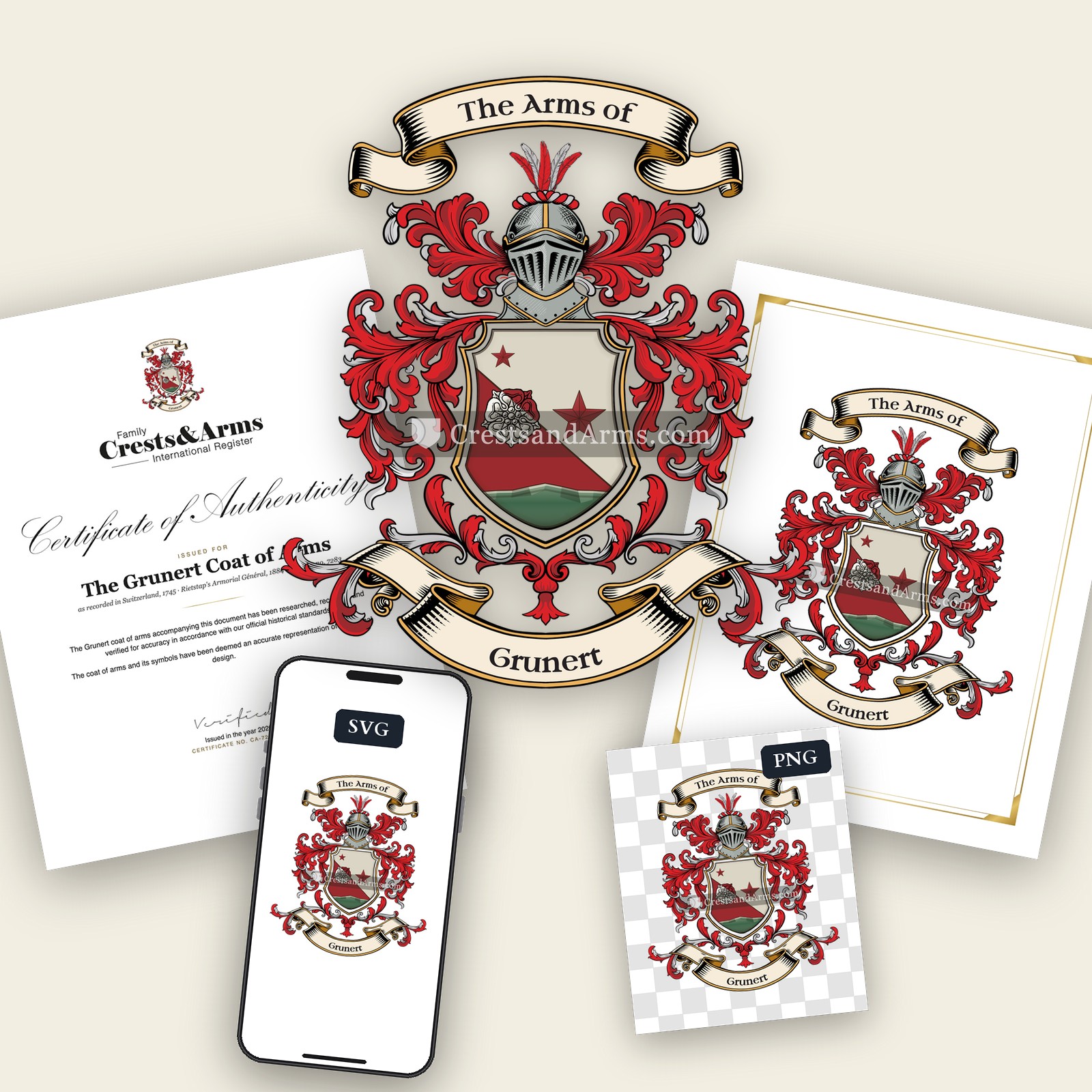
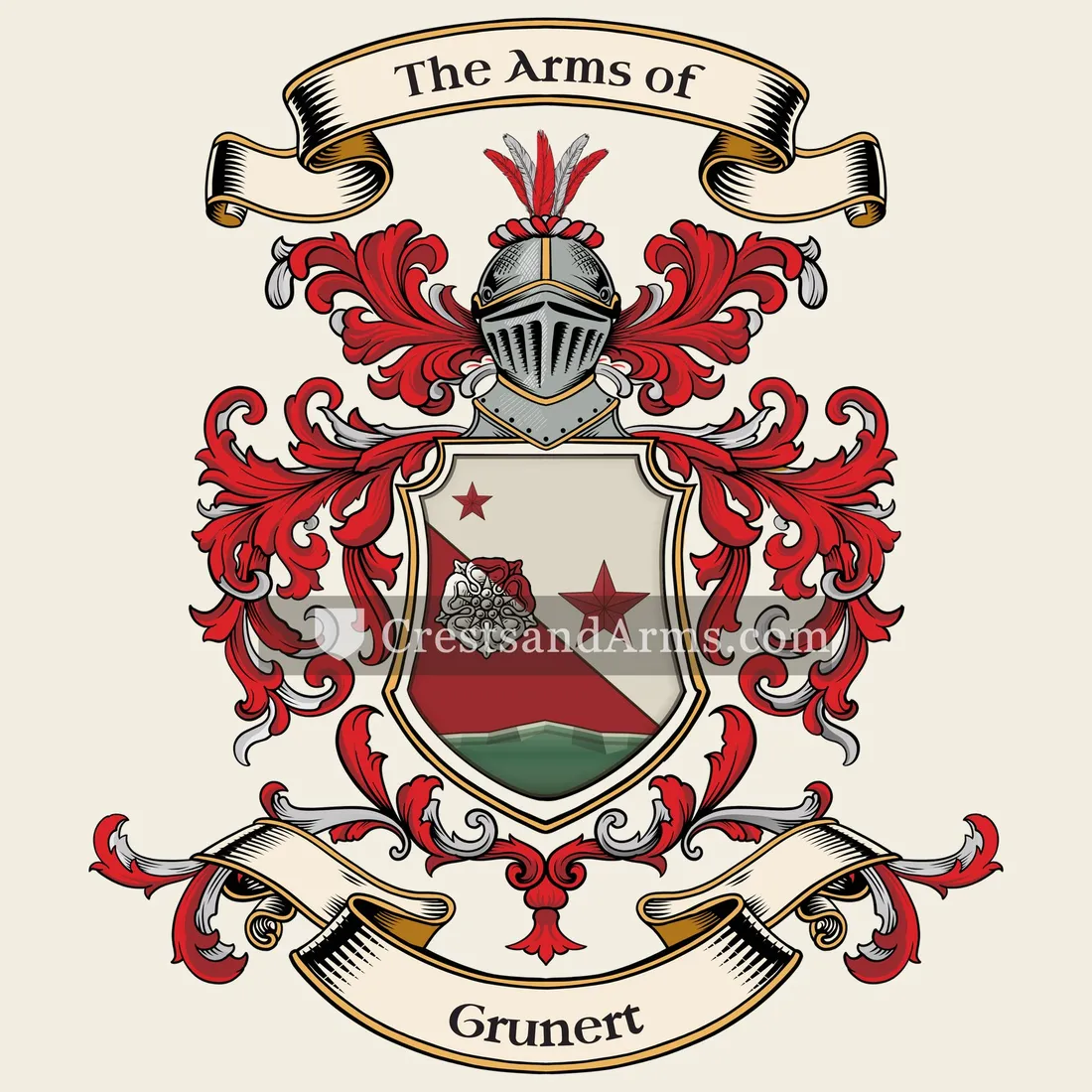
Symbols on this shield
mountThe ground held, and steadfastness upon it
roseThe seventh son, and beauty with grace
mulletThe third son, and a divine quality from above
Colours
Red (Gules)Means: Military strength
Silver (Argent)Means: Peace and sincerity
Green (Vert)Means: Hope
Historical info
Source
J. B. Rietstap, Armorial Général, Gouda: G. B. van Goor Zonen, 1884–87
Blazon (the actual original written record)
“Taillé de gu. sur arg.; à une rose de l'un en l'autre, tigée et feuillée de sin., soutenue d'un tertre du même, et acc. au canton dextre du chef d'une étoile d'arg. et au flanc sen. d'une autre étoile de gu. C.: une femme iss., hab. d'un parti d'arg. et de gu., tenant de sa main dextre une rose de gu. et de sa sen. une rose d'arg., chaque rose tigée et feuillée de sin.”
SwitzerlandBerne, c. 1745
Digital archive packCoat of arms PNG, gold border print PDF, vector SVG and the certificate of authenticity. Sent to your email in minutes.
Map of Switzerland showing where the Grunert arms are recorded
The Grunert arms were recorded in Berne, c. 1745.
This is where the arms were entered in the register. Families often moved to other parts of the country, so the same name can turn up in more than one region.
The body that granted and recorded arms in Switzerland in this period.
How Arms Worked in Switzerland
In Switzerland, coats of arms were not restricted to the nobility and were often adopted by common citizens and families. These symbols were passed down through generations to show family identity. When branches of a family grew, they often changed small details of the design to distinguish their own line from the original group.
Granting authority
Cantonal and civic authorities managed the use of coats of arms within their specific regions and local jurisdictions.
How they got arms
Families typically assumed their own coats of arms based on local custom rather than receiving them from a central monarch.
Where arms were recorded
Arms were recorded in various cantonal and civic registers starting from the fourteenth century throughout the Swiss region.
The family's standing
Recorded among the armigerous families of Switzerland.
Origin & History of the Grunert Family in Switzerland
The family name Grunert carries a deep history rooted in the German-speaking regions of Europe, with significant evidence of its presence in the Swiss canton of Berne by the middle of the 18th century. By 1745, records indicate that members of the Grunert family were established within the city, likely participating in the local economy and social structures of the time. The name itself is thought to be a descriptive surname, often linked to the German word for green, which may have originally referred to a person who lived near a lush meadow or worked as a forester. Because Switzerland served as a crossroads for trade and migration during this era, families like the Grunerts often moved between neighboring regions to seek new opportunities in agriculture or craftsmanship. Their integration into the Bernese community suggests they were part of the steady growth of the city during the Enlightenment period, contributing to the local culture and the development of the region.
Meaning of the Grunert family crest colors & symbols
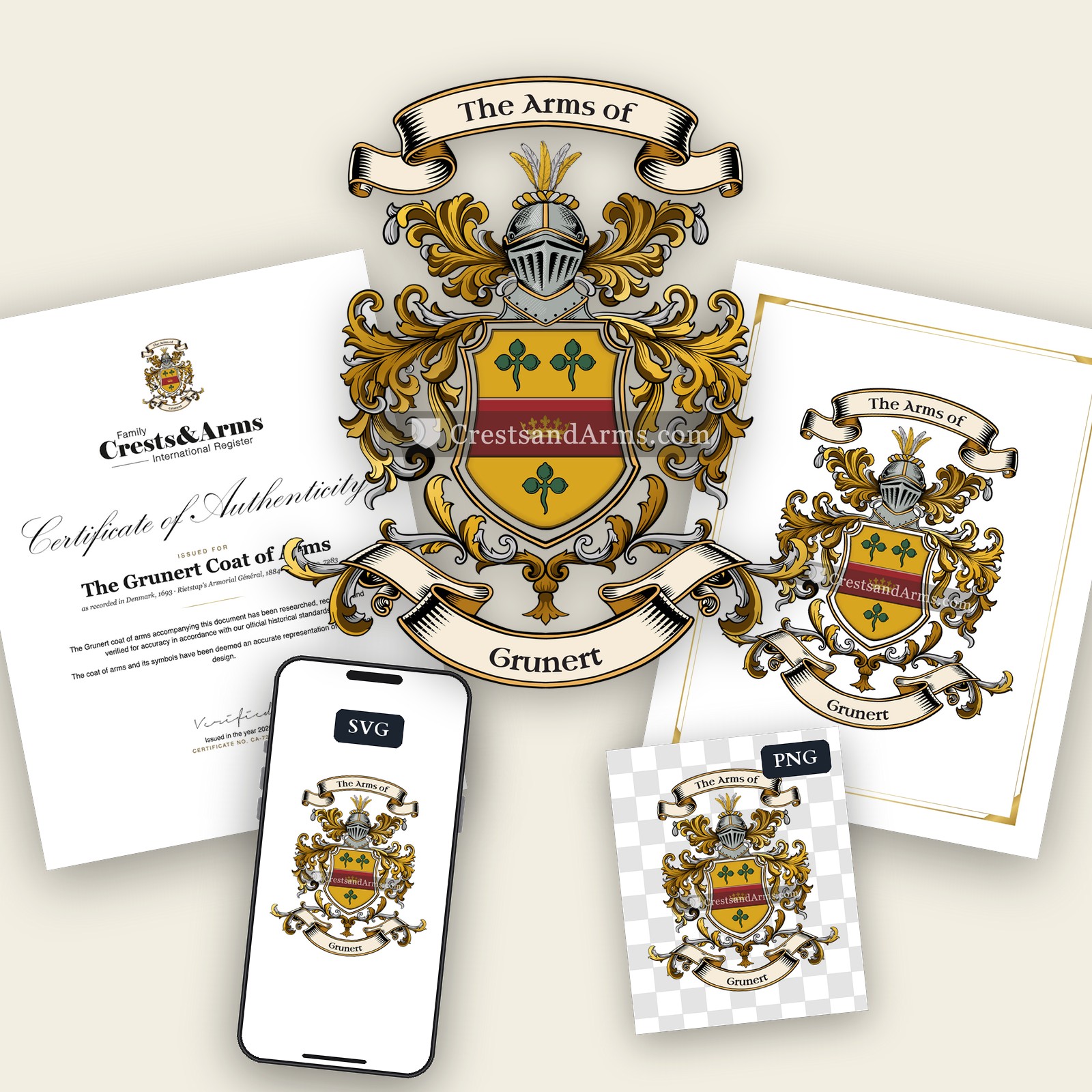
Symbols on this shield
fessThe military belt, and readiness to serve
crownSovereignty, authority and just reward
trefoilPerpetuity, and the Trinity
Colours
Gold (Or)Means: Generosity
Red (Gules)Means: Military strength
Green (Vert)Means: Hope
Historical info
Source
J. B. Rietstap, Armorial Général, Gouda: G. B. van Goor Zonen, 1884–87
Blazon (the actual original written record)
“D'or à la fasce de gu., ch. d'une couronne du champ et acc. de trois trèfles de sin. C.: un lion iss. d'or.”
Denmarkc. 1693
Digital archive packCoat of arms PNG, gold border print PDF, vector SVG and the certificate of authenticity. Sent to your email in minutes.
Map of Denmark showing where the Grunert arms are recorded
The Grunert arms were recorded in Denmark, c. 1693.
Arms such as these were typically recorded in Sjaælland.
Zealand held the Danish court, the crown's offices and Copenhagen itself. Families who served the king kept estates within reach of it, and royal service was the ordinary route to a coat of arms.
This is where the arms were entered in the register. Families often moved to other parts of the country, so the same name can turn up in more than one region.
The body that granted and recorded arms in Denmark in this period.
Christian V of Denmark
Sovereign of the period
Christian V of Denmark
1670–1699
Reigning in Germany when the Grunert arms are first recorded.
How Arms Worked in Denmark
Danish heraldry during this period was closely tied to noble status and royal favor rather than being open to all citizens. Arms were typically granted by the monarch to individuals, and these symbols were then shared by all members of the noble house. If a family line died out, the right to use those specific arms ended with them.
Granting authority
The Danish royal chancery held the power to issue and regulate official coats of arms for the kingdom.
How they got arms
Families usually received their arms through a formal royal grant that confirmed their noble status and rights.
Where arms were recorded
These grants were officially recorded in the Danish Royal Chancery records starting in the sixteenth century.
The family's standing
Recorded among the armigerous families of Denmark.
Origin & History of the Grunert Family in Denmark
The history of the Grunert family in Denmark begins with documented roots on the island of Sjaelland as early as 1693. During this period, the name was likely introduced to the region through the movement of laborers or craftsmen migrating across the Baltic Sea. Because the name follows a Germanic structure, it suggests that the family were part of the steady stream of settlers who moved into Danish territories to work in agriculture or trade. Life for the family in late 17th-century Sjaelland was centered around the local parish system, where birth, marriage, and death records were maintained by the church. As they integrated into Danish society, the family members adapted to the local social structure while maintaining their distinct surname. Over the following generations, the Grunerts became part of the fabric of rural and provincial life, contributing to the local communities of the island through their work and daily interactions.
Grunert Meaning & Related Branches
Root word
grun
Germanic word meaning green or verdant.
This name
GrunertA topographic name for someone who lived near a green field or forest.
also spelled
Greener
Documented Sources
J. B. Rietstap, Armorial Général, Gouda: G. B. van Goor Zonen, 1884–87
Bahlow, Hans, Deutsches Namenlexikon: Familien- und Vornamen nach Ursprung und Sinn erklärt, 1967
Heintze, Albert, Die deutschen Familiennamen: geschichtlich, geographisch, sprachlich, 1903
Stadtarchiv Nürnberg, Bürgerbücher der Stadt Nürnberg
Digital archive packCoat of arms PNG, gold border print PDF, vector SVG and the certificate of authenticity. Sent to your email in minutes.


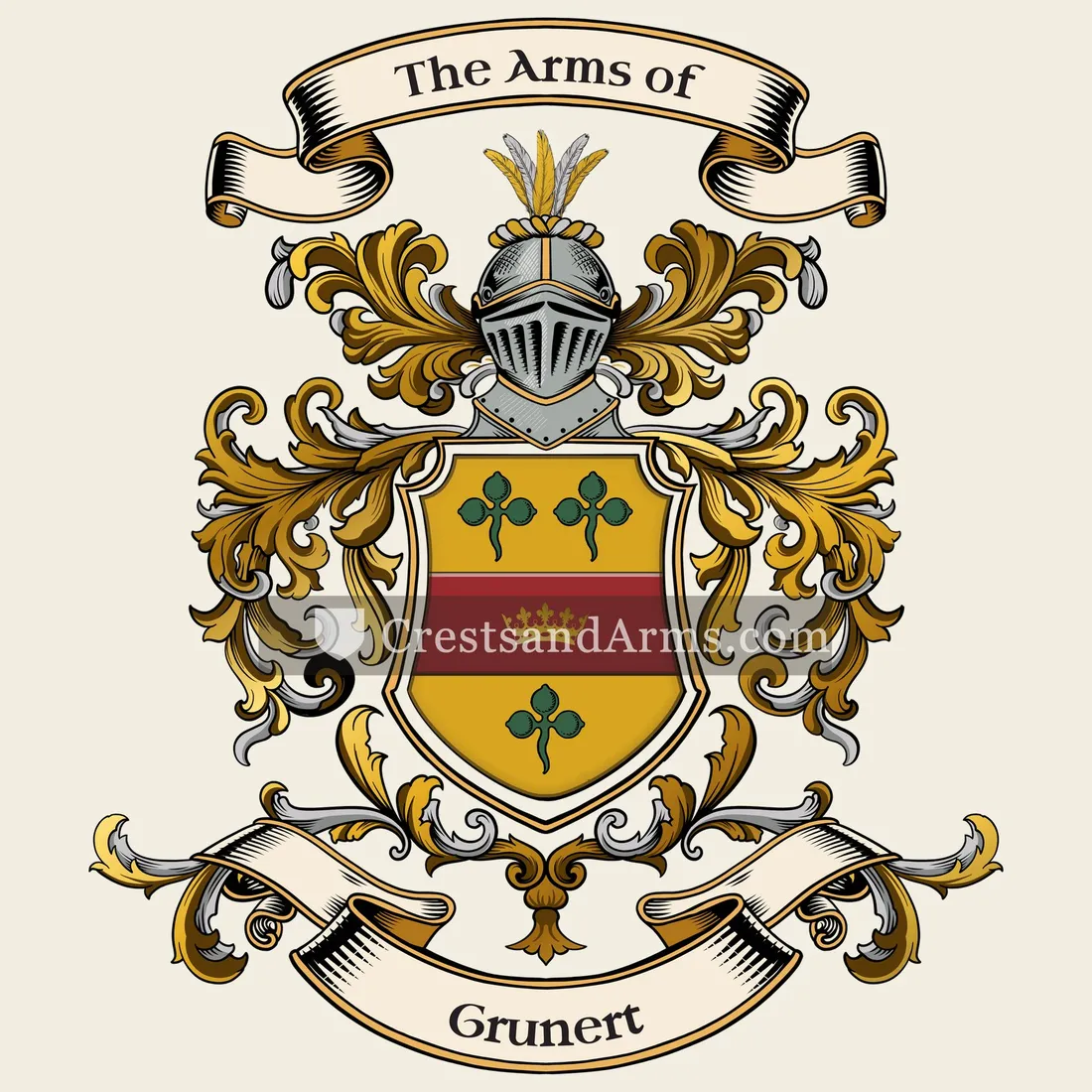
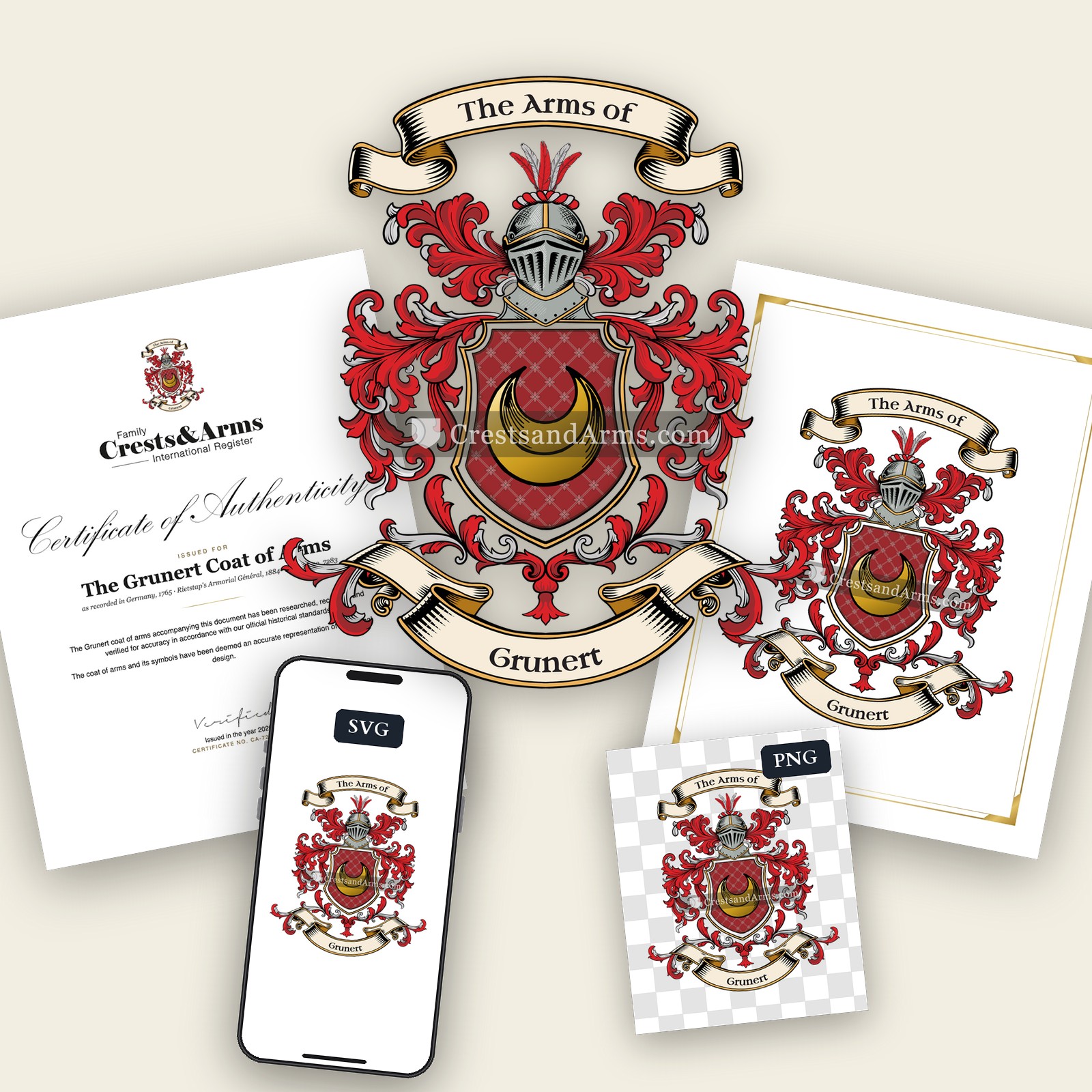
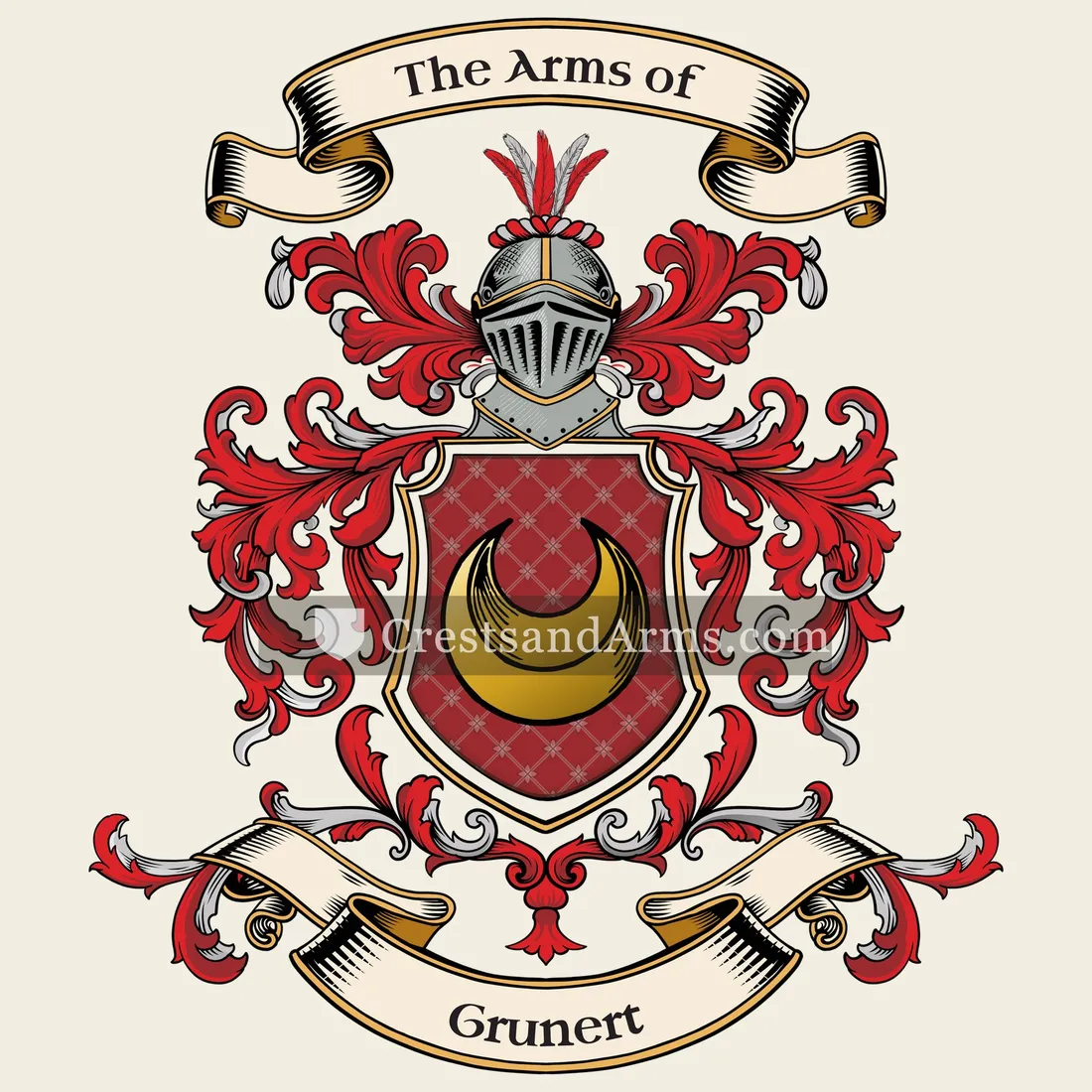
 crescentHonour by the sovereign, and the second son
 crescentHonour by the sovereign, and the second son


 mountThe ground held, and steadfastness upon it
 roseThe seventh son, and beauty with grace
 mulletThe third son, and a divine quality from above

 fessThe military belt, and readiness to serve
 crownSovereignty, authority and just reward
 trefoilPerpetuity, and the Trinity