Map of Spain showing where the Guasco arms are recorded
The Guasco arms were recorded in Piedmont, c. 1722.
Piedmont was Alpine and river country in north-western Italy, ruled from Turin. Its noble houses were listed formally by the state, and a name on that list carried arms as a matter of record.
This is where the arms were entered in the register. Families often moved to other parts of the country, so the same name can turn up in more than one region.
The body that granted and recorded arms in Spain in this period.
Philip V of Spain
Sovereign of the period
Philip V of Spain
1714–1724
Reigning in Spain when the Guasco arms are first recorded.
How Arms Worked in Spain
In Spain, a coat of arms was considered a form of property that belonged to the entire family line. These arms were passed down from a father to all his children equally. Younger branches of the family usually kept the original design without needing to add any special marks to distinguish their specific line.
Granting authority
The Cronista Rey de Armas was the official body that regulated and granted coats of arms throughout Spain.
How they got arms
Families often obtained their arms through royal grants or by proving their noble status to the official heraldic authority.
Where arms were recorded
Coats of arms were officially recorded in the registers of the Cronista Rey de Armas starting in 1496.
The family's standing
Recorded among the armigerous families of Piedmont.
Origin & History of the Guasco Family in Spain
The Guasco family name carries a deep history that traces back to the rugged landscapes of Northern Italy before spreading across various regions of Europe. While the family established a strong presence in the Piedmont region by 1722, their roots are often linked to the broader movements of noble families across the Mediterranean. In the context of Spain, the name appears in historical records as the family integrated into the administrative and military life of the Spanish Empire. Members of the Guasco family were known for their roles in local governance and their connections to the shifting borders of the era. By moving between the Italian states and Spanish territories, they maintained influence through strategic marriages and service to the crown. This migration pattern reflects the typical behavior of prominent families who sought to expand their reach and secure their status within the complex political landscape of the eighteenth century.
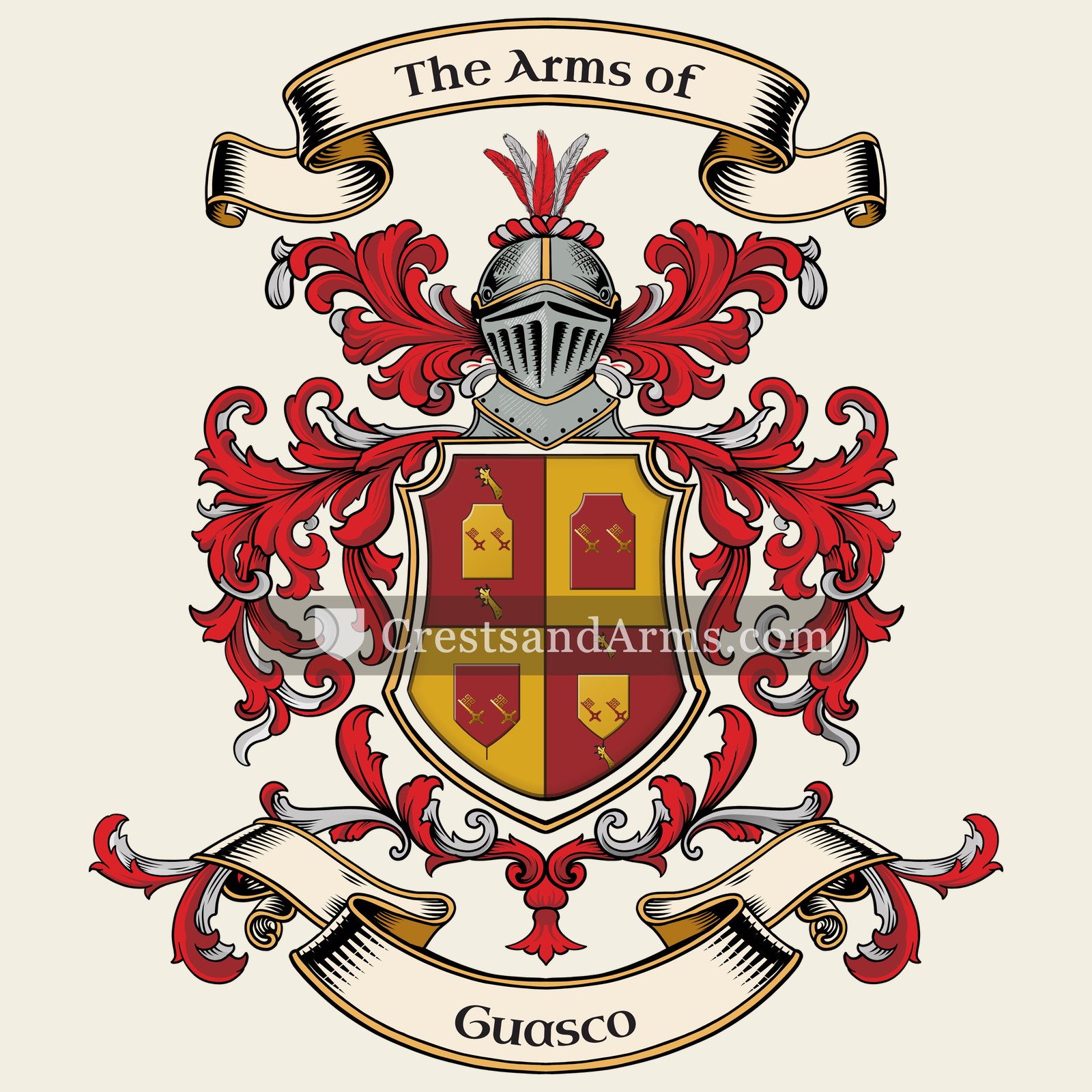
Coat of Arms & Family Crest Details
Symbols on this shield
pawStrength held ready, the beast's power in a single limb
keyGuardianship, and the office of a steward
Colours
Red (Gules)Means: Military strength
Gold (Or)Means: Generosity
Historical info
Source
J. B. Rietstap, Armorial Général, Gouda: G. B. van Goor Zonen, 1884–87
Blazon (the actual original written record)
“Ec.: aux 1 et 4 de gu. à deux pattes de lion d'or, mouv. des cantons de la p., posées en chev. et tenant ensemble une bague du même, châtonnée d'un diamant; aux 2 et 3 tranché-denché d'or sur azur. Sur le tout de gu. à deux clés, passées en saut., celle en bande d'or et celle en barre d'arg.; à une ombelle d'or, br. sur les clés. S.: deux lions d'or. D.: C'EST MON DÉSIR.”
PiedmontPiedmont, c. 1775
Digital archive packCoat of arms PNG, gold border print PDF, vector SVG and the certificate of authenticity. Sent to your email in minutes.
Map of Italy showing where the Guasco arms are recorded
The Guasco arms were recorded in Piedmont, c. 1775.
Piedmont was Alpine and river country in north-western Italy, ruled from Turin. Its noble houses were listed formally by the state, and a name on that list carried arms as a matter of record.
This is where the arms were entered in the register. Families often moved to other parts of the country, so the same name can turn up in more than one region.
The body that granted and recorded arms in Italy in this period.
Alvise Giovanni Mocenigo
Sovereign of the period
Alvise Giovanni Mocenigo
1763–1778
Reigning in Spain when the Guasco arms are first recorded.
How Arms Worked in Italy
In the Italian states, coats of arms were often used by noble families to show their status and history. These symbols were passed down through the generations to all legitimate male descendants. Younger branches of a family usually kept the original design but sometimes added small changes to distinguish their specific line from the main branch.
Granting authority
Various local rulers and city governments controlled the use of coats of arms across the different Italian states.
How they got arms
Families often assumed their own arms or received them as official grants from local lords, popes, or city councils.
Where arms were recorded
Arms were recorded in local city archives or private family books rather than in one single national register.
The family's standing
Recorded among the armigerous families of Piedmont.
Origin & History of the Guasco Family in Italy
The Guasco family name is deeply rooted in the history of the Piedmont region of northwestern Italy. While historical records confirm the family’s established presence in the area by 1775, the name itself likely emerged much earlier as a reflection of the local linguistic patterns and social structures of the Middle Ages. Families in this part of Italy often took names that identified their ancestral ties to specific towns or their roles within the feudal system. As the Guasco family grew, they became integrated into the administrative and social life of the Piedmontese landscape, eventually becoming landowners and local figures of influence. Their history is closely tied to the development of the region, where they navigated the shifting political powers of the Italian states while maintaining their identity across generations. By the late eighteenth century, the family had solidified their status as a recognized part of the local community, leaving behind a legacy that spans centuries of regional change.
Guasco Meaning & Related Branches
Root word
Wasko
A Germanic or Slavic term associated with a forest or wild place.
This name
GuascoA topographic surname referring to someone who lived near a wooded or wild area.
also spelled
Guaschi
Guascos
Guasc
Gwasko
Documented Sources
J. B. Rietstap, Armorial Général, Gouda: G. B. van Goor Zonen, 1884–87
Crollalanza, G. B. di, Dizionario storico-blasonico delle famiglie nobili e notabili italiane, 1886
Archivio di Stato di Torino, Corte, Famiglie, Guasco, 1722


 treeLife, endurance and deep roots
 treeLife, endurance and deep roots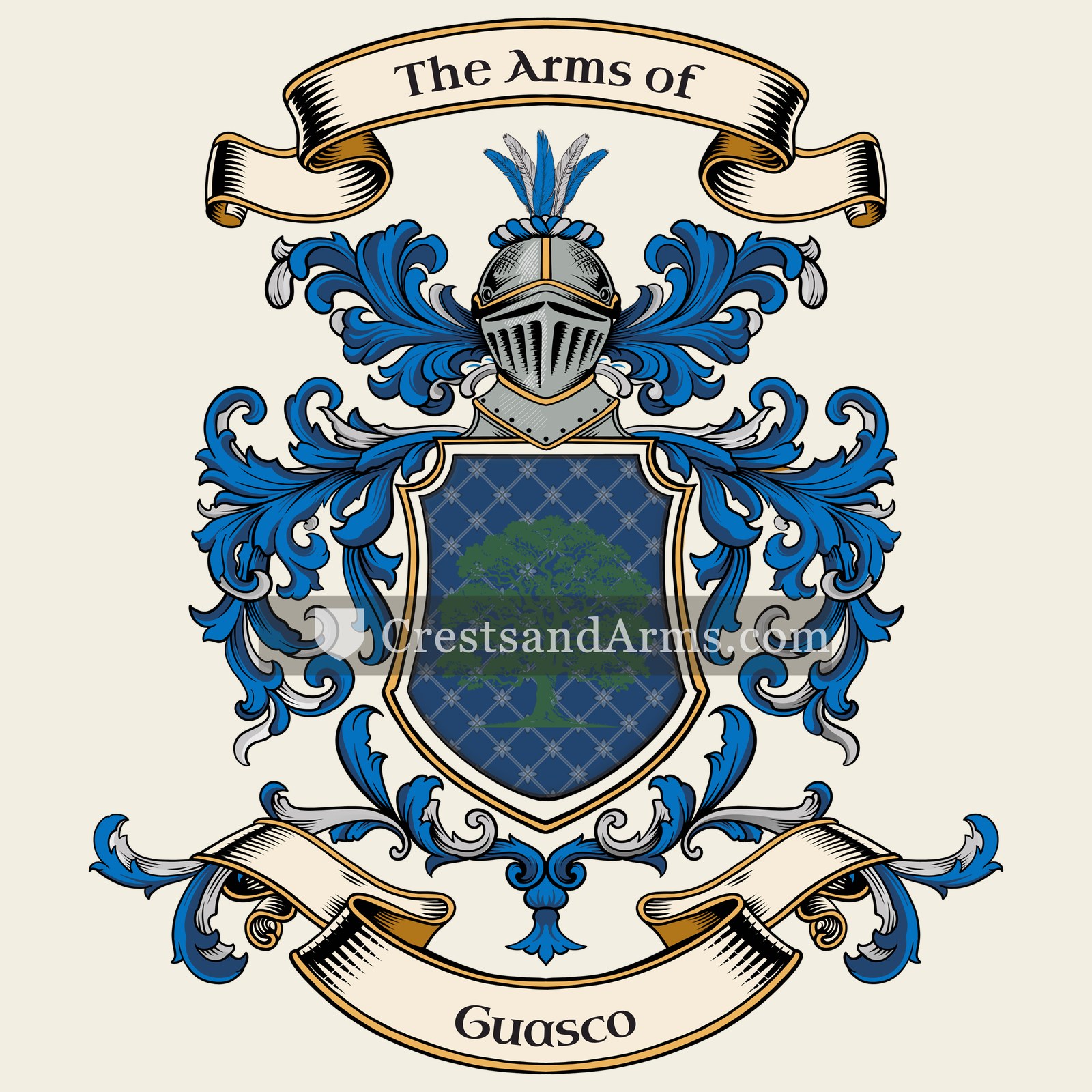


 pawStrength held ready, the beast's power in a single limb
 keyGuardianship, and the office of a steward