Map of Spain showing where the Gullace arms are recorded
The Gullace arms were recorded in Aragon, c. 1722.
Aragon was mountain and river country in north-eastern Spain, with a strong tradition of small independent landholders. A great many families counted as gentry there, and each one needed a shield to be told apart.
This is where the arms were entered in the register. Families often moved to other parts of the country, so the same name can turn up in more than one region.
The body that granted and recorded arms in Spain in this period.
Philip V of Spain
Sovereign of the period
Philip V of Spain
1714–1724
Reigning in Spain when the Gullace arms are first recorded.
How Arms Worked in Spain
In Spain, a coat of arms was considered a form of property that belonged to the entire family line. These arms were passed down from a father to all his children equally. Younger branches of the family usually kept the original design without needing to add any special marks to distinguish their specific line.
Granting authority
The Cronista Rey de Armas was the official body that regulated and granted coats of arms throughout Spain.
How they got arms
Families often obtained their arms through royal grants or by proving their noble status to the official heraldic authority.
Where arms were recorded
Coats of arms were officially recorded in the registers of the Cronista Rey de Armas starting in 1496.
The family's standing
Recorded among the armigerous families of Aragon.
Origin & History of the Gullace Family in Spain
The family name Gullace has deep roots tied to the Mediterranean region, with documented evidence placing family members in the Kingdom of Aragon by the year 1722. During this period, Aragon was a significant cultural and political hub that connected the Iberian Peninsula to the wider Mediterranean world. The name likely evolved as a regional identifier or a descriptive surname common among local populations during the eighteenth century. Families in this area often lived in agricultural communities or port towns where they contributed to the local economy and social structure. As the family moved and grew over the following generations, they carried this specific name as a marker of their ancestral connection to the Aragonese landscape and the historical traditions of that era.
Gullace Meaning & Related Branches
Root word
Gullus
Latin term for a rooster or a person from Gaul.
This name
GullaceA patronymic or descriptive surname likely derived from a nickname relating to a rooster.
also spelled
Gallack
Gallace
Gallach
Galak
Documented Sources
J. B. Rietstap, Armorial Général, Gouda: G. B. van Goor Zonen, 1884–87
Archivo de la Corona de Aragón, Catálogo de la Real Audiencia de Aragón. 1722
Llabrés, Gabriel, Inventario de los documentos del Archivo de la Corona de Aragón. 1910
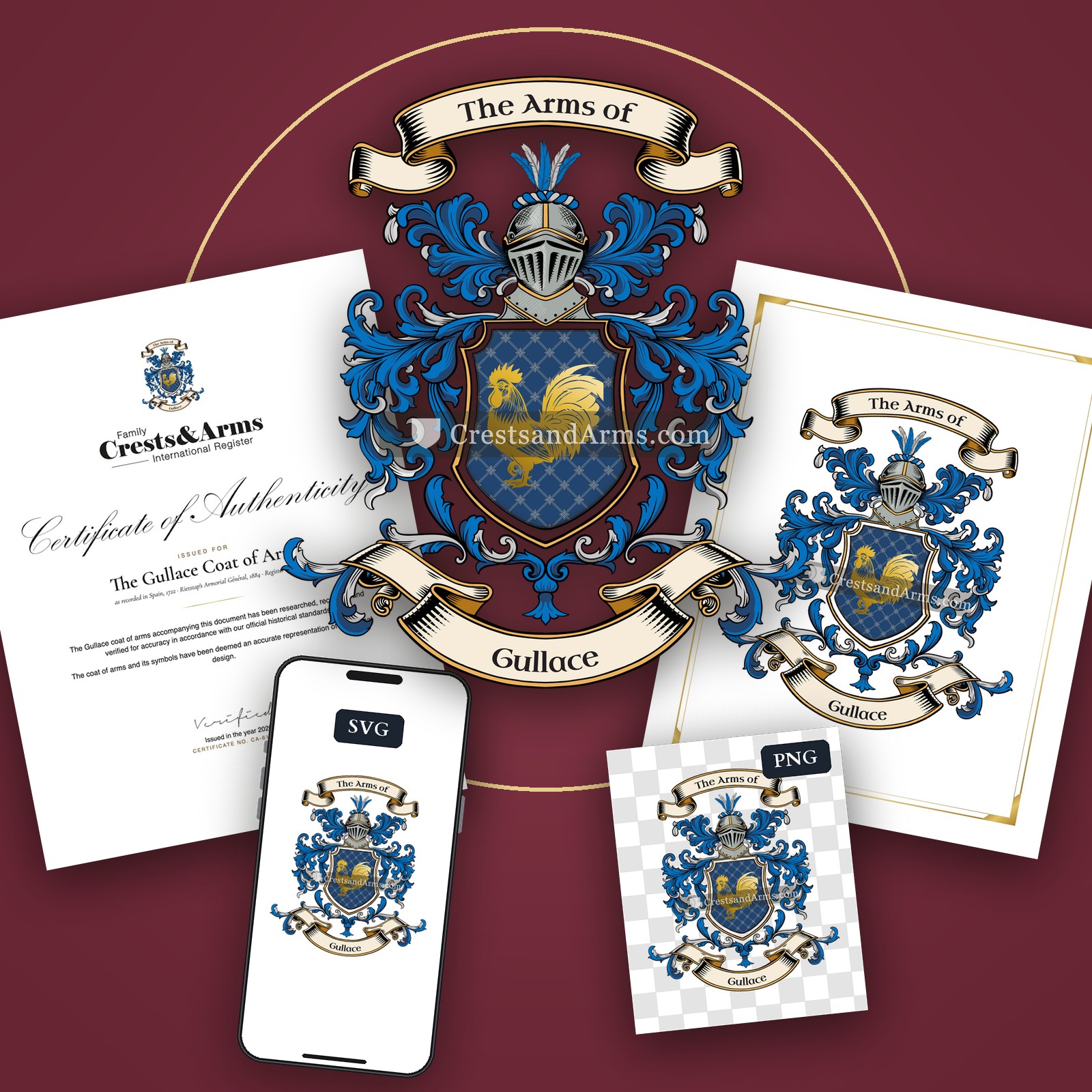
Digital archive packCoat of arms PNG, gold border print PDF, vector SVG and the certificate of authenticity. Sent to your email in minutes.


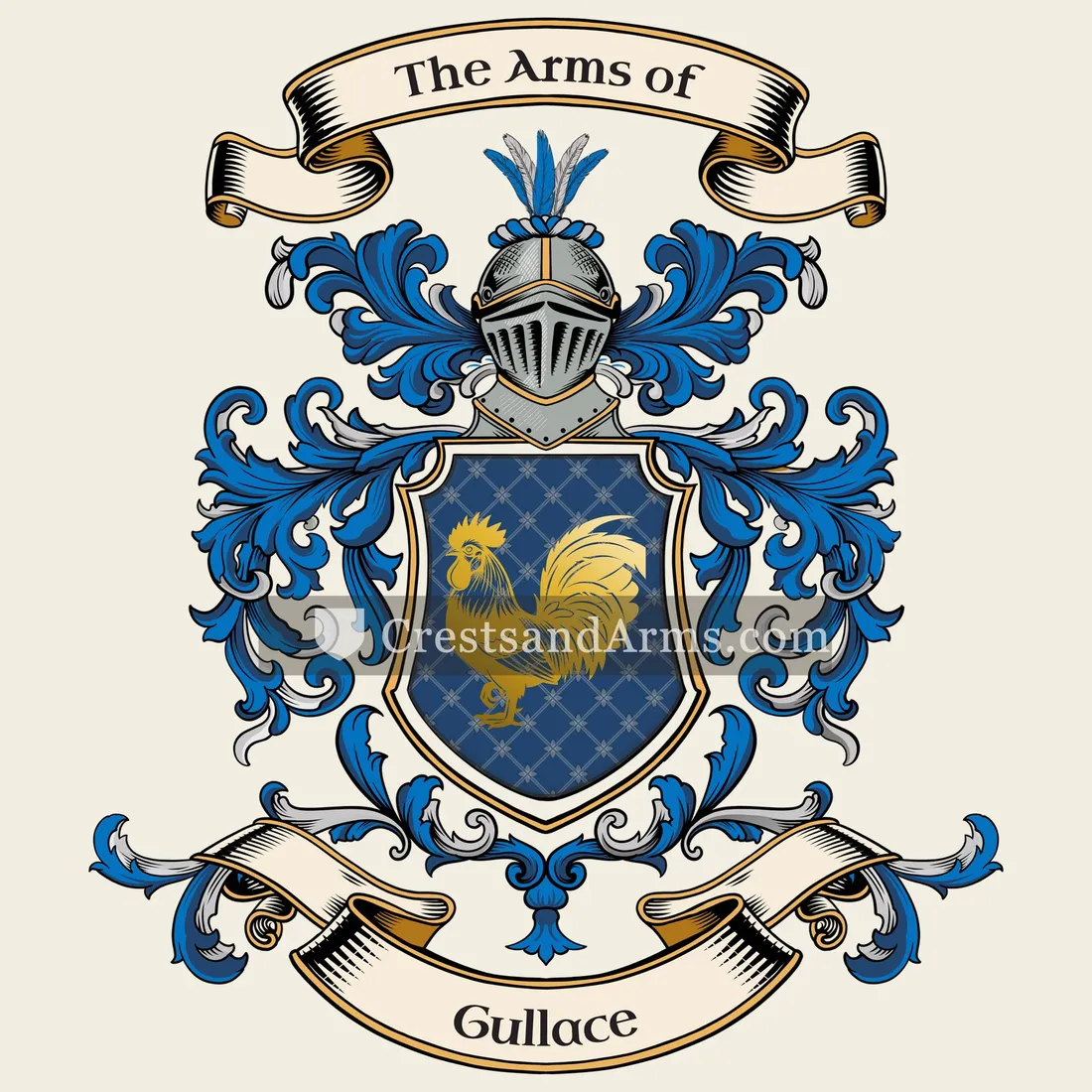
 cockCourage, vigilance and readiness for battle
 cockCourage, vigilance and readiness for battle