Map of Netherlands showing where the Gurram arms are recorded
The Gurram arms were recorded in Netherlands, c. 1815.
Arms such as these were typically recorded in Friesland.
Friesland was low, wet country on the northern coast of the Netherlands, farmed by families who had held the same land for centuries. Free landholders were unusually common there, and a free landholder could carry arms.
This is where the arms were entered in the register. Families often moved to other parts of the country, so the same name can turn up in more than one region.
Region
Friesland
First recorded
1815
Granting Authority for the Gurram Arms
Hoge Raad van Adel
Photograph made by me · CC BY-SA 3.0
The body that granted and recorded arms in Netherlands in this period.
William I of the Netherlands
Sovereign of the period
William I of the Netherlands
1815–1840
Reigning in Netherlands when the Gurram arms are first recorded.
How Arms Worked in Netherlands
In the Netherlands, coats of arms were often used by noble families and those who held specific public offices. These arms were passed down through the generations to legitimate descendants. Younger branches of a family usually kept the original design without needing to add special marks. This system ensured that the family identity remained clear and consistent over many years.
Granting authority
The Hoge Raad van Adel is the official body that regulates and manages noble titles and coats of arms in the Netherlands.
How they got arms
Families typically obtained their coats of arms through official royal grants or by proving their long-standing historical use of the symbols.
Where arms were recorded
Coats of arms are officially recorded in the registers held by the Hoge Raad van Adel, which began its work in 1814.
The family's standing
Recorded among the armigerous families of Netherlands.
Origin & History of the Gurram Family in Netherlands
The history of the Gurram family in the Netherlands centers on the northern province of Friesland, where records confirm their presence by 1815. During this period, the Napoleonic administration required all citizens to adopt stable, hereditary surnames to improve tax collection and military conscription. Many families in the Frisian region chose names that reflected their local environment or specific ancestral traits, and the Gurram name likely emerged from these official registration efforts. Because Friesland maintained a distinct cultural and linguistic identity separate from the rest of the Netherlands, the family was part of a close-knit community that relied heavily on agriculture and maritime trade. By settling in this region, the early members of the family became part of the transition toward modern civil registration, which helped solidify their identity within the Dutch population during the nineteenth century.
Meaning of the Gurram family crest colors & symbols
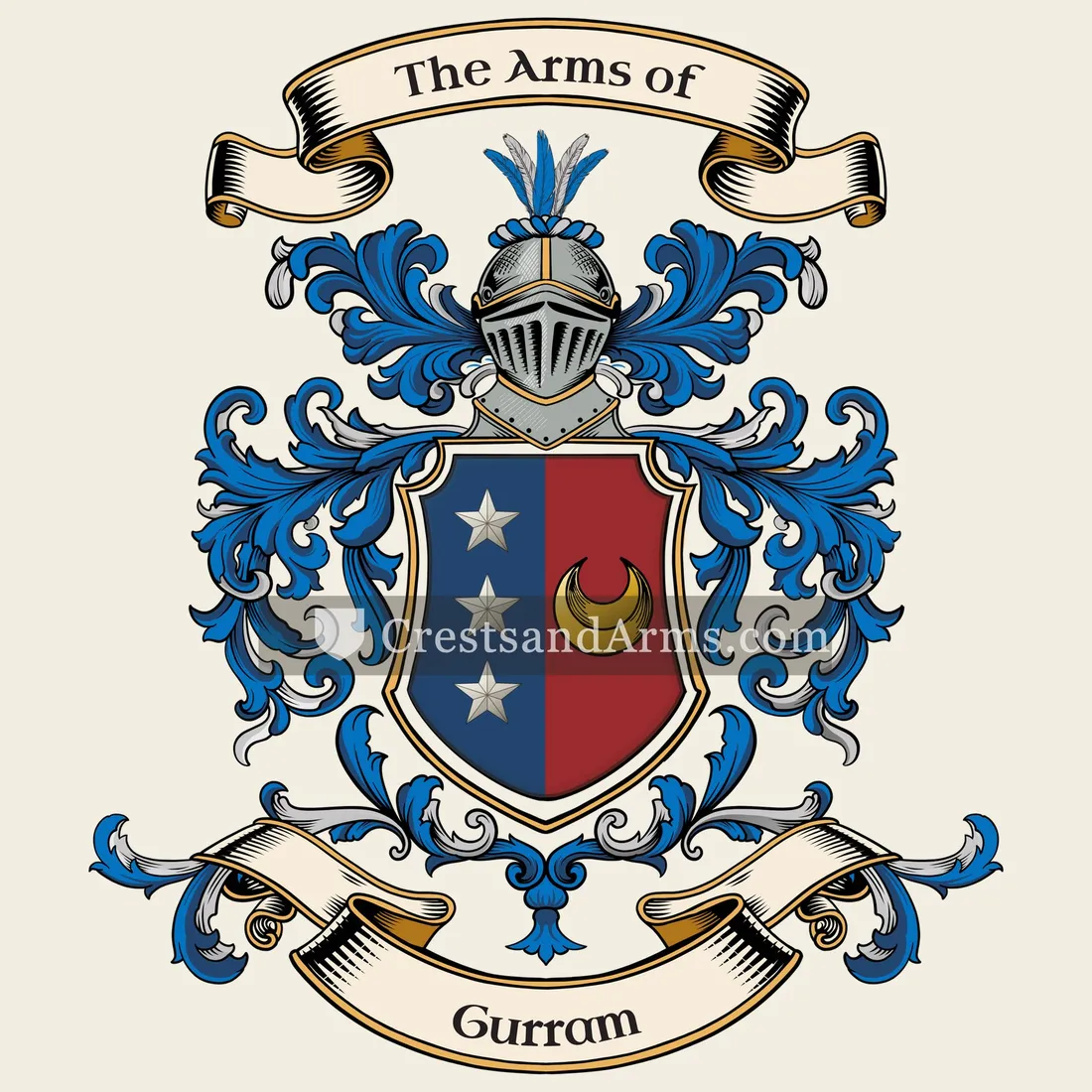
Symbols on this shield
mulletThe third son, and a divine quality from above
crescentHonour by the sovereign, and the second son
Colours
Blue (Azure)Means: Loyalty and truth
Red (Gules)Means: Military strength
Silver (Argent)Means: Peace and sincerity
Gold (Or)Means: Generosity
Historical info
Source
J. B. Rietstap, Armorial Général, Gouda: G. B. van Goor Zonen, 1884–87
Blazon (the actual original written record)
“Parti: au 1 d'azur à trois étoiles d'arg., rangées en pal; au 2 de gu. à un croiss. figuré tourné d'or. C.: une jeune fille iss., hab. de gu., cour. d'or, tenant de sa main dextre étendue une couronne de feuillage de sin.”
Denmarkc. 1722
Digital archive packCoat of arms PNG, gold border print PDF, vector SVG and the certificate of authenticity. Sent to your email in minutes.
Map of Denmark showing where the Gurram arms are recorded
The Gurram arms were recorded in Denmark, c. 1722.
Arms such as these were typically recorded in Sjaælland.
Zealand held the Danish court, the crown's offices and Copenhagen itself. Families who served the king kept estates within reach of it, and royal service was the ordinary route to a coat of arms.
This is where the arms were entered in the register. Families often moved to other parts of the country, so the same name can turn up in more than one region.
The body that granted and recorded arms in Denmark in this period.
Frederik IV of Denmark
Sovereign of the period
Frederik IV of Denmark
1699–1730
Reigning in Netherlands when the Gurram arms are first recorded.
How Arms Worked in Denmark
Danish heraldry during this period was closely tied to noble status and royal favor rather than being open to all citizens. Arms were typically granted by the monarch to individuals, and these symbols were then shared by all members of the noble house. If a family line died out, the right to use those specific arms ended with them.
Granting authority
The Danish royal chancery held the power to issue and regulate official coats of arms for the kingdom.
How they got arms
Families usually received their arms through a formal royal grant that confirmed their noble status and rights.
Where arms were recorded
These grants were officially recorded in the Danish Royal Chancery records starting in the sixteenth century.
The family's standing
Recorded among the armigerous families of Denmark.
Origin & History of the Gurram Family in Denmark
The history of the Gurram family in Denmark begins in the early eighteenth century, rooted in the landscape of Sjælland. By 1722, members of the family were already established within this region, which served as the cultural and political heart of the Danish kingdom. During this era, Sjælland was a hub of agricultural activity and local administration, suggesting that the early Gurram family members likely participated in the rural economy or the local parish systems that defined Danish life at the time. Because surnames were often tied to specific geographic locations or local occupations during this period, the presence of the family in Sjælland indicates a deep connection to the regional identity of eastern Denmark. As the family navigated the social structures of the 1700s, they became part of the long history of families who helped shape the local communities of the Danish islands.
Gurram Meaning & Related Branches
Root word
Ghor
A Proto-Indo-European term referring to a horse or equine animal.
This name
GurramDerived from a Telugu occupational or descriptive term for a horseman or someone associated with horses.
also spelled
Gramm
Graam
Gramme
Documented Sources
J. B. Rietstap, Armorial Général, Gouda: G. B. van Goor Zonen, 1884–87
AlleFriezen, Burgerlijke Stand Geboorteakten (1811–1900)
Tresoar, Bevolkingsregister van Friesland (1815)
Twerda, H., Fan Fryslân út: in skiednis fan de Fryske folkssykjen (1968)
Spahr van der Hoek, J.J., Geschiedenis van Friesland (1973)
Digital archive packCoat of arms PNG, gold border print PDF, vector SVG and the certificate of authenticity. Sent to your email in minutes.


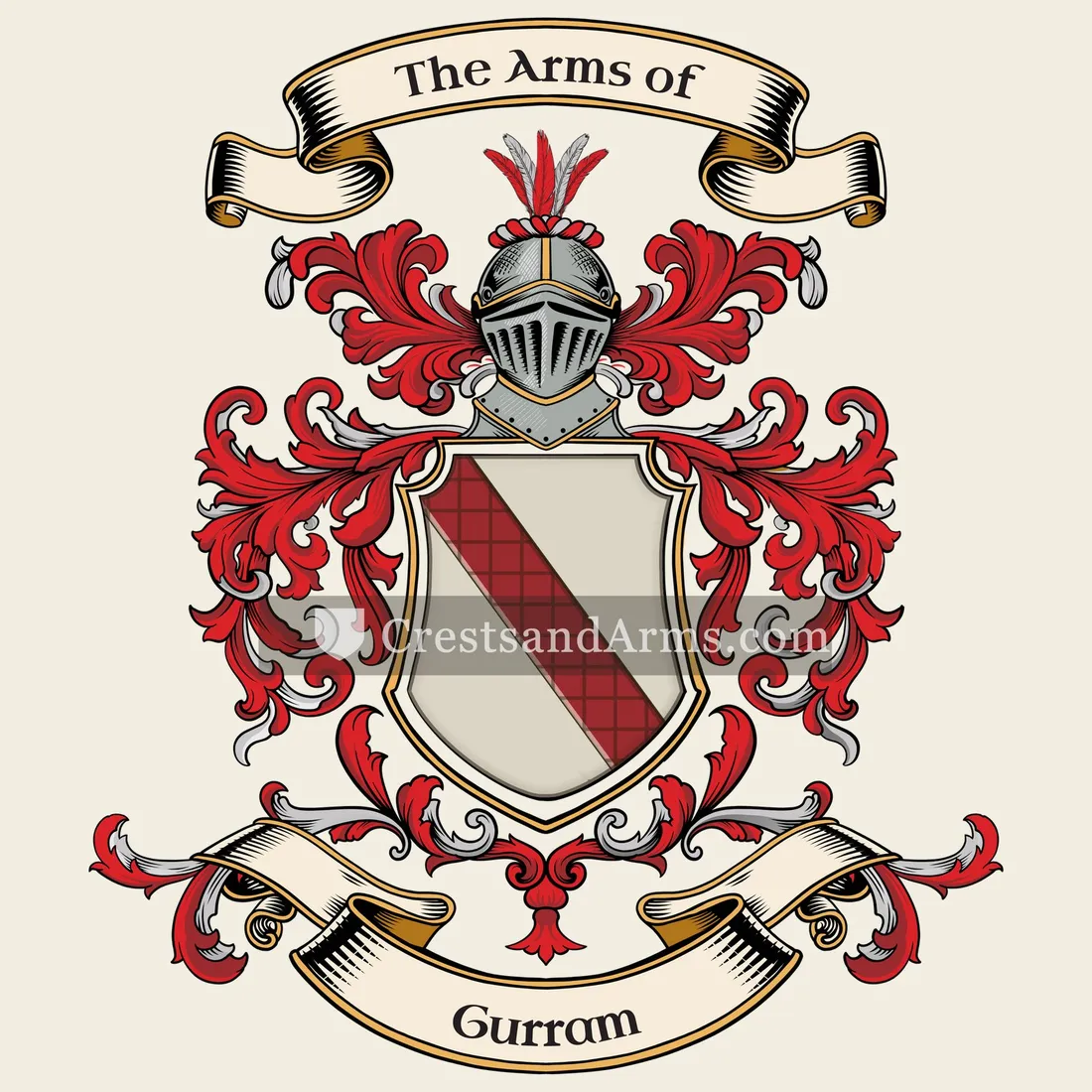
 bendDefence, and the scarf of a commander
 bendDefence, and the scarf of a commander


 mulletThe third son, and a divine quality from above
 crescentHonour by the sovereign, and the second son