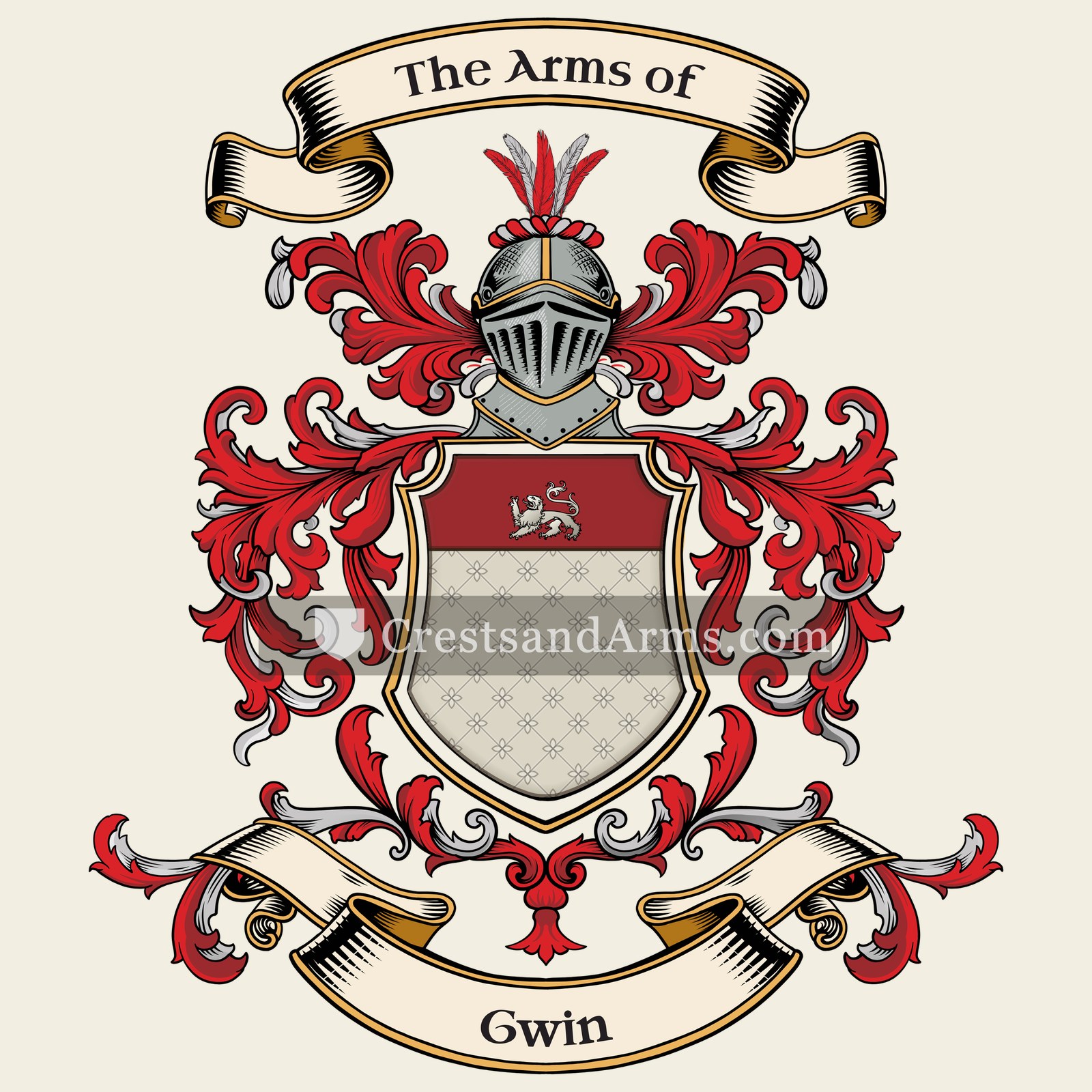
A record of documented arms, meaning and origin, researched for the Gwin family lines. Documented in 2 countries.
Reg. 4001 · French, G–I
Coat of Arms & Family Crest Details
Symbols on this shield
chiefAuthority, wisdom and dominion
lionCourage, strength and royalty
Colours
Silver (Argent)Means: Peace and sincerity
Red (Gules)Means: Military strength
Historical info
Source
J. B. Rietstap, Armorial Général, Gouda: G. B. van Goor Zonen, 1884–87
Blazon (the actual original written record)
“D'arg.; au chef de gu., ch. d'un lion iss. d'arg.”
ProvenceProvence, c. 1663
Where the Gwin Arms Were Recorded
Provence
Map of France showing where the Gwin arms are recorded
The Gwin arms were recorded in Provence, c. 1663.
Provence was old country, with towns dating to the Romans and families who traced their land back nearly as far. Its gentry were many and long-settled, and long settlement is what fills a register.
This is where the arms were entered in the register. Families often moved to other parts of the country, so the same name can turn up in more than one region.
The body that granted and recorded arms in France in this period.
Louis XIV of France
Sovereign of the period
Louis XIV of France
1643–1715
Reigning in France when the Gwin arms are first recorded.
How Arms Worked in France
In France, a coat of arms was a mark of honor that passed down through the male line to all legitimate descendants. Families often used the same shield without changes to show their shared heritage. If a branch wanted to stand out, they could add a small mark to their shield to show their specific place in the family tree.
Granting authority
The Juge d'armes de France acted as the official authority that regulated and verified coats of arms across the country.
How they got arms
Families typically inherited their arms from ancestors, though they could also receive them through royal grants or by proving their noble status.
Where arms were recorded
Coats of arms were officially recorded in the Armorial Général de France, which began its main collection in the year 1696.
The family's standing
Recorded among the armigerous families of Provence.
Origin & History of the Gwin Family in France
The history of the Gwin family in France is deeply rooted in the sun-drenched region of Provence, where records confirm their presence as early as 1663. During this period, the name was often associated with families living in the rural landscapes of southern France, where they likely worked as landowners or skilled tradespeople. Life in Provence during the seventeenth century was defined by a mix of Mediterranean culture and local traditions, and the Gwin family would have navigated the social shifts occurring under the reign of King Louis XIV. As they established themselves in their local communities, they became part of the long-standing demographic history of the region. Their survival and growth in this area reflect the broader patterns of migration and family stability that characterized the French countryside before the turn of the eighteenth century.
Coat of Arms & Family Crest Details
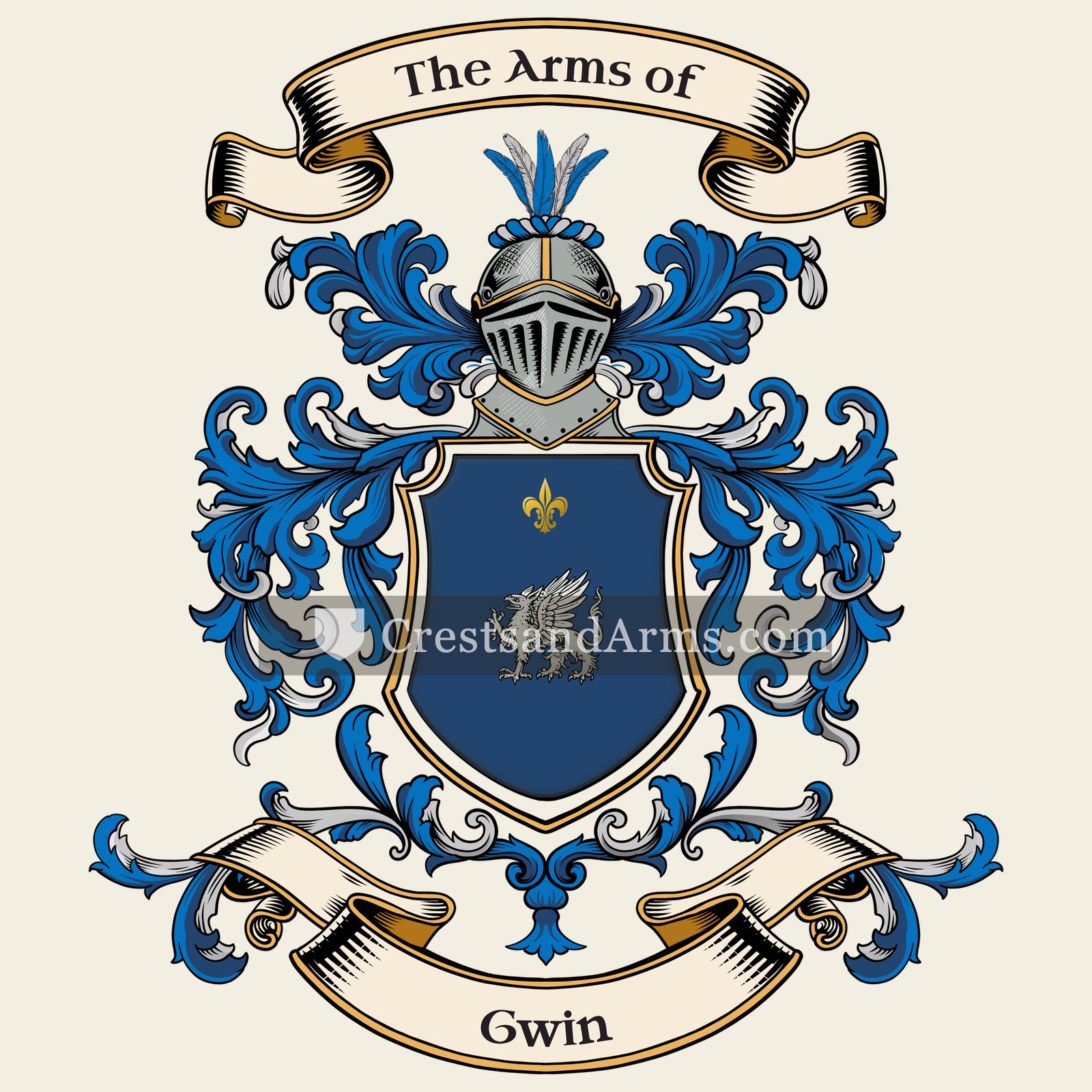
Symbols on this shield
griffinValour and vigilance, guarding great treasure
fleur de lisPurity, light, and the sixth son
Colours
Blue (Azure)Means: Loyalty and truth
Silver (Argent)Means: Peace and sincerity
Gold (Or)Means: Generosity
Historical info
Source
J. B. Rietstap, Armorial Général, Gouda: G. B. van Goor Zonen, 1884–87
Blazon (the actual original written record)
“D'azur à un griffon d'arg., adextré d'une fleur-de-lis d'or.”
Spainc. 1722
Where the Gwin Arms Were Recorded
Castile
Map of Spain showing where the Gwin arms are recorded
The Gwin arms were recorded in Spain, c. 1722.
Arms such as these were typically recorded in Castile.
Castile was the heart of Spain and the source of most of its noble families. Land won in the long wars against the Moors was granted out to fighting men, and a man granted land was granted arms along with it.
This is where the arms were entered in the register. Families often moved to other parts of the country, so the same name can turn up in more than one region.
The body that granted and recorded arms in Spain in this period.
Philip V of Spain
Sovereign of the period
Philip V of Spain
1714–1724
Reigning in France when the Gwin arms are first recorded.
How Arms Worked in Spain
In Spain, a coat of arms was considered a form of property that belonged to the entire family line. These arms were passed down from a father to all his children equally. Younger branches of the family usually kept the original design without needing to add any special marks to distinguish their specific line.
Granting authority
The Cronista Rey de Armas was the official body that regulated and granted coats of arms throughout Spain.
How they got arms
Families often obtained their arms through royal grants or by proving their noble status to the official heraldic authority.
Where arms were recorded
Coats of arms were officially recorded in the registers of the Cronista Rey de Armas starting in 1496.
The family's standing
Recorded among the armigerous families of Spain.
Origin & History of the Gwin Family in Spain
The history of the Gwin family in Spain is deeply rooted in the cultural landscape of Castile during the early eighteenth century. By 1722, records confirm that members of the family had established a presence in this region, which was then a center of significant administrative and social change under the Bourbon monarchy. The name likely arrived in the Iberian Peninsula through the complex networks of trade and military service that connected various European regions during this era. As the family settled into Castilian life, they integrated into the local economy and social structures of the time. This period was marked by a push for modernization and centralized governance, and the Gwin family would have navigated these shifting political tides while maintaining their distinct identity. Their presence in Castile serves as a testament to the movement of families across borders during the Enlightenment, reflecting a broader pattern of migration that shaped the demographics of the Spanish heartland.
Related Branches & Arms
Root word
Gwyn
A Welsh term meaning white, fair, or blessed.
This name
GwinDerived from a nickname for someone with a fair complexion or white hair.
also spelled
Guyn
Geen
Gwin
Documented Sources
J. B. Rietstap, Armorial Général, Gouda: G. B. van Goor Zonen, 1884–87
Departmental Archives of the Bouches-du-Rhône, Registres paroissiaux et d'état civil
Boyer, Jean, La vie quotidienne en Provence au XVIIe siècle, 1972
Poupardin, René, Le Royaume de Provence sous les Carolingiens, 1901
Digital archive packCoat of arms PNG, gold border print PDF, vector SVG and the certificate of authenticity. Sent to your email in minutes.


 chiefAuthority, wisdom and dominion
 lionCourage, strength and royalty
 chiefAuthority, wisdom and dominion
 lionCourage, strength and royalty

 griffinValour and vigilance, guarding great treasure
 fleur de lisPurity, light, and the sixth son