Map of Switzerland showing where the Halterman arms are recorded
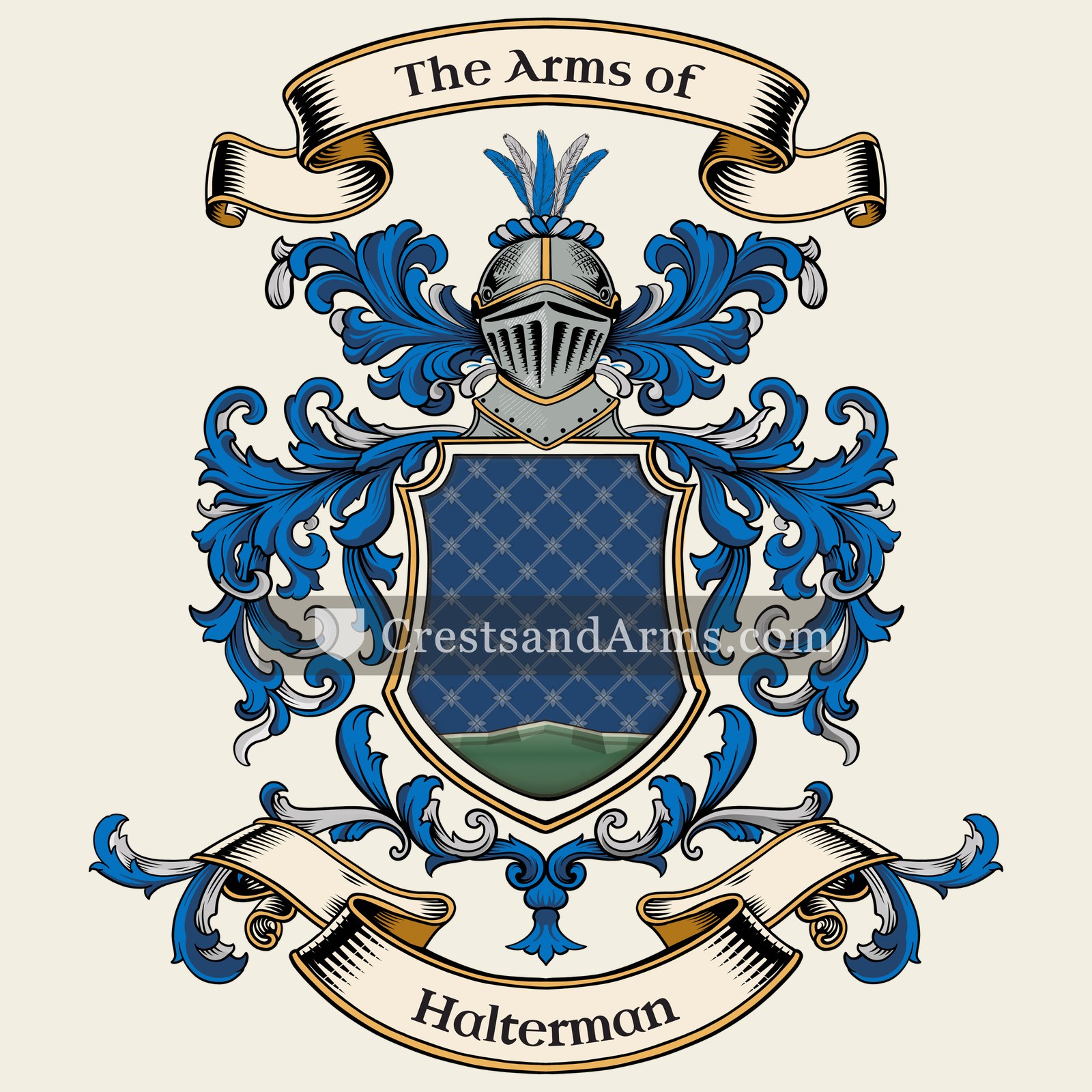
The Halterman arms were recorded in Bâle, c. 1745.
This is where the arms were entered in the register. Families often moved to other parts of the country, so the same name can turn up in more than one region.
The body that granted and recorded arms in Switzerland in this period.
How Arms Worked in Switzerland
In Switzerland, coats of arms were not restricted to the nobility and were often adopted by common citizens and families. These symbols were passed down through generations to show family identity. When branches of a family grew, they often changed small details of the design to distinguish their own line from the original group.
Granting authority
Cantonal and civic authorities managed the use of coats of arms within their specific regions and local jurisdictions.
How they got arms
Families typically assumed their own coats of arms based on local custom rather than receiving them from a central monarch.
Where arms were recorded
Arms were recorded in various cantonal and civic registers starting from the fourteenth century throughout the Swiss region.
The family's standing
Recorded among the armigerous families of Switzerland.
Origin & History of the Halterman Family in Switzerland
The surname Halterman is rooted in the Germanic linguistic tradition, likely originating as an occupational name for someone who worked with horses or managed a stable. The root word "Halter" refers to a person who holds or controls, while the suffix often denotes a specific role or trade. By the mid-eighteenth century, historical records confirm that members of the family were established in the city of Bâle, which is known today as Basel, Switzerland. During this era, families in the region often moved across borders for trade, religious freedom, or better agricultural prospects. The presence of the Halterman name in Bâle in 1745 suggests that the family was part of the vibrant mercantile and artisan culture that defined this important European crossroads. Over time, as family members migrated from these Swiss and German-speaking regions, the spelling of the name evolved to suit the phonetic patterns of their new homes.
Related Branches & Arms
Root word
Halder
A person who holds or manages a piece of land.
This name
HaltermanAn occupational surname for a landholder, steward, or someone in charge of a farmstead.
also spelled
Haltier
Halther
Haltre
Documented Sources
J. B. Rietstap, Armorial Général, Gouda: G. B. van Goor Zonen, 1884–87
Staatsarchiv Basel-Stadt, Kirchenbücher der Stadt Basel (Church records of the city of Basel)


 mountThe ground held, and steadfastness upon it
 mountThe ground held, and steadfastness upon it